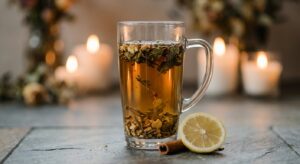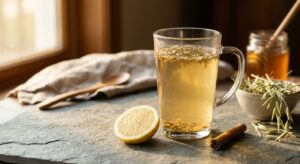
Chasteberry, also called vitex, monk’s pepper, or Vitex agnus-castus, is a deciduous shrub native to the Mediterranean basin and Central Asia. Its small, dark, peppercorn-like berries have been gathered since antiquity. Ancient Greek writers including Hippocrates and Dioscorides recorded its use for women’s ailments, and the name itself points to a curious piece of folklore: medieval monks reportedly chewed the berries to dampen libido and support vows of celibacy, which is how the plant earned the name ‘monk’s pepper.’
Across centuries of European folk medicine, the berries were turned to for irregular cycles, breast tenderness before menstruation, and the unsettled moods that can accompany hormonal shifts. Today vitex remains one of the most researched herbs in women’s health, particularly in Germany, where standardized extracts have been used in clinical practice for decades. Its reputation rests on a gentle, slow-building influence rather than a quick effect, which is why it suits a nightly ritual so well.
As a tea, chasteberry is an acquired pleasure. The flavor is pungent, peppery, and slightly resinous, closer to a spice than a typical floral tisane. Many people blend it with softer herbs, but sipped on its own in the quiet of the evening, it becomes a grounding practice. Consistency matters more than strength with this herb, so the tea works best as a calm, repeated daily habit rather than an occasional cup.
2
cups
Ingredients
- 2 tspdried chasteberry (Vitex agnus-castus) berries, lightly crushed
- 480 mlwater (95°C / 203°F)
- —raw honey to taste (optional)
- —a small strip of orange peel or a pinch of cinnamon to soften the flavor (optional)
How to Brew
Click on an item below to shop for the recommended items for this recipe on Amazon.
As an Amazon Associate, we earn from qualifying purchases.
- Measure 2 teaspoons of dried chasteberries into a mortar or onto a cutting board. Lightly crush them with the back of a spoon or a pestle, just enough to crack the hard outer skin without grinding them to powder.
- Bring fresh water to a near boil, then let it rest for about 30 seconds so it settles at roughly 95°C (203°F).
- Place the crushed berries in a teapot or a mug fitted with a fine mesh infuser and pour the hot water over them.
- Cover the vessel with a lid or small plate to trap the volatile aromatics, and steep for 10 to 15 minutes. Because chasteberry is a hard berry, shorter steeps taste weak and thin.
- Strain thoroughly, pressing the berries gently against the strainer to release any remaining liquid.
- Sweeten with a little raw honey if desired and sip slowly about an hour before bed.
- Lightly crush 2 tablespoons of dried chasteberries and place them in a clean glass jar. Cold water extracts more slowly, so the slightly larger ratio compensates for the lower temperature.
- Add 1 liter of cold, filtered water and stir once to wet all the berries.
- Seal the jar and refrigerate for 8 to 12 hours, or overnight. Give the jar a gentle shake once or twice if you remember.
- Strain through a fine mesh sieve or a layer of muslin to remove all berry fragments.
- Serve over ice or at cool room temperature with a twist of citrus. Keep any leftovers refrigerated and drink within 48 hours.
- Add 1 tablespoon of lightly crushed dried chasteberries to a small saucepan with 360 ml of cold water. Starting with cold water allows the berries to heat gradually.
- Bring the pot slowly to a gentle simmer over medium-low heat. Avoid a hard rolling boil, which can drive off the delicate aromatic oils.
- Reduce the heat, partially cover the pot, and simmer for 15 minutes, stirring occasionally. The liquid will reduce slightly and deepen to a rich amber.
- Remove the pot from the heat, cover fully, and let it rest for another 10 minutes so the flavors settle and the berries release a little more.
- Strain through a fine mesh sieve into a warmed mug. Add a strip of orange peel or a pinch of cinnamon while the tea is still hot to round out the peppery edge.
- Sip slowly while warm as part of your evening wind-down.
Health Benefits
Several randomized trials and systematic reviews suggest standardized vitex extracts can reduce PMS symptoms such as breast tenderness, irritability, bloating, and mood swings. Benefits generally appear after at least one to three cycles of consistent use.
By nudging the pituitary’s output of luteinizing hormone and prolactin, vitex may help rebalance the ratio of estrogen to progesterone, which can encourage more regular cycles in some women with mild luteal phase irregularity.
Cyclic mastalgia is linked in part to elevated prolactin, and vitex’s dopaminergic activity may help lower it. Clinical studies have reported meaningful improvement in cyclic breast tenderness compared with placebo.
Because vitex acts on dopamine receptors in the pituitary, it has been studied for modestly elevated prolactin levels. This use should only ever be explored under medical supervision.
The warm, deliberate act of brewing and sipping a nightly cup supports relaxation and consistency, which is useful because vitex works gradually and depends on regular daily use.
🧪 Key Bioactive Compounds
The Science Behind Chasteberry
Chasteberry’s best-studied mechanism involves the hypothalamic-pituitary axis. Certain diterpenes in the fruit appear to bind dopamine D2 receptors on pituitary lactotroph cells. Dopamine normally restrains prolactin release, so activating these receptors may lower prolactin output. Because elevated prolactin can disrupt the luteal phase and suppress progesterone, this action is thought to underlie vitex’s effects on cycle regularity and cyclic breast pain.
Beyond dopamine signaling, vitex flavonoids such as casticin and vitexin, along with iridoid glycosides like agnuside and aucubin, contribute antioxidant and anti-inflammatory activity. Some research also suggests extracts interact with opioid and estrogen-beta receptors, which may partly explain the mood-related and PMS-relieving effects reported in clinical trials. The overall picture is of a modulating herb rather than a hormone replacement: it nudges the system instead of supplying hormones directly.
It is worth being honest about the evidence. Most of the strongest clinical data comes from standardized extracts taken in measured doses, not from home-brewed tea, and the active compounds are not all water-soluble. A traditional tea is likely a gentler, milder preparation than a standardized capsule. For that reason, results vary, benefits are cumulative over several months, and tea is best seen as a supportive daily ritual rather than a substitute for medical care when cycles are persistently irregular.
Brewing Tips
- Be patient and consistent: most women need at least three full cycles of daily use before judging whether vitex is helping.
- Crush the berries lightly just before brewing to release more of their aromatic oils, but avoid grinding them to a fine powder, which makes the tea cloudy and harder to strain.
- Drink the tea in the evening or morning at the same time each day, since a steady routine supports the slow, cumulative way this herb works.
- Store dried berries in an airtight glass jar away from light and heat to preserve their volatile oils, and replace them after about a year.
- Keep a simple cycle journal alongside your tea ritual to track symptoms, mood, and cycle length so you can see real patterns over time.