Few herbs carry as much quiet reverence among midwives and herbalists as red raspberry leaf (Rubus idaeus). While the berries get all the glory in jams and desserts, it is the humble, serrated leaf that has been steeped for generations as a women’s tonic. European folk herbalists called it a “woman’s herb,” and written references to its use around childbearing stretch back several centuries. Midwives in many traditions have offered it to mothers both before and after birth as a gentle, nourishing infusion.
In the postpartum period, the body is doing remarkable work. The uterus is returning toward its pre-pregnancy size, blood stores are rebuilding, and sleep is fragmented at best. Traditional herbalism turned to red raspberry leaf for its astringent, toning character and its generous mineral content, offering a cup of warmth that asks nothing of an exhausted new parent except a few quiet minutes. Its flavor is mild and approachable, a soft cousin to black tea without the caffeine, which makes it a natural fit for an evening wind-down.
This guide frames red raspberry leaf as a nightly ritual rather than a remedy. The act of boiling the kettle, waiting for the leaves to unfurl, and drinking something warm and fragrant can anchor the end of a long day. Pair it with good rest, good food, and the guidance of your midwife or doctor, and it becomes a small, steady act of self-care during recovery.
2
cups
Ingredients
- 2 tbspdried red raspberry leaf
- 480 mlfreshly boiled water (95 to 100°C / 203 to 212°F)
- —raw honey to taste (optional)
- —a slice of lemon or a pinch of dried ginger (optional)
How to Brew
Click on an item below to shop for the recommended items for this recipe on Amazon.
As an Amazon Associate, we earn from qualifying purchases.
- Measure 1 tablespoon of dried red raspberry leaf per 240 ml of water into a teapot, French press, or large mug with an infuser. Use the full 2 tablespoons for a 480 ml pot.
- Bring fresh water to a full boil, then pour it directly over the leaves, making sure they are fully submerged.
- Cover the vessel with a lid or saucer to trap the steam and volatile aromatics, then steep for 10 to 15 minutes. Go closer to 15 minutes for a deeper, more astringent cup.
- Strain the leaves through a fine mesh strainer or lift out the infuser, pressing gently to extract the last of the liquid.
- Sweeten with a little raw honey if desired and sip slowly, ideally while seated and off your feet.
- Add 3 tablespoons of dried red raspberry leaf to a 1 liter glass jar. Cold extraction is gentler, so a slightly higher ratio is used.
- Fill the jar with cool, filtered water and stir once so every leaf is wet.
- Seal the jar and refrigerate for 8 to 12 hours, which makes it easy to set up after dinner and have ready for the next evening.
- Strain through a fine mesh strainer into a clean jar or pitcher, discarding the leaves.
- Pour over ice or drink as is, and finish with a squeeze of lemon. Keep refrigerated and drink within 2 days.
- Place 1/2 cup (about 15 g) of dried red raspberry leaf into a 1 liter heatproof glass jar or thermos.
- Pour 1 liter of freshly boiled water over the leaves, filling the jar nearly to the top.
- Seal tightly and let it stand at room temperature or in an insulated thermos for 4 to 8 hours, or overnight.
- Strain thoroughly, pressing the leaves to release every drop of the dark infusion.
- Drink 1 cup gently warmed or at room temperature, and refrigerate the remainder to enjoy within 24 hours.
Health Benefits
Red raspberry leaf contains minerals such as calcium, magnesium, potassium, and some iron, and its traditional role as a nutritive tonic rests on this profile. A cup supplements a balanced diet but should not replace prescribed iron or prenatal vitamins.
Herbalists have long used the leaf to support the uterus as it recovers after birth, attributing this to its tannins and alkaloids. Modern clinical evidence is limited and mixed, so this remains primarily a traditional use rather than a proven effect.
Laboratory studies show that raspberry leaf polyphenols, including ellagitannins and flavonoids, can neutralize free radicals and dampen inflammatory signaling. These findings are promising but largely preclinical.
As a caffeine-free warm drink, it supports a soothing bedtime routine, and the ritual itself can lower stress and signal the body to wind down. Much of the benefit here comes from the pause rather than any single compound.
The leaf’s tannins have a mild astringent action traditionally used to settle an upset stomach and firm loose stools. Evidence is mainly historical and anecdotal.
🧪 Key Bioactive Compounds
The Science Behind Red Raspberry Leaf
Red raspberry leaf is chemically rich in polyphenols, especially ellagitannins such as sanguiin H-6 and lambertianin C, along with flavonoids like quercetin and kaempferol. These compounds give the tea its characteristic astringency, the slightly drying sensation on the tongue, and are responsible for much of the antioxidant activity measured in laboratory studies. Tannins bind proteins and can tighten tissues in a mild way, which is the likely basis for the leaf’s traditional use as a toning herb.
The best-known claim, that raspberry leaf tones the uterus, has been investigated mostly in the context of late pregnancy rather than the postpartum period. Early animal and tissue studies suggested the leaf could influence smooth muscle contraction, and the alkaloid fragarine was once proposed as the active agent. Human trials, however, have been small and have produced inconsistent results, so researchers describe the evidence as inconclusive. This is why the herb is best understood as a gentle traditional tonic rather than a clinically proven treatment.
The leaf also supplies modest amounts of minerals including calcium, magnesium, potassium, and iron, which supports its role as a nutritive herb. A single cup will not meet daily mineral needs, but regular infusions, especially long overnight preparations, contribute to overall nourishment. Because tannins can bind iron and reduce its absorption, timing the tea away from iron-rich meals and supplements is a practical way to get the benefits without the trade-off.
Brewing Tips
- Choose organic, dried red raspberry leaf that is green to olive-brown, fragrant, and free of dust, and store it in an airtight jar away from light.
- Brew a big batch of the overnight infusion before bed so a nourishing, ready-to-drink jar is waiting when you are too tired to fuss with a kettle.
- Drink the tea between meals rather than with iron supplements, since the tannins can reduce iron absorption.
- Start with one cup a day and increase slowly to two or three if you feel good, checking in with your provider about what suits your recovery.
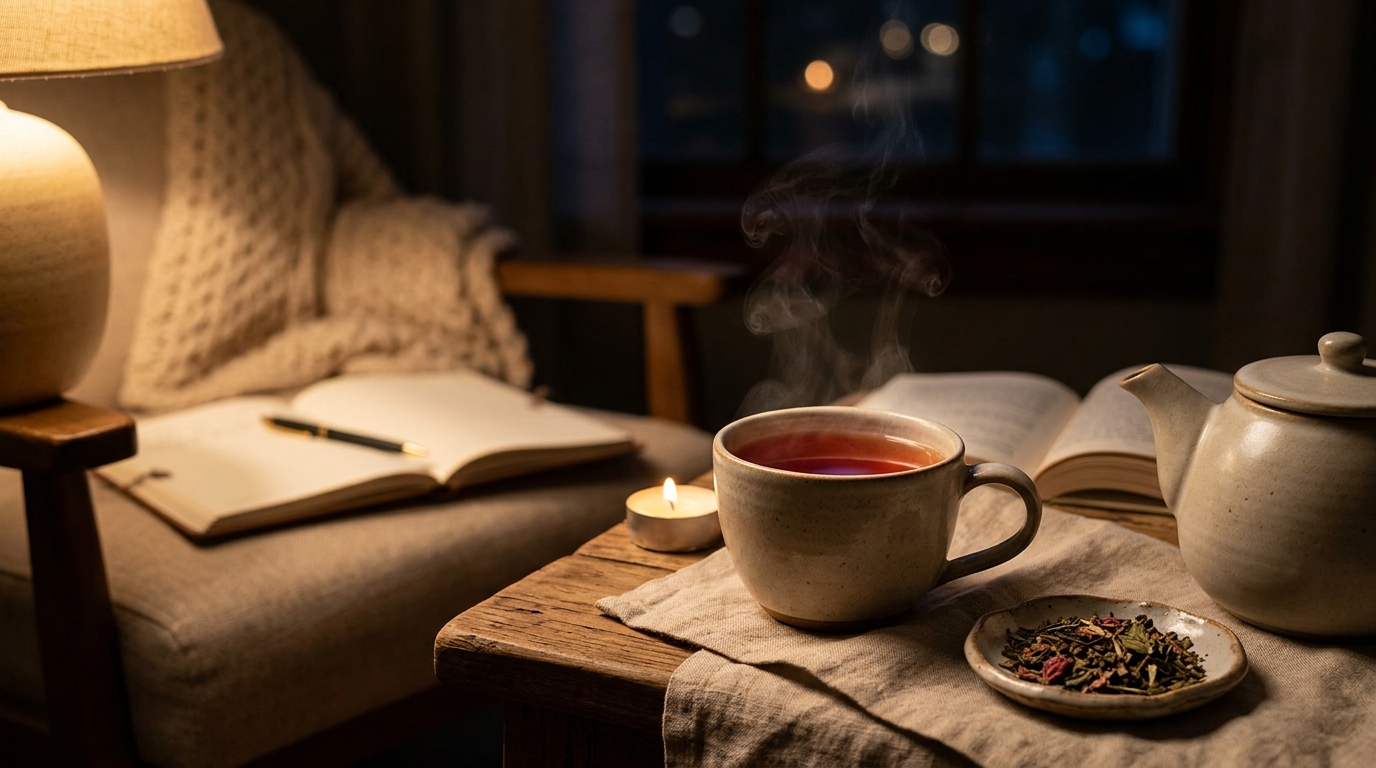
- Make it a ritual: dim the lights, warm your mug with hot water first, and give yourself ten quiet minutes to simply sip.