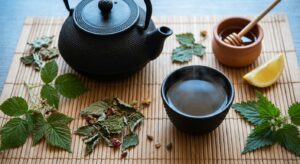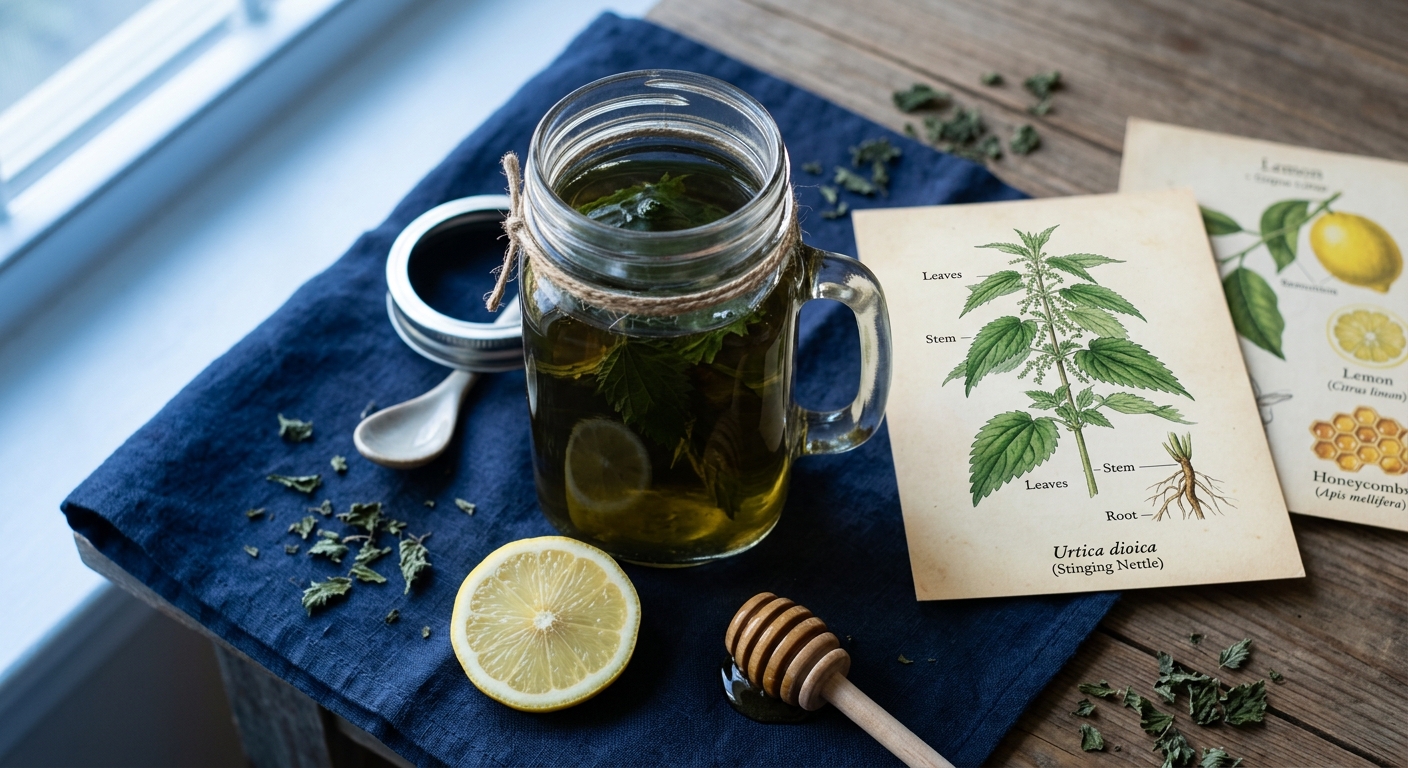
Long before iron supplements lined pharmacy shelves, women across Europe and the Americas turned to stinging nettle (Urtica dioica) as a foundational nourishing herb. Midwives in medieval Europe recommended it during pregnancy to build blood and ease fluid retention, while Indigenous herbalists in North America brewed it as a spring tonic to replenish the body after the lean winter months. Nettle’s reputation as a woman’s herb is deeply rooted in tradition, and modern nutritional analysis has done nothing but confirm what generations of healers already knew: this humble, sting-laden plant is extraordinarily rich in the minerals women need most.
What sets nettle apart from most medicinal herbs is that it functions as both a therapeutic remedy and a whole-food nourishment source. A single cup of strongly brewed nettle infusion delivers meaningful amounts of iron, calcium, magnesium, potassium, and vitamins A, C, and K. Herbalist Susun Weed famously championed the overnight nettle infusion as a daily tonic for women, arguing that a four-hour-plus steep extracts far more bioavailable minerals than a standard five-minute tea. That practice has become a cornerstone of the nourishing herbal traditions movement and remains one of the most practical, affordable ways to support women’s nutritional health.
Beyond raw nutrition, nettle contains a fascinating array of bioactive compounds that address concerns uniquely relevant to women: anti-inflammatory lectins that ease menstrual cramping, phytonutrients that support kidney and adrenal function, and compounds that gently modulate sex hormone-binding globulin, influencing how estrogen and testosterone are processed in the body. Whether you are managing heavy periods, navigating perimenopause, supporting a pregnancy, or simply looking for a deeply nourishing daily ritual, nettle tea offers something genuinely substantive in every cup.
2
cups
Ingredients
- 2 tbspdried nettle leaf
- 480 mlwater (95°C / 203°F)
- —fresh lemon slice (optional, enhances iron absorption)
- —raw honey to taste (optional)
How to Brew
Click on an item below to shop for the recommended items for this recipe on Amazon.
As an Amazon Associate, we earn from qualifying purchases.
- Measure 1 tablespoon of dried nettle leaf per 240 ml of water and place it into a tea infuser or directly into a heatproof mug or small teapot.
- Heat filtered water to just at or below a full boil, around 95 to 100°C (203 to 212°F). Nettle is a robust leaf that benefits from near-boiling water, which helps break down cell walls and extract minerals.
- Pour the hot water over the nettle, cover the mug or pot with a lid or small plate to trap the volatile compounds and steam, and steep for 10 to 15 minutes. Covering is important for preserving the vitamins.
- Remove the infuser or strain the tea through a fine mesh strainer into your cup. Press the spent leaves gently with a spoon to extract any remaining liquid.
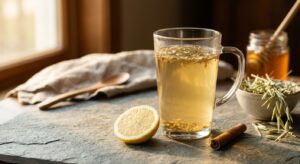
- Add a squeeze of fresh lemon juice before drinking. The vitamin C in lemon significantly increases absorption of the non-heme iron in nettle. Sweeten lightly with raw honey if desired, and drink while warm.
- Place 2 to 3 tablespoons of dried nettle leaf into a clean glass jar. Use slightly more herb than you would for hot brewing to compensate for the gentler extraction of cold water.
- Fill the jar with 480 ml of cold, filtered water at room temperature. Stir the nettle gently to ensure all leaves are submerged. Do not use hot water.
- Seal the jar loosely with a lid and leave it at room temperature for the first 1 to 2 hours, then transfer it to the refrigerator. Allow the nettle to steep for a total of 8 to 12 hours, or overnight.
- In the morning, strain the tea through a fine mesh strainer or cheesecloth into a glass, pressing the leaves to extract maximum liquid. Discard the spent herb.
- Drink the cold brew chilled or at room temperature. Add a squeeze of lemon for iron absorption, or a few mint leaves for a refreshing lift. This preparation keeps refrigerated for up to 24 hours.
- Place 28 to 30 grams (about 1 ounce) of dried nettle leaf into a 1-liter glass jar. This is a much larger quantity than a standard infusion and is intentional for maximizing mineral extraction.
- Bring filtered water to a near-boil at 95 to 100°C (203 to 212°F) and fill the jar completely to the top. Filling it to the brim minimizes the air space, which helps preserve vitamins during the long steep.
- Seal the jar tightly with a lid and leave it to steep at room temperature for a minimum of 4 hours and up to 8 hours. Many practitioners prepare this before bed and drink it the following morning.
- Strain the deeply colored, rich green tea through a fine mesh strainer or cheesecloth into a pitcher or large measuring cup. The resulting liquid will be much darker and more concentrated than a standard brew, with a deep forest-green color.
- Pour a serving over ice or gently reheat a portion on the stovetop. Add lemon juice to support iron absorption. The remaining infusion can be stored in the refrigerator for up to 48 hours and consumed in portions throughout the day. Aim for 2 to 4 cups daily as a nourishing tonic.
Health Benefits
Nettle leaf is one of the highest plant sources of non-heme iron, making it a practical dietary support for women who lose significant iron through monthly menstrual bleeding. Pairing nettle tea with vitamin C, such as a squeeze of lemon, converts the non-heme iron into a more absorbable form, increasing uptake substantially.
Compounds in nettle root and leaf, including beta-sitosterol and lignans, interact with sex hormone-binding globulin (SHBG), potentially influencing the ratio of free to bound estrogen and testosterone in the bloodstream. This mechanism is of interest for women managing conditions like PCOS, estrogen dominance, and perimenopausal hormonal fluctuations.
Nettle contains quercetin and other anti-inflammatory flavonoids that inhibit the production of prostaglandins, the hormone-like compounds responsible for uterine contractions and the pain associated with primary dysmenorrhea. Regular consumption as a daily tonic tea may help reduce the intensity of cramps over time.
With notable levels of calcium, magnesium, and vitamin K, nettle tea contributes to the nutrient matrix required for bone density maintenance. This is especially relevant for perimenopausal and post-menopausal women, for whom bone loss accelerates due to declining estrogen levels.
Nettle is a well-documented diuretic herb, traditionally used to reduce the water retention and bloating that many women experience premenstrually. Its diuretic action is gentle and mineral-conserving, unlike pharmaceutical diuretics, and it simultaneously supports kidney filtration without depleting potassium.
🧪 Key Bioactive Compounds
The Science Behind Stinging Nettle
Nettle’s reputation as a nourishing herb for women is grounded in genuine nutritional density. Lab analyses of dried Urtica dioica leaf consistently show high concentrations of iron, calcium, magnesium, potassium, and vitamins A, C, and K, with iron values ranging from 1.6 to over 3 mg per gram of dried herb depending on growing conditions and soil mineral content. Importantly, the vitamin C naturally present in fresh nettle (though reduced in dried leaf) helps catalyze the conversion of non-heme iron into the more bioavailable ferrous form. This is why the traditional practice of squeezing lemon into nettle tea is not just about flavor; it is a genuinely functional preparation technique that measurably increases iron uptake.
On the hormonal front, several constituents in nettle interact with the endocrine system through distinct mechanisms. The phytosterol beta-sitosterol has been shown in vitro to bind to sex hormone-binding globulin (SHBG), the protein that carries estrogen and testosterone through the bloodstream in their inactive, bound form. By influencing SHBG binding, nettle may help modulate the ratio of free to bound hormones, a mechanism relevant to conditions of estrogen dominance and androgen excess. Separately, nettle’s lectin UDA (Urtica dioica agglutinin) has demonstrated immunomodulatory activity in laboratory studies, inhibiting pro-inflammatory cytokines including TNF-alpha and IL-1 beta, which are implicated in both autoimmune conditions and the inflammatory component of menstrual pain.
The diuretic action of nettle is also well characterized and stems from a combination of flavonoids and potassium that increase glomerular filtration rate and urine output without causing the potassium loss associated with synthetic diuretics. A double-blind, randomized clinical trial published in Phytotherapy Research confirmed nettle’s efficacy as a diuretic in human subjects, validating centuries of traditional use for premenstrual bloating and water retention. What makes this particularly relevant for women is that the diuretic action is accompanied by, rather than opposed to, mineral replenishment, making nettle a genuinely restorative choice rather than a depleting one.
Brewing Tips
- Always cover your mug or pot while steeping nettle to trap steam and preserve heat-sensitive vitamins, particularly vitamin C, which plays a direct role in iron absorption.
- Use the strongest preparation you can enjoy daily. A quick 5-minute steep gives you a pleasant herbal tea, but a 10-minute hot brew or an overnight cold infusion gives you a genuinely mineral-rich tonic. The color of your brew is a reliable guide: a pale greenish cup has much less to offer than a deep forest-green one.
- Add a small squeeze of fresh lemon juice to every cup, not just for flavor but for the vitamin C, which converts nettle’s non-heme iron into the absorbable ferrous form and can increase iron uptake by as much as two to three times.
- Batch-brew a liter of cold-brewed nettle infusion overnight and drink it in portions throughout the following day. This makes it easy to reach the two-to-four cup daily intake that herbal practitioners recommend for nutritional and hormonal support.
- If the earthy, spinach-like flavor is too strong on its own, blend dried nettle with milder herbs like oat straw, lemon balm, or spearmint in a one-to-one ratio. These pairings soften the flavor without diminishing the mineral content.