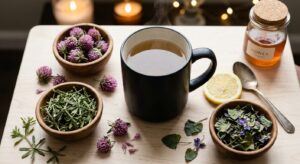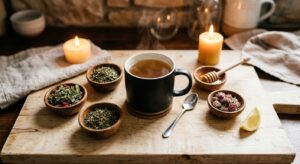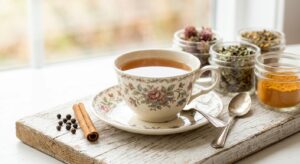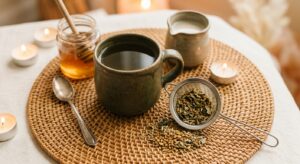
Long before over-the-counter pain relievers existed, women across cultures turned to the plant world for relief during menstruation. From European herbalists prescribing cramp bark tinctures to Ayurvedic practitioners brewing ginger and turmeric decoctions, the tradition of using herbal tea for period pain is ancient, widespread, and remarkably consistent. These plants were not chosen randomly – they were selected over generations of careful observation, passed down through healers, midwives, and grandmothers who understood the rhythms of the female body.
This period pain blend centers on three powerhouse herbs: cramp bark (Viburnum opulus), ginger root (Zingiber officinale), and chamomile (Matricaria chamomilla). Cramp bark is exactly what its name promises – a botanical antispasmodic that relaxes smooth muscle tissue, including the uterine walls that contract so forcefully during menstruation. Ginger brings potent anti-inflammatory action, reducing the prostaglandins that drive the pain response. Chamomile rounds out the blend with its calming, mildly sedative properties that ease both physical tension and the emotional heaviness that often accompanies a difficult cycle.
What makes this blend especially compelling is that modern science is beginning to confirm what traditional herbalists always knew. Clinical trials have demonstrated ginger’s effectiveness against dysmenorrhea, cramp bark’s antispasmodic mechanisms have been identified at the biochemical level, and chamomile’s flavonoids have been shown to reduce muscle spasms and inflammation. Brewed as a tea, these herbs work synergistically, and the warmth of the cup itself adds therapeutic value by increasing pelvic circulation and relaxing abdominal muscles. This is herbal medicine at its most practical and most delicious.
2
cups
Ingredients
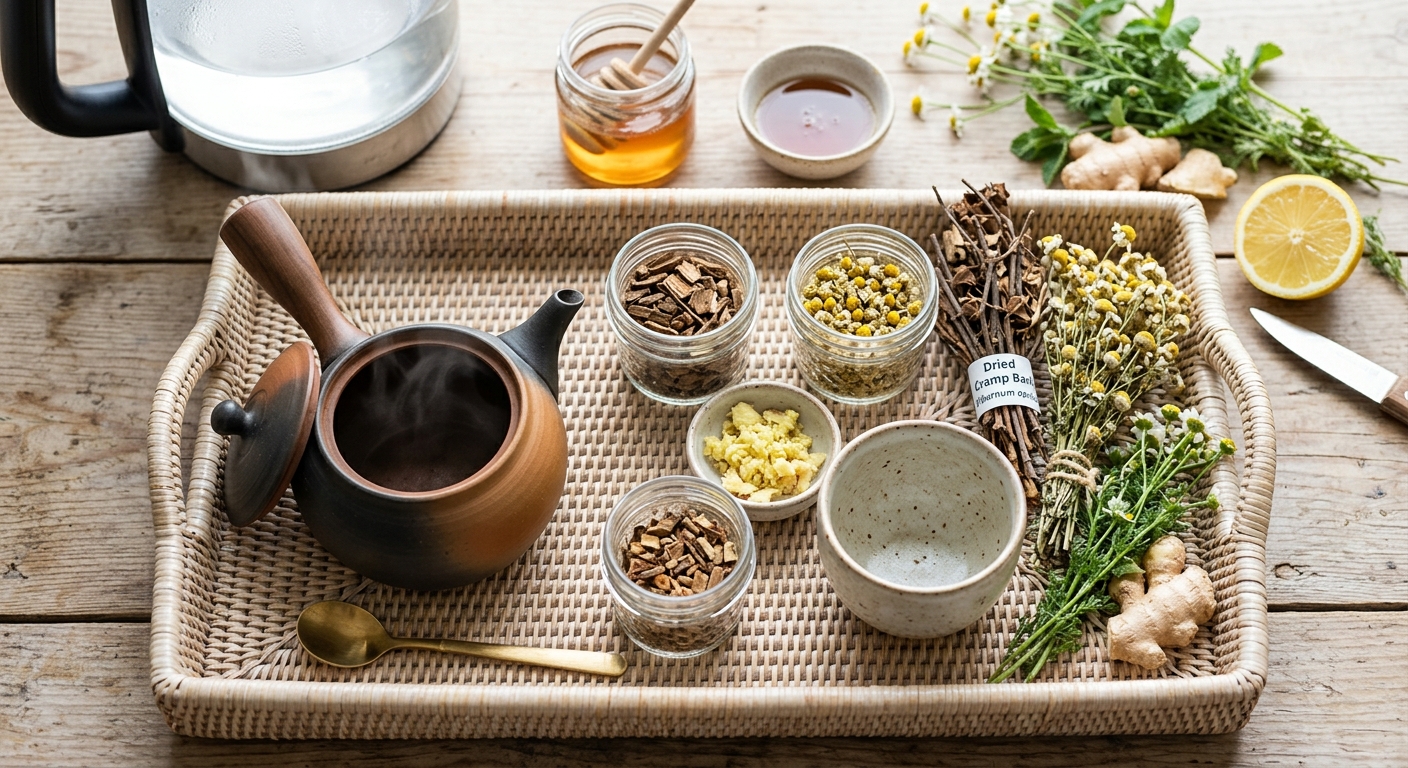
- 2 tspdried cramp bark (Viburnum opulus)
- 1 tspfresh grated ginger root (or 0.5 tsp dried)
- 1 tspdried chamomile flowers
- 500 mlwater (for hot brew)
- —raw honey or maple syrup to taste (optional)
- —a slice of lemon (optional)
How to Brew
Click on an item below to shop for the recommended items for this recipe on Amazon.
As an Amazon Associate, we earn from qualifying purchases.
- Add the dried cramp bark and grated ginger to a small saucepan with 500ml of cold water. Bring to a gentle boil over medium heat.
- Reduce heat to a low simmer and cover the saucepan. Simmer the cramp bark and ginger together for 12 to 15 minutes. The liquid will deepen to a rich amber color.
- Remove from heat and allow the decoction to cool for 2 minutes until it drops below 90°C (194°F). This protects the chamomile’s volatile oils.
- Add the dried chamomile flowers directly to the saucepan. Cover and steep for a further 5 minutes.
- Strain through a fine mesh strainer into your mug, pressing the herbs gently to extract the last of their goodness.
- Sweeten with raw honey or maple syrup if desired, and sip slowly while warm. Begin drinking 1 to 2 days before your period starts for best results.
- Lightly crush the dried cramp bark pieces using a mortar and pestle or the back of a spoon to increase surface area and improve cold extraction.
- Combine the crushed cramp bark, grated or sliced ginger, and chamomile flowers in a clean glass jar. Pour 500ml of cold filtered water over the herbs.
- Stir gently to ensure all herbs are fully submerged, then loosely cover the jar with a lid or cloth. Leave at room temperature for 1 hour to allow an initial bloom.
- Transfer the jar to the refrigerator and cold brew for 10 to 12 hours, or overnight. The slow extraction draws out the antispasmodic and anti-inflammatory compounds with less astringency than hot methods.
- Strain through a fine mesh strainer or cheesecloth into a glass or bottle. Discard the spent herbs.
- Warm the cold brew gently on the stovetop or in a microwave before drinking during your period, as warmth enhances pelvic circulation. Do not boil. Sweetener is optional. Refrigerated cold brew keeps for up to 48 hours.
- Combine 4 tsp dried cramp bark, 2 tsp grated ginger, and 2 tsp dried chamomile flowers in a medium saucepan with 500ml of cold water. This double-strength ratio will be diluted when serving.
- Bring to a gentle boil, then reduce to a low simmer. Simmer uncovered for 20 minutes, allowing the liquid to reduce slightly and deepen in color and potency.
- Remove from heat, cover, and allow the chamomile to steep in the residual heat for 8 to 10 minutes.
- Strain through a fine mesh strainer lined with cheesecloth into a clean glass jar, pressing the herbs firmly to extract every drop of concentrate.
- Allow the concentrate to cool completely before sealing the jar. Store in the refrigerator for up to 5 days.
- To serve, dilute approximately 60 to 80ml of concentrate with 160ml of hot water (around 90°C / 194°F). Adjust the ratio to your preference. Add honey, lemon, or a cinnamon stick for extra comfort and flavor.
Health Benefits
Cramp bark contains scopoletin and viopudial, two compounds that directly relax smooth muscle contractions in the uterus. Traditional herbalists have relied on this plant for dysmenorrhea for centuries, and pharmacological studies confirm it acts on calcium channel mechanisms that drive uterine spasms.
Ginger’s active compounds, particularly 6-gingerol and shogaol, inhibit the COX and LOX enzyme pathways responsible for prostaglandin production. High prostaglandin levels are the primary driver of primary dysmenorrhea, and multiple randomized controlled trials have found ginger to be as effective as ibuprofen for reducing menstrual pain severity.
Chamomile’s apigenin content provides mild anxiolytic effects by modulating GABA receptors, which are the same receptors targeted by benzodiazepine medications. This makes chamomile valuable during the emotional fluctuations of menstruation without causing dependency or grogginess.
Many women experience nausea, bloating, and diarrhea during their period due to elevated prostaglandins affecting the gastrointestinal tract. Both ginger and chamomile are well-established digestive herbs that reduce nausea, calm intestinal spasms, and ease bloating, addressing these common menstrual side effects directly.
The warmth of a hot herbal tea, combined with ginger’s vasodilatory properties, promotes blood flow to the pelvic region. Improved circulation helps reduce the ischemia (restricted blood flow) in uterine tissue that amplifies cramping pain, providing both immediate and sustained comfort.
🧪 Key Bioactive Compounds
The Science Behind Cramp Bark
The scientific case for this period pain blend begins with prostaglandins, hormone-like lipid compounds synthesized from arachidonic acid in the uterine lining. In the days leading up to menstruation, the endometrium produces elevated levels of prostaglandins, particularly PGF2-alpha and PGE2, which trigger forceful uterine muscle contractions to shed the lining. These contractions temporarily restrict blood flow to the uterine muscle, causing ischemia and the characteristic cramping pain of dysmenorrhea. Nonsteroidal anti-inflammatory drugs (NSAIDs) work by blocking the COX enzymes that produce these prostaglandins. Ginger works through a remarkably similar mechanism: its phenolic compounds, including 6-gingerol and shogaol, inhibit both COX-1, COX-2, and additionally the LOX pathway, giving it a broader anti-inflammatory profile than many pharmaceutical options. A 2015 randomized controlled trial published in the Journal of Alternative and Complementary Medicine found that 250mg of ginger powder taken four times daily was statistically equivalent to 250mg of mefenamic acid (a common NSAID) for reducing menstrual pain.
Cramp bark’s mechanism is distinct and complementary. Its coumarin compound scopoletin and iridoid viopudial act directly on smooth muscle cells by modulating calcium ion channels. Uterine contractions, like all muscle contractions, depend on calcium influx into muscle cells. By interfering with this channel activity, cramp bark reduces the amplitude and frequency of uterine spasms without eliminating normal muscle function. This is the same general mechanism exploited by pharmaceutical calcium channel blockers used in preterm labor management, which explains why cramp bark has such a long and respected history as a uterine antispasmodic in Western herbalism, Eclectic medicine, and North American indigenous traditions.
Chamomile’s contribution to this blend operates at a neurological level as much as a peripheral one. Its primary flavonoid apigenin has been shown in receptor-binding studies to act as a partial agonist at benzodiazepine binding sites on GABA-A receptors in the central nervous system, producing anxiolytic and mild sedative effects without the risks of pharmaceutical sedatives. Additionally, chamomile’s bisabolol and chamazulene (the compound responsible for its characteristic blue color in distilled essential oil) are potent anti-inflammatories and antispasmodics that act locally in smooth muscle tissue. Together, these compounds make chamomile uniquely suited to period pain: it addresses both the physical spasm and the heightened emotional sensitivity that many women experience during menstruation, making the entire experience of menstruation more manageable and less distressing.
Brewing Tips
- Start drinking this tea one to two days before your period is due rather than waiting for cramps to begin. Reducing prostaglandin activity preventively is far more effective than trying to interrupt established cramping.
- Use fresh ginger root rather than dried when possible. Fresh ginger contains higher levels of 6-gingerol, while dried ginger converts more of it to the equally potent shogaol. Both forms are effective, but fresh ginger produces a more vibrant, pungent flavor and a slightly broader anti-inflammatory profile.
- Store any leftover concentrate or cold brew in a sealed glass jar in the refrigerator for up to 48 hours (cold brew) or 5 days (concentrate). Reheat gently before drinking, as warmth and improved pelvic circulation are part of the therapeutic effect of this particular blend.