Tribulus terrestris, commonly known as puncture vine, goat’s head, or bindii, has been a cornerstone of women’s wellness traditions across South Asia, Eastern Europe, and the Mediterranean for more than two thousand years. In Ayurvedic medicine, it was classified as a rasayana, a rejuvenating herb believed to restore vitality, support the reproductive system, and promote overall longevity. Bulgarian and Eastern European folk medicine traditions relied heavily on tribulus preparations to ease menopausal discomfort, regulate menstrual cycles, and restore energy in women experiencing hormonal fatigue.
What makes tribulus genuinely fascinating is that it works along a very different pathway than most adaptogens. Rather than directly supplying hormones, the plant’s active compounds, particularly steroidal saponins called protodioscin and dioscin, are thought to encourage the pituitary gland to optimize its own signaling, nudging levels of luteinizing hormone and follicle-stimulating hormone toward better balance. This mechanism places tribulus in a unique category: not a hormone replacement, but a gentle hormonal conversation starter. For women navigating the irregular terrain of perimenopause, polycystic ovary syndrome, or low libido, that distinction matters enormously.
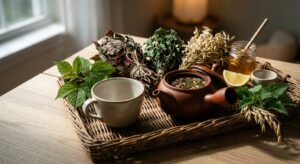
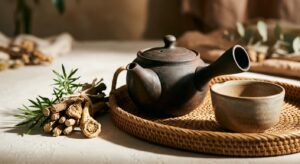
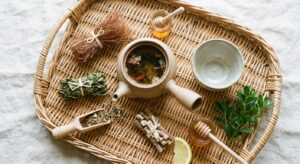
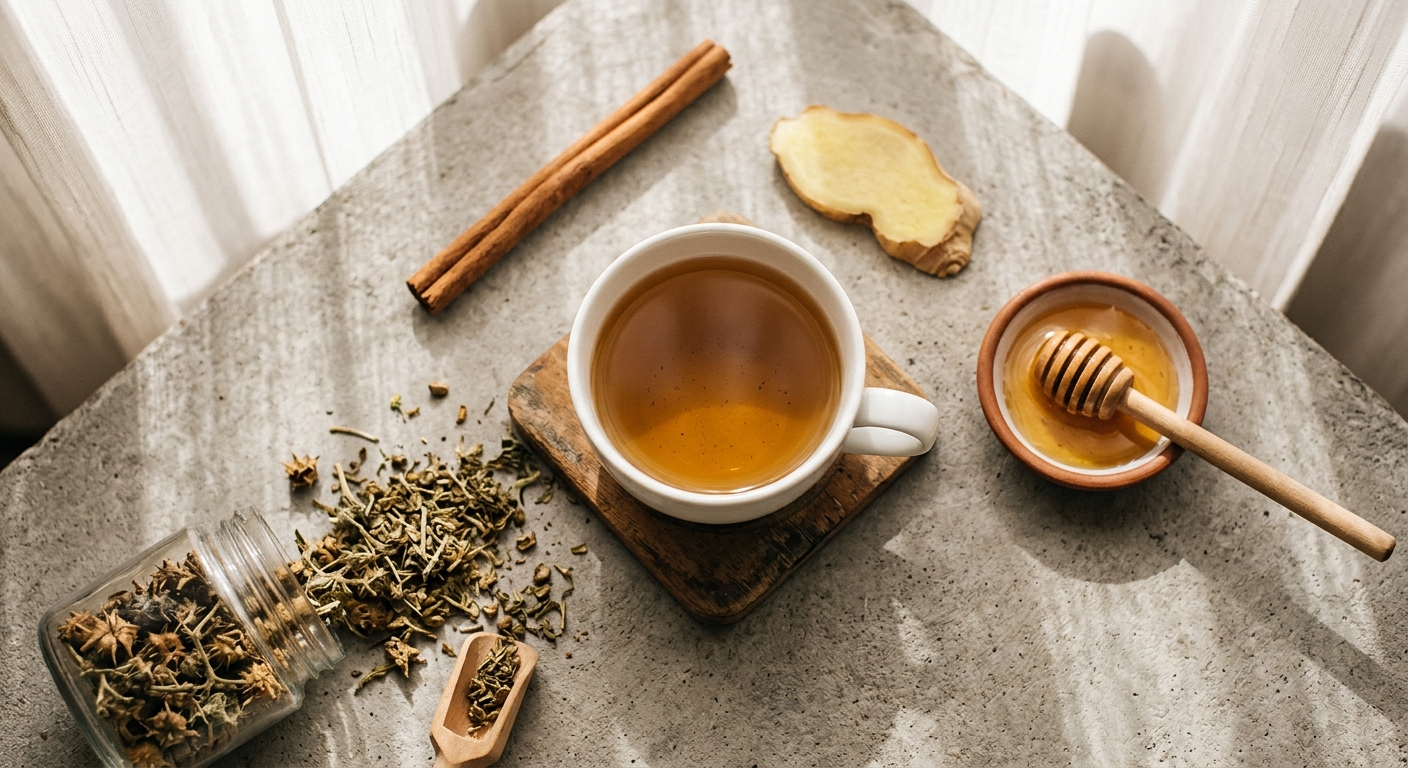
The tea itself is brewed most commonly from the dried aerial parts or the fruit of the plant, though traditional decoctions also use the root and are considered the most potent preparation. The flavor is mild and slightly earthy, with a faintly bitter edge that blends well with warming spices like cinnamon or ginger. Whether you are approaching tribulus as a daily tonic, a cycle-supporting ritual, or a natural complement to your perimenopausal wellness routine, brewing it as a tea is one of the gentlest and most accessible ways to invite this resilient plant into your life.
2
cups
Ingredients
- 2 tspdried tribulus fruit or aerial parts
- 480 mlwater (95°C / 203°F)
- —raw honey or coconut sugar to taste (optional)
- —cinnamon stick for warming depth (optional)
- —fresh ginger slice to balance bitterness (optional)
How to Brew
Click on an item below to shop for the recommended items for this recipe on Amazon.
As an Amazon Associate, we earn from qualifying purchases.
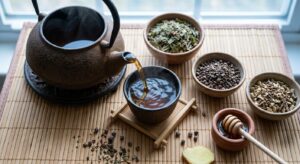
- Heat filtered water to 95°C (203°F). If you do not have a temperature-controlled kettle, bring water to a full boil and let it rest for 60 to 90 seconds before pouring.
- Add 1 teaspoon of dried tribulus fruit or aerial parts per 240 ml of water to your tea infuser or teapot. If using a cinnamon stick or ginger slice, add these now.
- Pour the hot water over the herb, ensuring all plant material is fully submerged. Cover the cup or pot with a lid or small plate to trap the volatile aromatic compounds and hold heat.
- Steep for 10 to 15 minutes. Taste at the 10-minute mark. If you prefer a stronger, more saponin-rich cup, allow the full 15 minutes.
- Remove the infuser or strain the tea through a fine-mesh strainer into your mug. Sweeten with raw honey or coconut sugar if desired, and sip slowly while warm.
- Measure 2 teaspoons of dried tribulus fruit or aerial parts per 480 ml of cold, filtered water. There is no need to heat anything, which is what makes this method genuinely different in both process and flavor profile.
- Combine the herb and cold water in a glass jar with a tight-fitting lid. Stir briefly to ensure the plant material is fully submerged and saturated.
- Seal the jar and leave it at room temperature for the first hour to allow initial hydration of the dried plant material, then transfer it to the refrigerator.
- Allow the tea to cold-steep for 8 to 12 hours, or overnight. The slow, cool extraction draws out saponins and minerals gradually, producing a milder, less bitter brew than hot methods.
- Strain through a fine-mesh strainer or cheesecloth into a glass or pitcher. Discard the spent herb. Serve over ice, optionally with a squeeze of lemon or a few fresh mint leaves for brightness. Store any remainder in the refrigerator and consume within 24 hours.
- Measure 1 tablespoon of dried tribulus fruit or root pieces per 480 ml of cold, filtered water. Place both together in a small saucepan. Starting the herb in cold water before heating allows a fuller extraction of the dense plant material.
- Bring the water and herb to a full rolling boil over medium-high heat, stirring once or twice. As soon as a full boil is reached, reduce the heat to a gentle simmer.
- Allow the liquid to simmer uncovered for 20 to 25 minutes, or until the volume has reduced by roughly one-third, concentrating the saponins, alkaloids, and minerals. Keep the simmer low and steady, not a vigorous boil.
- Remove from heat and allow the decoction to cool slightly for 5 minutes. Strain through a fine-mesh strainer or muslin cloth into a mug or glass measuring cup, pressing the spent herb gently to extract remaining liquid.
- Sip the decoction plain or with a small amount of raw honey. Because this is a concentrated preparation, the recommended serving is 120 to 180 ml per session, not a full large mug. Any remaining decoction can be stored in the refrigerator for up to 48 hours and reheated gently.
Health Benefits
The steroidal saponins in tribulus, particularly protodioscin, are believed to stimulate the pituitary gland to regulate the release of luteinizing hormone and follicle-stimulating hormone. A 2016 clinical trial published in the Journal of Diet Supplements found that tribulus supplementation improved hormonal parameters and sexual function in premenopausal women with low libido.
Multiple clinical studies, including a randomized double-blind trial in Phytomedicine, have shown statistically significant improvements in desire, arousal, and overall sexual satisfaction in women taking tribulus extract compared to placebo. The mechanism is thought to involve both hormonal modulation and improved genital blood flow.
Tribulus has been shown in several Bulgarian and Iranian clinical trials to reduce the frequency and severity of hot flashes, mood fluctuations, and sleep disturbances associated with perimenopause and menopause, likely through its phytoestrogenic-adjacent hormonal signaling activity rather than direct estrogen supplementation.
Traditional Ayurvedic practitioners have long prescribed tribulus for irregular cycles, and contemporary herbalists note its use in PCOS-related cycle irregularity. Its action on LH and FSH signaling may encourage more consistent ovulatory cycles in women with hormonal dysregulation.
The flavonoids kaempferol and rutin, along with the saponin fraction of tribulus, contribute meaningful antioxidant activity that may reduce oxidative stress in reproductive tissues. This anti-inflammatory action may also help reduce the prostaglandin-driven inflammation underlying painful menstruation.
🧪 Key Bioactive Compounds
The Science Behind Tribulus
The pharmacological activity of Tribulus terrestris centers on its exceptionally rich content of steroidal saponins, a class of bioactive glycosides that share structural similarities with steroid hormones in the human body. The most studied of these is protodioscin, which is found in particularly high concentrations in the fruit and root of plants grown in Eastern European and South Asian climates. Research suggests that protodioscin does not act as an exogenous hormone itself, but instead appears to stimulate the hypothalamic-pituitary-gonadal axis, encouraging the pituitary to produce luteinizing hormone more efficiently. In women, LH plays a central role in triggering ovulation and signaling the corpus luteum to produce progesterone, which makes this mechanism directly relevant to cycle regularity and reproductive hormone balance.
A series of randomized controlled trials conducted primarily in Bulgaria, Iran, and India between 2000 and 2020 has examined tribulus’s effects on female sexual function and menopausal symptoms with encouraging results. A frequently cited 2017 study in the journal Phytomedicine enrolled 60 women aged 18 to 46 with hypoactive sexual desire disorder and found that the group receiving tribulus extract reported significantly higher scores for desire, arousal, lubrication, and satisfaction compared to the placebo group after 90 days. Researchers noted measurable changes in free testosterone and DHEA-S levels in the treatment group, supporting the hypothesis that saponins are modulating upstream hormonal signaling rather than acting on peripheral tissue alone.
Beyond reproductive hormones, tribulus carries a meaningful antioxidant payload through its flavonoid constituents, particularly kaempferol, quercetin, and rutin. These compounds have demonstrated the ability to scavenge reactive oxygen species in ovarian and uterine tissue models, which is relevant because oxidative stress is increasingly recognized as a contributor to conditions like PCOS, endometriosis, and premature ovarian insufficiency. The rutin content also contributes to capillary strengthening and anti-inflammatory prostaglandin modulation, offering a secondary pathway through which tribulus tea may reduce menstrual cramps and pelvic inflammation. Taken together, the science positions tribulus not as a single-mechanism herb but as a multi-layered botanical ally for women’s hormonal health.
Brewing Tips
- Source your tribulus from a reputable supplier that provides standardized saponin content, ideally 40 to 45% protodioscin by dry weight, as saponin concentration varies significantly by plant origin and growing region.
- Drink tribulus tea consistently for at least 30 to 60 days before evaluating results for hormonal or libido-related goals, as the herb’s adaptogenic action is gradual and cumulative rather than immediate.
- If the earthy bitterness of the plain tea is too pronounced, brew it together with licorice root in a 3-to-1 tribulus-to-licorice ratio, as licorice naturally softens astringent herbs and adds its own complementary support for adrenal function.