Red clover (Trifolium pratense) has dotted meadows and roadsides across Europe, Central Asia, and North America for centuries, its cheerful magenta blooms beloved by bees and herbalists alike. In traditional European folk medicine, the blossoms were gathered in summer and used in teas, poultices, and syrups to address skin conditions, respiratory complaints, and what older herbalists called “women’s complaints” relating to the menstrual cycle and the change of life. Native American healers, including the Cherokee and Ojibwe, also used related clover species for coughs and fevers, weaving the plant deeply into the fabric of plant medicine across many cultures.
What makes red clover truly remarkable is its exceptionally high concentration of isoflavones, a class of phytoestrogens that includes formononetin, biochanin A, daidzein, and genistein. These compounds interact with estrogen receptors in the body, producing mild estrogenic effects that can help smooth the hormonal fluctuations of perimenopause and menopause. Unlike synthetic hormone therapies, red clover’s phytoestrogens are selective and gentle, and the plant has attracted considerable scientific attention over the past three decades for its potential to reduce hot flushes, support cardiovascular health, and maintain bone density in postmenopausal women.
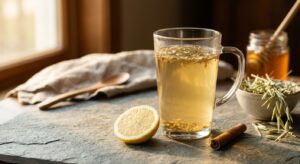
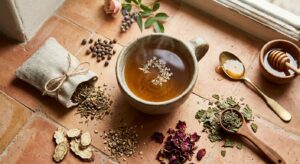
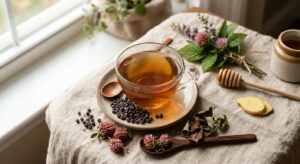
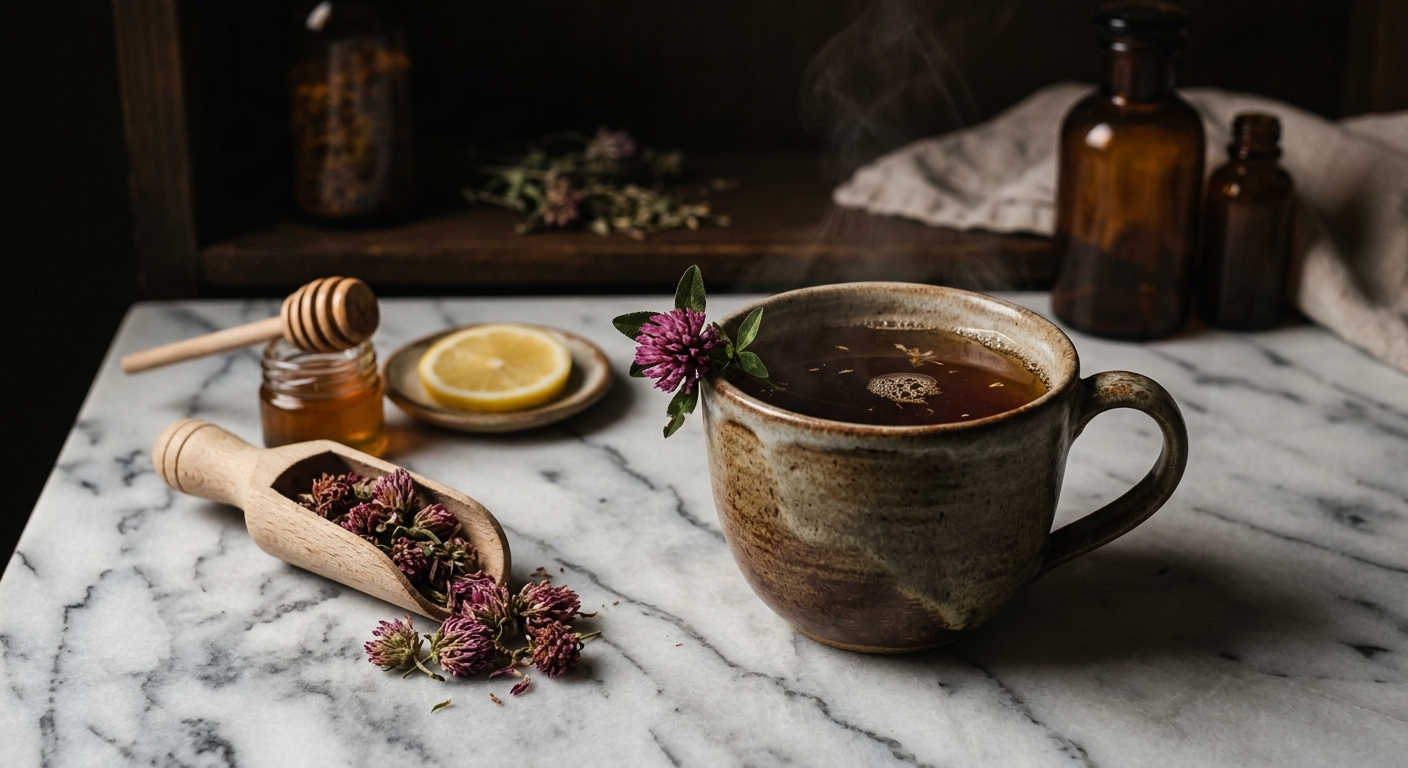
As a tea, red clover is a pleasure to drink on its own merits. The dried blossoms yield a pale rosy-gold cup with a distinctly floral, mildly sweet aroma reminiscent of fresh hay and honey. It is light-bodied and easy on the palate, making it a tea you can genuinely look forward to as a daily ritual rather than a medicinal chore. Sipped hot on a quiet morning or cold-brewed overnight for a refreshing afternoon drink, red clover tea invites a slow, attentive relationship with the plant and with your own body.
2
cups
Ingredients
- 2 tbspdried red clover blossoms
- 480 mlwater (90°C / 194°F)
- —raw honey or a slice of lemon to taste (optional)
How to Brew
Click on an item below to shop for the recommended items for this recipe on Amazon.
As an Amazon Associate, we earn from qualifying purchases.
- Measure 2 tablespoons of dried red clover blossoms per 480 ml of water. If using fresh blossoms, double the quantity to 4 tablespoons.
- Heat filtered water to 90 to 95°C (194 to 203°F). Avoid a full rolling boil, as very high heat can degrade some of the delicate isoflavone compounds and dull the floral aroma.
- Place the blossoms in a roomy tea infuser or a tea pot with an internal strainer. Pour the hot water directly over the blossoms to encourage full immersion and even extraction.
- Cover the vessel with a lid or small saucer to trap the volatile aromatic compounds and maintain temperature throughout steeping.
- Steep for 10 to 15 minutes. Taste at 10 minutes for a lighter, more floral cup, or continue to 15 minutes for a fuller-bodied infusion with a deeper golden color and more pronounced isoflavone content.
- Strain into a warm mug, sweeten lightly with raw honey if desired, and sip slowly. Drink one to two cups daily for consistent hormonal support.
- Measure 3 tablespoons of dried red clover blossoms per 480 ml of cold filtered water. The higher ratio compensates for the slower cold-water extraction.
- Combine the blossoms and cold water in a glass jar. Stir gently to ensure all the blossoms are submerged and saturated.
- Leave the jar uncovered at room temperature for 30 to 60 minutes to allow the initial extraction to begin, then seal with a lid and transfer to the refrigerator.
- Cold steep for a total of 8 to 12 hours, or overnight. The slow extraction draws out the natural sweetness and floral character of the blossoms without releasing bitter tannins.
- Strain through a fine mesh strainer into a pitcher or bottle, pressing the blossoms gently to extract the remaining liquid.
- Serve over ice in a tall glass. Garnish with a fresh sprig of mint or a thin slice of lemon for a refreshing afternoon drink. Refrigerate leftovers and consume within 48 hours.
- Measure 1 full cup (approximately 28 g) of dried red clover blossoms and place them into a 1-liter glass jar with a tight-fitting lid. This higher herb-to-water ratio is essential to the therapeutic infusion method.
- Bring 1 liter of filtered water to just off the boil, around 95 to 100°C (203 to 212°F), and pour it immediately over the dried blossoms, filling the jar to the top.
- Stir briefly to ensure the blossoms are fully saturated, then seal the jar tightly with the lid. The sealed jar traps all volatile aromatic and medicinal compounds that would otherwise escape as steam.
- Allow the infusion to steep at room temperature for a minimum of 30 minutes and up to 60 minutes. For the highest isoflavone and mineral content, some practitioners steep for up to 4 hours, though the flavor becomes more intensely earthy and grassy beyond 60 minutes.
- Strain through a fine mesh strainer or cheesecloth into a pitcher, pressing firmly on the spent blossoms to extract every drop of the nutrient-rich liquid.
- Drink one to two cups of the strained infusion per day as a hormonal tonic. The remaining infusion can be stored in the refrigerator for up to 24 hours. Add honey or a squeeze of lemon to balance the more robust flavor.
Health Benefits
Multiple randomized controlled trials, including studies published in Gynecological Endocrinology, have found that red clover isoflavone extracts (40 to 160 mg daily) significantly reduced the frequency and severity of hot flushes compared to placebo, with the greatest benefit seen in women experiencing frequent flushes.
Genistein and other isoflavones in red clover have been shown to inhibit osteoclast activity, the cellular process responsible for bone breakdown. A 2007 study in the journal Osteoporosis International found that red clover isoflavone supplementation significantly reduced bone loss in perimenopausal women over a 12-month period.
Red clover isoflavones have been shown to improve arterial elasticity and modestly reduce LDL cholesterol levels, both of which are cardiovascular risk factors that increase after menopause. The formononetin content, in particular, appears to support healthy endothelial function.
The combined presence of quercetin, biochanin A, and other flavonoids gives red clover significant antioxidant capacity, helping to neutralize free radicals and reduce systemic inflammation, which underlies a wide range of chronic conditions.
Some research suggests that phytoestrogens can stimulate collagen synthesis and improve skin thickness and elasticity in postmenopausal women, which may help counteract the skin thinning and dryness associated with declining estrogen levels.
🧪 Key Bioactive Compounds
The Science Behind Red Clover
The health story of red clover centers on its isoflavones, a group of polyphenolic compounds classified as phytoestrogens because their molecular structure is similar enough to human estradiol that they can bind to estrogen receptors (ERs) in the body. Red clover contains four primary isoflavones: formononetin, biochanin A, daidzein, and genistein. Formononetin and biochanin A are the most abundant in the plant but are largely prodrugs; intestinal bacteria convert them into the more bioavailable forms daidzein and genistein, respectively, following ingestion. This means the actual phytoestrogenic effect depends partly on the composition of an individual’s gut microbiome, which helps explain why clinical responses to red clover vary between individuals.
The estrogenic activity of red clover isoflavones is notably selective. They bind preferentially to estrogen receptor beta (ER-beta) over estrogen receptor alpha (ER-alpha), a distinction that carries important physiological implications. ER-beta activation is associated with protective and modulatory effects in tissues such as bone, blood vessels, and the nervous system, whereas ER-alpha activation more strongly drives proliferative responses in tissues like the uterus and breast. This selectivity is one reason researchers believe red clover may support bone density and cardiovascular health without the same proliferative risks associated with conventional estrogen therapy, though this remains an area of active investigation and should not be interpreted as a blanket safety claim for hormone-sensitive conditions.
Beyond their estrogenic activity, the isoflavones in red clover, particularly genistein and biochanin A, have demonstrated direct inhibitory effects on enzymes involved in cell proliferation, including tyrosine kinase and aromatase. Quercetin, present alongside the isoflavones, contributes meaningful antioxidant activity by scavenging reactive oxygen species and downregulating pro-inflammatory pathways including NF-kB signaling. The cumulative effect of these compounds in a daily cup of red clover tea is modest compared to standardized extracts used in clinical trials, but consistent long-term consumption of the whole plant infusion is considered by many herbalists and integrative practitioners to provide a gentler, more sustainable form of phytoestrogenic support for women across the menopausal transition.
Brewing Tips
- Source red clover blossoms that are organically grown or wildcrafted from unsprayed land, as the flowers are highly attractive to bees and are often found in areas that receive agricultural herbicide treatment.
- Store dried red clover blossoms in an airtight glass jar away from light and heat. Properly stored, they retain potency for up to 12 months. Blossoms that have faded to a dull brown or lost their sweet aroma should be replaced.
- For the most consistent isoflavone content, always cover your tea while it steeps. Many of the beneficial volatile compounds will escape with the steam from an uncovered cup, reducing both the aroma and the medicinal value of the brew.