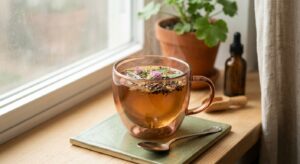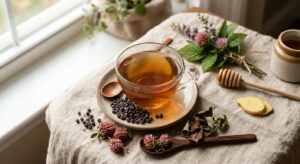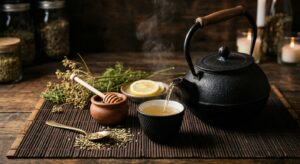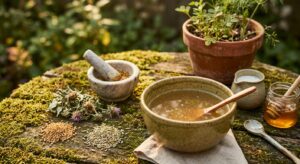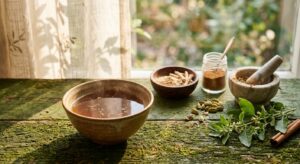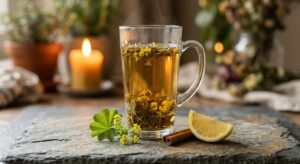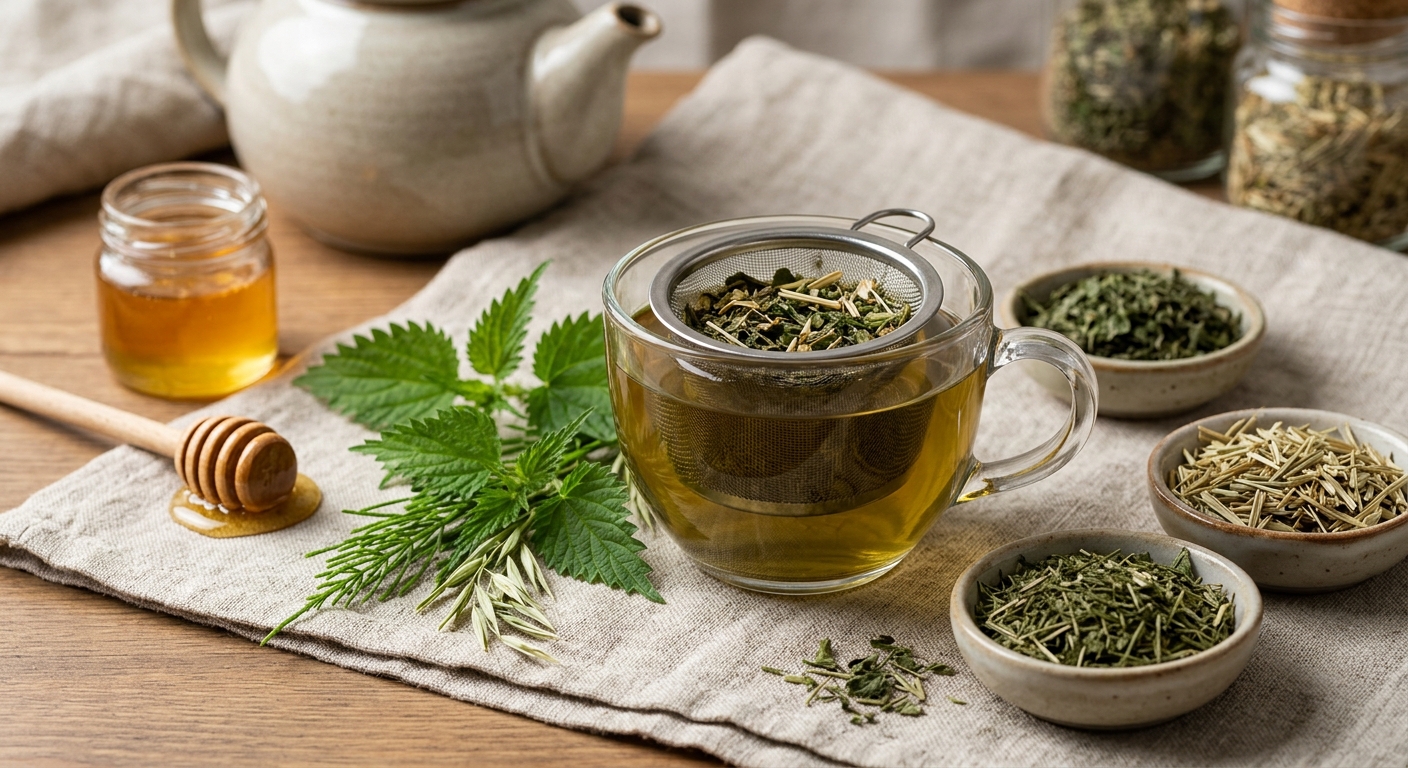
Long before calcium supplements lined pharmacy shelves, women turned to the earth for bone-building nourishment. Stinging nettle (Urtica dioica), oatstraw (Avena sativa), and horsetail (Equisetum arvense) have been used for centuries across European and Native American herbal traditions as mineral-dense tonics, particularly valued during pregnancy, lactation, and the menopausal transition when bone density becomes a pressing concern. These herbs were brewed in long, slow infusions to coax every available mineral from the plant material, a practice that modern herbalists still consider the gold standard for nourishing the skeletal system.
What makes this blend so compelling from a nutritional standpoint is the remarkable mineral density each herb brings to the cup. Nettle leaf is one of the most mineral-rich plants available, delivering calcium, magnesium, iron, and vitamin K, all nutrients directly involved in bone metabolism. Oatstraw adds a gentle, milky sweetness alongside its own calcium and silica content, while also calming the nervous system, an often-overlooked ally during the hormonal fluctuations that accompany perimenopause. Horsetail is uniquely high in orthosilicic acid, the bioavailable form of silica that stimulates osteoblast activity and supports collagen production within the bone matrix. Together, these three herbs form a synergistic mineral team that no single supplement easily replicates.
This tea is best approached as a daily tonic rather than a quick fix. The traditional method involves a long, nourishing infusion, sometimes steeped overnight, to fully extract the water-soluble minerals from the dried plant material. Even a standard hot brew yields measurable mineral content when steeped for the recommended time. Whether you are in your thirties building peak bone density, navigating the perimenopausal years, or seeking gentle post-menopausal support, this earthy, nourishing blend offers a daily ritual that is as grounding as it is therapeutic.
2
cups
Ingredients
- 2 tspdried nettle leaf
- 2 tspdried oatstraw
- 1 tspdried horsetail herb
- 480 mlwater (95°C / 203°F)
- —a squeeze of fresh lemon juice (optional, enhances mineral bioavailability)
- —raw honey to taste (optional)
How to Brew
Click on an item below to shop for the recommended items for this recipe on Amazon.
As an Amazon Associate, we earn from qualifying purchases.
- Bring filtered water to 95°C (203°F), just below a rolling boil. Avoid a full boil as prolonged boiling can degrade some heat-sensitive vitamins, though the minerals will remain intact.
- Combine 2 tsp dried nettle leaf, 2 tsp dried oatstraw, and 1 tsp dried horsetail in a large tea infuser, muslin bag, or a heatproof jar. Use a vessel that allows the herbs room to expand and circulate freely.
- Pour 480 ml of the hot water directly over the herbs and cover the vessel immediately with a lid or small saucer. Covering is critical as it traps the aromatic steam and also helps maintain steeping temperature throughout the full infusion.
- Steep for a minimum of 15 minutes and up to 20 minutes. For an even more mineral-dense infusion, you may steep for up to 4 hours at room temperature after the initial hot pour, a technique known as a long infusion.
- Strain thoroughly, pressing gently on the herbs to extract remaining liquid. Add a small squeeze of fresh lemon juice if desired; the mild acidity helps convert some mineral salts into more bioavailable ionic forms.
- Sweeten lightly with raw honey if preferred and sip slowly while warm. Aim for one to two cups daily as a tonic practice.
- In a clean glass jar, combine 3 tsp dried nettle leaf, 3 tsp dried oatstraw, and 1.5 tsp dried horsetail. Slightly higher quantities are used compared to hot brewing because cold water extracts more slowly and less aggressively.
- Pour 480 ml of cold, filtered water over the herbs at room temperature. Stir briefly with a long spoon to ensure all the plant material is submerged and fully saturated.
- Cover the jar with a lid or clean cloth secured with a rubber band. Allow it to sit at room temperature for the first hour to begin maceration, then transfer to the refrigerator.
- Steep in the refrigerator for 8 to 12 hours, ideally overnight. The cold temperature slows extraction but also preserves delicate chlorophyll, giving the brew a vivid deep green color and a fresher, more vegetal taste than the hot version.
- Strain well through a fine mesh strainer or cheesecloth, pressing gently to extract all the liquid. The resulting brew will be noticeably silkier in texture than the hot infusion, largely due to the oatstraw mucilage extracted at cool temperatures.
- Serve chilled over ice or allow to warm slightly at room temperature before drinking. Add lemon juice and a drizzle of honey if desired. Store covered in the refrigerator for up to 48 hours.
- Bring a full 500 ml of filtered water to a rolling boil at 100°C (212°F). Unlike the standard hot brew, the long infusion uses fully boiling water because the extended steep at lower temperatures will more than compensate for any minor vitamin degradation during the pour.
- Place 1 full tablespoon of dried nettle leaf, 1 tablespoon of dried oatstraw, and 2 tsp of dried horsetail into a 500 ml glass jar with a tight-fitting lid. These larger quantities reflect the traditional nourishing infusion approach, which treats the herbs more like a food than a supplement.
- Pour the boiling water over the herbs, filling the jar to the very top to minimize air space, which can cause subtle oxidation during the long steep. Seal the lid tightly immediately.
- Allow the jar to steep at room temperature, undisturbed, for a minimum of 4 hours. For maximum mineral extraction, steep for the full 8 hours. The liquid will deepen significantly in color and develop a rich, earthy, almost broth-like depth of flavor.
- Strain the herbs thoroughly, pressing or squeezing the plant material firmly to extract every drop of the mineral-rich liquid. The spent herbs can be composted or applied as a garden fertilizer.
- Drink 1 to 2 cups of the infusion throughout the day, either warm (gently reheated without boiling) or at room temperature. Store any remaining liquid in the refrigerator and consume within 24 hours, as the concentrated nature of this brew makes it more susceptible to spoilage than a lighter infusion.
Health Benefits
The combined silica from horsetail, calcium from nettle and oatstraw, and vitamin K1 from nettle work synergistically to support bone formation and reduce mineral loss. Clinical research on horsetail’s orthosilicic acid has shown measurable increases in bone collagen synthesis markers in postmenopausal women.
Vitamin K1 in nettle activates osteocalcin to anchor calcium into bone tissue, while magnesium ensures proper parathyroid regulation of calcium levels in the bloodstream. This co-factor matrix may make plant-sourced calcium more efficiently utilized than isolated calcium supplements.
Silicon from horsetail is a structural component of collagen cross-linking, which gives bones and connective tissues their flexibility and tensile strength. Adequate silica intake has been associated with improved bone quality beyond just density measures.
Oatstraw is a well-established nervous system trophorestorative, nourishing the adrenal glands and reducing cortisol-driven mineral depletion. Since chronically elevated cortisol accelerates bone loss by increasing urinary calcium excretion, oatstraw’s adaptogenic calming effect indirectly supports skeletal health.
Chronic low-grade inflammation is a primary driver of osteoclast activity and accelerated bone resorption. The avenanthramides in oatstraw and the polyphenols in nettle collectively reduce inflammatory cytokines, helping to slow bone breakdown and maintain overall mineral balance.
🧪 Key Bioactive Compounds
The Science Behind Nettle Leaf
The science behind this blend centers on the interconnected web of nutrients required for healthy bone metabolism. Bone is not inert mineral crystal; it is a living tissue continuously remodeled by osteoblasts (cells that build bone) and osteoclasts (cells that break it down). For this process to favor bone formation over bone loss, the body requires adequate calcium, but also the cofactors that govern how calcium is transported, deposited, and retained. Nettle leaf delivers a trifecta of bone cofactors: vitamin K1 to activate osteocalcin, magnesium to regulate parathyroid hormone signaling, and bioavailable calcium from a food matrix that includes naturally occurring phosphorus and boron, minerals that facilitate calcium uptake at the cellular level.
Horsetail’s contribution is particularly well-supported by emerging research into silicon biochemistry. Orthosilicic acid, the water-soluble form of silicon abundant in horsetail extracts, has been shown in peer-reviewed studies to stimulate osteoblast collagen type I synthesis, the protein scaffold onto which calcium phosphate crystals are deposited during bone formation. A 2013 study published in the Journal of Nutrition, Health and Aging found that orthosilicic acid supplementation improved bone collagen remodeling markers in women with lower bone density. Silicon also plays a structural role in glycosaminoglycan synthesis, supporting the cartilage and connective tissue that protects joints from impact stress, making horsetail relevant beyond just bone density metrics.
Oatstraw rounds out the blend by addressing the often-overlooked hormonal and stress-related drivers of bone loss. Research on the hypothalamic-pituitary-adrenal (HPA) axis has established that chronically elevated cortisol promotes urinary calcium wasting and directly inhibits osteoblast function. Oatstraw’s avenanthramides and beta-glucans support HPA axis regulation, helping to normalize cortisol output over time. Additionally, oatstraw’s mucilaginous polysaccharides may improve the gut mucosal environment through which calcium must be absorbed, offering a subtle but meaningful improvement in overall mineral assimilation, particularly for women with digestive vulnerability or low stomach acid, both common concerns in the perimenopausal years.
Brewing Tips
- For maximum mineral extraction, always cover your infusion vessel while steeping. Covering traps heat and prevents volatile aromatic compounds from escaping, maintaining the temperature needed to fully extract minerals from plant cell walls.
- Use filtered or spring water rather than heavily chlorinated tap water. Chlorine can subtly alter the flavor of mineral-dense herb blends and may interfere with the microbial balance of longer cold infusions.
- Source your herbs from reputable suppliers who test for heavy metal contamination, particularly for horsetail. As a silica-accumulating plant, horsetail can also absorb heavy metals from contaminated soil, so organic, tested sourcing is especially important for this herb.