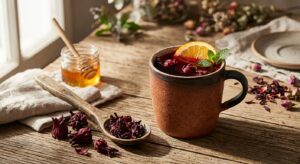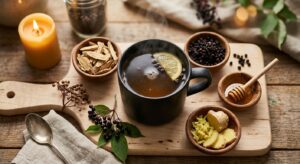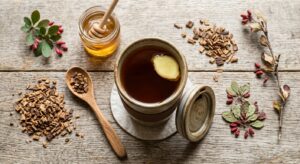
Long before pharmacies lined every street corner, communities across Europe, North America, and Asia turned to their gardens and forests for protection against seasonal illness. Elderberry (Sambucus nigra) was boiled into syrups by European herbalists as far back as the 17th century, celebrated in medical texts for its ability to ward off colds and fevers. Rosehip, the fruit of the wild rose, was harvested across Scandinavia and Central Asia as one of nature’s richest sources of vitamin C, especially valued during World War II when citrus imports to Britain were cut off. Echinacea, native to the North American plains, was arguably the most widely used medicinal plant among Indigenous nations, employed by the Lakota, Cheyenne, and others for everything from toothaches to snake bites to respiratory infections.
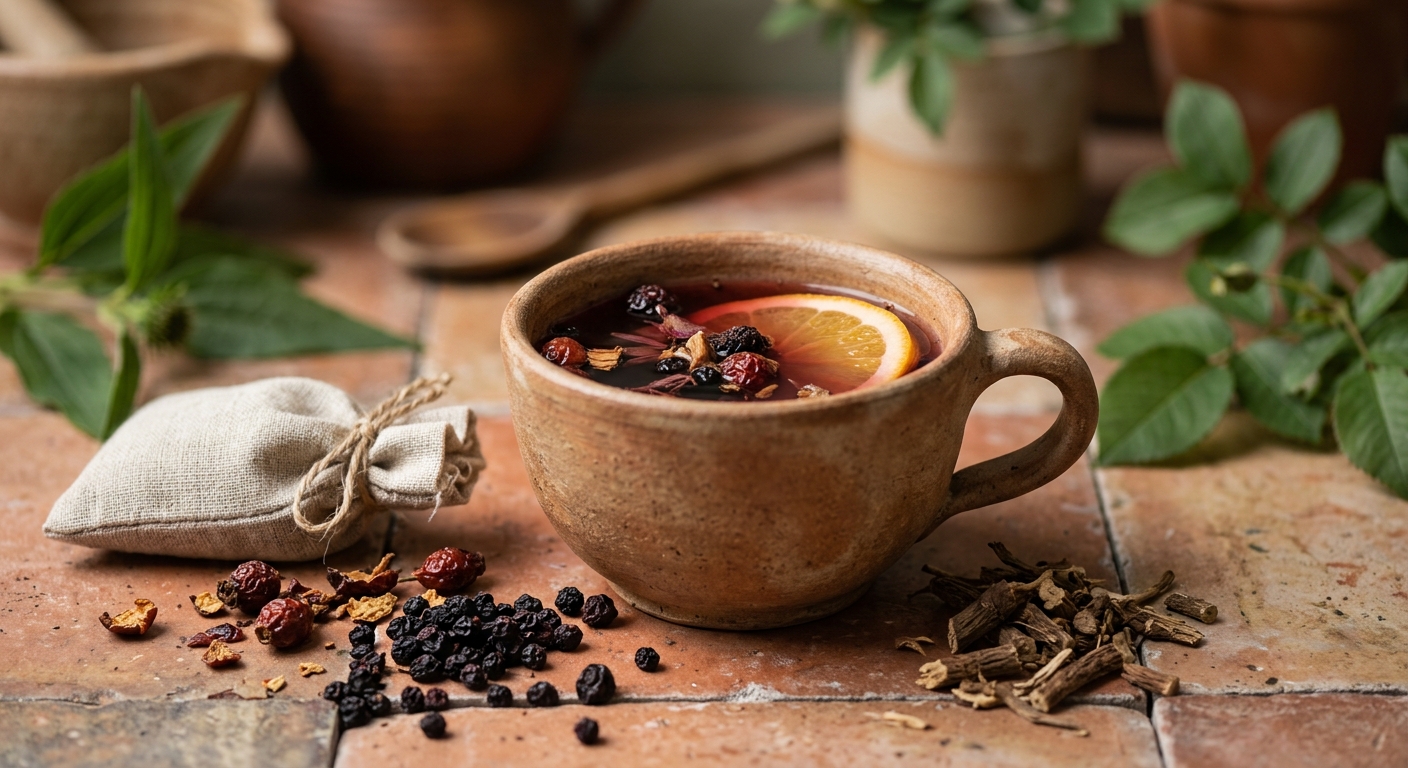
Together, these three herbs form a triumvirate of immune support that bridges traditional plant medicine and modern nutritional science. The cold brew method is especially well-suited to this blend because it preserves delicate polyphenols, anthocyanins, and vitamin C that can degrade under high heat. The result is a smooth, deeply ruby-colored tea with a pleasantly tart and berry-forward flavor that is equally refreshing served over ice in summer or gently warmed on a cold winter evening. Unlike many medicinal teas, this one is genuinely enjoyable to drink every single day.
This guide walks you through three brewing methods so you can tailor the preparation to your schedule and preference. Whether you prefer a quick hot brew on a busy morning, a slow cold brew that develops overnight in your refrigerator, or a sun tea that brews gently on your windowsill, each method extracts a slightly different profile of beneficial compounds and flavors. Start with high-quality dried herbs from a reputable supplier, and you will taste the difference immediately.
2
cups
Ingredients
- 1 tbspdried elderberries
- 1 tbspdried rosehips (whole or crushed)
- 1 tspdried echinacea root or purpurea herb
- 500 mlfiltered water
- —raw honey or maple syrup to taste (optional)
- —thin orange slice for garnish (optional)
How to Brew
Click on an item below to shop for the recommended items for this recipe on Amazon.
As an Amazon Associate, we earn from qualifying purchases.
- Bring 500 ml of filtered water to a full boil (95 to 100°C / 203 to 212°F) in a small saucepan or electric kettle.
- Add the dried elderberries, crushed rosehips, and echinacea root or herb directly to a teapot or heatproof infuser. If using a saucepan, add herbs directly to the water after removing from heat.
- Pour the boiling water over the herbs, cover the teapot or saucepan with a lid to trap volatile aromatic compounds, and steep for 10 to 15 minutes. A lid prevents the loss of beneficial essential oils.
- Strain through a fine mesh strainer into two mugs, pressing the spent herbs gently with the back of a spoon to extract all remaining liquid.
- Taste before sweetening. The tea will be pleasantly tart. Add raw honey or maple syrup if desired, and serve immediately while hot.
- Place the dried elderberries, rosehips, and echinacea into a clean glass jar or pitcher. Do not use a metal container, as the acidity of rosehips can react subtly with some metals over long infusion periods.
- Pour 500 ml of cold filtered water over the herbs. Stir briefly with a long spoon to ensure all the dried fruit is submerged and beginning to hydrate.
- Seal the jar or cover the pitcher and leave it at room temperature for 1 hour to begin the infusion, then transfer to the refrigerator.
- Allow the tea to cold brew in the refrigerator for a total of 8 to 12 hours, or overnight. The longer it steeps (up to 12 hours), the deeper the color and the more concentrated the flavor.
- Strain through a fine mesh strainer into two glasses filled with ice, pressing the herbs gently to extract remaining liquid. Sweeten lightly with honey if desired and garnish with an orange slice.
- Add the dried elderberries, rosehips, and echinacea to a large, very clean glass jar with a tight-fitting lid. Cleanliness is especially important for sun tea since it brews at temperatures too low to be fully sanitizing.
- Fill the jar with 500 ml of cold filtered water and secure the lid tightly. Give it a gentle shake to wet all the herbs evenly.
- Place the sealed jar in a sunny spot outdoors or on a south-facing windowsill where it will receive at least 3 to 4 hours of direct sunlight. The warmth of the sun will gently coax the anthocyanins, tannins, and vitamin C out of the dried fruits without degrading them the way boiling water can.
- Check the color after 3 hours. The tea should be a rich, translucent ruby red. If it looks pale, continue steeping for up to 5 hours total.
- Once brewed to your liking, strain into two glasses over ice, pressing the herbs lightly. Consume the sun tea within 24 hours and refrigerate any leftovers promptly.
Health Benefits
Multiple randomized controlled trials have found that elderberry extract significantly reduces the duration and severity of influenza and common cold symptoms, with one meta-analysis (Hawkins et al., 2019) finding a substantial reduction in upper respiratory symptoms. The anthocyanins appear to block viral entry into host cells.
Clinical evidence supports echinacea’s role in stimulating innate immunity, particularly through increased phagocytosis by macrophages and elevated production of interferon, a key antiviral signaling protein. A 2015 Cochrane-style review found echinacea preparations reduced the risk of catching a cold by up to 35 percent.
Rosehips provide one of the most concentrated plant-based sources of vitamin C, a nutrient that plays a well-documented role in supporting epithelial barrier function, stimulating the production and activity of lymphocytes and phagocytes, and reducing oxidative stress during acute infection.
The combined quercetin, anthocyanins, and caffeic acid derivatives in this blend provide broad-spectrum antioxidant coverage, helping to neutralize the reactive oxygen species that cause cellular damage during both chronic low-grade inflammation and acute illness.
Rosehip pectin acts as a prebiotic fiber, selectively feeding beneficial gut bacteria such as Lactobacillus and Bifidobacterium species. Because approximately 70 percent of the immune system is housed in gut-associated lymphoid tissue, supporting gut microbiome diversity has a meaningful downstream effect on systemic immune function.
🧪 Key Bioactive Compounds
The Science Behind Elderberry
The immune-supporting action of this blend is not the result of any single compound but a coordinated interplay between several distinct phytochemical families. Elderberry’s anthocyanins, particularly cyanidin-3-glucoside and cyanidin-3-sambubioside, have been shown in in vitro studies to directly inhibit influenza A and B viruses by binding to viral hemagglutinin proteins, preventing the virus from docking to and entering human respiratory epithelial cells. A landmark randomized trial published in Nutrients (2016) found that travelers taking elderberry extract experienced colds that were, on average, two days shorter and significantly less severe than those in the placebo group.
Echinacea’s mechanism is quite different. Rather than targeting specific pathogens, its alkylamides, polysaccharides, and caffeic acid glycosides work upstream by priming and amplifying the innate immune response. Alkylamides bind directly to cannabinoid receptor 2 (CB2) on immune cells, triggering macrophage activation and boosting the production of cytokines such as TNF-alpha and interleukin-6 in the early phase of an immune response. Echinacoside, meanwhile, has demonstrated direct antimicrobial activity against a range of bacteria including Staphylococcus aureus. Together, these compounds help the body mount a faster and more coordinated first-line response to pathogens.
Rosehip’s contribution is anchored in its extraordinary vitamin C density and its polyphenol content, particularly quercetin and tiliroside. Vitamin C is essential for the proliferation and function of T-lymphocytes and B-lymphocytes, the adaptive immune cells responsible for targeted pathogen recognition and antibody production. It also regenerates other antioxidants such as vitamin E, creating a cascading antioxidant effect throughout immune tissues. Cold brewing is particularly favorable for preserving ascorbic acid, which is notably sensitive to heat and begins to degrade significantly above 70°C (158°F), making the cold brew preparation the optimal method for maximizing the vitamin C yield from this blend.
Brewing Tips
- Lightly crush dried rosehips with the back of a spoon before brewing to break the skin and increase the surface area exposed to water, which noticeably boosts extraction of both vitamin C and color.
- For cold brew, use filtered or spring water rather than tap water. Chlorine compounds in tap water can subtly compete with and mute the delicate anthocyanin flavors of elderberry.
- Use echinacea root (Echinacea angustifolia or purpurea root) rather than the leaf or flower for a more potent alkylamide content. The root produces that characteristic mild tingling on the tongue that indicates good quality and proper extraction.