In Traditional Chinese Medicine, Wei Qi (pronounced “way chee”) refers to the body’s outermost layer of protective vital energy, roughly analogous to what modern science understands as immune surveillance. When Wei Qi is strong, the body resists invasion by external pathogens, recovers quickly from illness, and maintains robust energy levels. When it is depleted, through chronic stress, poor sleep, seasonal change, or overwork, the body becomes vulnerable to colds, fatigue, and prolonged recovery. For over two thousand years, TCM practitioners have prescribed specific tonic herbs to rebuild and nourish this protective force, and this blend draws from the heart of that tradition.
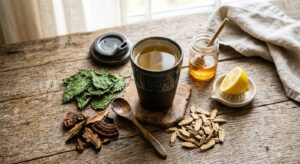
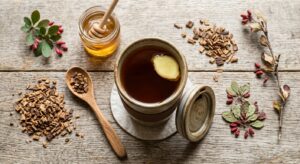
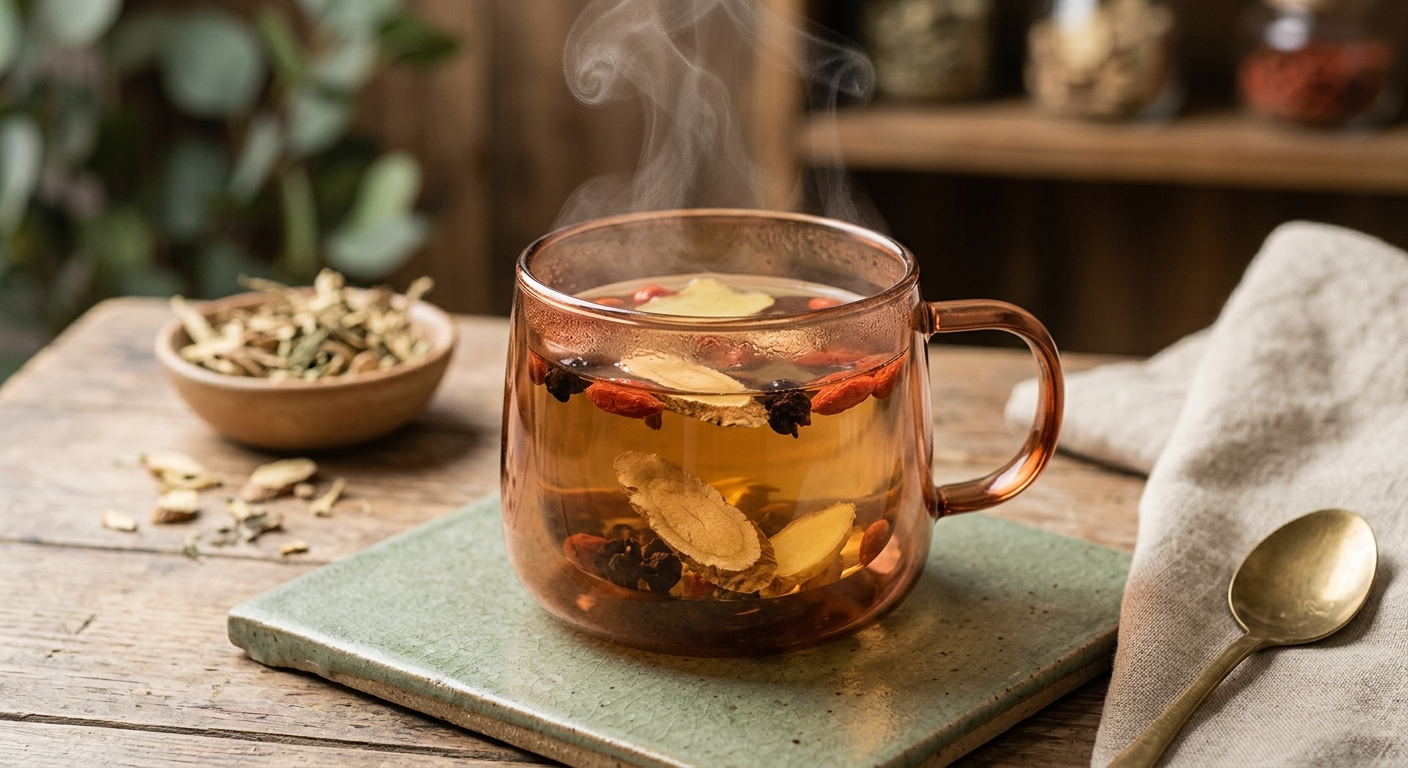
The three pillars of this formula are Huang Qi (astragalus root), Gou Qi Zi (goji berry), and Wu Wei Zi (schisandra berry). Astragalus is one of the most studied immunomodulating herbs in Chinese medicine, used in classical formulas like Yu Ping Feng San to tonify the spleen and lung Qi while strengthening the body’s surface defenses. Goji berry nourishes Yin and essence, providing antioxidant-rich support to the blood and liver. Schisandra, whose name means “five-flavor berry” for its unique combination of all five TCM flavors, acts as an adaptogen that supports the lungs, kidneys, and heart while reducing the impact of physical and emotional stress on immune function. Together, these three herbs create a synergistic formula that works across multiple organ systems.
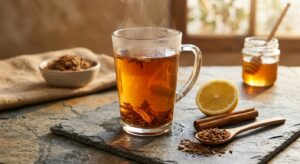
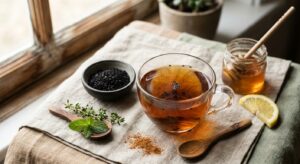
What makes this tea remarkable is both its depth of flavor and the breadth of its action. It is not a quick-fix remedy for an active cold, but rather a long-term tonic meant to be sipped daily over weeks and months, gradually building the body’s reserves. The brew yields a rich, earthy, slightly sweet, and pleasantly tart liquor with the warming character appropriate for a formula designed to protect against the cold and damp that TCM associates with immune vulnerability. This is a tea with history, purpose, and a genuinely complex sensory character worth savoring every morning.
2
cups
Ingredients
- 15 gdried astragalus root slices (Huang Qi)
- 10 gdried goji berries (Gou Qi Zi)
- 6 gdried schisandra berries (Wu Wei Zi), lightly crushed
- 600 mlwater (for hot brew)
- —raw honey or rock sugar to taste (optional)
- —2 to 3 slices fresh ginger (optional, for warming effect)
How to Brew
Click on an item below to shop for the recommended items for this recipe on Amazon.
As an Amazon Associate, we earn from qualifying purchases.
- Combine the astragalus root slices, goji berries, schisandra berries, and optional ginger in a small saucepan with 600 ml of cold water. Starting in cold water allows the dense root material to release its compounds gradually.
- Place the saucepan over medium-high heat and bring the water to a full boil. Once boiling, immediately reduce the heat to low so the liquid maintains a gentle, steady simmer with small bubbles breaking the surface.
- Simmer uncovered for 20 to 30 minutes. The liquid will reduce slightly and deepen in color to a rich amber-red. You will notice the goji berries plumping and the schisandra releasing a crimson hue into the brew.
- Remove from heat and allow the tea to rest for 5 minutes off the burner. This rest period allows the remaining aromatic compounds to settle rather than evaporate.
- Strain through a fine-mesh strainer into two mugs, pressing the spent goji berries gently with a spoon to extract their remaining liquid. Sweeten with raw honey or rock sugar if desired, and serve immediately.
- Lightly crush the schisandra berries using the back of a spoon or a muddler, and slice the astragalus root pieces into thinner segments if possible. This increases the surface area available for cold extraction, compensating for the absence of heat.
- Combine all herbs with 700 ml of cool, filtered water in a glass jar or pitcher. Use slightly more water than in the hot method to account for a less concentrated extraction. Stir briefly to submerge all herbs.
- Leave the jar at room temperature for 1 hour to begin the extraction process, then seal or cover and transfer to the refrigerator.
- Allow the herbs to steep in the refrigerator for 12 to 18 hours. A longer steep of 18 hours produces a richer, more ruby-colored brew. Taste at 12 hours if you prefer a lighter, more delicate tonic.
- Strain through a fine-mesh strainer into glasses, pressing the goji berries gently to release their remaining liquid. Serve over ice, or warm a portion gently in a saucepan if preferred. The cold-brew concentrate keeps refrigerated for up to 3 days.
- Double the ingredient quantities: use 30 g astragalus root, 20 g goji berries, and 12 g schisandra berries. Place all herbs in a medium saucepan and cover with 1.2 liters of cold water. Allow the herbs to soak for 20 minutes before heating, which pre-hydrates the root and improves extraction efficiency.
- Bring the water to a rolling boil over medium-high heat, then reduce immediately to a low simmer. Simmer uncovered for 45 to 60 minutes, allowing the liquid to reduce by roughly half to approximately 600 ml of finished concentrate.
- Monitor the simmer closely during the final 15 minutes. The liquid will become notably darker, thicker, and more intensely flavored. If the liquid reduces below 500 ml before the full cooking time, add small amounts of hot water to maintain volume.
- Remove from heat, rest for 5 minutes, then strain through a fine-mesh strainer lined with muslin cloth or a nut milk bag for the clearest concentrate. Press the spent herbs firmly to extract maximum liquid.
- Allow the concentrate to cool completely, then pour into a clean glass jar and seal. Refrigerate for up to 7 days. Each morning, measure 80 to 100 ml of concentrate into a mug and dilute with 240 ml of hot water. Sweeten if desired and drink on an empty stomach for best absorption according to TCM tradition.
Health Benefits
Astragalus polysaccharides have been shown in multiple clinical and laboratory studies to increase the activity of natural killer (NK) cells, macrophages, and dendritic cells, the front-line defenders of the innate immune system. Regular consumption may reduce the frequency and duration of upper respiratory infections, particularly in individuals under chronic stress or seasonal immune pressure.
Schisandra berry is classified as an adaptogen in both TCM and modern pharmacology, meaning it helps normalize the body’s physiological response to stressors. Schisandrin B and related lignans have been shown to modulate hypothalamic-pituitary-adrenal (HPA) axis activity, reducing cortisol-driven immune suppression that occurs during prolonged mental or physical stress.
Goji berries carry one of the highest antioxidant ratings among dietary fruits, with zeaxanthin, polysaccharides, and vitamin C working together to neutralize free radicals that damage lymphocytes and other immune cells. This antioxidant protection is particularly relevant for supporting mucosal immunity in the respiratory and digestive tracts.
In TCM, both astragalus and schisandra are classified as lung tonic herbs, used to strengthen the body’s surface defenses against wind-cold and wind-heat pathogens. Modern research has found that astragalus root extracts can stimulate secretory IgA production in mucosal linings, reinforcing the first line of respiratory defense against airborne pathogens.
The liver is a central organ in immune regulation, responsible for filtering pathogens, producing acute-phase proteins, and clearing immune complexes. Schisandra’s hepatoprotective lignans have been used clinically in parts of Asia to support liver enzyme normalization, and their inclusion in this formula reflects the TCM understanding that a healthy liver is foundational to a resilient immune system.
🧪 Key Bioactive Compounds
The Science Behind Astragalus Root
The scientific interest in Wei Qi Tonic herbs has grown substantially over the past three decades, with astragalus root receiving particular attention. The primary bioactive fraction, astragalus polysaccharides (APS), has been the subject of over 300 peer-reviewed studies investigating its effects on the immune system. Mechanistically, APS binds to toll-like receptors (TLR4) on macrophages, triggering a cascade that upregulates phagocytic activity, stimulates the release of interleukin-2 (IL-2) and interferon-gamma, and promotes the differentiation of naive T-cells into active Th1 helper cells. This represents a genuine immunomodulating effect, meaning the formula supports immune calibration rather than simply stimulating it indiscriminately, which is an important distinction for long-term safe use.
Schisandra berry’s lignans, particularly schisandrin B and gomisin A, operate through a distinct but complementary pathway. Research published in peer-reviewed pharmacology journals has demonstrated that these compounds act on the central nervous system’s stress-response circuitry, specifically the HPA axis, to reduce exaggerated cortisol secretion in response to stressors. Since chronically elevated cortisol suppresses lymphocyte proliferation, natural killer cell activity, and antibody production, normalizing this stress response has measurable downstream benefits for immune resilience. Additionally, schisandrin lignans have been shown to induce phase II detoxification enzymes in the liver, including glutathione-S-transferase, supporting the liver’s role as an immune clearance organ.
Goji berry’s contribution to the formula centers on its exceptionally high content of Lycium barbarum polysaccharides (LBP), zeaxanthin dipalmitate, and betaine. LBP has demonstrated the ability to enhance splenic lymphocyte proliferation and increase CD4+ to CD8+ T-cell ratios in animal studies, suggesting a benefit to adaptive immune memory and response strength. Zeaxanthin, perhaps better known for its role in eye health, concentrates in mucosal tissue throughout the body, where it exerts antioxidant protection against the oxidative damage inflicted by pathogens and inflammatory responses. The synergy between these three botanical families, a root polysaccharide tonic, a lignan-rich adaptogen, and an antioxidant-dense berry, reflects a sophisticated understanding of immune complexity that modern pharmacology is only beginning to map in molecular detail.
Brewing Tips
- Do not discard the spent goji berries after straining. They are edible and nutrient-rich. Add them to oatmeal, yogurt, or a smoothie bowl for an extra dose of antioxidants and polysaccharides.
- For best results according to TCM principles, drink this tonic consistently for a minimum of four to eight weeks before evaluating its effects. Tonic herbs work cumulatively and are not designed for immediate acute relief.
- Source astragalus root from reputable suppliers who test for heavy metals and pesticide residues, as roots are particularly prone to soil contamination. Look for organic certification or third-party tested products from established TCM herb suppliers.
- Lightly crushing the schisandra berries before brewing, regardless of the method, significantly increases the extraction of their lignan compounds. A few firm presses with the back of a spoon is sufficient.
- This formula is most traditionally consumed in the morning on an empty stomach or as a warm mid-afternoon tonic, not in the evening, as astragalus has a mildly energizing Qi-raising quality that may interfere with sleep in sensitive individuals.