Long before thyme found its place in every kitchen spice rack, it was a cornerstone of ancient medicine. The Egyptians used it in embalming rituals for its powerful antimicrobial properties, while Greek physicians prescribed it for chest ailments and coughs. In medieval Europe, sprigs of thyme were carried as talismans against illness, and monks cultivated it in monastery gardens specifically for healing teas and poultices. This humble herb has earned its reputation across thousands of years and dozens of cultures, not through superstition, but through genuine, observable results.
What makes thyme so remarkable as a medicinal tea is the density of its bioactive compounds. Unlike many herbal teas that offer mild, generalized support, thyme delivers a concentrated hit of thymol, carvacrol, and rosmarinic acid, a trio of compounds with documented antimicrobial, antispasmodic, and anti-inflammatory actions. Traditional European herbalism, particularly in Germany where thyme preparations are approved by the Commission E for bronchitis and upper respiratory catarrh, has long recognized the plant as one of the most effective herbal allies for the lungs and immune system.
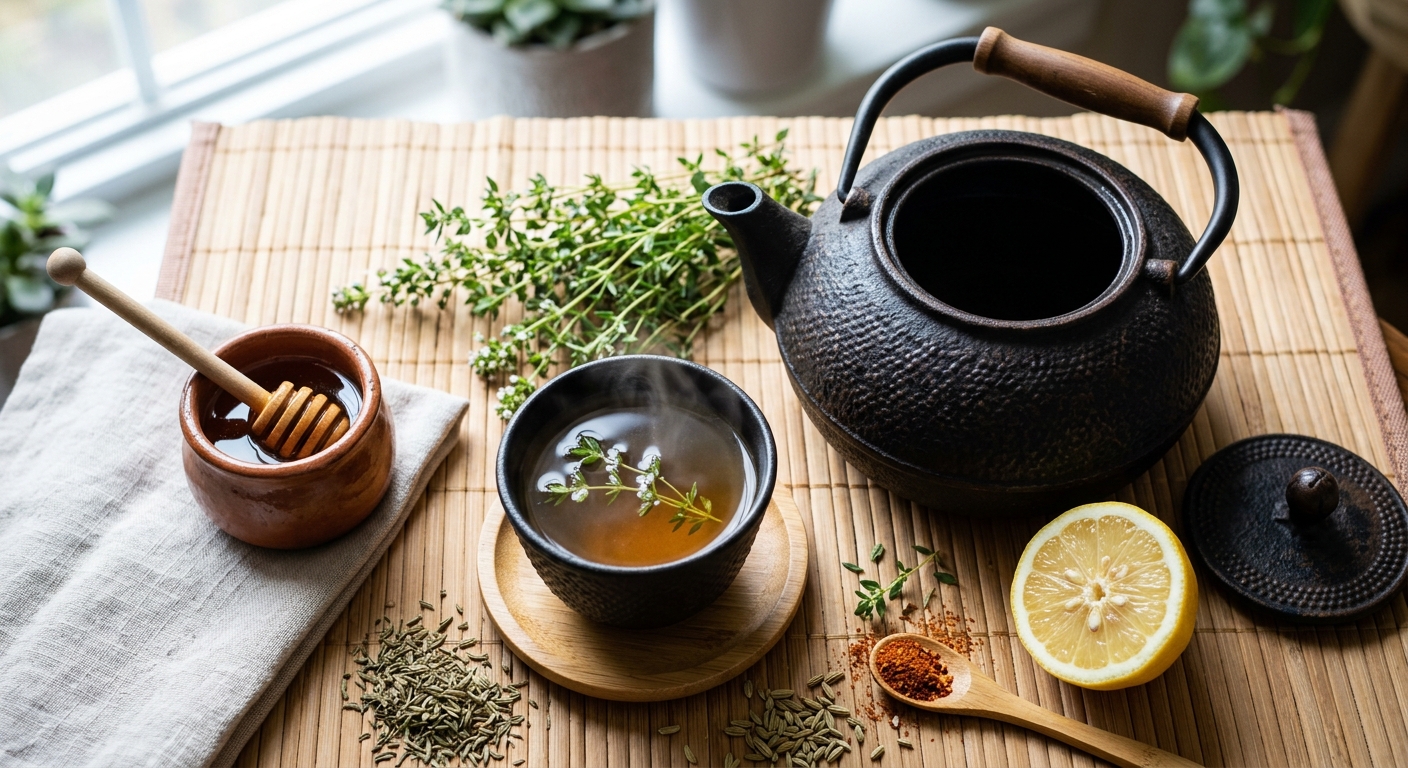
Brewed as a tea, thyme transforms into something far more than a cooking ingredient. The hot water draws out its volatile oils and polyphenols into a golden, sharply aromatic cup with a warm, slightly earthy flavor and a clean, almost medicinal finish. A squeeze of lemon brightens the brew and adds vitamin C, while raw honey contributes its own antimicrobial compounds and coats an irritated throat. Whether you feel the first tickle of a cold coming on or simply want to fortify your immune system through the colder months, thyme immune tea is one of the most practical and time-tested choices in the herbal pharmacy.
2
cups
Ingredients
- 2 tbspfresh thyme sprigs (or 2 tsp dried thyme)
- 480 mlwater (95°C / 203°F)
- 1 tbspfresh lemon juice
- —raw honey to taste (optional)
- —a pinch of cayenne pepper (optional, for extra immune support)
How to Brew
Click on an item below to shop for the recommended items for this recipe on Amazon.
As an Amazon Associate, we earn from qualifying purchases.
- Bring filtered water to 95°C (203°F). If using a standard kettle, bring to a full boil and let it rest for 30 seconds before pouring.
- Place 2 tablespoons of fresh thyme sprigs (or 2 teaspoons of dried thyme) directly into a teapot or heatproof mug. Lightly bruise fresh sprigs by pressing them with the back of a spoon to help release the volatile oils.
- Pour 480 ml of hot water over the thyme and cover the vessel immediately with a lid or small plate. Covering is essential, as thymol and other volatile compounds will escape with the steam if left open.
- Steep for 10 to 15 minutes. The longer end of this range produces a more potent, medicinally active brew. Taste at 10 minutes and continue steeping if you want more intensity.
- Strain the tea through a fine mesh strainer into two mugs. Squeeze in fresh lemon juice and stir in raw honey after the tea has cooled slightly below 60°C (140°F) to preserve the honey’s active enzymes.
- Drink slowly while hot, ideally 2 to 3 cups per day at the onset of a cold or respiratory illness.
- Place 3 tablespoons of fresh thyme sprigs or 1 tablespoon of dried thyme into a clean glass jar. For added immune benefit, add 2 to 3 thin slices of fresh ginger or a strip of lemon peel.
- Pour 480 ml of room temperature filtered water over the herbs. Do not use warm or hot water, as the goal is a slow, cold extraction that softens the flavor profile.
- Stir gently to submerge all the plant material, then seal the jar with a lid. Let it sit at room temperature for 1 hour, then transfer to the refrigerator.
- Cold steep for a total of 8 to 12 hours, or overnight. The resulting infusion will be noticeably lighter in color and aroma than the hot brew, with a fresher, greener flavor.
- Strain through a fine mesh strainer into a glass. Add a squeeze of lemon and a small drizzle of honey if desired. The cold brew keeps refrigerated for up to 48 hours.
- Serve over ice for a refreshing daytime immune tonic, or gently warm a portion in a small saucepan on low heat if you prefer a warm drink without resteeping.
- Add 3 tablespoons of fresh thyme (or 1.5 tablespoons of dried thyme) to a small stainless steel or ceramic saucepan with 600 ml of cold filtered water. Starting from cold water allows the plant material to release compounds gradually as the temperature rises.
- Bring the water to a full boil over medium-high heat, uncovered. Once boiling, immediately reduce the heat to a gentle simmer.
- Cover the saucepan with a lid, leaving a small gap for steam to escape, and simmer gently for 20 to 25 minutes. The liquid will reduce by roughly one third, concentrating the active compounds. Check periodically to ensure it does not reduce too aggressively.
- Remove from heat and allow the decoction to cool, still covered, for 5 minutes. This brief resting period allows any remaining volatile oils in the steam to condense back into the liquid.
- Strain through a fine mesh strainer, pressing the plant material firmly with the back of a spoon to extract every last drop of the concentrated liquid. You should end up with approximately 300 to 350 ml of dark golden decoction.
- Add fresh lemon juice and raw honey to taste. Store leftover decoction in a sealed glass jar in the refrigerator for up to 3 days. Reheat gently on the stovetop or in a mug with hot water, do not microwave at high heat as this degrades thymol.
Health Benefits
Thymol acts directly on bronchial smooth muscle as an antispasmodic, reducing the frequency and intensity of coughs. Germany’s Commission E has formally approved thyme preparations for the treatment of bronchitis and upper respiratory catarrh, one of the highest standards of recognition in phytomedicine.
Both thymol and carvacrol have demonstrated strong antimicrobial effects against a wide range of bacteria and fungi in laboratory studies, including antibiotic-resistant strains. While human clinical data is still developing, the traditional use of thyme as an infection-fighting herb is well supported by this mechanistic evidence.
Rosmarinic acid and luteolin work together to inhibit pro-inflammatory pathways, including the production of inflammatory cytokines like interleukin-6. This makes thyme tea a useful ally during the inflammatory phase of a cold or flu, helping to ease sore throats, sinus pressure, and general immune-driven discomfort.
Thyme contains one of the highest antioxidant concentrations of any culinary herb, with rosmarinic acid and luteolin scavenging free radicals that contribute to cellular damage and immune suppression. Regular consumption of thyme tea may help maintain a more resilient immune system over time.
Thymol has antispasmodic effects on the smooth muscle of the gastrointestinal tract as well, making thyme tea useful for bloating, gas, and mild digestive cramps that sometimes accompany illness. Traditional European herbalists frequently prescribed thyme for concurrent respiratory and digestive complaints.
🧪 Key Bioactive Compounds
The Science Behind Thyme
The medicinal power of thyme tea rests primarily on two phenolic monoterpenes: thymol and carvacrol. These volatile compounds, which give thyme its distinctive sharp aroma, work by disrupting the phospholipid bilayer of microbial cell membranes. This disruption causes leakage of cellular contents and ultimately cell death, making thymol and carvacrol effective against a broad spectrum of bacteria, fungi, and, in preliminary research, certain viruses. Importantly, the two compounds appear to act synergistically, meaning their combined effect in whole thyme is greater than either compound would achieve alone. This is a principle well documented in phytochemistry and one of the core arguments for using the whole plant rather than isolated extracts.
Beyond its direct antimicrobial action, thyme exerts significant anti-inflammatory effects through its polyphenol content, particularly rosmarinic acid and luteolin. Rosmarinic acid inhibits the enzyme cyclooxygenase-2 (COX-2), the same target as many common anti-inflammatory drugs, though with far milder potency and without their gastrointestinal side effects. Luteolin acts on multiple inflammatory pathways simultaneously, suppressing the release of pro-inflammatory cytokines and reducing histamine secretion from mast cells. These effects help explain why thyme tea can relieve the swelling and irritation of a sore throat and reduce the congestion associated with upper respiratory infections.
Thymol also exhibits an antispasmodic effect on smooth muscle tissue, which is particularly relevant for its use in respiratory conditions. By relaxing the bronchial muscles, thymol reduces the hypersensitivity that drives persistent coughing. This is the pharmacological basis for thyme-based cough medicines, which have been used in European clinical practice for decades. A randomized controlled trial published in Arzneimittelforschung found that a thyme-ivy combination extract was as effective as the conventional cough suppressant ambroxol in acute bronchitis, offering meaningful clinical validation for what herbalists have long observed in practice.
Brewing Tips
- Always cover your mug or teapot while steeping thyme tea. Thymol and carvacrol are volatile compounds that evaporate readily with steam, and leaving the cup uncovered can reduce the medicinal potency of your brew by a meaningful amount.
- Fresh thyme generally produces a brighter, more aromatic cup, while dried thyme delivers a more concentrated, slightly more pungent flavor. Use roughly three times the amount of fresh thyme compared to dried when substituting, as the drying process removes water and concentrates the herb.
- Add honey only after the tea has cooled to below 60°C (140°F). Above this temperature, heat degrades hydrogen peroxide and other beneficial enzymes in raw honey that contribute to its own antimicrobial properties, turning it into simple sweetener rather than a medicinal addition.