Tucked behind the sternum, the thymus gland is one of the most quietly powerful organs in the human body. It is here that naive immune cells mature into T-lymphocytes, the specialized defenders that distinguish self from pathogen and coordinate the entire adaptive immune response. Yet the thymus begins to shrink after puberty, a process called thymic involution, making intentional nutritional and herbal support increasingly important as we age. Herbal traditions from ancient Greece to Traditional Chinese Medicine have long prized certain plants for their ability to strengthen what we now recognize as thymic and immune function, long before the biology was understood.
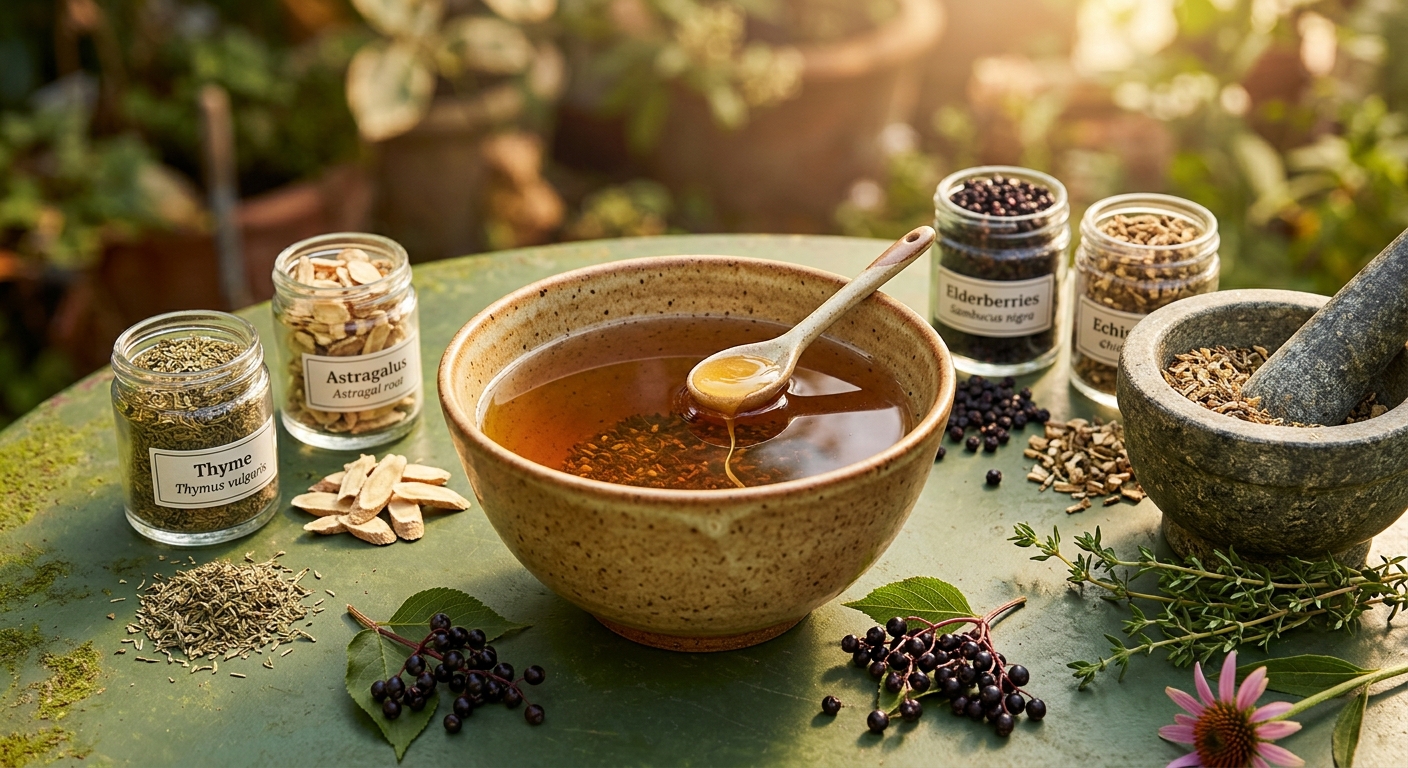
Thyme (Thymus vulgaris) sits at the heart of this blend. Revered since antiquity by Greek physicians, medieval monks, and wartime herbalists alike, thyme was traditionally burned as incense for purification, brewed as tea for lung complaints, and applied as a poultice for infections. Its name shares a root with the Greek word for the thymus gland itself, a linguistic echo of the deep historical association between this herb and the seat of vitality. Paired with astragalus root (Astragalus membranaceus), a cornerstone of Chinese tonic medicine prized for tonifying wei qi or defensive energy, and elderberry (Sambucus nigra), a European folk remedy used for centuries at the first sign of colds and fevers, this blend creates a synergistic trio that addresses immune readiness from multiple angles.
What makes this tea especially meaningful is that it is not simply about fighting an acute infection. It is about building foundational immune intelligence over time. Regular consumption of these herbs, backed by growing bodies of research, may help promote T-cell activity, reduce oxidative stress on immune tissues, and provide the micronutrients and polysaccharides that keep the thymus and its downstream defenders functioning with precision. Whether you are entering cold and flu season, recovering from illness, or simply prioritizing long-term wellness, this tea offers a grounded, historically informed, and scientifically compelling place to start.
2
cups
Ingredients
- 2 tspdried thyme (Thymus vulgaris)
- 1 tbspdried astragalus root slices
- 1 tbspdried elderberries (Sambucus nigra)
- 1 tspdried echinacea root or aerial parts
- 500 mlwater (filtered)
- —raw honey or manuka honey to taste (optional)
- —slice of fresh lemon (optional)
How to Brew
Click on an item below to shop for the recommended items for this recipe on Amazon.
As an Amazon Associate, we earn from qualifying purchases.
- Place the astragalus root slices and dried elderberries into a small saucepan with 500 ml of cold filtered water. Bring to a gentle boil over medium heat, then reduce to a low simmer and cook uncovered for 10 minutes. This brief decoction step is essential for unlocking the tough cell walls of the root and berries.
- Remove the saucepan from heat and immediately add the dried thyme and echinacea. Cover the saucepan with a lid to trap the volatile aromatic oils of the thyme, which would otherwise escape in the steam. Steep covered for an additional 5 minutes.
- Strain the tea through a fine mesh strainer into two pre-warmed mugs, pressing gently on the spent herbs to extract the last of the infusion.
- Allow to cool for 1 to 2 minutes until it reaches a comfortable drinking temperature. Stir in raw honey if desired, as honey adds its own antimicrobial properties to the blend. Add a squeeze of fresh lemon for vitamin C and brightness.
- Drink one mug immediately while warm. The second serving can be covered and consumed within 4 hours, or refrigerated for up to 24 hours.
- Combine all herbs (thyme, astragalus slices, elderberries, and echinacea) in a clean glass jar. Pour 500 ml of cold filtered water over the herbs. Do not use hot water – the goal is a slow, cold extraction that draws out delicate compounds without heat.
- Stir gently with a long spoon to ensure all the dried herbs are fully submerged. Place a piece of cheesecloth or a small plate loosely over the top of the jar to keep contaminants out while allowing the herbs to breathe.
- Let the jar sit at room temperature for 1 hour to begin the extraction process, then seal the jar with a lid and transfer it to the refrigerator. Allow it to steep for a total of 8 to 12 hours, or conveniently overnight.
- The next morning, strain the cold brew through a fine mesh strainer lined with cheesecloth into a clean glass or pitcher, pressing the herbs gently. The resulting liquid will be a soft burgundy color with a milder, slightly fruity and herbal character.
- Serve over ice with a lemon slice and a small drizzle of honey. Consume within 24 hours and keep refrigerated.
- Combine 1 liter of cold filtered water with double the standard quantities of astragalus root slices and elderberries (2 tablespoons of each) in a medium saucepan. Bring the water to a rolling boil, then immediately reduce the heat to a steady low simmer.
- Simmer uncovered for 25 to 30 minutes, allowing the liquid to reduce by approximately half to around 500 ml. The liquid will deepen significantly in color, shifting from pale pink to a rich, dark burgundy as the anthocyanins concentrate.
- Remove the pan from heat and add the thyme and echinacea (standard quantities). Cover immediately with a tight-fitting lid and allow the aromatic herbs to infuse into the hot concentrated liquid for 10 minutes. Do not skip the lid – the thymol and carvacrol in thyme are volatile and will dissipate quickly in steam.
- Strain through a fine mesh strainer lined with cheesecloth into a clean glass jar, pressing the herbs firmly to extract every last drop of the dark, syrupy liquid.
- Allow to cool completely before sealing. Store the concentrate in the refrigerator for up to 5 days. To use, pour 60 to 90 ml of concentrate into a mug and dilute with 150 to 200 ml of hot water. Sweeten with manuka honey to taste. You can also add the concentrate to hot herbal teas as a booster.
Health Benefits
Astragalus polysaccharides have been shown in multiple studies to stimulate thymic epithelial cell proliferation and enhance the differentiation of naive T-cells into active immune defenders, directly supporting the gland most responsible for adaptive immunity. Animal and in vitro research suggests these polysaccharides may even slow age-related thymic involution.
Thymol and carvacrol from thyme, combined with echinacoside from echinacea, activate macrophages and natural killer cells, the first-line responders of the innate immune system. This dual activation means the body is better equipped to detect and neutralize pathogens before they establish an infection.
Elderberry extract has been the subject of several randomized controlled trials demonstrating that it can reduce the duration of influenza symptoms by an average of 4 days compared to placebo. Its combination with thyme, traditionally used in European herbal medicine for bronchitis and respiratory catarrh, makes this blend particularly relevant for cold and flu season.
The anthocyanins in elderberry and the flavonoids apigenin and luteolin in thyme provide significant antioxidant coverage that protects immune cells from oxidative stress. Chronic oxidative damage to thymic tissue is one of the mechanisms implicated in immunosenescence, the gradual decline of immune function with age.
Unlike pharmaceutical anti-inflammatories, the compounds in this blend, particularly carvacrol and apigenin, appear to reduce excessive or chronic inflammatory signaling while preserving the acute inflammatory response needed to fight infection. This makes the tea suitable for regular preventive use rather than just acute illness.
🧪 Key Bioactive Compounds
The Science Behind Thyme
The scientific case for this blend centers on the remarkable body of research surrounding astragalus polysaccharides (APS). Studies published in journals including the Journal of Ethnopharmacology and Phytomedicine have demonstrated that APS directly stimulates thymic stromal cells, promoting the microenvironment necessary for T-cell education and maturation. In aged animal models, APS supplementation has been associated with measurable increases in thymus weight and T-lymphocyte proliferation, suggesting potential for counteracting the age-related decline in thymic output. While human clinical trials are still limited, the pharmacological evidence for APS as a thymic tonic is among the strongest in herbal immunology research.
Elderberry’s bioactive anthocyanins, particularly cyanidin-3-glucoside and cyanidin-3-sambubioside, have been studied extensively in the context of viral infections. A 2016 randomized, double-blind, placebo-controlled trial published in Nutrients found that elderberry supplementation significantly reduced the duration and severity of colds in air travelers. Mechanistic studies suggest these compounds may bind to and prevent the hemagglutinin spikes on influenza viruses from attaching to host cell receptors, reducing viral infectivity. Simultaneously, elderberry flavonoids stimulate cytokine production in healthy immune cells, fine-tuning the immune response rather than simply dampening it.
Thymol and carvacrol, the dominant volatile phenols in thyme, exert their effects through multiple pathways. They inhibit the cyclooxygenase (COX) enzymes responsible for prostaglandin synthesis, reducing inflammatory signaling in a manner mechanistically similar to NSAIDs but at a much milder scale. More relevant to immune support, these compounds demonstrate direct antimicrobial activity against a broad range of respiratory pathogens, including Streptococcus pyogenes and several influenza strains, in laboratory studies. Echinacea’s echinacoside and alkylamides round out the blend by activating toll-like receptors (TLRs) on innate immune cells, effectively lowering the detection threshold for incoming pathogens and accelerating the early immune cascade.
Brewing Tips
- For maximum polysaccharide extraction from astragalus root, always use the hot brew or decoction method rather than cold brew, and allow a full 10-minute simmer before adding the more delicate herbs.
- Source elderberries from a reputable herbal supplier and confirm they are fully dried or pre-processed. Never use raw, fresh elderberries in this tea, as they require heat or drying to deactivate their naturally occurring cyanogenic compounds.
- Consider brewing this tea in batches using the concentrated decoction method during cold and flu season, storing the concentrate in the refrigerator for up to 5 days so you can prepare a therapeutic cup in under 2 minutes each morning.
- For enhanced absorption of fat-soluble compounds like thymol and carvacrol, consider drinking this tea alongside a small amount of healthy fat, such as a few nuts or a piece of avocado toast, as lipophilic terpenes absorb more efficiently in the presence of dietary fat.
- If the flavor is too medicinal for your palate, a small piece of cinnamon bark or a few slices of fresh ginger added during the simmer stage will add warmth and sweetness while contributing their own complementary immune-supportive compounds.