Long before vitamin C supplements lined pharmacy shelves, people across the Caribbean, Central America, and northern South America were reaching for the acerola cherry. Known scientifically as Malpighia emarginata, this small, bright red fruit has been used in folk medicine for centuries to ward off illness, speed recovery from fevers, and restore vitality. Indigenous communities prized it as a food and medicine alike, and Spanish colonizers recorded its use as early as the 15th century. Today, acerola holds the remarkable distinction of containing anywhere from 50 to 100 times more vitamin C per gram than an orange, making it one of the most nutrient-dense fruits on the planet.
What sets acerola apart from other vitamin C sources is the form in which that vitamin occurs. Rather than isolated ascorbic acid, acerola delivers its vitamin C alongside a rich matrix of bioflavonoids, carotenoids, and polyphenols that work together to enhance absorption and broaden the herb’s antioxidant reach. Traditional healers used acerola tea and juice not just for colds and flu, but for skin health, fatigue, and recovery from physical stress. Brazilian herbalists, in particular, have long incorporated the fruit into their plant medicine traditions, and Brazil remains the world’s largest producer of acerola today.
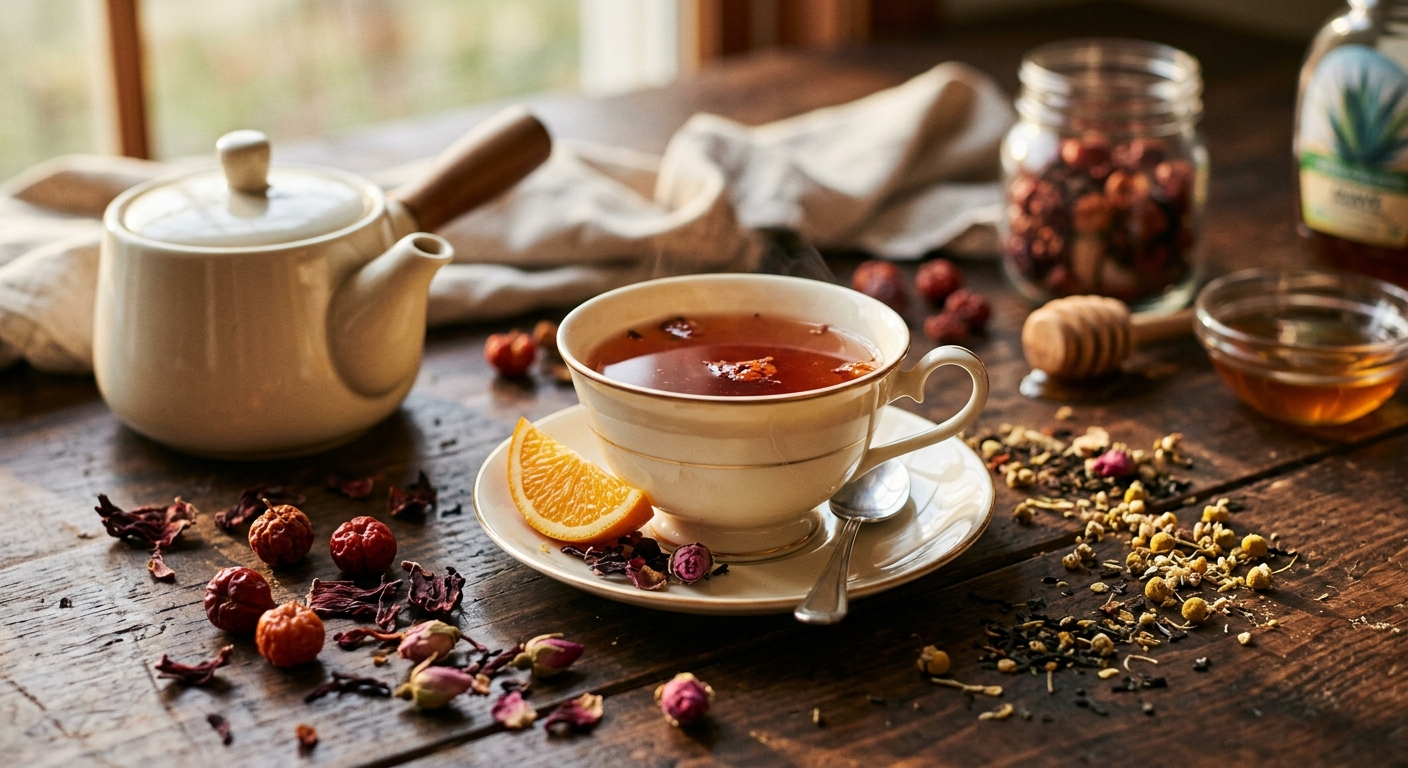
In the cup, acerola cherry tea is a vibrant and invigorating experience. Its flavor is pleasingly tart with a bright, fruity depth reminiscent of hibiscus and cranberry, and its color is a stunning deep ruby red. Whether you brew it hot to soothe a sore throat or cold to create a refreshing wellness drink on a warm afternoon, acerola tea is as delightful to the senses as it is beneficial to the body. It pairs beautifully with warming spices like ginger and cinnamon, and its natural acidity makes it a perfect candidate for honey sweetening or a splash of citrus juice.
2
cups
Ingredients
- 2 tbspdried acerola cherry pieces or powder
- 480 mlwater (85°C / 185°F)
- —raw honey or agave to taste (optional)
- —fresh lemon or orange slice to serve (optional)
How to Brew
Click on an item below to shop for the recommended items for this recipe on Amazon.
As an Amazon Associate, we earn from qualifying purchases.
- Heat filtered water to 85°C (185°F). If you do not have a temperature-controlled kettle, bring water to a full boil and allow it to rest for 3 to 4 minutes before using.
- Place 1 tablespoon of dried acerola cherry pieces or 1 teaspoon of acerola powder per cup into a fine-mesh infuser, tea basket, or small strainer set inside your mug.
- Pour the heated water gently over the acerola, fully submerging the fruit pieces. Cover the mug with a small saucer or lid to trap volatile aromatic compounds and retain heat.
- Steep for 7 to 10 minutes. For a more intensely tart and nutrient-rich cup, extend to 12 minutes, but taste at the 7-minute mark first.
- Remove the infuser and gently press the fruit pieces against the strainer with the back of a spoon to extract the remaining liquid and concentrated nutrients.
- Sweeten with raw honey or agave if desired, and finish with a squeeze of fresh lemon or a slice of orange to complement the bright citrus notes.
- Add 3 tablespoons of dried acerola cherry pieces per 500 ml of cold filtered water to a clean glass jar. Because no heat is used to drive extraction, a higher fruit-to-water ratio is needed to develop full flavor.
- Stir briefly to ensure all the fruit is submerged, then cover the jar with a lid or plastic wrap to prevent contamination and oxidation.
- Allow the jar to sit at room temperature for 1 hour to begin extraction, then transfer it to the refrigerator.
- Cold steep for 10 to 14 hours, or overnight. The infusion will turn a deep jewel-red and develop a smooth, rounded tartness that is noticeably less sharp than the hot brew.
- Strain through a fine-mesh strainer or cheesecloth into a clean pitcher or glass, pressing the fruit to recover all liquid.
- Serve over ice straight, or top with sparkling water for a naturally effervescent wellness drink. Sweeten lightly with honey syrup (honey dissolved in equal parts warm water) for easy mixing.
- Combine 6 tablespoons of dried acerola cherry pieces with 480 ml of filtered water in a small saucepan. This higher fruit-to-water ratio creates a concentrated base roughly four times stronger than a standard cup.
- Heat the mixture gently over low heat, bringing it to a temperature of 80 to 85°C (176 to 185°F). Do not allow the liquid to boil. Use a kitchen thermometer to monitor temperature carefully, as sustained heat above 90°C will degrade vitamin C.
- Maintain this gentle heat for 20 to 25 minutes, stirring occasionally and keeping the pot partially covered to reduce water evaporation while allowing some steam to escape.
- Remove from heat and allow the concentrate to cool for 10 minutes. Strain through a fine-mesh strainer into a clean glass bottle or jar, pressing the fruit firmly to extract all liquid.
- To serve, dilute 60 to 80 ml of concentrate with 180 ml of hot water at 85°C for an instant cup of tea, or dilute with cold sparkling water and ice for a vibrant chilled drink.
- Store the sealed concentrate in the refrigerator for up to 5 days. Shake or stir before each use as natural sediment may settle.
Health Benefits
Acerola is one of the most concentrated natural sources of vitamin C on Earth, providing up to 1677 mg per 100 grams of fresh fruit. Vitamin C stimulates the production and function of white blood cells, enhances antibody responses, and helps the immune system mount a faster, more effective defense against pathogens.
Beyond its vitamin C content, acerola is rich in anthocyanins, rutin, and quercetin, which collectively neutralize reactive oxygen species and reduce systemic oxidative stress. Studies have shown that the whole-fruit matrix of acerola has significantly higher antioxidant activity than isolated ascorbic acid alone.
Vitamin C is an essential cofactor in the enzymatic reactions that build and cross-link collagen fibers, the structural protein responsible for skin elasticity, wound healing, and connective tissue integrity. Regular consumption of vitamin C-rich foods has been associated with reduced skin wrinkling and improved wound repair in clinical studies.
Meta-analyses of randomized controlled trials have found that regular supplementation with vitamin C reduces the duration of common cold symptoms by up to 14 percent in adults. Acerola’s high bioavailable vitamin C, delivered alongside synergistic flavonoids, makes it a traditional and evidence-supported choice during cold and flu season.
The adrenal glands contain one of the highest concentrations of vitamin C in the human body, using it to synthesize stress hormones including cortisol and adrenaline. During periods of physical or psychological stress, vitamin C is rapidly depleted, and regular replenishment through acerola tea can support sustained energy levels and resilience to fatigue.
🧪 Key Bioactive Compounds
The Science Behind Acerola Cherry
The scientific reputation of acerola rests primarily on its extraordinary vitamin C density, but researchers have become increasingly interested in the synergistic matrix of compounds that accompany the ascorbic acid. A landmark comparison study found that whole acerola fruit extract demonstrated significantly greater antioxidant capacity in cell-based assays than an equivalent dose of isolated synthetic ascorbic acid. This synergy is attributed to the co-presence of rutin and quercetin, two flavonoids that inhibit the enzyme ascorbate oxidase and reduce the rate at which vitamin C is metabolized, effectively extending its activity within biological tissues. Quercetin also appears to recycle oxidized vitamin C back to its active form, further amplifying the antioxidant response.
From an immunological standpoint, vitamin C exerts its effects at multiple levels of the immune cascade. It enhances neutrophil chemotaxis and phagocytosis, supports natural killer cell activity, and promotes the proliferation of T-lymphocytes during an immune response. The anthocyanins in acerola add another layer of immune support by suppressing pro-inflammatory cytokines including interleukin-6 and tumor necrosis factor-alpha, which drive the excessive inflammation associated with severe respiratory infections. Beta-carotene, present in meaningful amounts in acerola, is converted by the body to vitamin A, which maintains the structural integrity of mucosal barriers in the nose, throat, and lungs, serving as a first-line physical defense against inhaled pathogens.
The bioavailability of vitamin C from acerola compared to synthetic ascorbic acid has been studied in human trials. Research published in nutritional biochemistry journals has found that plasma vitamin C levels rise at a comparable or slightly faster rate following consumption of acerola-derived vitamin C versus synthetic supplements, suggesting that the natural food matrix does not impair and may actually support absorption. Malic acid, one of acerola’s primary organic acids, plays a role here by maintaining an acidic environment in the digestive tract that favors ascorbic acid absorption. For anyone seeking to maximize immune nutrition through their diet, acerola tea represents one of the most efficient and pleasurable whole-food delivery systems for this essential vitamin.
Brewing Tips
- Always use water below 90°C when brewing acerola to protect its heat-sensitive vitamin C content. Even a modest reduction from boiling to 85°C can meaningfully preserve more of the ascorbic acid in your cup.
- For the best flavor and nutrition, purchase whole dried acerola cherry pieces rather than pre-made tea bags when possible. Whole or coarsely chopped pieces retain their bioactive compounds longer than finely ground powder, which oxidizes quickly once opened.
- Store dried acerola in an airtight glass container away from direct light and heat. Vitamin C is highly sensitive to oxidation, so exposure to air and light will degrade its potency over time. Refrigerating the sealed container can extend its shelf life by several months.