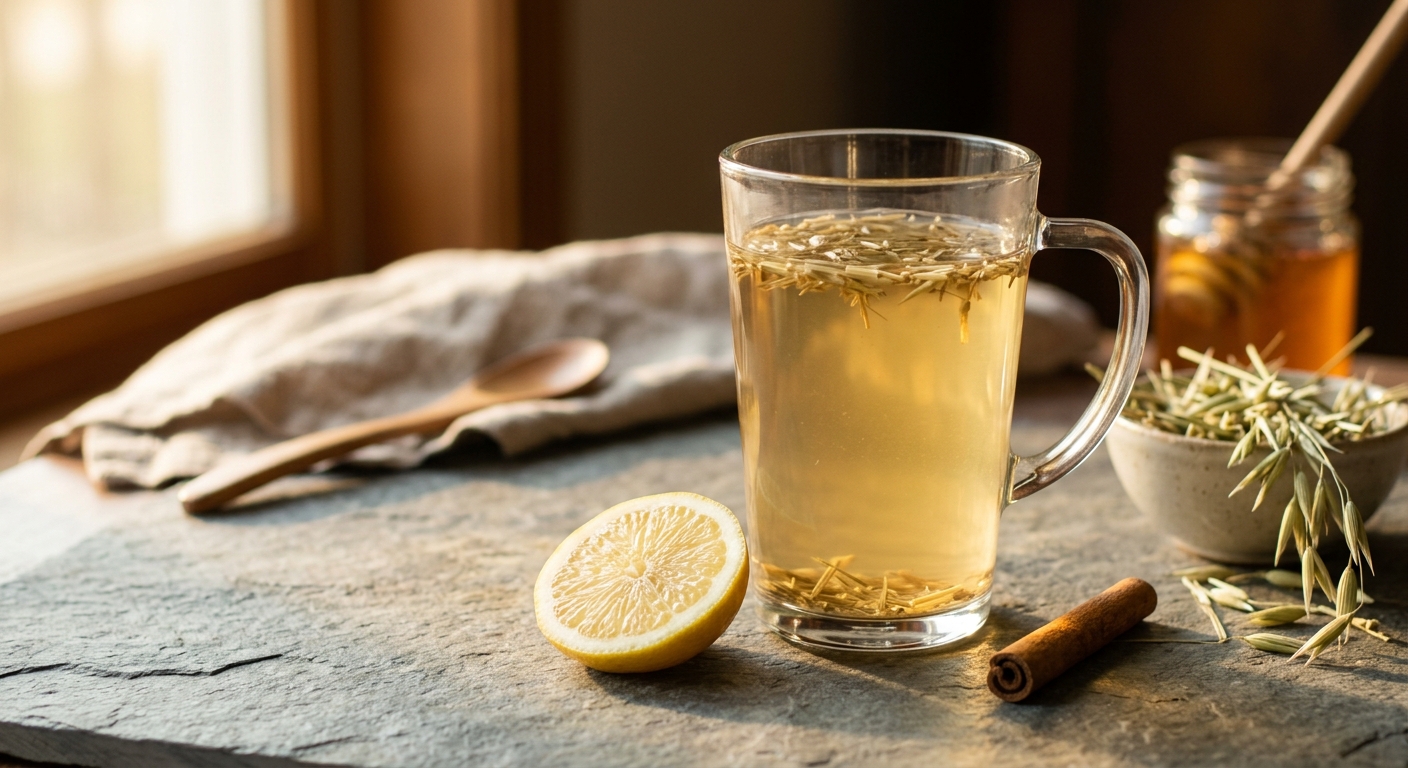
Long before oats became a breakfast staple, the green, unripe tops and stems of the oat plant, known as oat straw, were treasured by European herbalists as a profound tonic for the nervous system and reproductive health. Dating back to medieval herbalism and documented in the writings of the 12th-century healer Hildegard von Bingen, oat straw was prescribed to restore vitality in women experiencing exhaustion, anxiety, and hormonal disruption. Unlike the familiar rolled oats in your pantry, oat straw is harvested at the milky stage of the plant’s growth, when its nutrient and phytochemical content is at its peak, yielding a deeply mineral-rich infusion that feeds the body at a cellular level.
In traditional Western herbalism, oat straw occupies a special place among what herbalists call nutritive nervines, herbs that simultaneously nourish the body’s mineral reserves and calm an overstressed nervous system. This dual action makes it particularly valuable for women navigating the hormonal fluctuations of the menstrual cycle, perimenopause, and menopause. Women who are depleted from chronic stress, poor sleep, or the physical demands of pregnancy and postpartum recovery often find oat straw tea to be a quiet, restorative ally. Its gentle nature means it can be consumed daily over extended periods without the risk of overstimulation or dependency that accompanies stronger herbal remedies.
What sets oat straw apart from many women’s herbs is its extraordinary mineral density. A long-steeped cup delivers a meaningful supply of calcium, magnesium, silica, and iron, nutrients that are frequently depleted in women, particularly during menstruation and at menopause. This nutritional richness, combined with its mild and grassy sweetness, makes oat straw one of the most approachable and genuinely therapeutic teas a woman can incorporate into her daily rhythm. Whether sipped warm on a quiet morning or brewed cold and enjoyed throughout the day, this is a tea designed for the long game, one cup at a time building reserves of calm, strength, and resilience.
2
cups
Ingredients
- 4 tbspdried oat straw (cut and sifted)
- 480 mlwater (90°C / 194°F)
- —raw honey or maple syrup to taste (optional)
- —a pinch of dried spearmint for brightness (optional)
How to Brew
Click on an item below to shop for the recommended items for this recipe on Amazon.
As an Amazon Associate, we earn from qualifying purchases.
- Heat filtered water to 88 to 93°C (190 to 200°F). Avoid a full rolling boil, as very high heat can diminish the delicate nervine constituents in oat straw.
- Place 2 tablespoons of dried oat straw per cup into a teapot, French press, or heat-safe jar with a tight-fitting lid. A covered vessel is essential to trap the volatile aromatic compounds as the herb steeps.
- Pour the hot water over the oat straw, ensuring all the plant material is fully submerged. Stir gently to saturate the herb, then cover tightly and allow to steep for a minimum of 20 minutes. For a more mineral-dense and deeply therapeutic cup, steep for the full 40 minutes.
- Strain through a fine-mesh strainer or cheesecloth into your mug, pressing the spent herb gently to extract every drop of the nutrient-rich liquid.
- Sweeten lightly with raw honey if desired, or add a small pinch of dried spearmint to lift the grassy notes. Sip slowly and mindfully, ideally in the morning or early afternoon.
- Measure 3 tablespoons of dried oat straw per 480 ml of filtered cold or room-temperature water. The slightly higher herb-to-water ratio compensates for the slower cold-extraction process.
- Combine the oat straw and water in a clean glass jar. Stir or shake to ensure all the herb is thoroughly moistened and in contact with the water. Do not add heat at any stage.
- Seal the jar tightly and leave it on the counter for 1 hour to allow the initial extraction to begin at room temperature, then transfer it to the refrigerator.
- Allow the jar to cold-steep in the refrigerator for a total of 8 to 12 hours, or overnight. The longer the steep, the deeper the mineral content and the more golden-green the color will become.
- Strain the cold infusion through a fine-mesh strainer or nut milk bag into a clean bottle or pitcher. Press the herb well to extract all liquid. Serve over ice, optionally with a slice of lemon or a few fresh spearmint leaves.
- Bring filtered water to 88 to 93°C (190 to 200°F). Place a generous 1 ounce (approximately 28 grams or about 5 to 6 tablespoons) of dried oat straw into a 1-liter heat-safe glass jar or French press.
- Pour the hot water to fill the jar completely. A full jar with minimal air space helps preserve the volatile compounds and prevents oxidation during the long steep.
- Immediately seal the jar with a tight lid or press the French press plunger to just above the herb. Wrap the jar in a small towel to retain warmth and steep at room temperature, undisturbed, for a minimum of 4 hours and up to 8 hours.
- After the steeping period, strain the deep golden infusion through a fine-mesh strainer or cheesecloth, pressing the herb firmly. Compost the spent plant material or use it as a garden soil amendment.
- The finished infusion can be consumed warm by gently reheating to a comfortable drinking temperature over low heat, or refrigerated and served cold over the following 24 to 36 hours. Drink 1 to 2 cups per day as a daily tonic.
Health Benefits
The steroidal saponins in oat straw, particularly avenacosides, are thought to support the hypothalamic-pituitary-adrenal (HPA) axis, helping the body regulate its stress hormone response. This adaptogenic-adjacent action makes oat straw valuable for women experiencing hormonal dysregulation linked to chronic stress, perimenopause, or cycle irregularities.
Oat straw is classified as a trophorestorative nervine in Western herbal medicine, meaning it restores and rebuilds nervous system function over time rather than simply suppressing anxiety acutely. Clinical herbalists recommend it for women experiencing nervous exhaustion, burnout, low mood, and anxiety associated with hormonal shifts, citing its gramine content and mineral richness as key mechanisms.
The bioavailable calcium, magnesium, and silica in a long-steeped oat straw infusion directly support bone mineral density, a critical concern for perimenopausal and postmenopausal women facing accelerated bone loss. Silica additionally supports the integrity of connective tissue, joints, hair, and skin elasticity.
Magnesium is well-documented in clinical research to reduce the severity of PMS symptoms including cramping, mood swings, breast tenderness, and fluid retention. Oat straw’s significant magnesium content, readily extracted during a long hot infusion, makes it a practical daily tonic during the luteal phase for women prone to pronounced PMS.
The combination of iron, B vitamins, and nervine compounds in oat straw addresses two common drivers of fatigue in women: micronutrient depletion from menstruation and adrenal fatigue from chronic stress. Unlike stimulant herbs, oat straw builds energy reserves gradually through consistent daily use, making it ideal for long-term vitality support.
🧪 Key Bioactive Compounds
The Science Behind Oat Straw
The therapeutic reputation of oat straw is increasingly finding support in phytochemical research, particularly around its unique class of antioxidants called avenanthramides. These polyphenolic compounds, found almost exclusively in the Avena genus, have been shown in laboratory and human studies to inhibit pro-inflammatory cytokines, reduce oxidative stress in vascular tissue, and improve nitric oxide production, which supports healthy blood flow and cardiovascular function. For women, whose cardiovascular risk increases significantly after menopause, the anti-inflammatory activity of avenanthramides offers a compelling reason to incorporate oat straw as a long-term dietary habit.
The nervine properties of oat straw have long been attributed in part to its alkaloid content, particularly gramine, an indole alkaloid also found in barley and other grasses. Gramine has demonstrated interactions with serotonin and dopamine pathways in preliminary research, offering a plausible neurochemical basis for the calming, mood-stabilizing effects that herbalists have observed for centuries. Combined with the well-established role of magnesium in GABAergic neurotransmission and stress hormone regulation, oat straw presents a multi-pathway approach to nervous system support that is both gentle and physiologically coherent. Magnesium deficiency, which is widespread among women, is directly linked to heightened anxiety, poor sleep, and PMS severity, and a long-steeped oat straw infusion can meaningfully contribute to correcting this deficit.
The steroidal saponins in oat straw, identified as avenacosides A and B, represent perhaps the most intriguing area of current research for women’s hormonal health. Steroidal saponins can interact with hormone receptors and HPA axis signaling, and some researchers have proposed that they may exert mild adaptogenic effects by modulating cortisol output during periods of sustained stress. While large-scale clinical trials specifically on oat straw and women’s hormonal health remain limited, the ethnobotanical record and the growing body of research on its constituent compounds provide a strong rationale for its traditional use as a tonic for hormonal resilience, adrenal recovery, and long-term reproductive vitality.
Brewing Tips
- Always use a covered vessel when steeping oat straw, whether a lidded jar, French press, or teapot with a lid. The aromatic and nervine compounds are volatile and will escape with the steam from an open cup, reducing the therapeutic value of the infusion.
- Buy cut-and-sifted oat straw rather than powdered for the best infusions. Look for oat straw that is bright green to pale gold in color with a fresh, grassy scent, signs of good quality and proper harvest at the milky stage. Dull brown or musty-smelling material has lost much of its potency.
- Consistency matters more than potency with oat straw. Unlike acute herbal remedies, oat straw works best as a daily tonic consumed over weeks and months. Many herbalists recommend drinking 1 to 2 cups per day for at least four to six weeks before expecting to notice meaningful changes in energy, mood, and sleep quality.