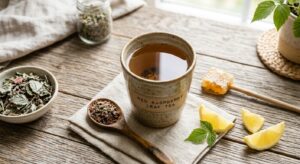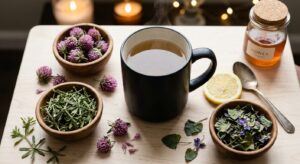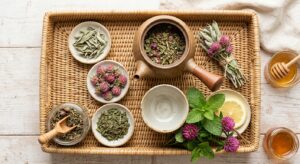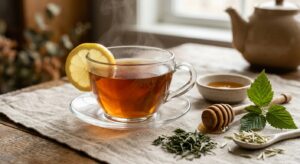
For thousands of years, herbalists across cultures have recognized that a woman’s body moves through distinct phases each month, and that plant medicine can be tailored to support each transition. From the cooling, restorative herbs of menstruation to the energizing botanicals of ovulation, cycle syncing with herbal teas is one of the oldest forms of women’s wellness. Traditional Chinese medicine, Ayurveda, and European folk herbalism all developed rich libraries of cycle-phase herbs long before modern endocrinology confirmed what healers already knew: hormones shift dramatically across the cycle, and so do the body’s nutritional and botanical needs.
This guide centers on a core cycle tea blend built around raspberry leaf, the foundational uterine tonic of Western herbalism, alongside adaptogens, antispasmodics, and phytoestrogenic herbs that support each of the four phases: menstrual, follicular, ovulatory, and luteal. Rather than offering a single rigid recipe, this post gives you a phase-by-phase framework so you can brew what your body needs on any given week. Each herb has been chosen for documented traditional use, plausible mechanisms, and a growing body of phytochemical research supporting its role in hormonal and reproductive health.
Sensory experience matters here too. These teas are not just functional, they are genuinely pleasurable. Raspberry leaf carries a clean, mildly astringent earthiness reminiscent of black tea without the caffeine. Cramp bark adds a subtle woody depth. Rose petals bring a soft floral sweetness that makes even a remedial blend feel like a ritual. Whether you are new to cycle-phase wellness or a seasoned herbalist looking to refine your practice, this guide will help you brew with intention and confidence.
2
cups
Ingredients
- 2 tspdried raspberry leaf (base for all phases)
- 1 tspdried rose petals (follicular and ovulatory phases)
- 1 tspdried cramp bark (menstrual and luteal phases)
- 0.5 tspdried chaste tree berry / vitex (luteal phase)
- 0.5 tspdried nettle leaf (all phases, optional for mineral support)
- 480 mlwater (95°C / 203°F for hot brew)
- —raw honey or maple syrup to taste (optional)
- —a slice of fresh ginger (optional, for warming and anti-nausea support during menstruation)
How to Brew
Click on an item below to shop for the recommended items for this recipe on Amazon.
As an Amazon Associate, we earn from qualifying purchases.
- Identify your current cycle phase: menstrual (days 1 to 5), follicular (days 6 to 13), ovulatory (days 14 to 16), or luteal (days 17 to 28). Select your herb combination accordingly: raspberry leaf and cramp bark for menstrual, raspberry leaf and rose petals for follicular and ovulatory, or raspberry leaf with vitex and cramp bark for luteal.
- Bring filtered water to 93 to 95°C (200 to 203°F). Avoid a rolling boil, as sustained high heat can degrade delicate volatile oils in rose petals and reduce the bioavailability of some flavonoids.
- Add 2 teaspoons of raspberry leaf plus your phase-specific herbs (totaling 3 to 4 teaspoons of combined dry herb) to a tea infuser, muslin bag, or teapot strainer. Place inside your mug or teapot.
- Pour the hot water over the herbs and immediately cover the mug or pot with a small plate, lid, or saucer. Steep for 10 to 15 minutes. The longer steep for raspberry leaf is intentional, drawing out more of the tannins and fragrine alkaloid that support uterine tone.
- Remove the infuser and taste. Sweeten lightly with raw honey if desired, or add a thin slice of fresh ginger for warming support during cramping phases. Sip slowly over 10 to 15 minutes for best absorption.
- Measure 3 to 4 teaspoons of your chosen phase blend into a clean glass jar. For the cold brew method, emphasize nettle leaf and raspberry leaf for their mineral content, and include rose petals for a pleasant flavor and antioxidant support. Cramp bark is less effective in cold water and is better reserved for hot infusions.
- Pour 480 ml of cool, filtered water over the herbs at room temperature. Do not use cold refrigerator water to start, as room temperature water initiates the extraction process more effectively before chilling.
- Stir gently to ensure all plant material is saturated, then seal the jar with a lid. Allow it to sit at room temperature for 30 minutes, then transfer to the refrigerator.
- Steep overnight or for a minimum of 8 hours and up to 12 hours. The result will be a lightly colored, smooth infusion with a noticeably less astringent taste compared to the hot brew.
- Strain through a fine mesh strainer into a glass. Serve over ice or at room temperature. Add a squeeze of lemon or a few fresh mint leaves to brighten the flavor. This cold brew keeps refrigerated for up to 48 hours, making it convenient for batch brewing across multiple days of the same cycle phase.
- Measure 1 to 2 teaspoons of cramp bark (and optionally 0.5 teaspoons of dried ginger root or valerian root if deeper relaxation is needed) into a small saucepan. Add 500 ml of cold filtered water and allow the bark to soak for 5 minutes before heating. This pre-soak begins breaking down cell walls.
- Place the saucepan over medium heat and bring slowly to a low, steady simmer. Do not bring to a full rolling boil, as excessive heat can degrade some of the active compounds. Once simmering, reduce heat to maintain a gentle bubble.
- Simmer uncovered for 20 to 25 minutes, allowing the liquid to reduce slightly. You will notice the water deepen in color to a warm amber or light brown as the bark compounds extract into the liquid.
- Remove from heat and add your softer herbs, such as 2 teaspoons of raspberry leaf and 1 teaspoon of rose petals, directly to the hot decoction liquid. Cover the saucepan and allow these to infuse off the heat for an additional 10 minutes.
- Strain through a fine mesh strainer into a mug, pressing gently on the herbs to extract the remaining liquid. Sweeten with honey or a small piece of dried licorice root if the flavor is too bitter. Drink one cup during the onset of cramps or in the evening of the late luteal phase as a preventative measure.
Health Benefits
Cramp bark contains scopoletin and viopudial, antispasmodic compounds that directly relax uterine smooth muscle. Combined with the anti-inflammatory action of quercetin in raspberry leaf, this blend addresses both the muscle spasm and prostaglandin-driven inflammation that cause dysmenorrhea.
Raspberry leaf has been used for centuries as a uterine tonic, and its alkaloid fragrine is believed to improve the coordination and efficiency of uterine muscle contractions. This may help reduce the duration and severity of menstrual flow over time with consistent use.
Vitex agnus-castus (chaste tree berry) has been studied in multiple randomized controlled trials showing significant reduction in PMS symptoms, including irritability, breast tenderness, and mood changes. Its iridoid compounds modulate the pituitary dopamine pathway, indirectly supporting the progesterone-to-estrogen ratio in the luteal phase.
Nettle leaf provides one of the highest plant-based concentrations of bioavailable iron, calcium, and magnesium of any common herbal tea. Regular consumption during and after menstruation can help offset the mineral depletion associated with blood loss, supporting energy levels and reducing fatigue.
Rose petals contain mild anxiolytic compounds including rosmarinic acid and flavonoids that interact with the GABAergic system to produce a calming effect. Combined with the adaptogenic properties of vitex in the luteal phase, this blend supports emotional regulation during premenstrual windows.
🧪 Key Bioactive Compounds
The Science Behind Raspberry Leaf
The science behind cycle-phase herbal teas is rooted in the intersection of phytochemistry and reproductive endocrinology. Raspberry leaf, the anchor herb of this blend, contains fragrine, a water-soluble alkaloid that has demonstrated the ability to influence smooth muscle tone in vitro. While large-scale human clinical trials are limited, observational studies and midwifery research suggest that regular raspberry leaf consumption is associated with shorter active labor and reduced need for intervention in late pregnancy, consistent with its traditional reputation as a uterine tonic. The quercetin and tannin content also supports its use as an anti-inflammatory and astringent herb that may modulate the prostaglandin cascade driving dysmenorrhea.
Vitex agnus-castus has the strongest evidence base of any herb in this blend for female reproductive health. A 2017 meta-analysis published in the Journal of Alternative and Complementary Medicine reviewed multiple randomized controlled trials and found statistically significant improvements in overall PMS symptom scores for women taking vitex extracts standardized to agnuside. The proposed mechanism involves the binding of vitex diterpenes to pituitary dopamine D2 receptors, reducing prolactin secretion. Elevated prolactin in the luteal phase is associated with progesterone insufficiency, breast tenderness, and mood symptoms, making vitex a rational botanical choice for this phase of the cycle.
Cramp bark’s antispasmodic reputation is supported by the identification of scopoletin and viopudial, compounds that have demonstrated direct relaxant effects on smooth muscle in preclinical studies. Scopoletin, a coumarin derivative, appears to inhibit calcium influx into smooth muscle cells, reducing the sustained contractions that cause cramping pain. Rose petals contribute rosmarinic acid, a polyphenol with confirmed anti-inflammatory and anxiolytic properties in human studies, while apigenin’s mild phytoestrogenic activity at estrogen receptor beta sites may support tissue health during the estrogen-dominant follicular and ovulatory phases without the risks associated with stronger phytoestrogens like genistein.
Brewing Tips
- Keep a cycle herb kit with four small labeled jars, one per phase, so you can switch your blend at each transition without measuring from scratch every time.
- For the cold brew mineral infusion, add a small strip of dried nettle root alongside the leaf to enhance the earthy, mineralic extraction profile and deepen the magnesium content of the final brew.
- Drink raspberry leaf tea consistently throughout the entire cycle rather than only during menstruation, as its uterine toning benefits build over weeks of regular use rather than offering acute relief from a single cup.