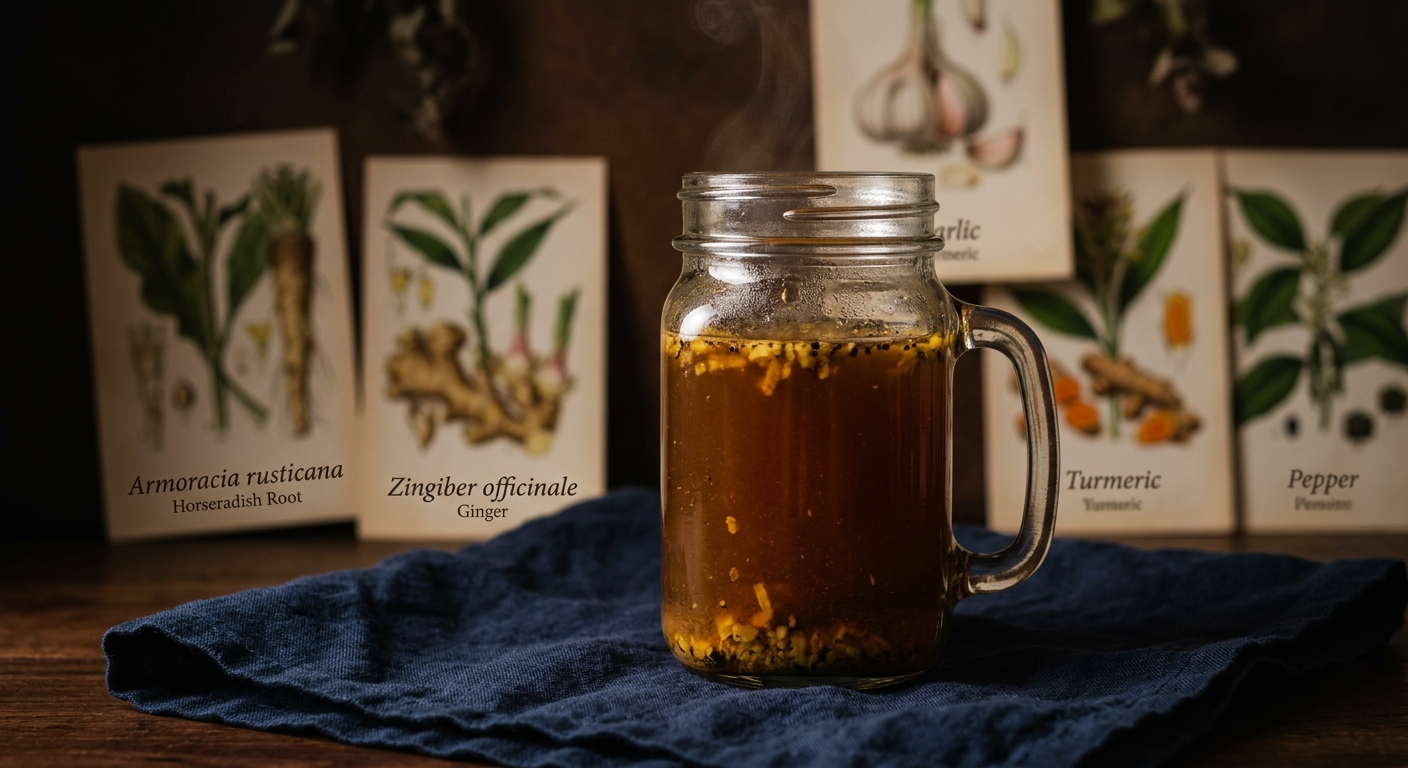
Fire cider is one of American folk herbalism’s most beloved and boldly flavored preparations, credited to herbalist Rosemary Gladstar who popularized the recipe in the 1970s at the California School of Herbal Studies. Rooted in older European traditions of using pungent, warming herbs to ward off winter illness, fire cider originally took the form of a vinegar tincture steeped with horseradish, garlic, ginger, onion, and hot peppers. Transforming these same potent ingredients into a drinkable tea brings their benefits into a soothing, aromatic format that is easier on the palate for those new to the tradition, while still delivering a serious warming punch.
What makes fire cider herb tea extraordinary is the synergy of its ingredients. Each herb contributes a distinct therapeutic action: horseradish and garlic supply sulfur-rich compounds that support immune function and clear the respiratory tract, ginger and black pepper provide anti-inflammatory heat that stimulates circulation and digestion, and raw apple cider vinegar adds probiotic acids and brightens the entire blend. Turmeric lends its golden hue and curcumin to the mix, giving the cup an earthy depth and additional anti-inflammatory support. Together they create a brew that is less a gentle comfort tea and more a tonic you reach for when your body demands reinforcement.
Traditionally sipped at the first sign of a cold, flu, or chest congestion, fire cider tea has also found a devoted audience among those who use it preventively throughout the autumn and winter months. Its flavor profile is bold and unapologetic: sharp, spicy, tangy, with a lingering warmth that radiates from the chest outward. A small drizzle of raw honey softens the edges without dulling the potency, and a squeeze of fresh lemon juice intensifies the vitamin C content and brightens the flavor into something genuinely craveable. This is tonic herbalism at its most direct and alive.
2
cups
Ingredients
- 1 tspfreshly grated or dried horseradish root
- 1 tspfreshly grated or dried ginger root
- 0.5 tspground turmeric
- 0.25 tspfreshly cracked black pepper
- 1 clovegarlic, minced or thinly sliced
- 1 pinchcayenne pepper
- 480 mlwater (90 to 95°C / 194 to 203°F)
- 1 tbspraw apple cider vinegar (with the mother)
- —raw honey to taste (optional)
- —fresh lemon juice to taste (optional)
How to Brew
Click on an item below to shop for the recommended items for this recipe on Amazon.
As an Amazon Associate, we earn from qualifying purchases.
- Prepare your aromatics: if using fresh horseradish and ginger, grate or finely mince them to maximize surface area and volatile oil release. Slice the garlic clove thinly.
- Combine the horseradish, ginger, garlic, turmeric, black pepper, and cayenne in a heat-safe mug or small teapot. If using a tea infuser or muslin bag, place all ingredients inside and set it in the vessel.
- Heat your water to 90 to 95°C (194 to 203°F). Pour it over the herbs, ensuring all ingredients are fully submerged.
- Cover the mug or teapot with a lid or small saucer to trap the volatile aromatic oils and steep for 10 to 15 minutes. A longer steep produces a more intense, medicinal-strength brew.
- Remove the infuser or strain the liquid through a fine mesh strainer into a second mug.
- Stir in 1 tablespoon of raw apple cider vinegar while the tea is still warm but no longer scalding. Add honey and fresh lemon juice to taste. Sip slowly and enjoy the spreading warmth.
- Combine the horseradish, ginger, garlic, turmeric, black pepper, and cayenne in a clean glass jar with a lid. If using fresh ingredients, slice or grate them for maximum infusion.
- Add 480 ml of filtered water at room temperature, then stir in the raw apple cider vinegar. The vinegar is added at this stage rather than at the end because cold infusion does not compromise its cultures.
- Seal the jar tightly and shake gently for 20 to 30 seconds to distribute the ingredients evenly throughout the liquid.
- Refrigerate for 8 to 12 hours or overnight. The slower, cooler infusion draws out a different balance of compounds compared to hot brewing, with a gentler pungency and a more complex herbal depth.
- Strain the cold-brewed tonic through a fine mesh strainer into a glass or pour-over pitcher. Press the solids gently with the back of a spoon to extract the remaining liquid.
- Sweeten with a small drizzle of raw honey and a squeeze of lemon if desired. Serve over ice for a refreshing immune tonic shot or drink it straight from a small glass as a morning ritual.
- Place the horseradish, ginger, garlic, turmeric, black pepper, and cayenne into a small saucepan. If using whole fresh roots, chop them roughly into small pieces to increase extraction efficiency.
- Add 600 ml of cold filtered water to the saucepan, starting with cold water to allow the compounds to release gradually as the temperature rises.
- Bring the mixture to a gentle boil over medium heat, then immediately reduce the heat to a low simmer. Cover the saucepan with a lid to retain volatile oils and aromatic compounds.
- Simmer gently for 20 to 25 minutes. The liquid will reduce and deepen in color to a rich amber-gold. Check occasionally to ensure it remains at a low simmer rather than a vigorous boil.
- Remove from heat and allow to cool for 3 to 5 minutes before straining through a fine mesh strainer into a heat-safe mug or jar. The resulting decoction will be concentrated and potent.
- Stir in the raw apple cider vinegar once the liquid has cooled to a warm but not boiling temperature. Add honey and lemon to taste. For a standard serving, dilute with an equal part of warm water. Sip in small, steady amounts to allow the warmth to build.
Health Benefits
Allicin from garlic and sinigrin from horseradish deliver direct antimicrobial action against a range of bacteria and viruses. Multiple clinical studies have shown that garlic supplementation reduces both the frequency and duration of common cold episodes.
The volatile isothiocyanates released from horseradish root act as a powerful natural expectorant and decongestant, thinning mucus secretions in the nasal passages and bronchial airways. This mechanism is well-established in European phytotherapy traditions and supported by modern pharmacological studies on glucosinolate-rich plants.
Curcumin from turmeric combined with the anti-inflammatory phenolics in ginger creates a synergistic anti-inflammatory effect. Piperine from black pepper ensures curcumin is absorbed effectively rather than passing through the digestive system unutilized.
Ginger and cayenne are both traditional diaphoretics, meaning they promote perspiration by increasing peripheral circulation. This action has long been used in herbal medicine to assist the body in managing fever and expelling pathogens through the skin.
Raw apple cider vinegar with the mother contains beneficial acetic acid, enzymes, and trace probiotic cultures that support the gut microbiome. A healthy gut microbiome is strongly linked to robust immune function, as approximately 70 percent of immune cells reside in gut-associated lymphoid tissue.
🧪 Key Bioactive Compounds
The Science Behind Horseradish Root
The therapeutic power of fire cider tea rests on a remarkable convergence of bioactive compounds from multiple plant families. Horseradish root contains sinigrin, a glucosinolate that remains inert until the plant’s cells are damaged by grating, chopping, or chewing. Once disrupted, the enzyme myrosinase converts sinigrin into allyl isothiocyanate, the volatile compound responsible for horseradish’s signature sinus-clearing punch. Research confirms that allyl isothiocyanate is a potent broad-spectrum antimicrobial agent and a natural expectorant that helps mobilize mucus in the upper and lower respiratory tracts. This is why traditional herbalists have long prescribed horseradish specifically for sinus infections, bronchitis, and head colds rather than as a general tonic.
Garlic’s primary compound allicin operates through a parallel mechanism: it forms when the enzyme alliinase in garlic cells contacts its substrate alliin upon crushing or cutting. Allicin has been studied extensively in clinical trials, including a landmark double-blind placebo-controlled trial published in Advances in Therapy, which found that a daily allicin supplement reduced cold incidence by 63 percent compared to placebo. The combination of horseradish isothiocyanates and garlic allicin in a single preparation creates a formidable antimicrobial environment within the respiratory mucosa. Meanwhile, 6-gingerol in ginger has been shown to inhibit the replication of respiratory syncytial virus (RSV) and to reduce the production of pro-inflammatory cytokines through suppression of NF-kB pathways, giving ginger a dual antiviral and anti-inflammatory role in the blend.
The inclusion of black pepper in fire cider tea is not merely for heat but reflects a sophisticated understanding of phytochemical bioavailability. Curcumin, the principal polyphenol in turmeric, is notoriously difficult for the body to absorb when consumed in isolation due to rapid hepatic metabolism. Piperine from black pepper inhibits the enzyme glucuronidase that breaks curcumin down in the liver, increasing curcumin’s bioavailability by up to 2000 percent according to research published in Planta Medica. This ancient Ayurvedic pairing of turmeric and black pepper is now validated at the molecular level, demonstrating that traditional botanical formulations often contain built-in pharmacological wisdom that modern science continues to uncover.
Brewing Tips
- Always use raw, unfiltered apple cider vinegar that contains the mother. Pasteurized or filtered varieties lack the enzymes and trace probiotics that contribute to the tonic’s gut-supportive benefits.
- When grating fresh horseradish root, work near an open window or exhaust fan. The volatile isothiocyanates released during grating are powerful enough to irritate the eyes and airways, much like cutting onions but considerably more intense.
- Start with a smaller serving of about 120 ml diluted with warm water if you are new to fire cider tea. The combination of horseradish, cayenne, and garlic is intense, and building your tolerance gradually ensures you experience the benefit without overwhelming your digestive system.