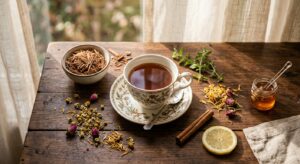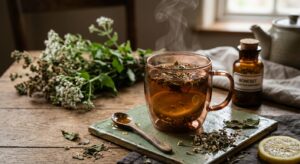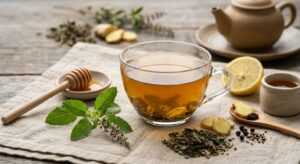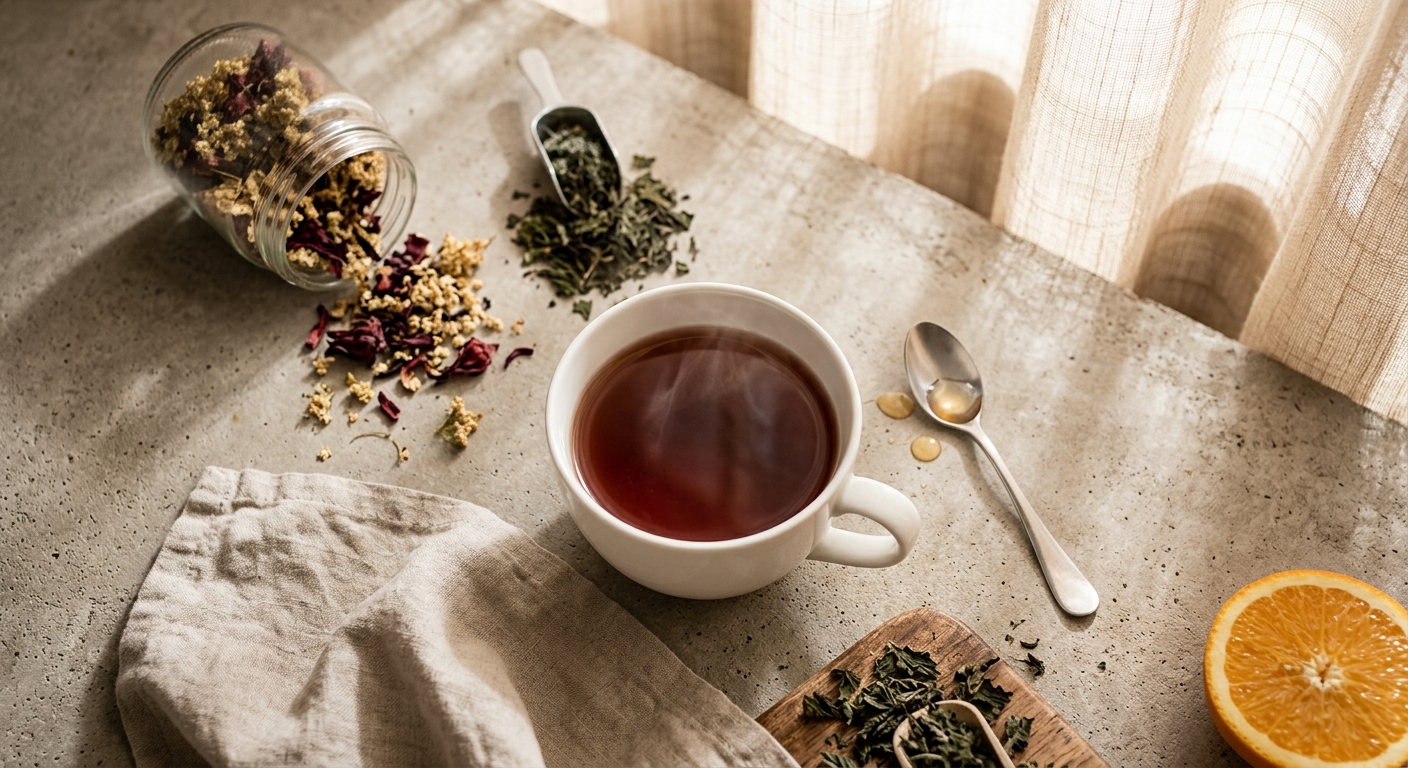
Long before quercetin appeared in clinical trials, the plants that carry it were already celebrated by healers across the world. Elderflower was gathered each summer in European villages to ward off colds and fevers. Hibiscus calyces were brewed into crimson teas across West Africa, the Caribbean, and Mexico, prized for their cooling and restorative qualities. Stinging nettle, despite its fearsome reputation in the garden, was dried and steeped as a tonic herb throughout the British Isles and continental Europe, valued for its dense mineral content and anti-inflammatory character. What these botanicals share, beyond their long histories of use, is an exceptionally high concentration of quercetin, a polyphenolic flavonoid that modern science has identified as one of the most potent natural modulators of immune response.
Quercetin works through several overlapping mechanisms that make it uniquely valuable during cold and flu season. It inhibits the replication of respiratory viruses, stabilizes mast cells to reduce histamine-driven inflammation, and enhances the uptake of zinc into cells, amplifying that mineral’s antiviral effects. The combination of elderflower, hibiscus, and nettle in a single tea creates a synergistic quercetin delivery system, with each herb contributing its own complementary array of polyphenols, vitamins, and trace minerals. The result is a brew that tastes as bold and alive as it performs.
The flavor of this blend is vivid and layered. Hibiscus brings a tart cranberry-like brightness that anchors the cup. Elderflower adds a delicate floral sweetness reminiscent of lychee and pear blossom, softening the hibiscus edge. Nettle contributes a grassy, mineral undertone that grounds the whole blend and signals its nutritive depth. Together they produce a tea that is refreshing hot, stunning chilled, and versatile enough to enjoy year-round, with particular relevance when your immune system needs deliberate, consistent support.
2
cups
Ingredients
- 2 tspdried elderflower
- 2 tspdried hibiscus calyces
- 1 tspdried stinging nettle leaf
- 480 mlwater (90°C / 194°F)
- —raw honey or agave syrup to taste (optional)
- —slice of fresh orange (optional, for serving)
How to Brew
Click on an item below to shop for the recommended items for this recipe on Amazon.
As an Amazon Associate, we earn from qualifying purchases.
- Heat filtered water to 90 to 95°C (194 to 203°F). If you do not have a temperature-controlled kettle, bring the water to a full boil and allow it to rest for 90 seconds before pouring.
- Measure 2 teaspoons dried elderflower, 2 teaspoons dried hibiscus calyces, and 1 teaspoon dried stinging nettle leaf into a tea infuser or small muslin bag. Place the infuser directly inside your teapot or mug.
- Pour 480 ml of hot water evenly over the herbs, fully submerging the blend. Place a small saucer or lid over the top of your mug to trap volatile aromatic compounds and prevent heat loss.
- Steep for 7 to 10 minutes. Taste at 7 minutes for a brighter, more floral cup. Extend to 10 minutes for deeper tartness and a stronger quercetin extraction from the hibiscus calyces.
- Remove the infuser and press it gently with the back of a spoon to release any remaining liquid from the herbs. Sweeten with raw honey if desired and serve immediately with a slice of orange on the rim.
- Measure 3 teaspoons dried elderflower, 3 teaspoons dried hibiscus calyces, and 1.5 teaspoons dried stinging nettle leaf into a clean glass jar. Use 1.5 times the standard hot brew amount to compensate for the lower extraction temperature.
- Pour 480 ml of cool, filtered water (room temperature, not chilled) over the herbs. Stir briefly to ensure all plant material is saturated and no dry clumps remain floating at the surface.
- Seal the jar with a lid or cover it tightly with plastic wrap. Let it sit at room temperature for 1 hour to begin extraction, then transfer the jar to the refrigerator.
- Cold steep for 10 to 14 hours, or overnight. The hibiscus calyces will tint the water a vivid ruby red within the first few hours. At 10 hours the flavor is bright and floral. At 14 hours it becomes fuller and more intensely tart.
- Strain the infusion through a fine mesh strainer or cheesecloth into a pitcher. Press the spent herbs firmly to extract every drop of the quercetin-rich liquid. Serve over ice with a slice of orange or lime.
- Measure 4 teaspoons dried elderflower, 4 teaspoons dried hibiscus calyces, and 2 teaspoons dried stinging nettle leaf into a small saucepan. These doubled quantities will yield a concentrate intended for dilution.
- Add 480 ml of filtered water to the saucepan and heat gently to 85 to 90°C (185 to 194°F). Do not allow the mixture to boil. Use a kitchen thermometer or watch for a steady stream of small bubbles at the bottom of the pan, which signals the correct temperature range.
- Maintain the temperature at 85 to 90°C and steep the herbs uncovered for 20 to 25 minutes, stirring occasionally. The liquid will darken significantly to a deep burgundy and the aroma will intensify as volatile compounds concentrate.
- Remove the saucepan from heat and allow the concentrate to cool for 5 minutes. Strain through a fine mesh strainer into a glass jar, pressing the herbs firmly. You should yield roughly 300 to 350 ml of rich, potent concentrate.
- To serve hot, dilute one part concentrate with one part hot water in a mug and sweeten to taste. To serve cold, dilute with sparkling water over ice in a 1 to 1 ratio. Store unused concentrate in the refrigerator in a sealed jar for up to 5 days.
Health Benefits
Quercetin and isoquercetin have been shown in multiple in vitro and some clinical studies to interfere with the replication cycle of rhinoviruses, coronaviruses, and influenza viruses by blocking key viral proteases. A 2021 randomized controlled trial found that quercetin supplementation significantly reduced the duration and severity of early-stage COVID-19 symptoms compared to standard care alone.
Quercetin acts as a natural zinc ionophore, facilitating the transport of zinc ions across cell membranes into the cytoplasm where zinc directly inhibits viral RNA polymerase activity. This mechanism explains why the combination of dietary quercetin from herbal teas and adequate zinc intake is considered a particularly effective antiviral strategy in functional medicine practice.
Quercetin stabilizes mast cells and basophils, preventing the release of histamine and other inflammatory mediators that drive sneezing, runny nose, and itchy eyes. Research published in the International Journal of Molecular Sciences confirmed that quercetin inhibits the degranulation of IgE-sensitized mast cells at physiologically relevant concentrations achievable through consistent dietary intake.
Hibiscus anthocyanins and quercetin glycosides collectively scavenge reactive oxygen species and reduce oxidative stress biomarkers, including malondialdehyde, in circulating immune cells. This antioxidant load helps preserve immune cell integrity during periods of high metabolic demand, such as active infection or intense physical stress.
Elderflower’s scopoletin content contributes gentle bronchodilatory and mucus-thinning effects that complement quercetin’s anti-inflammatory action in the respiratory tract. Traditional European herbalism consistently recommended elderflower tea at the onset of colds and flu for these combined properties, a practice now supported by its known phytochemical profile.
🧪 Key Bioactive Compounds
The Science Behind Elderflower
Quercetin is a polyphenolic flavonoid classified within the flavonol subgroup, and it is one of the most extensively studied plant compounds in nutritional immunology. It exists in plants primarily as glycosides, where the quercetin molecule is bound to a sugar such as rutinose or glucose, which improves its water solubility and influences its absorption kinetics in the gut. When you steep elderflower, hibiscus, or nettle in hot water, these water-soluble quercetin glycosides dissolve readily into the liquid, making the infusion an efficient delivery vehicle for the compound. Isoquercetin, the glucose-bound form abundant in hibiscus, has been specifically identified as the most bioavailable dietary form of quercetin, with peak plasma concentrations appearing within 30 minutes of ingestion.
At the cellular level, quercetin exerts its immune-modulating effects through several well-characterized pathways. It directly inhibits the activity of phosphatidylinositol 3-kinase (PI3K) and nuclear factor-kappa B (NF-kB), two central signaling proteins that drive the production of pro-inflammatory cytokines including interleukin-6 (IL-6) and tumor necrosis factor-alpha (TNF-alpha). By dialing back these pathways, quercetin reduces the chronic low-grade inflammation that impairs immune surveillance and makes individuals more susceptible to respiratory infections. Simultaneously, it preserves and enhances the acute, targeted inflammatory response needed to clear pathogens, demonstrating the nuanced immune-modulating, rather than simply immune-suppressing, character that distinguishes it from pharmaceutical anti-inflammatories.
The anthocyanins in hibiscus, particularly delphinidin-3-sambubioside, add a complementary layer of antiviral protection by directly disrupting the lipid envelopes of enveloped viruses, which include influenza, coronaviruses, and herpes simplex viruses. This membrane-disrupting mechanism is structurally independent of quercetin’s protease-inhibiting mechanism, meaning the two compound classes work in parallel to reduce viral load through entirely separate biological targets. This multi-target action is one of the defining advantages of whole-plant herbal teas over isolated supplement compounds, and it explains why this blend, consumed consistently throughout cold and flu season, represents a scientifically coherent strategy for immune resilience rather than simply a traditional health ritual.
Brewing Tips
- For maximum quercetin extraction from hibiscus calyces, lightly crush the dried flowers between your fingers before adding them to your infuser. This breaks the cell walls and dramatically increases the surface area exposed to hot water.
- Store dried elderflower, hibiscus, and nettle in separate airtight glass jars away from direct light and heat. Quercetin and anthocyanins degrade with UV exposure, and blending the herbs only at brew time preserves their individual potency far longer than pre-mixing the blend in bulk.
- Pair this tea with a handful of quercetin-rich foods such as capers, red onion, or apple to build a consistently high dietary quercetin level throughout the day, as research suggests that sustained daily intake produces stronger immune protection than occasional large doses.