Long before decongestant sprays and antihistamine tablets, people across the world turned to their kitchen gardens and wild hedgerows for relief from blocked sinuses and congested chests. Peppermint has been used in European folk medicine since at least the 18th century, while ginger root features prominently in Ayurvedic and Traditional Chinese Medicine as a warming expectorant that breaks up mucus and improves circulation. Thyme was carried by Roman soldiers for courage and endurance, but herbalists across medieval Europe prized it equally for its ability to clear the lungs and ease persistent coughs. Together, these herbs form a blend that has stood the test of centuries.
What makes this tea remarkable is the synergy between its key ingredients. Peppermint delivers menthol, a compound that activates cold-sensing receptors in the nasal passages and throat, creating an immediate sensation of openness and airflow even when physical congestion is still present. Ginger adds warming gingerols that stimulate circulation and have genuine anti-inflammatory effects on irritated mucous membranes. Thyme contributes thymol and carvacrol, two potent antimicrobial compounds that have been shown in clinical studies to support bronchial health. A touch of eucalyptus leaf amplifies the whole blend with the powerful expectorant compound 1,8-cineole, which helps loosen and expel mucus from the respiratory tract.
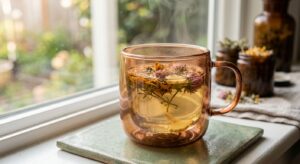
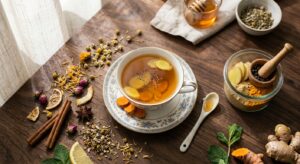
This is not a delicate, sipping tea. It is a purposeful, aromatic brew that announces itself from the moment you pour the boiling water. The steam alone, rising from the mug with its sharp minty, camphor-like fragrance, begins working on your sinuses before the first sip. Brewed correctly, it produces a pale amber liquid with a bold, complex flavor that is simultaneously cooling and warming, sharp and soothing. For anyone who has spent a restless night breathing through their mouth, this cup is a genuine act of relief.
2
cups
Ingredients
- 2 tspdried peppermint leaves
- 1 tspdried thyme leaves
- 1 tspdried eucalyptus leaves (food-grade)
- 1 inchfresh ginger root, thinly sliced
- 500 mlwater (100°C / 212°F)
- —raw honey to taste (optional)
- —fresh lemon juice to taste (optional)
How to Brew
Click on an item below to shop for the recommended items for this recipe on Amazon.
As an Amazon Associate, we earn from qualifying purchases.
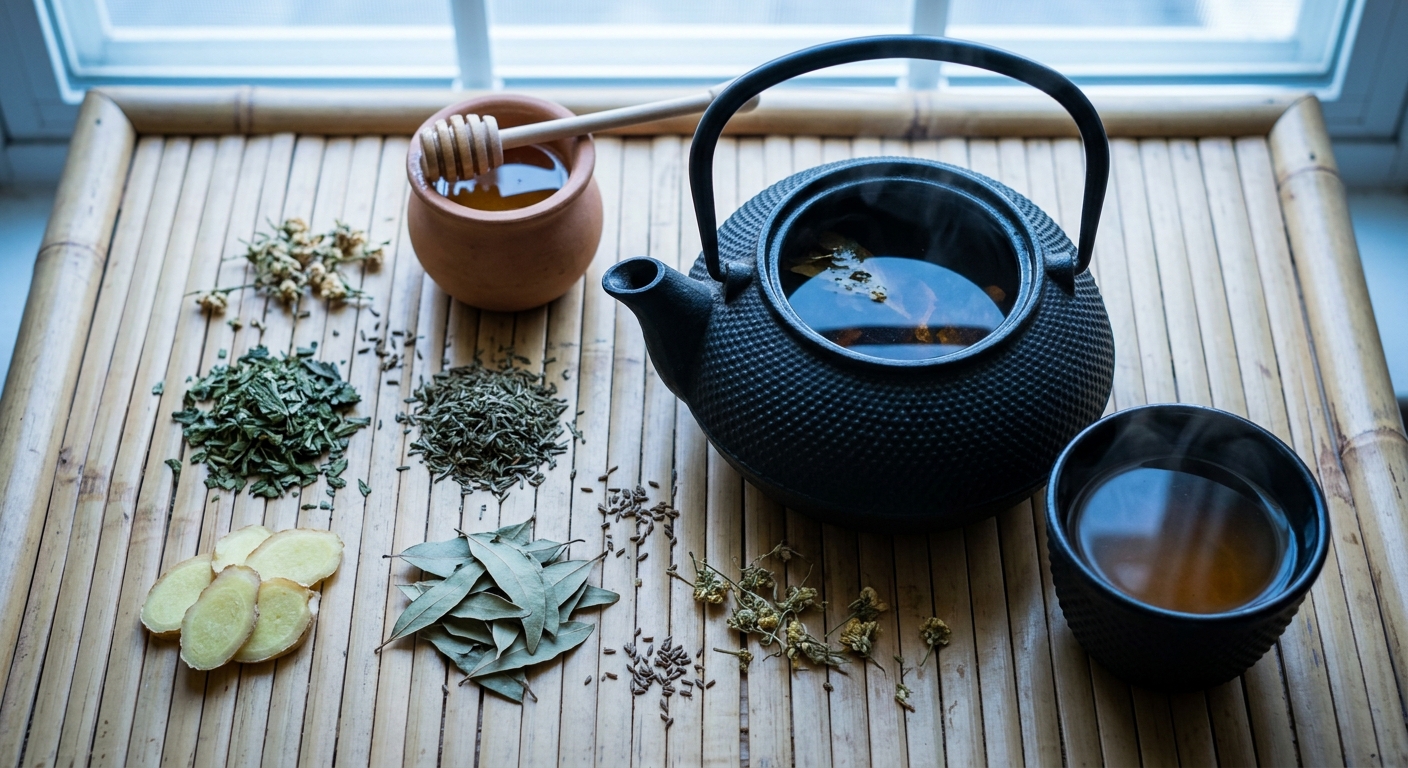
- Slice fresh ginger into thin rounds and place them directly into your teapot or mug along with the dried peppermint, thyme, and eucalyptus leaves. Using a tea infuser or small loose-leaf strainer will make removal easier.
- Bring fresh water to a full rolling boil at 100°C (212°F). The high temperature is intentional here as it is needed to extract the volatile oils from eucalyptus and thyme, which require more heat than delicate floral herbs.
- Pour the boiling water over the herbs and immediately cover the teapot or place a small saucer over the top of your mug. This is the most important step in this recipe as it prevents the medicinal menthol and cineole vapors from escaping.
- Steep for 10 to 12 minutes. The longer steep compared to a standard herbal tea extracts the full benefit from the tougher thyme leaves and ginger root. The brew will deepen in color and intensity.
- Remove the infuser or strain the herbs out carefully. Add raw honey and a squeeze of fresh lemon juice if desired. Honey adds a soothing coat to an irritated throat, while lemon adds vitamin C and brightens the flavor.
- Before drinking, hold the mug close to your face and inhale the steam slowly and deeply for 30 seconds. This steam inhalation step delivers menthol and cineole directly to congested nasal passages, offering immediate relief.
- Slice fresh ginger into thin rounds. Combine the ginger, dried peppermint, dried thyme, and dried eucalyptus leaves in a clean glass jar. Because cold water extracts more slowly, slightly increase the herb quantities by about 25 percent compared to the hot brew recipe for a potent result.
- Pour cold, filtered water over the herbs and stir gently to ensure all the plant material is submerged. Do not use boiling or even warm water, as the cold extraction process is what gives this brew its smoother, less astringent character.
- Seal the jar with a lid or cover it tightly with plastic wrap. Leave it at room temperature for one hour to allow initial extraction to begin, then transfer to the refrigerator.
- Refrigerate for a full 8 to 10 hours, or overnight for convenience. The slow cold extraction pulls peppermint menthol and ginger gingerols into the water gradually, resulting in a mellow, refreshing brew without the sharp bitterness that can come from prolonged hot steeping.
- Strain the herbs through a fine mesh strainer or cheesecloth, pressing the ginger slices gently to release any remaining liquid. Serve over a glass of ice or at room temperature. Add honey stirred in warm water first so it dissolves properly, or use liquid honey. Finish with a squeeze of lemon. Stored in the refrigerator, this cold brew keeps well for up to 48 hours.
- Double the quantity of eucalyptus leaves and peppermint for this method, as you are making a concentrate designed for both inhalation and drinking. Place the herbs and sliced ginger into a large, wide, heat-safe bowl or a medium saucepan.
- Bring 750 ml of water to a full rolling boil and pour it directly over the herbs in the bowl. The steam will immediately begin rising, carrying volatile oils with it. This is intentional and is the first phase of the treatment.
- Drape a large bath towel over your head and lean over the bowl, keeping your face at least 25 to 30 centimeters above the hot water to avoid steam burns. Close your eyes and breathe slowly and deeply through your nose for 5 to 10 minutes. Pause whenever needed for fresh air. This direct steam inhalation delivers 1,8-cineole and menthol deep into nasal passages, sinuses, and the upper bronchial tract.
- After the steam inhalation phase, allow the liquid in the bowl to cool for 5 minutes until it is a safe drinking temperature. Strain the concentrated brew through a fine mesh strainer into a mug, pressing the herbs firmly to extract maximum liquid.
- The resulting concentrate will be much stronger than a standard cup of tea. Dilute it with an equal amount of hot water to create two full servings, or drink it as a strong single serving. Add honey generously, as both the flavor and the honey’s antimicrobial properties are particularly valuable in this application.
Health Benefits
Menthol from peppermint activates cold-receptor nerve endings in the nasal mucosa, producing an immediate sensation of open airways. While it does not physically shrink swollen tissue the way pharmaceutical decongestants do, it meaningfully reduces the perception of blockage, making breathing feel noticeably easier.
The 1,8-cineole in eucalyptus has been validated in multiple clinical studies as a mucolytic agent that reduces the viscosity of mucus secretions in the bronchial tract, making it easier to cough up and expel. Thymol from thyme complements this action by relaxing bronchial smooth muscle.
Thymol and carvacrol from thyme, alongside 6-gingerol from ginger, have demonstrated inhibitory activity against a range of bacteria and viruses in laboratory settings. While drinking tea is not equivalent to pharmaceutical antimicrobial therapy, these compounds may help support the body’s immune response during a respiratory illness.
Both ginger and peppermint contain compounds that inhibit cyclooxygenase (COX) enzymes and reduce the production of inflammatory prostaglandins, which contribute to the swelling and irritation that make congestion so uncomfortable. Rosmarinic acid further suppresses the release of histamine from mast cells.
The warm liquid base of this tea coats and soothes the throat mucosa, while menthol’s mild anesthetic effect on nerve endings temporarily reduces the sensitivity that triggers dry, irritating coughs. Honey, when added, forms a protective film over the throat lining and has its own well-documented antimicrobial properties.
🧪 Key Bioactive Compounds
The Science Behind Peppermint
The decongestant properties of this tea blend are grounded in well-characterized receptor pharmacology. Menthol, the primary active compound in peppermint, is a selective agonist of the TRPM8 ion channel, a cold-thermosensor found abundantly in the sensory neurons of the trigeminal nerve that innervates the nasal passages. When menthol binds to TRPM8, it triggers the same neurological signal as actual cold air, producing a cooling sensation and a genuine perception of increased nasal airflow. A 2016 study published in Flavour and Fragrance Journal confirmed that menthol-induced TRPM8 activation reduces nasal airflow resistance perception in congested subjects. This is not simply a placebo: it reflects a measurable change in how the nervous system processes sensory information from the airways.
Eucalyptus leaf contributes 1,8-cineole, also known as eucalyptol, which has a more direct and clinically documented mechanism of action in the respiratory tract. A series of randomized controlled trials summarized in a 2011 review in Respiratory Research found that 1,8-cineole significantly reduced the frequency and severity of acute exacerbations of chronic obstructive pulmonary disease and reduced mucus secretion by downregulating cytokine pathways including TNF-alpha and interleukin-1 beta. Its mucolytic action comes from its ability to alter the rheological properties of mucus, reducing its viscosity so that the mucociliary escalator can clear it from the airways more efficiently. Thymol, the phenolic compound that gives thyme its sharp aroma, has been studied extensively in the context of bronchitis. A large observational study published in Arzneimittelforschung involving over 7,000 patients found that a thyme-ivy combination significantly reduced acute bronchitis symptoms, validating centuries of folk use.
Ginger’s contribution comes primarily from its gingerols and shogaols, which are potent inhibitors of the COX-1 and COX-2 enzyme pathways responsible for prostaglandin synthesis. Prostaglandins are key mediators of the inflammatory cascade that drives swelling of the nasal mucosa, sinus pressure, and the general malaise of a cold or flu. By dampening prostaglandin production, 6-gingerol may reduce the tissue swelling that physically obstructs airflow. Fresh ginger is notably richer in 6-gingerol, while dried ginger contains higher levels of 6-shogaol, a slightly more bioavailable and potent anti-inflammatory compound formed during the drying process. Using fresh ginger in this blend, as this recipe does, also introduces zingerone and a broader spectrum of volatile aromatic compounds that complement the eucalyptus and menthol in the steam phase of the brew.
Brewing Tips
- Always cover your mug or teapot during steeping. Menthol and eucalyptol are highly volatile and will evaporate rapidly from an open cup, significantly reducing both the flavor and the therapeutic potency of your brew.
- Use food-grade dried eucalyptus leaves sourced from a reputable herbal supplier. Eucalyptus essential oil is a completely different preparation and must never be added to tea or taken internally, as concentrated eucalyptol can be toxic when ingested in oil form.
- For maximum ginger extraction, bruise or lightly crush the sliced ginger pieces with the flat side of a knife before adding them to the brew. This breaks open the cell walls and releases significantly more of the pungent gingerol compounds into the water.