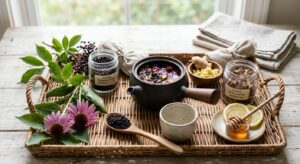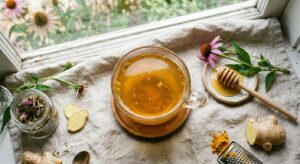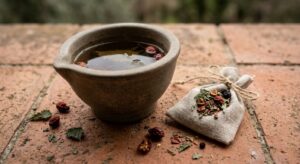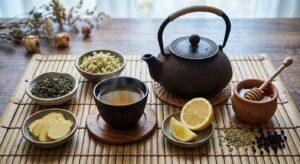
High in the Peruvian and Bolivian Andes, where thin air and harsh weather demand physical resilience, indigenous communities have long relied on a handful of extraordinary plants to stay well. Muña (Minthostachys mollis), a minty shrubby herb that thrives above 3,000 meters, has been used by Quechua healers for centuries to ease respiratory complaints and improve oxygenation at altitude. Cat’s claw (Uncaria tomentosa), a thorned vine from the Amazonian cloud forests that borders the Andean range, has been prepared as a bark decoction by Asháninka healers for generations to strengthen the body against infection. Together, they form the backbone of what contemporary herbalists now call Andean Immune Tea.
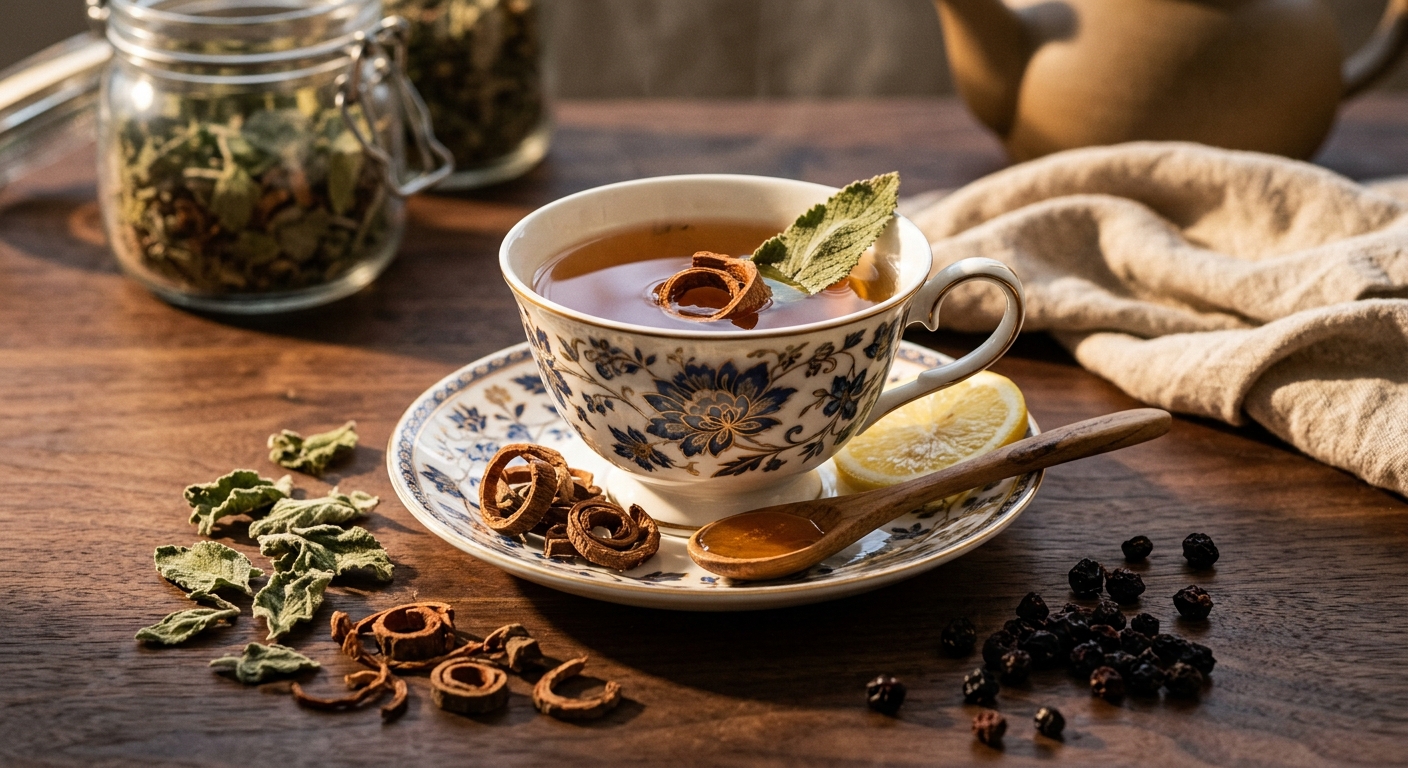
The addition of dried elderberry (Sambucus nigra) bridges Old and New World herbal traditions beautifully. While elderberry is native to Europe and North America, its antiviral compounds and deep, tart flavor have made it a beloved companion herb in modern immunity blends worldwide. Its role here is both medicinal and sensory: it deepens the color of the brew to a gorgeous crimson-violet and lends a fruity tartness that balances the earthy bitterness of cat’s claw bark and the cooling mint of muña. The result is a tea that feels as ancient as the mountains and as purposeful as any modern wellness formula.
What makes this blend genuinely special is the layered action of its three key plants. Rather than targeting a single pathway, the Andean Immune Tea works across several fronts: antiviral activity from elderberry anthocyanins, immune cell modulation from cat’s claw alkaloids, and respiratory support from muña’s volatile oils. This kind of multi-herb synergy is at the heart of traditional Andean plant medicine, and modern pharmacological research is beginning to validate what highland healers knew all along.
2
cups
Ingredients
- 1 tspdried muña leaves
- 1 tbspcat’s claw bark (cut and sifted)
- 1 tbspdried elderberries
- 500 mlfiltered water
- —raw honey or panela to taste (optional)
- —fresh lemon slice (optional)
How to Brew
Click on an item below to shop for the recommended items for this recipe on Amazon.
As an Amazon Associate, we earn from qualifying purchases.
- Combine the cat’s claw bark and dried elderberries in a small saucepan with 500 ml of filtered water. Bring to a gentle boil over medium heat.
- Once boiling, reduce the heat to a low simmer and cover the saucepan partially. Allow the bark and berries to decoct for 12 to 15 minutes, until the liquid has reduced slightly and turned a deep crimson.
- Remove the saucepan from the heat entirely and add the dried muña leaves. Cover with a tight-fitting lid and allow everything to steep together for 5 minutes. This protects the volatile mint oils in the muña from evaporating.
- Strain through a fine mesh strainer into two mugs, pressing gently on the solids to extract the full liquid.
- Add a slice of fresh lemon and a small spoonful of raw honey or panela if desired. Sip slowly while warm, ideally at the first sign of illness or as a daily preventive during cold season.
- Lightly crush the dried elderberries with the back of a spoon before placing them into a glass jar along with the cat’s claw bark and muña leaves. Crushing the elderberries increases surface area and improves cold extraction.
- Pour 600 ml of cold, filtered water over the herbs (use a slightly higher water volume than the hot method to compensate for lower extraction efficiency at cold temperatures).
- Stir gently, cover the jar with a lid or cloth, and leave at room temperature for 2 hours to begin extraction.
- Transfer the jar to the refrigerator and allow to cold brew for a further 10 to 16 hours, ideally overnight.
- Strain through a fine mesh strainer or cheesecloth into a clean jar or pitcher. Press gently on the solids. The cold brew will keep refrigerated for up to 3 days.
- Serve over ice with a lemon wedge. The flavor will be noticeably smoother and less bitter than the hot brew, with the elderberry fruit notes more prominent. Stir in honey if desired, as cold brew will not dissolve honey as easily, so a runny variety works best.
- Triple the standard herb quantities: use 3 tsp muña, 3 tbsp cat’s claw bark, and 3 tbsp elderberries. Add these to a medium saucepan with 750 ml of filtered water.
- Bring to a full boil, then reduce heat to a steady, active simmer (not a bare simmer). Leave the lid slightly ajar to allow steam to escape and the liquid to reduce intentionally.
- Simmer uncovered for 25 to 30 minutes, until the liquid has reduced to approximately 400 to 450 ml. It should be deeply colored and noticeably more viscous than a standard brew.
- Remove from heat, add the muña leaves if you have not yet added them, cover, and steep for an additional 5 minutes before straining.
- Strain through a fine mesh strainer or muslin cloth into a clean glass jar. Press the solids firmly to extract every drop.
- Store the concentrate in a sealed glass jar in the refrigerator. To use, dilute approximately 60 to 80 ml of concentrate with 160 ml of hot water, or enjoy as a shot-style tonic of 30 to 40 ml on its own. Stir in honey or lemon to taste before serving.
Health Benefits
Elderberry anthocyanins, particularly cyanidin-3-glucoside, have been shown in randomized controlled trials to significantly reduce the severity and duration of influenza infections by blocking viral entry into host cells. Combined with cat’s claw’s quinovic acid glycosides, which have demonstrated antiviral activity in vitro, this blend offers layered antiviral support.
Cat’s claw oxindole alkaloids have been studied for their ability to stimulate phagocytosis and enhance natural killer cell activity, helping the immune system identify and eliminate pathogens more efficiently. Unlike simple stimulants, these alkaloids appear to have an immunomodulating effect, supporting activity when needed without triggering excessive inflammation.
Muña has been used in traditional Andean medicine specifically for respiratory complaints, including altitude-related breathlessness, coughs, and congestion. Its volatile oils, particularly pulegone and menthone, act as natural expectorants and mild bronchodilators, helping to open airways and ease mucus clearance.
All three herbs in this blend contribute anti-inflammatory compounds, including rosmarinic acid from muña, proanthocyanidins from elderberry, and tannins from cat’s claw bark. Together they help reduce the systemic inflammation that causes the aching, fatigue, and fever associated with viral infections.
Elderberry is one of the most antioxidant-rich plant foods measured by ORAC value, and its high anthocyanin content protects immune cells from oxidative stress during the heightened metabolic activity of fighting infection. Muña’s rosmarinic acid adds complementary antioxidant protection at the mucosal level.
🧪 Key Bioactive Compounds
The Science Behind Muña (Minthostachys Mollis)
The immunological activity of this blend is best understood through the lens of each herb’s dominant compound class. Cat’s claw (Uncaria tomentosa) has been the subject of significant pharmacological research, particularly focusing on its oxindole alkaloids, pteropodine and isopteropodine. These compounds have been shown to increase the production of interleukin-1 and interleukin-6 by macrophages while simultaneously modulating the overproduction of TNF-alpha, a cytokine implicated in the excessive inflammation that can make viral infections more damaging than the pathogen itself. This dual action, stimulating the initial immune response while tempering runaway inflammation, is a rare and valuable pharmacological profile.
Elderberry’s antiviral credentials have been tested in human clinical trials, which is unusual in the world of herbal medicine. A 2016 randomized controlled trial published in Nutrients found that travelers taking elderberry extract experienced significantly shorter colds and reduced symptom severity compared to placebo. The mechanism involves cyanidin-3-glucoside binding to and neutralizing the hemagglutinin spikes on influenza virus particles, physically preventing the virus from attaching to and entering host cells. Additional research suggests elderberry flavonoids also have direct virucidal activity, disrupting viral envelope integrity and reducing the effective viral load in infected tissue.
Muña’s contribution to this blend is primarily respiratory and antioxidant in nature. The plant belongs to the Lamiaceae family and shares key volatile compounds with other medicinal mints, including pulegone, menthone, and rosmarinic acid. Rosmarinic acid is a particularly well-studied phenolic compound with confirmed inhibitory activity against the enzymes COX-1 and COX-2, the same targets as many non-steroidal anti-inflammatory drugs. At the mucosal level, this compound helps maintain the integrity of respiratory and digestive tissue under the oxidative stress of active infection, supporting the body’s first line of barrier defense while the adaptive immune system mounts its targeted response.
Brewing Tips
- Always simmer cat’s claw bark first before adding muña, as the delicate volatile oils in muña will evaporate quickly if exposed to prolonged high heat, taking much of the respiratory benefit with them.
- Source your cat’s claw from reputable suppliers who distinguish between Uncaria tomentosa (TOA and POA alkaloid-rich) and Uncaria guianensis, as the two species have different alkaloid profiles. Most clinical research has focused on Uncaria tomentosa.
- For a stronger elderberry flavor and maximum anthocyanin extraction in the cold brew method, lightly crush the dried berries before adding them to the water. A mortar and pestle works perfectly for this.
- If you are making the concentrate for illness prevention, prepare a fresh batch every 4 to 5 days and store it in a dark glass jar at the back of your refrigerator to slow light-induced degradation of the anthocyanins.
- Panela, the unrefined whole cane sugar used throughout the Andes, is the most traditional sweetener for this tea and adds a subtle molasses depth that complements the earthy cat’s claw notes beautifully.