Garlic has been revered as both food and medicine for over 5,000 years, appearing in the healing traditions of ancient Egypt, Greece, China, and India. Egyptian workers building the pyramids consumed it daily for strength and stamina, while Hippocrates prescribed it for respiratory conditions, parasites, and fatigue. In traditional Chinese medicine, garlic was used to warm the lungs and dispel cold pathogens, making garlic tea a natural and time-honored remedy for winter illnesses. Across Eastern Europe and the Mediterranean, grandmothers prepared garlic broths and teas at the first sign of a sore throat, long before science could explain why they worked so well.
What makes garlic tea genuinely remarkable is its chemistry. When raw garlic is crushed or chopped, an enzyme called alliinase converts a sulfur compound called alliin into allicin, the compound responsible for garlic’s sharp aroma and most of its medicinal power. Allicin is antimicrobial, antiviral, and anti-inflammatory, and research has confirmed that it can reduce the duration and severity of the common cold. Brewing garlic as a tea allows these compounds to infuse directly into a warm, soothing liquid that coats the throat and enters the bloodstream quickly, making it one of the most direct delivery methods for garlic’s therapeutic benefits.
Garlic tea is not a subtle drink. Its flavor is bold, savory, and unmistakably pungent, with a warming heat that builds as you sip. Many traditions soften the intensity by pairing it with lemon juice, raw honey, fresh ginger, or a pinch of cayenne, creating a complex, spicy tonic that is as comforting as it is medicinal. Whether you are fighting off a cold, supporting cardiovascular health, or simply looking to add a powerful functional beverage to your wellness routine, garlic tea is one of the most ancient and effective herbal preparations you can make at home.
2
cups
Ingredients
- 4 clovesfresh garlic, crushed or roughly chopped
- 480 mlwater (95°C / 203°F)
- 1 tbspfresh lemon juice
- —raw honey to taste (optional)
- —1/4 tsp fresh grated ginger (optional)
- —pinch of cayenne pepper (optional)
How to Brew
Click on an item below to shop for the recommended items for this recipe on Amazon.
As an Amazon Associate, we earn from qualifying purchases.
- Peel and crush or roughly chop 2 fresh garlic cloves per serving. Let the crushed garlic rest on your cutting board for 10 minutes before proceeding. This resting period is essential: it allows the enzyme alliinase to activate and produce allicin before the heat of brewing can deactivate that enzyme.
- Bring filtered water to 90 to 95°C (194 to 203°F). Do not use a rolling boil, as excessively high heat can degrade some of the more delicate sulfur compounds once they are in the water.
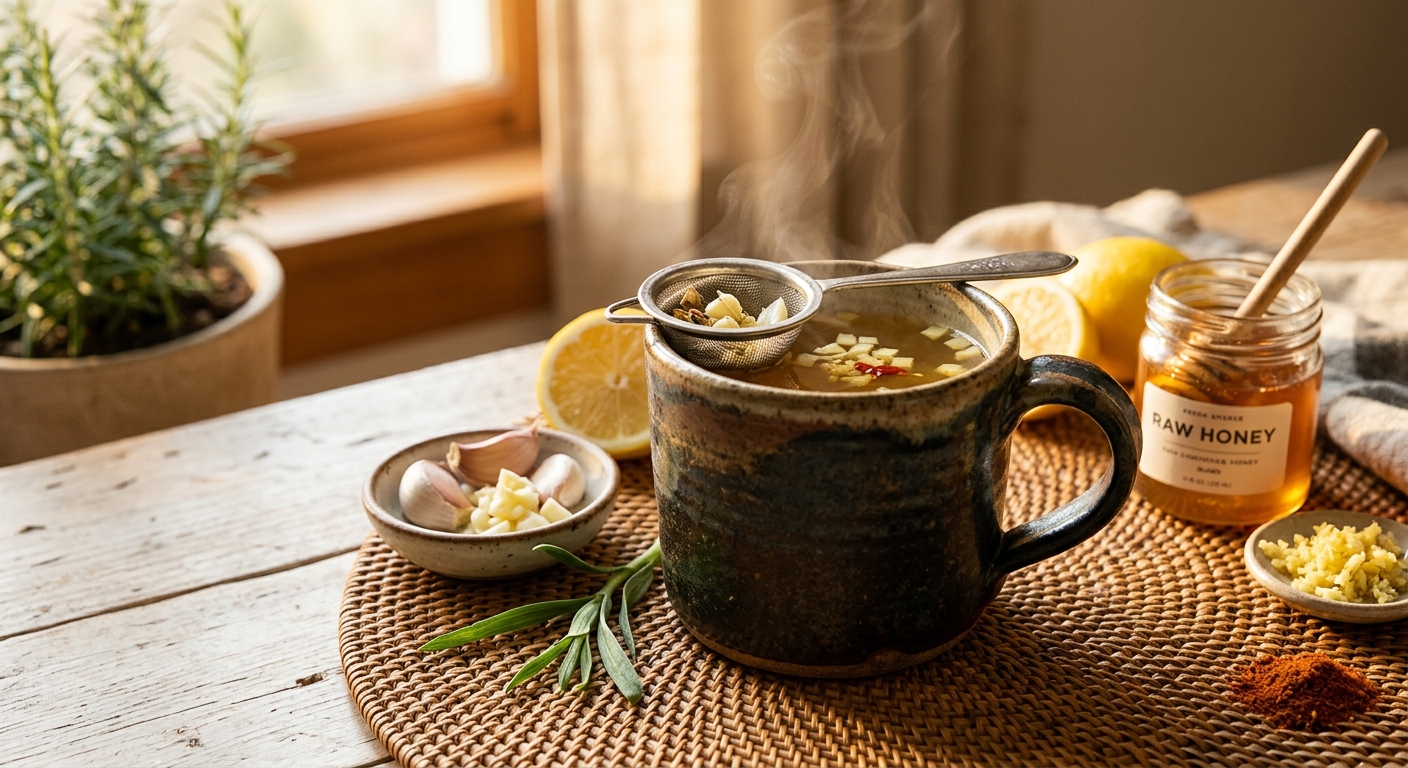
- Place the crushed garlic cloves into a tea infuser, strainer basket, or directly into your mug. Pour the hot water over the garlic and cover the mug with a small plate or lid to trap the volatile aromatic compounds inside.
- Steep for 10 to 15 minutes. A shorter steep produces a milder, more approachable tea. A full 15-minute steep extracts more of the sulfur compounds and produces a noticeably more medicinal, pungent brew.
- Strain out the garlic cloves. Squeeze in fresh lemon juice, which brightens the flavor and adds vitamin C. Stir in raw honey to taste, and add a pinch of cayenne or a slice of fresh ginger if desired. Drink while warm.
- Peel and thinly slice 3 fresh garlic cloves per serving. Place the sliced garlic into a clean glass jar. Allow the sliced garlic to rest uncovered for 10 minutes so that alliinase activity can produce allicin before the cloves are submerged in water.
- Pour room-temperature filtered water over the garlic slices, using approximately 240 ml per serving. Do not use hot water. Seal the jar tightly with a lid to prevent the aromatic compounds from escaping.
- Let the jar sit at room temperature for 1 hour, then transfer it to the refrigerator. Allow the garlic to cold-infuse for a total of 8 to 12 hours, or overnight. The slow, cold extraction pulls flavor and bioactive compounds into the water without any heat degradation.
- Strain the infused liquid through a fine mesh strainer into a glass, pressing gently on the garlic slices to extract remaining liquid. The cold brew will taste noticeably sharper and more raw than the hot brew version.
- Add fresh lemon juice and raw honey to taste. Stir well until the honey fully dissolves in the cold liquid. Consume within 48 hours and store any remainder in the refrigerator.
- Peel and crush 4 to 6 garlic cloves. Peel a 2 cm piece of fresh ginger root and slice it into thin coins. Allow the crushed garlic to rest for 10 minutes to activate allicin production before adding it to heat.
- Place the garlic and ginger slices into a small saucepan. Add 600 ml of filtered water and bring the mixture to a gentle simmer over medium heat. Do not allow it to reach a hard boil, as this creates excessive evaporation and can degrade volatile compounds.
- Reduce heat to maintain a steady, low simmer. Simmer uncovered for 20 to 25 minutes, allowing the liquid to reduce by roughly one-quarter. The resulting decoction will be noticeably more concentrated, darker in color, and more intensely flavored than a standard steep.
- Remove from heat and allow the decoction to cool for 3 to 5 minutes. Strain through a fine mesh strainer into mugs, pressing the garlic and ginger solids firmly to extract every drop of concentrated liquid.
- Stir in the juice of half a lemon and raw honey to taste. Optionally add a pinch of turmeric or black pepper to further enhance the anti-inflammatory profile. Serve warm and sip slowly. This decoction is best consumed immediately while the aromatic compounds are at full potency.
Health Benefits
Allicin and other organosulfur compounds in garlic stimulate the production and activity of white blood cells, particularly natural killer cells and macrophages. A landmark randomized trial published in Advances in Therapy found that participants taking allicin-rich garlic extract had significantly fewer colds and recovered faster than those in the placebo group.
Allicin has demonstrated broad-spectrum antimicrobial activity in laboratory studies, inhibiting the growth of common pathogens including Staphylococcus aureus, E. coli, and Candida albicans. Its antiviral properties have been observed against influenza and rhinovirus strains, making garlic tea a relevant support during respiratory illness season.
Regular garlic consumption has been associated with meaningful reductions in both systolic and diastolic blood pressure in hypertensive individuals, as confirmed by a meta-analysis in the Journal of Nutrition. Ajoene and diallyl disulfide further support heart health by reducing platelet aggregation and lowering LDL cholesterol oxidation.
S-Allylcysteine and quercetin in garlic neutralize reactive oxygen species that drive cellular aging and chronic disease. These compounds help reduce oxidative stress in vascular tissue and have shown neuroprotective effects in preclinical models of cognitive decline.
Garlic tea’s anti-inflammatory and expectorant properties make it particularly useful during upper respiratory infections. The warm steam and volatile sulfur compounds can help loosen mucus, soothe inflamed airways, and reduce the severity of sore throat and nasal congestion when consumed at the onset of illness.
🧪 Key Bioactive Compounds
The Science Behind Garlic
The medicinal reputation of garlic rests almost entirely on its remarkable sulfur chemistry. When a garlic clove is left intact, the precursor compound alliin and the enzyme alliinase are stored in separate cellular compartments. The moment the clove is crushed, chopped, or damaged, these two compounds combine and alliinase catalyzes the rapid conversion of alliin into allicin (diallyl thiosulfinate). Allicin is highly reactive and unstable, which is why it must be produced fresh by crushing garlic before brewing rather than purchasing pre-minced or pre-cooked garlic. Research published in the Journal of Agricultural and Food Chemistry has confirmed that allowing crushed garlic to rest for 10 minutes before applying heat preserves significantly more allicin activity than adding raw garlic directly to boiling water.
Allicin does not survive indefinitely in solution or under sustained high heat, but several of its breakdown products are themselves therapeutically active. Ajoene and diallyl disulfide form as allicin degrades during cooking or prolonged steeping, and both compounds retain meaningful antimicrobial and cardiovascular benefits. More heat-stable compounds such as S-Allylcysteine (SAC) and S-Allylmercaptocysteine (SAMC) are water-soluble, survive brewing temperatures well, and have been extensively studied for their antioxidant, cholesterol-modulating, and neuroprotective effects. This means that regardless of which brewing method you choose, garlic tea always delivers a meaningful spectrum of bioactive sulfur compounds, though the specific profile varies by preparation method.
The immune-modulating effects of garlic are supported by a growing body of clinical evidence. A well-cited randomized controlled trial found that daily allicin supplementation reduced the incidence of the common cold by 63 percent compared to placebo, and shortened recovery time from an average of 5.01 days to 1.52 days. Mechanistically, garlic compounds have been shown to enhance the cytotoxic activity of natural killer cells, increase the proliferation of lymphocytes in response to infection signals, and suppress the production of pro-inflammatory cytokines such as TNF-alpha and IL-6. Quercetin, the flavonoid also present in garlic, adds further antiviral support by interfering with viral replication at the cellular level, making garlic tea a scientifically grounded choice for immune support during cold and flu season.
Brewing Tips
- Always crush or chop garlic at least 10 minutes before adding it to hot water. This resting period activates alliinase and maximizes allicin production before heat deactivates the enzyme.
- Use fresh, firm garlic cloves rather than pre-minced garlic from a jar. Jarred garlic has already undergone processing that destroys alliinase activity and dramatically reduces allicin content.
- If the flavor is too sharp to drink comfortably, add a generous amount of raw honey, a squeeze of lemon, and a slice of fresh ginger. These additions do not reduce the medicinal potency and make the tea significantly more palatable.
- Drink garlic tea at the very first sign of cold or flu symptoms for the greatest benefit. The earlier you begin consuming it during an illness, the more effectively the antimicrobial and immune-stimulating compounds can act.