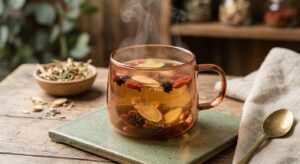
Few herbal pairings carry as much historical weight and modern scientific interest as elderberry and echinacea. Elderberry, derived from the fruit of Sambucus nigra, has been used in European folk medicine for thousands of years, appearing in the writings of Hippocrates, who called the elder tree his “medicine chest.” Indigenous cultures across North America similarly revered echinacea, particularly the Plains tribes who used species like Echinacea purpurea and Echinacea angustifolia for everything from infected wounds to snake bites. Together, these two herbs represent a meeting of Old World and New World plant wisdom.
What makes this blend so compelling is that both herbs work through complementary mechanisms. Elderberry is rich in anthocyanins and flavonols that appear to inhibit viral replication and reduce the severity of flu symptoms. Echinacea, on the other hand, is thought to stimulate the immune system directly, increasing the production and activity of white blood cells. When brewed together, they create a tea that is both preventative in daily use and responsive when illness has already taken hold.
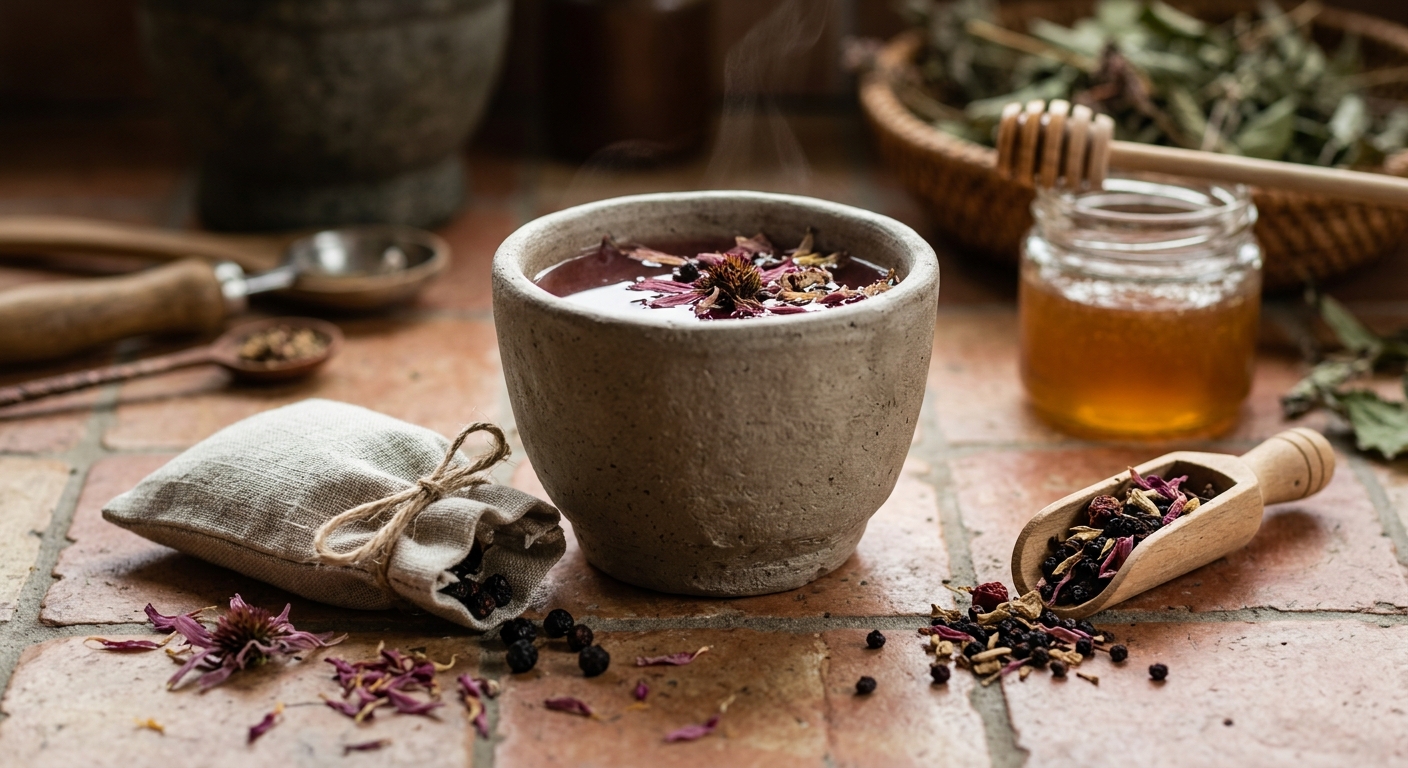
Beyond the science, this is simply a beautiful tea to drink. Elderberries contribute a deep, jewel-toned purple-red liquor with a tart, berry-forward sweetness, while echinacea adds an earthy backbone and a subtle, characteristic tingling sensation on the tongue that herbalists have long associated with the plant’s immune-activating properties. With a little raw honey and a slice of ginger, it becomes one of the most satisfying wellness brews you can prepare at home.
2
cups
Ingredients
- 2 tbspdried elderberries
- 1 tbspdried echinacea root or purpurea herb
- 500 mlwater (95°C / 203°F)
- 1 tspdried rose hips (optional, for extra vitamin C)
- —raw honey to taste
- —fresh lemon slice (optional)
How to Brew
Click on an item below to shop for the recommended items for this recipe on Amazon.
As an Amazon Associate, we earn from qualifying purchases.
- Measure 2 tablespoons of dried elderberries and 1 tablespoon of dried echinacea root or herb into a small saucepan or a large, heatproof infuser. If using rose hips, add 1 teaspoon at this stage.
- Heat 500 ml of filtered water to just below a rolling boil, around 95°C (203°F). Avoid a full boil, which can degrade some of the delicate anthocyanins in the elderberries.
- Pour the hot water over the herbs and cover the vessel with a lid or small plate. Covering the tea traps the volatile aromatic compounds and keeps the brew hot throughout the steep.
- Steep for 10 to 15 minutes. The longer end of the range will produce a more potent, deeper-colored brew. Taste at 10 minutes and extend if you prefer a bolder flavor.
- Strain the tea through a fine-mesh strainer or cheesecloth into a warmed mug, pressing the berries gently with the back of a spoon to extract the remaining liquid.
- Stir in raw honey to taste and add a fresh lemon slice if desired. Drink while warm for the best immune-supporting effect.
- In a glass jar, combine 3 tablespoons of dried elderberries and 1.5 tablespoons of dried echinacea herb or root. Use slightly more herb than the hot brew method to compensate for the slower cold extraction.
- Pour 600 ml of cold, filtered water over the herbs. Stir briefly to ensure the dried berries are fully submerged, as they can float to the surface.
- Seal the jar with a lid and leave it at room temperature for 1 to 2 hours to begin the extraction, then transfer to the refrigerator.
- Allow the blend to steep in the refrigerator for a total of 12 to 18 hours. Overnight is ideal. Check at the 12-hour mark: the liquid should be a rich rose-purple color.
- Strain the cold brew through a fine-mesh strainer lined with cheesecloth, pressing the berries firmly to release their full color and flavor. Discard the spent herbs.
- Serve over ice in a tall glass, sweetened with a small amount of honey syrup (made by dissolving honey in warm water first, so it blends easily into the cold liquid). Garnish with a sprig of fresh mint or a lemon wedge.
- Combine 3 tablespoons of dried elderberries and 1.5 tablespoons of echinacea root (chopped or broken pieces work best) in a small saucepan. Add rose hips if using.
- Pour 700 ml of cold, filtered water into the saucepan with the herbs. Starting in cold water and bringing everything up to temperature together draws out more constituents from dense plant material than adding herbs to pre-boiled water.
- Bring the mixture to a full boil over medium-high heat, then immediately reduce to a low simmer. Partially cover the saucepan with a lid to limit evaporation while still allowing some steam to escape.
- Simmer gently for 20 to 25 minutes, stirring occasionally. As the liquid reduces, you will notice the color deepening to a rich, dark burgundy. The volume will reduce by roughly 20 to 25 percent, concentrating the active compounds.
- Remove from heat and allow the decoction to cool slightly for 5 minutes, then strain through a fine-mesh strainer into a heatproof jug, pressing the berries firmly with a wooden spoon to extract every drop.
- Pour into mugs and sweeten with raw honey. Because this is a concentrate, you may wish to dilute it slightly with hot water to taste. A typical serving is about 120 to 150 ml of strained decoction per cup. Store any remaining decoction in the refrigerator for up to 48 hours and reheat gently before drinking.
Health Benefits
Multiple randomized controlled trials have found that elderberry extract can shorten the duration of influenza by an average of four days and reduce symptom severity. Its anthocyanins appear to prevent viral particles from binding to and entering respiratory cells.
Echinacea’s alkylamides and polysaccharides activate macrophages and natural killer cells, the first-line defenders of the innate immune system. Clinical reviews suggest that regular echinacea use may reduce the likelihood of developing a common cold by up to 58 percent.
Elderberries rank among the highest antioxidant-containing fruits measured by ORAC score. The quercetin and anthocyanins in this blend help neutralize free radicals generated during infection and inflammation, reducing oxidative stress on immune cells.
Traditional herbalists across both European and Native American traditions used these plants specifically for upper respiratory complaints. Modern research supports this use, with echinacea shown to reduce inflammation in the nasal passages and elderberry shown to reduce mucus production in flu patients.
Elderberries are a meaningful source of vitamin C, and when rose hips are added to the blend as suggested, the vitamin C content increases substantially. Vitamin C plays a direct role in the production and function of white blood cells and acts synergistically with the flavonoids in this blend.
🧪 Key Bioactive Compounds
The Science Behind Elderberry
The immune-supporting reputation of this blend rests on two distinct but complementary mechanisms. Elderberry’s dark purple-black pigmentation comes from a class of polyphenols called anthocyanins, primarily cyanidin-3-glucoside and cyanidin-3-sambubioside. Research published in journals including Nutrients and the Journal of International Medical Research has shown that these compounds can bind to viral surface proteins, physically preventing influenza virions from attaching to and entering human respiratory epithelial cells. In other words, elderberry may help stop a viral infection at the point of entry, before it gains a foothold.
Echinacea works at a different level of immune defense. Its alkylamides, particularly those found in the root of Echinacea purpurea and Echinacea angustifolia, interact with CB2 cannabinoid receptors on immune cells, triggering an upregulation of cytokine signaling and increasing the phagocytic activity of macrophages. The water-soluble polysaccharides in the aerial parts of the plant further activate natural killer cells and dendritic cells, which are critical for identifying and destroying virally infected cells. Together, alkylamides and polysaccharides create a two-pronged immune activation that operates within both the innate and adaptive arms of the immune system.
When brewed together, these herbs also deliver meaningful amounts of quercetin, caffeic acid derivatives, and rutin, all of which exhibit antioxidant and anti-inflammatory activity in human cell studies. Inflammation is the body’s primary response to infection, but unchecked inflammation can damage healthy tissue. The flavonoids in this blend appear to help calibrate that response, reducing excessive inflammatory signaling via NF-kB pathway inhibition while leaving the core immune response intact. This makes the tea potentially useful not just for shortening illness, but for making the experience of being sick less physically taxing.
Brewing Tips
- Store dried elderberries and echinacea in airtight glass jars away from light and heat, where they will retain their potency for up to 12 months. Discard any herbs that have lost their color or aroma.
- If using echinacea root rather than the aerial herb, consider a brief decoction before adding your elderberries, since root material benefits from longer heat exposure while berries can be added in the last 10 minutes to preserve their anthocyanins.
- For a concentrated immune syrup rather than a tea, simmer the decoction down by half, strain, cool, and then stir in an equal volume of raw honey. This elder-echinacea syrup keeps in the refrigerator for up to three weeks and can be taken by the tablespoon or stirred into hot water.