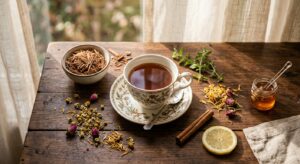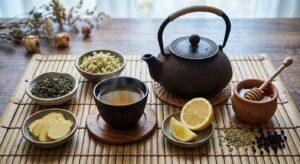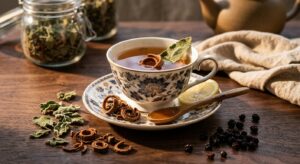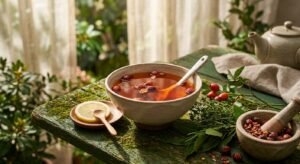
Long before pharmacies lined every street corner, herbalists across cultures reached for a handful of powerful plants when the seasons turned cold and illness crept in. Elderberry was treasured by Native American healers and European folk medicine practitioners alike for its antiviral properties. Echinacea, native to the North American prairies, was a staple remedy of the Plains Indians who used its roots and leaves to treat everything from snakebites to respiratory infections. Rose hips, bursting with vitamin C, were collected across Scandinavia and Asia as a winter tonic, while ginger’s warming, anti-inflammatory fire has fueled traditional medicine in India and China for over 5,000 years. Together, these herbs form a synergistic blend that is far greater than the sum of its parts.
What makes this cold and flu blend genuinely special is the layered approach each herb takes to supporting your immune system. Elderberry works on the viral level, potentially blocking pathogens from entering healthy cells. Echinacea activates white blood cell activity and stimulates innate immunity. Rose hips flood the body with vitamin C and antioxidants, while ginger reduces the inflammation and discomfort that comes with a full-blown cold. The result is a tea that addresses not just the symptoms but the underlying immune response, making it both a preventative tonic and an acute remedy.
This blend also delivers on flavor in a way that purely medicinal teas often fail to do. It is rich, tart, warming, and gently sweet, with the deep berry notes of elderberry and rose hips balancing the spicy kick of ginger and the subtle earthiness of echinacea root. Whether you are sipping it huddled under a blanket at the first sign of fatigue or brewing a cold-infused version to keep in the fridge through peak cold season, this tea is a genuine pleasure to drink.
2
cups
Ingredients
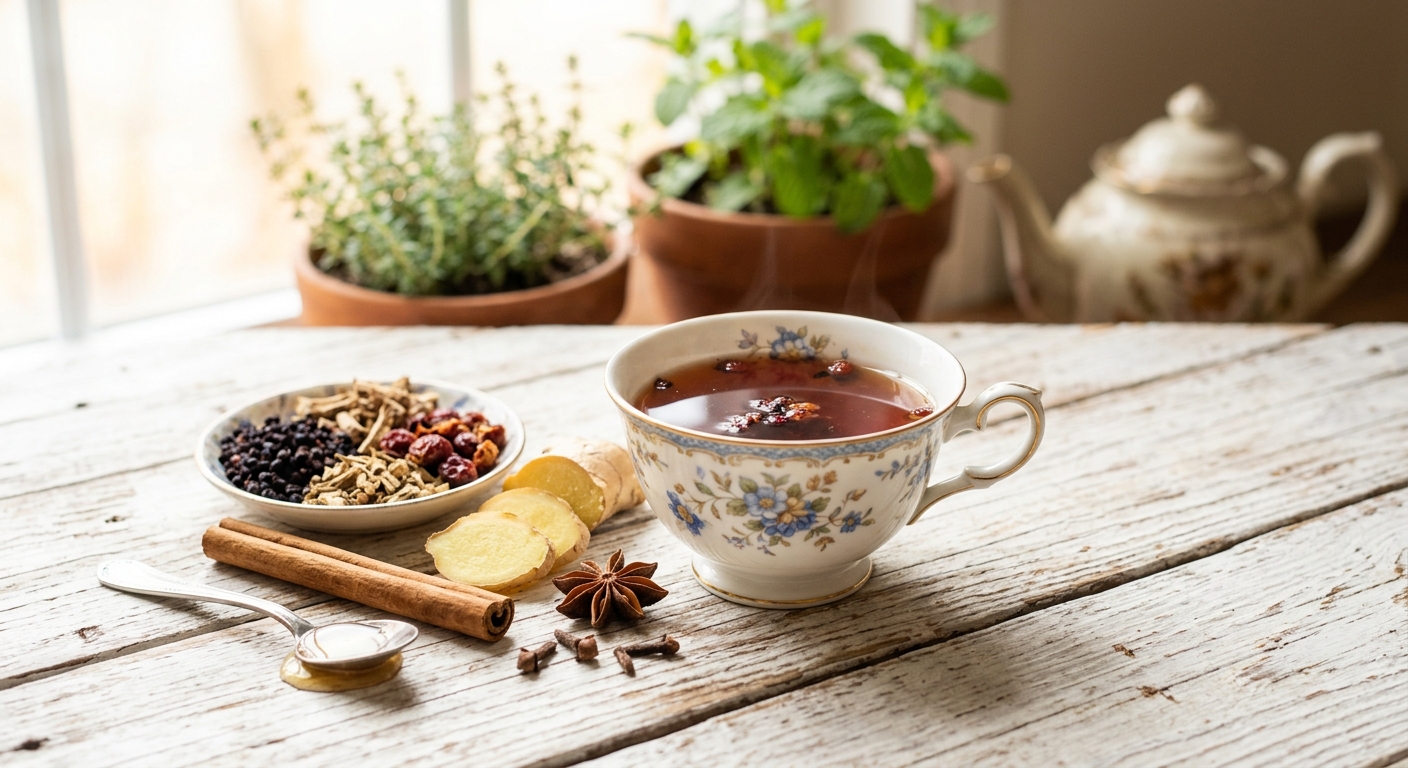
- 2 tspdried elderberries
- 1 tspdried echinacea root or purpurea herb
- 1 tspdried rose hips (crushed)
- 4 slicesfresh ginger root (or 1/2 tsp dried ground ginger)
- 480 mlwater (100°C / 212°F)
- —raw honey to taste (optional)
- —fresh lemon juice to taste (optional)
How to Brew
Click on an item below to shop for the recommended items for this recipe on Amazon.
As an Amazon Associate, we earn from qualifying purchases.
- Bring 480 ml of fresh, filtered water to a full boil at 100°C (212°F). Using filtered water makes a noticeable difference in flavor clarity.
- Add the dried elderberries, echinacea root or herb, crushed rose hips, and ginger slices directly to a small saucepan or a large teapot with a built-in strainer. If using a teapot, make sure the infuser basket is deep enough for the berries to expand.
- Pour the boiling water over the herbs and cover immediately with a lid. Covering the pot traps volatile aromatic compounds and prevents the beneficial essential oils in ginger from escaping as steam.
- Steep for 12 to 15 minutes. For a stronger medicinal brew, steep for up to 20 minutes. The color will deepen to a rich ruby or dark violet as the elderberries release their anthocyanins.
- Strain the tea through a fine mesh strainer into your mug, pressing gently on the solids to extract the last of the liquid.
- Add raw honey and a squeeze of fresh lemon juice to taste. Both enhance the flavor and contribute additional antimicrobial and vitamin C benefits. Drink warm and repeat 2 to 3 times daily at the onset of symptoms.
- Combine the dried elderberries, rose hips, echinacea herb, and ginger slices in a clean glass jar. Use a slightly higher ratio than hot brew, about 1.5 times the quantity of herbs, since cold water extracts compounds more slowly and less completely.
- Pour 480 ml of cold, filtered water over the herbs. Do not use hot water for this method, as cold extraction preserves more of the delicate polyphenols and vitamin C found in rose hips.
- Stir gently to ensure all the herbs are fully submerged. Place a lid or cover loosely on the jar to prevent odor absorption from the refrigerator.
- Allow the jar to sit at room temperature for 30 minutes to begin extraction, then transfer to the refrigerator. Steep for 10 to 12 hours or overnight.
- The next morning, strain the tea through a fine mesh strainer or cheesecloth into a clean pitcher or bottle. Press lightly on the herbs to release remaining liquid.
- Serve over ice or gently warm a single portion on the stovetop without boiling. Stir in honey to taste. The cold brew will keep refrigerated for up to 48 hours. Shake or stir before each serving.
- Combine the dried elderberries, echinacea root, crushed rose hips, and ginger slices in a small saucepan. Add 600 ml of cold, filtered water, which is slightly more than the standard serving to account for evaporation during simmering.
- Place the saucepan over medium heat and bring the water slowly to a gentle simmer. Do not boil vigorously, as a rolling boil can degrade some of the more fragile polyphenolic compounds. Aim for a steady, low simmer with small bubbles rising from the bottom of the pan.
- Once simmering, reduce the heat to low and maintain a gentle simmer for 20 to 30 minutes uncovered. As the liquid reduces, the colors will deepen and the aroma will intensify. The elderberries will swell and soften considerably.
- After 20 to 30 minutes, remove the saucepan from the heat and allow it to cool slightly for 3 to 5 minutes. This brief rest allows the herb matter to settle and makes straining easier.
- Strain the decoction through a fine mesh strainer or cheesecloth into a mug or heatproof pitcher, pressing firmly on the spent herbs to extract every last drop of the concentrated liquid.
- You will have a deeply concentrated, richly colored decoction. If it tastes very intense, dilute with a small amount of hot water to preference. Sweeten with raw honey and a generous squeeze of lemon juice. Drink one cup up to three times daily while symptoms persist.
Health Benefits
Multiple randomized controlled trials have found that elderberry extract significantly reduces the duration and severity of influenza and cold symptoms, with one meta-analysis published in Complementary Medicine Research concluding that supplementation substantially reduced upper respiratory symptoms. Echinacea has similarly been shown in clinical trials to reduce the duration of the common cold by 1 to 2 days when taken at onset.
Echinacea’s alkylamides and polysaccharides activate macrophages and natural killer cells, increasing the body’s first-line immune response. Importantly, research suggests echinacea acts as an immunomodulator rather than a simple stimulant, helping balance the immune response to avoid the cytokine overreaction that worsens severe respiratory illness.
Rose hips deliver among the highest concentrations of vitamin C of any food source, alongside carotenoids and polyphenols that neutralize free radicals generated during infection. Ginger’s 6-gingerol and shogaol compounds directly inhibit pro-inflammatory enzymes, reducing the fever, aches, and throat inflammation that accompany a cold.
Ginger’s warming properties increase circulation to the throat and airways, providing immediate comfort for soreness and congestion. Elderberry’s mucilaginous polysaccharides coat and soothe irritated mucous membranes, while the mild acidity of rose hips and lemon creates an environment less hospitable to bacterial secondary infections.
Taken as a regular tonic during cold and flu season, this blend helps prime the immune system before exposure. Research on elderberry and echinacea shows both herbs increase baseline levels of immunoglobulins and interferon, the signaling proteins that coordinate early antiviral defense, making the body quicker to respond when a pathogen is encountered.
🧪 Key Bioactive Compounds
The Science Behind Elderberry
The antiviral reputation of elderberry (Sambucus nigra) is backed by a growing body of clinical evidence. Its dark pigment comes from anthocyanins, particularly cyanidin-3-glucoside and cyanidin-3-sambubioside, which have been shown in laboratory studies to bind directly to influenza hemagglutinin proteins. This binding appears to prevent the virus from attaching to and penetrating host cells, effectively acting as a first-line molecular barrier. A 2016 randomized, double-blind, placebo-controlled trial published in Nutrients found that air travelers supplementing with elderberry extract experienced significantly shorter and less severe colds than the placebo group, lending clinical weight to these in-vitro mechanisms.
Echinacea’s immune benefits operate through distinct but complementary pathways. Its alkylamides, which are found in high concentrations in Echinacea purpurea and angustifolia root, are lipophilic and readily absorbed through oral mucosa and into systemic circulation. Once absorbed, they bind to cannabinoid receptor type 2 (CB2), which is expressed on a wide range of immune cells including macrophages and T-lymphocytes. This interaction does not suppress immunity like a corticosteroid; instead, it fine-tunes cytokine signaling, helping the immune system mount an efficient response without the runaway inflammation that characterizes severe viral illness. Meanwhile, echinacea’s caffeic acid derivatives, including echinacoside and cichoric acid, enhance phagocytic activity and have demonstrated direct antiviral and antibacterial properties in multiple in-vitro studies.
Ginger (Zingiber officinale) contributes to this blend primarily through its phenolic compounds, 6-gingerol in fresh ginger and 6-shogaol in dried ginger, both of which are potent inhibitors of cyclo-oxygenase (COX) and lipoxygenase (LOX) enzymes. These are the same enzymatic pathways targeted by over-the-counter anti-inflammatory medications like ibuprofen, meaning ginger provides genuinely meaningful relief from the fever, muscle aches, and throat inflammation of a cold through a recognized biochemical mechanism. Rose hips complete the synergy by delivering one of the highest natural concentrations of ascorbic acid available, alongside carotenoids such as beta-carotene and lycopene, and the flavonoid quercetin, which itself has been shown to inhibit viral RNA polymerase and reduce the replication rate of influenza strains in cell culture models.
Brewing Tips
- Keep a pre-mixed batch of the dry herb blend in an airtight jar throughout cold and flu season so you can brew a cup in minutes without measuring each herb individually when you are already feeling unwell.
- For the strongest decoction, use echinacea root rather than the aerial parts of the plant, as the root contains higher concentrations of alkylamides and echinacoside. Look for Echinacea purpurea or angustifolia root at reputable herbal suppliers.
- Always use dried elderberries from a reputable source and never attempt to brew with raw fresh berries picked from the wild, as unripe or improperly prepared elderberries contain cyanogenic glycosides that cause gastrointestinal distress. Dried commercial elderberries have been processed to eliminate this risk.