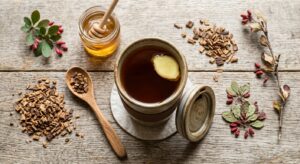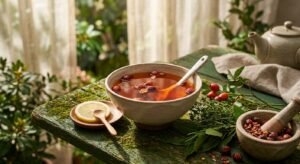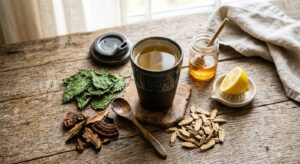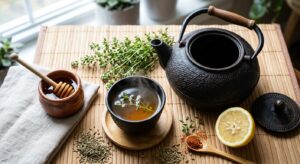
The lymphatic system is one of the body’s most underappreciated networks, a quiet but tireless web of vessels, nodes, and organs that filters waste, transports immune cells, and keeps fluid balance in check. Unlike the cardiovascular system, the lymph has no dedicated pump, relying instead on muscle movement, breathing, and, as generations of herbalists have believed, the gentle nudging of specific medicinal plants. Lymphatic Support Tea draws on a tradition as old as European folk medicine and Ayurvedic practice, combining herbs that have long been called “lymphagogues,” plants traditionally used to encourage lymph flow and reduce stagnation.
The blend at the heart of this recipe pairs cleavers (Galium aparine), one of the most celebrated lymphatic tonics in Western herbalism, with the vibrant petals of calendula (Calendula officinalis), the warming spice of ginger root, and the gentle sweetness of red clover blossoms (Trifolium pratense). Cleavers has been prescribed since at least the time of Dioscorides for swollen glands and skin conditions linked to sluggish lymph. Calendula, revered across medieval Europe and into Ayurveda, contributes anti-inflammatory resins and powerful flavonoids that support lymph node health and mucosal immunity. Together these herbs create a brew that is both purposeful and surprisingly pleasant to drink.
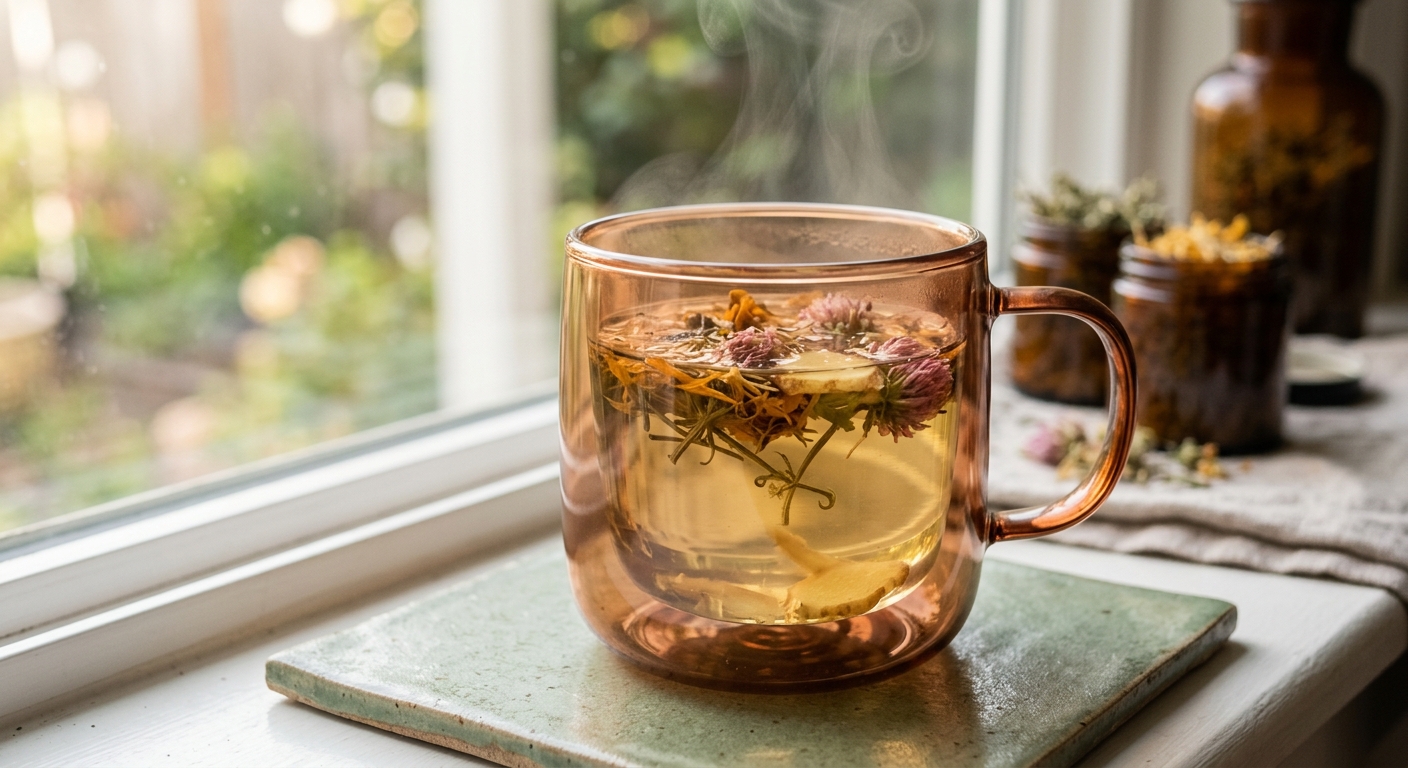
Sensory experience matters as much as therapeutic intent, and this tea delivers on both counts. The cup opens with an earthy, slightly grassy base from the cleavers, softened by the warm honey-like sweetness of red clover and lit up by the gentle heat of ginger. Calendula lends a faintly resinous, almost marigold brightness and turns the liquid a beautiful amber-gold. It is a tea that feels like a slow, deliberate act of care, the kind of ritual that suits a quiet morning or an evening wind-down, especially during cold and flu season when the lymph nodes can use all the support they can get.
2
cups
Ingredients
- 2 tspdried cleavers (Galium aparine)
- 1 tspdried calendula petals
- 1 tspdried red clover blossoms
- 0.5 tspfresh ginger root, thinly sliced (or 0.25 tsp dried)
- 480 mlwater (85 to 90°C / 185 to 194°F)
- —raw honey or maple syrup to taste (optional)
- —a squeeze of fresh lemon juice (optional)
How to Brew
Click on an item below to shop for the recommended items for this recipe on Amazon.
As an Amazon Associate, we earn from qualifying purchases.
- Heat fresh filtered water to 85 to 90°C (185 to 194°F). If you do not have a temperature-controlled kettle, bring water to a full boil and allow it to rest for 3 to 4 minutes before using.
- Combine the dried cleavers, calendula petals, red clover blossoms, and ginger slices in a tea infuser, muslin bag, or directly in a teapot. For two servings, use the full ingredient quantities listed above.
- Pour the hot water over the herbs, ensuring all plant material is fully submerged. Place a small saucer, lid, or piece of foil over your mug or teapot to prevent aromatic steam from escaping.
- Steep for 10 to 15 minutes. A longer steep draws out more of the lymphagogue compounds from cleavers and the flavonoids from calendula, resulting in a deeper color and more pronounced therapeutic character.
- Remove the infuser or strain through a fine mesh strainer. Press the herbs gently with the back of a spoon to extract every last drop.
- Taste the tea before sweetening. If desired, stir in raw honey once the temperature has dropped slightly to preserve its enzymes. Add a squeeze of lemon to brighten the flavor and support vitamin C intake. Drink one to two cups daily for best results.
- Measure out the full recipe quantity of dried cleavers, calendula petals, red clover blossoms, and ginger into a clean glass jar. For a cold brew, slightly increase the cleavers to 3 teaspoons per 480 ml to compensate for the gentler extraction of cold water.
- Pour room-temperature filtered water (not chilled) over the herbs. The initial room-temperature contact helps the plant cell walls begin to release their compounds before refrigeration slows the process. Stir briefly to wet all the herbs.
- Seal the jar with a lid or cover tightly with a clean cloth and rubber band. Place the jar on the counter for 30 to 60 minutes at room temperature, then transfer to the refrigerator.
- Allow the herbs to steep in the refrigerator for 8 to 12 hours. Overnight is ideal. The slow, cold extraction draws out a smooth, mildly sweet, and grassy infusion that showcases cleavers at its most refreshing.
- In the morning, strain the tea through a fine mesh strainer or cheesecloth, pressing the herbs firmly to capture all the liquid. Discard the spent herbs.
- Serve over ice or lightly chilled. Stir in a small drizzle of honey or a slice of fresh lemon. The cold brew will keep refrigerated in a sealed jar for up to 48 hours.
- Choose a bright, sunny morning for brewing. Add the full recipe quantity of dried cleavers, calendula petals, red clover blossoms, and ginger into a large, clean glass jar. Increase the herb quantity by 25 percent compared to the hot brew recipe, as sun tea extracts more gently than hot water.
- Fill the jar with fresh cold or room-temperature filtered water and stir briefly to ensure the herbs are fully submerged. Seal with a lid or secure a clean cloth over the opening.
- Place the jar in a sunny outdoor spot or on a south-facing windowsill where it will receive direct sunlight. The gentle heat (30 to 45°C) slowly coaxes the herbs’ soluble compounds into the water without destroying delicate aromatic molecules.
- Allow the jar to steep in the sun for 3 to 5 hours, checking occasionally. The liquid will shift from pale yellow to a warm amber-gold as calendula carotenoids and cleavers chlorophyll infuse into the water.
- Bring the jar inside, strain the tea through a fine mesh strainer or cheesecloth, and taste. Sun tea has a naturally gentle, rounded flavor. Sweeten with honey or agave if desired and serve immediately over ice or at room temperature.
- Consume the sun tea the same day it is brewed. Do not store sun tea overnight, as the warm brewing temperature can encourage bacterial growth over time.
Health Benefits
Cleavers has been used as a lymphagogue in Western herbal medicine for centuries, and contemporary herbalists cite its iridoid glycosides and tannins as the compounds behind its ability to reduce swollen lymph nodes and ease fluid retention in surrounding tissues. While large-scale clinical trials are still limited, its traditional use across European and North American herbal systems is well-documented.
Calendula’s triterpenoid saponins, including oleanolic acid, have been shown in in vitro studies to stimulate lymphocyte activity and natural killer cell function, two pillars of innate immunity. Red clover isoflavones contribute additional antioxidant and immunomodulating effects that help the immune system respond proportionately rather than overreacting.
Ginger’s 6-gingerol and shogaol compounds are well-studied inhibitors of COX-2 and NF-kB pathways, two central drivers of chronic inflammation. Combined with luteolin from calendula, this blend addresses inflammatory signaling at multiple points, potentially reducing the underlying tissue congestion that burdens the lymphatic system.
The lymphatic system works alongside the liver and kidneys to filter metabolic waste, and several herbs in this blend support that partnership. Cleavers has historically been used to support kidney function and urinary output, helping to move filtered waste out of the body, while calendula’s hepatoprotective flavonoids may support liver processing of cellular debris transported by lymph.
Red clover’s biochanin A and formononetin are potent antioxidants that protect lymph node tissues and immune cells from oxidative damage. Calendula’s carotenoids, including beta-carotene and lycopene precursors, further reinforce this antioxidant defense, helping to keep the lymphatic network functioning under conditions of oxidative stress such as illness or infection.
🧪 Key Bioactive Compounds
The Science Behind Cleavers
The scientific case for lymphatic-supportive herbs is still developing, but the evidence pointing to cleavers and calendula is promising. Cleavers (Galium aparine) contains asperuloside, a bicyclic iridoid glycoside that has demonstrated anti-inflammatory and mild diuretic activity in preclinical models. Iridoids are known to modulate NF-kB signaling, one of the master regulators of the inflammatory response, and their presence in cleavers aligns with the plant’s long-standing traditional reputation for reducing lymph node congestion and tissue swelling. Cleavers also contains significant quantities of tannins and chlorophyll, compounds that contribute to its mild astringency and its traditional reputation as a blood and lymph purifier.
Calendula (Calendula officinalis) has attracted considerably more laboratory attention. Its oleanolic acid and ursolic acid triterpenoids have been shown in multiple cell studies to stimulate macrophage activity and lymphocyte proliferation, directly enhancing the cellular arm of innate immunity. A 2009 study published in the Journal of Clinical Oncology found that calendula cream outperformed trolamine in preventing acute dermatitis in breast cancer patients receiving radiotherapy, suggesting real anti-inflammatory potency. In the context of a lymphatic tea, calendula’s flavonoids, particularly luteolin and quercetin, inhibit the release of histamine and pro-inflammatory interleukins, helping to quiet the kind of low-grade systemic inflammation that impairs lymph flow and contributes to swollen nodes.
Red clover’s isoflavones, formononetin and biochanin A, act as phytoestrogens but also carry meaningful antioxidant and anti-inflammatory activity independent of estrogenic pathways. Research published in Phytotherapy Research has highlighted their ability to reduce oxidative stress markers and modulate immune cytokines. Ginger’s 6-gingerol rounds out the blend with its well-characterized COX-2 inhibition and its ability to improve peripheral microcirculation, a factor directly relevant to lymph movement since lymphatic capillaries rely on interstitial fluid pressure and local blood flow dynamics to function efficiently. Together, these four herbs target the lymphatic system from complementary biochemical angles, offering a blend that is greater than the sum of its individual parts.
Brewing Tips
- Use the freshest dried cleavers you can source. Cleavers loses potency relatively quickly after drying, so store it in an airtight amber glass jar away from heat and light, and replace your supply every six to twelve months for maximum therapeutic value.
- If you have access to fresh cleavers in spring, use three times the dried quantity (about 2 tablespoons of loosely packed fresh herb per cup) for an exceptionally vibrant cold infusion. Fresh cleavers cold brew is a classic spring tonic in traditional Western herbalism.
- Drink this tea consistently for two to four weeks to notice cumulative lymphatic and immune benefits. A single cup is pleasant, but the herbs in this blend are gentle tonics that work best when taken as part of a regular daily ritual, ideally alongside light movement or dry brushing to further encourage lymph flow.