Deep in the rainforests of Peru and other parts of Central and South America grows a formidable woody vine known as Uncaria tomentosa, named for the curved, claw-like thorns that help it climb toward the forest canopy. For at least two thousand years, indigenous Amazonian peoples, including the Asháninka of Peru, have harvested the bark and root of this plant to brew tonics used for inflammation, infections, digestive disturbances, and to support overall vitality. European explorers and later researchers began documenting its use in the twentieth century, and by the 1990s cat’s claw had become one of the most internationally traded medicinal plants from the Amazon basin.
What sets cat’s claw apart from most herbal teas is the nature of its medicinal material. Rather than delicate leaves or flowers, the active compounds reside in the inner bark and root bark, both fibrous and dense tissues that require a longer, more deliberate extraction than a standard steep. This is a tea that rewards patience, and the resulting brew is earthy, slightly bitter, and deeply warming, with a quality that feels unmistakably medicinal. Traditional healers often describe it as a plant that works slowly and systematically, strengthening the body from within rather than offering quick symptomatic relief.
Modern phytochemical research has validated much of what Amazonian healers knew empirically. Scientists have identified a rich profile of oxindole alkaloids, polyphenols, and glycosides in the bark that modulate immune function, inhibit pro-inflammatory pathways, and exhibit antioxidant activity. Today cat’s claw is used in integrative medicine settings to support immune resilience during cold and flu season, to ease joint inflammation, and to promote gut health. It is one of the few Amazonian plants with a substantial body of clinical and preclinical evidence backing traditional claims.
2
cups
Ingredients
- 2 tbspdried cat’s claw bark (cut and sifted or powdered)
- 500 mlwater
- —raw honey to taste (optional)
- —fresh lemon slice (optional, to brighten flavor)
- —cinnamon stick (optional, complements the earthy notes)
How to Brew
Click on an item below to shop for the recommended items for this recipe on Amazon.
As an Amazon Associate, we earn from qualifying purchases.
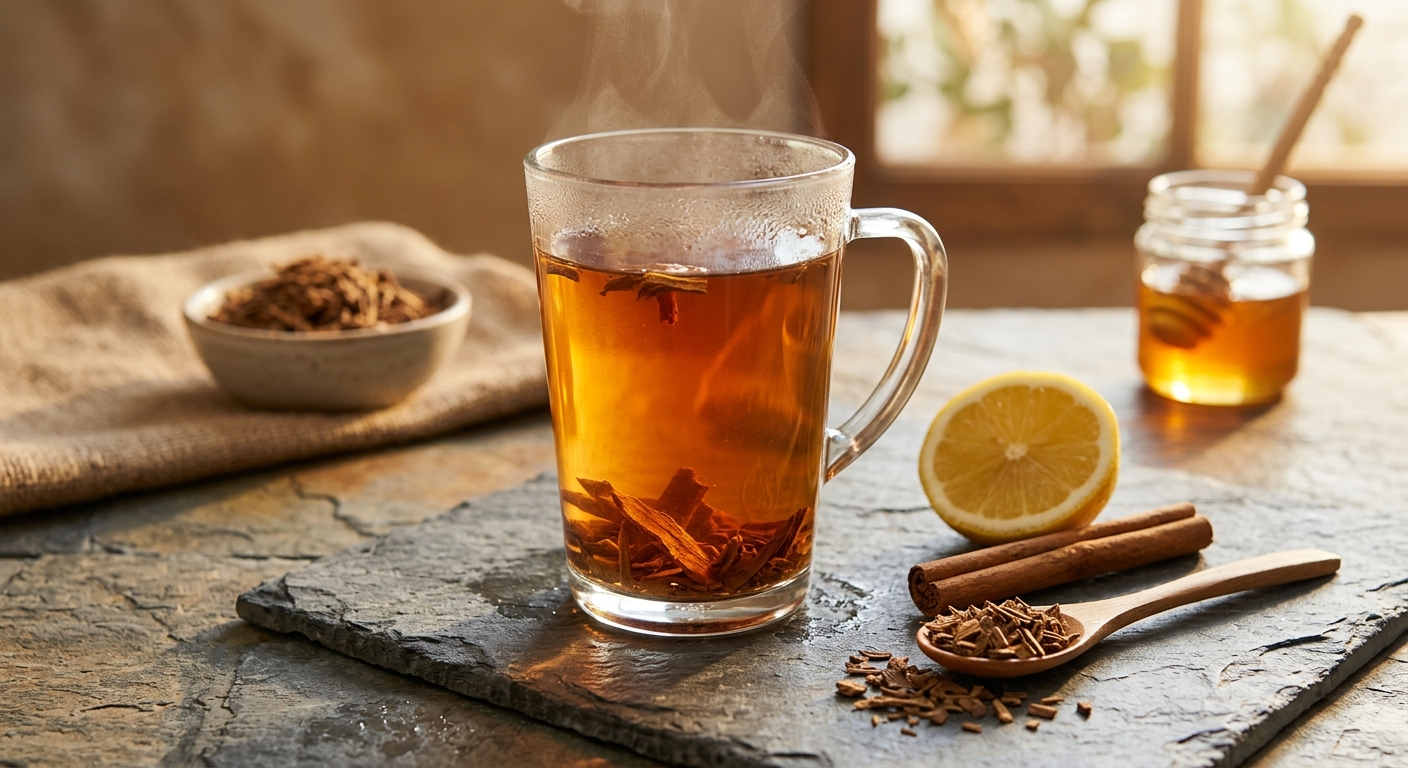
- Add 2 tablespoons of dried cat’s claw bark to a small saucepan and pour in 500 ml of cold, filtered water. Starting with cold water allows the bark to hydrate gradually before heat is applied, which improves extraction.
- Bring the water to a full rolling boil over medium-high heat, then immediately reduce to a gentle simmer. The surface should show soft, lazy bubbles rather than a vigorous boil.
- Simmer uncovered for 20 to 30 minutes. You will notice the water taking on a deep reddish-amber to mahogany color as the compounds extract. Stir once or twice during this time.
- Remove from heat and allow the decoction to rest for 5 minutes off the stove. This resting period lets the remaining soluble compounds continue to diffuse into the liquid as it cools slightly.
- Pour the liquid through a fine mesh strainer or cheesecloth into a heat-safe mug or pitcher, pressing the spent bark gently to extract every last drop. Discard the bark.
- Add a squeeze of fresh lemon, a drizzle of raw honey, or a cinnamon stick to taste. Serve hot and sip slowly over 15 to 20 minutes.
- Place 3 tablespoons of dried cat’s claw bark into a clean glass jar with a lid. Cold extraction requires a slightly higher bark-to-water ratio to compensate for the lower extraction efficiency at cool temperatures.
- Pour 600 ml of cold, filtered water over the bark. Stir thoroughly with a long spoon to ensure all the bark pieces are submerged and there are no dry clumps floating at the surface.
- Seal the jar and leave it at room temperature for 2 hours to begin hydration and allow initial compound diffusion. Then transfer the jar to the refrigerator.
- Let the bark infuse in the refrigerator for a further 10 to 16 hours, for a total steeping time of 12 to 18 hours. The longer end of this range will produce a deeper color and stronger flavor.
- Remove from the refrigerator and strain the liquid through a fine mesh strainer or nut milk bag into a clean pitcher, pressing gently on the spent bark to extract maximum liquid.
- Serve the cold brew over ice or straight from the refrigerator. Add a slice of lemon or a small amount of honey stirred in beforehand if desired. Keeps refrigerated for up to 3 days.
- Add 4 tablespoons of dried cat’s claw bark to a medium saucepan and cover with 750 ml of cold, filtered water. Using a larger volume of water compensates for evaporation over the long simmer and prevents the liquid from concentrating too quickly.
- Bring to a full boil over medium-high heat, then reduce to a steady, gentle simmer. Place a lid on the pan slightly ajar to allow steam to escape while preventing excessive evaporation.
- Simmer for 45 to 60 minutes, checking the liquid level every 15 minutes. If it reduces below 300 ml before the time is up, add small amounts of hot water to maintain volume. The goal is to finish with approximately 300 to 350 ml of rich, dark concentrate.
- Remove from heat and allow to cool for 10 minutes in the pan. The liquid should be a very deep mahogany color with a full-bodied, intensely earthy aroma.
- Strain the concentrate through a fine mesh strainer or cheesecloth into a clean glass jar with a tight-fitting lid, pressing firmly on the spent bark to recover all liquid. Discard the bark.
- Allow to cool completely before sealing and refrigerating. To serve, dilute one part concentrate with two to three parts hot or cold water depending on your preferred strength. Add honey, lemon, or a pinch of cinnamon as desired.
Health Benefits
The pentacyclic oxindole alkaloids in cat’s claw bark have been shown in clinical and in vitro studies to enhance phagocytic activity and stimulate the proliferation of immune cells. A 2001 randomized controlled trial published in Phytomedicine found that daily cat’s claw extract significantly increased white blood cell counts in healthy volunteers, suggesting meaningful immune support during cold and flu season.
Cat’s claw extract has been shown to inhibit the NF-kB inflammatory signaling pathway, which regulates the production of pro-inflammatory cytokines including TNF-alpha and interleukin-1. Clinical studies in patients with rheumatoid arthritis showed significant reductions in joint swelling and pain scores following supplementation with standardized cat’s claw extracts over several weeks.
The procyanidins and polyphenolic compounds present in cat’s claw bark demonstrate strong free radical scavenging activity in laboratory assays. Regular consumption of antioxidant-rich botanicals is associated with reduced oxidative stress, which plays a role in aging, cardiovascular disease, and immune dysfunction.
Traditional Amazonian use of cat’s claw heavily emphasized its role in soothing gastrointestinal complaints including gastritis, irritable bowel, and intestinal inflammation. Modern research supports this, with studies showing anti-inflammatory effects on intestinal mucosa and some evidence of prebiotic-like activity supporting a balanced gut microbiome.
Quinovic acid glycosides extracted from cat’s claw bark have demonstrated antiviral activity against several RNA viruses in laboratory studies. While human clinical trials specifically for antiviral effects are limited, traditional use during respiratory infections and the mechanistic evidence make it a well-regarded herb for cold and flu recovery protocols.
🧪 Key Bioactive Compounds
The Science Behind Cat’S Claw
The medicinal power of cat’s claw bark is primarily attributed to two classes of alkaloids: pentacyclic oxindole alkaloids (POAs) and tetracyclic oxindole alkaloids (TOAs). Research has shown that these two groups have opposing effects on the immune and central nervous systems, which is why the quality and chemotype of the source material matters enormously. POA-rich preparations from Uncaria tomentosa are the type most studied for immune modulation, and they work by enhancing the activity of phagocytes, the immune cells responsible for engulfing and destroying pathogens. Published studies have demonstrated that POAs stimulate interleukin-1 and interleukin-6 production in macrophages, effectively priming the immune system for a faster and more organized response to infection.
Alongside the alkaloids, cat’s claw contains a notable concentration of carboxyl alkyl esters and quinovic acid glycosides that target inflammatory pathways at the molecular level. The carboxyl alkyl esters have been shown to inhibit NF-kB, a transcription factor that acts as a master switch for the production of inflammation-promoting cytokines. This mechanism is particularly relevant to conditions like rheumatoid arthritis and inflammatory bowel disease, and explains why cat’s claw has been investigated in clinical trials for both conditions with encouraging results. A 2002 study in the journal Rheumatology found that patients with active rheumatoid arthritis who received cat’s claw extract experienced a statistically significant reduction in painful and swollen joint counts compared to placebo.
The antioxidant polyphenols in cat’s claw, particularly the procyanidins and catechins, add another layer of bioactivity. These compounds donate electrons to neutralize reactive oxygen species, protecting cellular membranes, proteins, and DNA from oxidative damage. Oxidative stress is now understood to be a driver of chronic inflammation, accelerated aging, and immune dysfunction, meaning that the antioxidant and anti-inflammatory properties of cat’s claw work synergistically rather than independently. Researchers continue to investigate the full pharmacological profile of this extraordinary bark, and the convergence of traditional knowledge and modern science makes it one of the most compelling subjects in contemporary ethnopharmacology.
Brewing Tips
- Always use cut-and-sifted inner bark rather than whole chunks for better surface area and more efficient extraction during the decoction. Powdered bark extracts quickly but can make straining more difficult, so use cheesecloth if working with powder.
- Pair cat’s claw with a fat-soluble carrier like a small amount of coconut oil or full-fat milk stirred into the finished tea, as some of the plant’s bioactive compounds have improved bioavailability when consumed with lipids.
- Store dried cat’s claw bark in an airtight glass jar away from direct light and moisture. Properly stored bark retains its potency for 18 to 24 months. Check for a rich, earthy aroma when opening the jar as a freshness indicator; bark that smells flat or dusty has likely degraded.