Long before sea buckthorn appeared on the shelves of health food stores, it was already legendary. In ancient Tibet and Mongolia, warriors fed sea buckthorn berries to their horses to promote strength and a glossy coat, and the plant earned the poetic name “shining horse” in classical texts. Traditional Ayurvedic and Tibetan medicine prized every part of the shrub, from its bark to its roots to its extraordinary orange berries, using them to treat wounds, improve digestion, and fortify the body against the brutal cold of high-altitude winters. The Roman writer Theophrastus noted its tenacity in rocky, windswept soils, and modern botanists confirm that this resilient shrub can fix its own nitrogen, surviving where almost nothing else will.
What makes sea buckthorn truly remarkable is its nutritional density. The berries contain somewhere between 400 and 2500 mg of vitamin C per 100 grams depending on the variety and growing conditions, making them one of the most vitamin C-rich foods on the planet, far outpacing citrus fruits. They are also one of the few plant sources of all four omega fatty acids, including the rare omega-7 palmitoleic acid, which supports mucosal membranes and skin integrity. When brewed into tea using the dried berries, the fruit pulp, or the leaves, you unlock a spectrum of flavonoids, carotenoids, and organic acids that work synergistically to support immunity, reduce inflammation, and protect cells from oxidative stress.
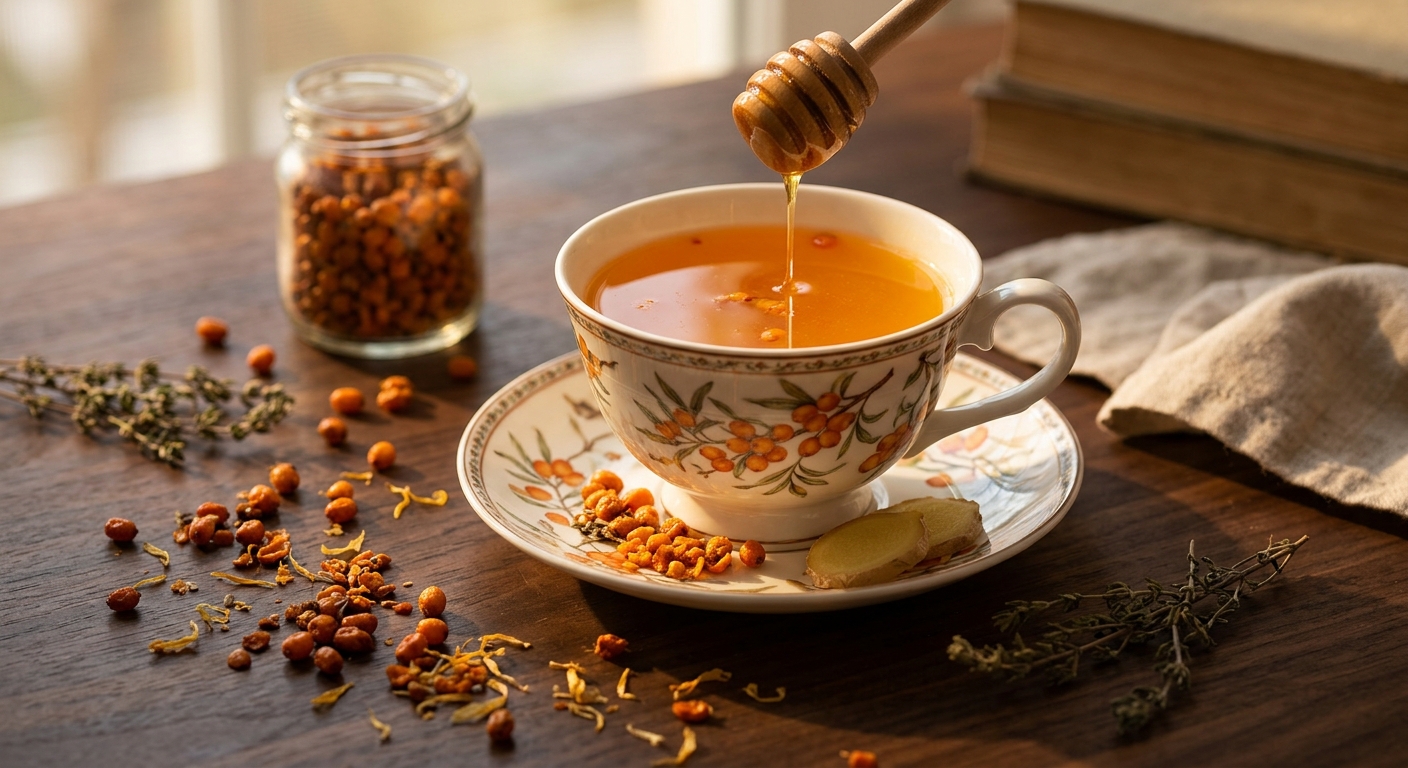
As a tea, sea buckthorn delivers a bold, tangy character that is genuinely unlike anything else in the herbal world. Its flavor sits somewhere between rosehip, passion fruit, and sour citrus, with a vivid orange-gold color that looks almost luminous in the cup. Whether you brew it hot on a winter morning to fend off a seasonal cold, or cold-brew it overnight into a refreshing wellness tonic, sea buckthorn tea is one of the most nourishing and visually stunning cups you can make. It has become a staple of Scandinavian, Russian, and Chinese wellness traditions, and its reputation is only growing as modern research catches up with what traditional healers have known for millennia.
2
cups
Ingredients
- 3 tspdried sea buckthorn berries (lightly crushed)
- 480 mlwater (90°C / 194°F)
- —raw honey or agave syrup to taste (optional)
- —fresh ginger slice (optional, for warmth and synergy)
How to Brew
Click on an item below to shop for the recommended items for this recipe on Amazon.
As an Amazon Associate, we earn from qualifying purchases.
- Measure 1.5 teaspoons of dried sea buckthorn berries per cup. Place the berries on a clean cutting board and lightly crush them with the back of a spoon or a muddler to break the skin and release their interior oils and juice. This step significantly increases the extraction of vitamins and carotenoids.
- Bring fresh filtered water to approximately 90°C (194°F). If you do not have a temperature-controlled kettle, bring water to a full boil, then remove it from the heat and allow it to rest for 60 to 90 seconds before using.
- Place the crushed berries into a fine-mesh tea infuser or directly into your mug. Pour the hot water slowly over the berries, filling the cup completely. The liquid will begin to turn a warm amber-gold color almost immediately.
- Cover your mug with a small saucer or lid to trap the volatile aromatic compounds and retain heat. Allow the tea to steep for 8 to 10 minutes. For a more intense, tarter brew with higher vitamin C extraction, steep for the full 10 minutes.
- Remove the infuser or strain the berries through a fine-mesh strainer. Taste the tea and sweeten with raw honey if desired. A thin slice of fresh ginger added during steeping pairs beautifully with the berry’s tartness and adds warming anti-inflammatory compounds. Serve immediately.
- Measure 2 teaspoons of dried sea buckthorn berries per 240 ml of water, using a slightly higher ratio than hot brew to compensate for slower cold extraction. Lightly crush the berries using a muddler to break the skin, which accelerates flavor and nutrient release without heat.
- Place the crushed berries into a clean glass jar. Pour cold, filtered water over the berries at room temperature. Do not use ice-cold water to start, as starting at room temperature allows the cell walls of the berry to open before refrigeration slows the process.
- Stir the mixture gently once to ensure all berries are fully submerged. Seal the jar with a lid and leave it on the counter for 30 minutes at room temperature to begin extraction, then transfer to the refrigerator.
- Allow the tea to cold-brew in the refrigerator for 10 to 14 hours, or overnight. The liquid will slowly deepen into a beautiful translucent amber-orange. Taste at 10 hours; if you prefer a stronger brew, continue for the full 14 hours.
- Strain the tea through a fine-mesh strainer or cheesecloth into a clean jar or glass, pressing gently on the berries to extract the last of the liquid. Serve over ice, sweeten lightly with honey or agave if desired, and consume within 48 hours for best freshness and nutritional potency.
- Add 2 tablespoons of whole dried sea buckthorn berries per 500 ml of cold filtered water to a small stainless steel or ceramic saucepan. Starting in cold water rather than hot allows the compounds to extract gradually as the temperature rises, producing a richer, more complex brew.
- Place the saucepan over medium heat and slowly bring the water to a gentle simmer. Do not rush this stage. As the water heats, you will notice the liquid beginning to color, shifting from pale to a rich amber-orange as the carotenoids and organic acids dissolve into the water.
- Once a gentle simmer is reached (small, consistent bubbles at the surface), reduce heat to low and maintain the simmer for 15 to 20 minutes. Stir occasionally and keep the saucepan partially covered to reduce evaporation. The liquid will reduce slightly and deepen in color significantly.
- After simmering, remove from heat and allow the decoction to rest uncovered for 5 minutes. This brief rest allows any remaining aromatic compounds to settle back into the liquid rather than escaping as steam.
- Pour the decoction through a fine-mesh strainer lined with cheesecloth into a heatproof jug or mugs, pressing firmly on the spent berries to extract maximum liquid. Sweeten with raw honey once the temperature has dropped to below 60°C (140°F) to preserve the honey’s enzymes. Serve hot or allow to cool and refrigerate for up to 3 days as a concentrated wellness tonic.
Health Benefits
Sea buckthorn’s extraordinary vitamin C content, combined with its flavonoids quercetin and isorhamnetin, stimulates the production and activity of white blood cells including lymphocytes and neutrophils. A 2017 study in the journal Nutrients found that sea buckthorn berry extract significantly enhanced immune cell proliferation and reduced oxidative stress markers in human subjects.
Isorhamnetin and quercetin work together to suppress the NF-kB signaling pathway, one of the central regulators of inflammatory response in the body. Regular consumption has been associated with lower levels of C-reactive protein and pro-inflammatory interleukins in clinical observations, making it useful for chronic low-grade inflammation as well as acute illness.
The rare omega-7 palmitoleic acid found in sea buckthorn berries has been shown in clinical research to support the health and regeneration of mucosal tissues lining the respiratory tract, gut, and oral cavity. Healthy mucous membranes form a physical barrier against invading bacteria and viruses, making this a uniquely structural form of immune support.
Sea buckthorn berries contain a diverse array of carotenoids, tocopherols, and flavonoids that work synergistically to neutralize reactive oxygen species. This broad-spectrum antioxidant activity has been shown to reduce lipid peroxidation and DNA oxidative damage, lowering long-term risk of chronic disease and supporting cellular longevity.
Research published in the European Journal of Clinical Nutrition found that sea buckthorn berry extract lowered serum LDL cholesterol and reduced platelet aggregation in human trials. The combined effects of omega fatty acids, flavonoids, and plant sterols found in the berry contribute to improved arterial elasticity and reduced inflammatory burden on the cardiovascular system.
🧪 Key Bioactive Compounds
The Science Behind Sea Buckthorn
The immune-boosting reputation of sea buckthorn is not simply folk wisdom: it rests on an unusually rich and diverse phytochemical profile that modern researchers are still working to fully characterize. Central to its activity is L-ascorbic acid, better known as vitamin C, present in sea buckthorn berries at concentrations that can exceed those of fresh oranges by a factor of ten or more. Vitamin C is essential for the proliferation and function of T-lymphocytes and natural killer cells, the frontline soldiers of adaptive immunity. It also supports the production of interferon, a signaling protein the body uses to mount antiviral responses. What makes sea buckthorn’s vitamin C particularly effective is the presence of co-occurring flavonoids, especially quercetin, which recycle oxidized ascorbic acid back to its active form, extending its antioxidant effect in the body well beyond what isolated vitamin C supplements can achieve.
Equally important are sea buckthorn’s flavonoids, particularly isorhamnetin, which is found in exceptionally high concentrations in this plant. Isorhamnetin inhibits the NF-kB transcription factor, a master regulator of inflammatory gene expression. When NF-kB is suppressed, the production of pro-inflammatory cytokines such as TNF-alpha, IL-6, and IL-1 beta is reduced, which translates to lower systemic inflammation and a more measured, effective immune response. This is particularly relevant in the context of seasonal illness: an overly aggressive inflammatory response, not just the pathogen itself, is often responsible for the worst symptoms of colds and flu. The carotenoids in sea buckthorn, including beta-carotene, lycopene, and zeaxanthin, add another layer of protection by acting as both antioxidants and precursors to vitamin A, which governs the development of immune cells in the bone marrow and thymus.
Perhaps the most scientifically fascinating aspect of sea buckthorn is its content of omega-7 palmitoleic acid, an unusual monounsaturated fatty acid that is rare in plant foods. Research from the University of Helsinki and other institutions has demonstrated that palmitoleic acid has a particular affinity for epithelial and mucosal tissues, where it promotes cell membrane fluidity and supports regeneration of the mucosal lining. Since the mucous membranes of the respiratory tract and gut represent the body’s first physical barrier against airborne pathogens, keeping them healthy is a foundational component of immune resilience. When you drink sea buckthorn tea prepared as a decoction, you extract more of these lipid-soluble compounds than in a standard hot steep, which is one reason the decoction method has been used historically in Tibetan medicine for immune and respiratory support during harsh winters.
Brewing Tips
- Always crush or lightly score dried sea buckthorn berries before brewing, regardless of method. The skin is tough and waxy, and intact berries release only a fraction of their vitamins and carotenoids compared to crushed ones.
- Store dried sea buckthorn berries in an airtight container away from direct light and heat. Carotenoids and vitamin C degrade with prolonged exposure to light and oxygen, so a dark glass jar in a cool cupboard will preserve potency significantly longer than a clear container on an open shelf.
- If your sea buckthorn tea is too tart for your palate, add a small amount of licorice root to the infuser. Licorice is naturally very sweet and adds a pleasant earthiness that rounds out the berry’s sharp acidity without masking its character, and it contributes its own immune-supportive glycyrrhizin compounds.