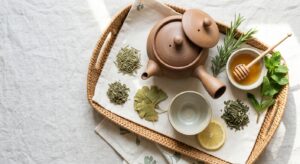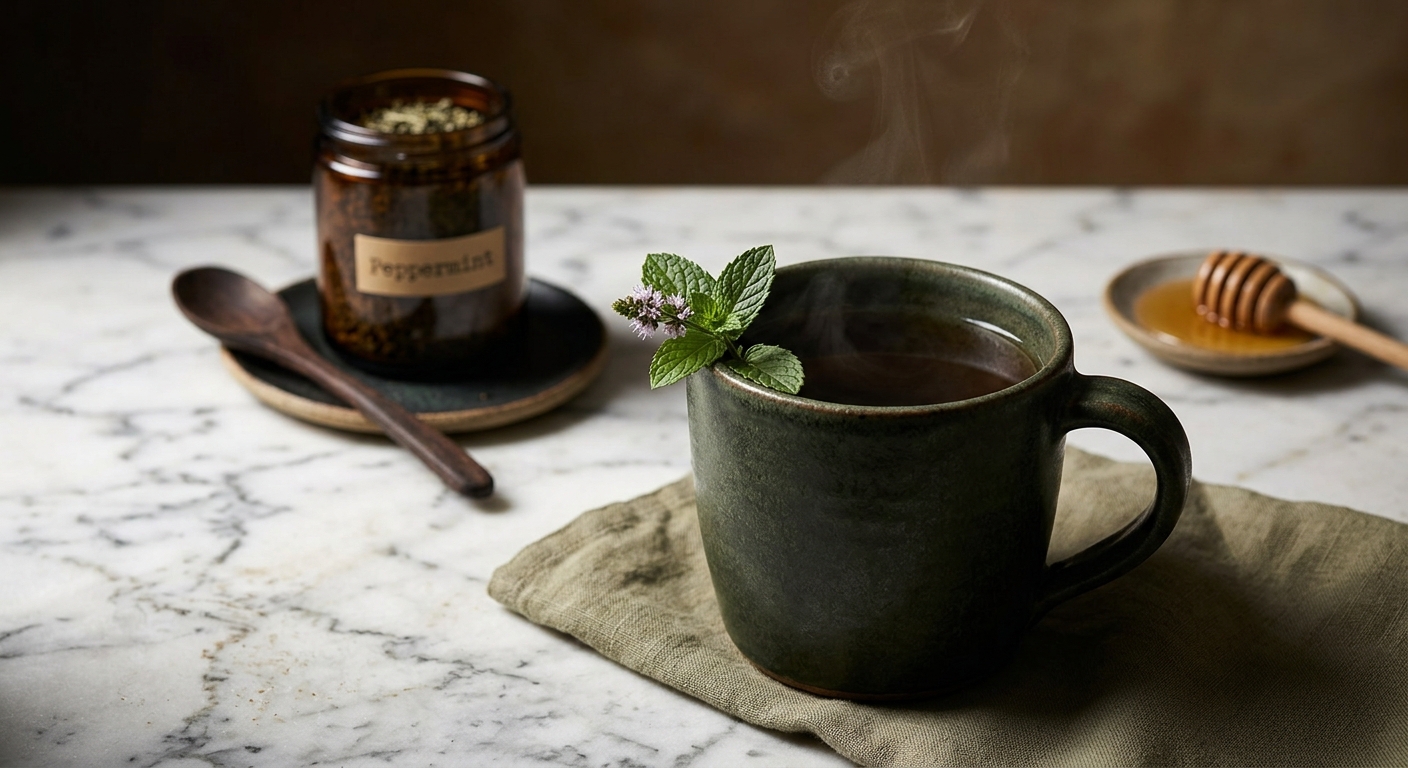
Peppermint has been awakening minds and soothing bodies for thousands of years. Ancient Egyptians cultivated it along the Nile and used it in medicinal preparations, while the Greeks and Romans crowned themselves with peppermint wreaths during feasts, believing the herb sharpened thinking and lifted spirits. In European folk medicine, a cup of strong peppermint tea was the traditional remedy for mental fatigue, head colds, and digestive sluggishness alike. Its reputation as a plant of clarity and vigor has carried faithfully into the modern world.
What makes peppermint exceptional among focus herbs is its immediate, sensory impact. The moment you pour hot water over fresh or dried peppermint leaves, the air fills with a bold, cooling menthol vapor that triggers your trigeminal nerve and wakes up your senses before you take a single sip. This is not merely pleasant aromatherapy. Research from Northumbria University found that simply inhaling peppermint aroma improved memory and alertness in study participants, suggesting the plant works on multiple pathways simultaneously, through scent, taste, and bioactive compounds absorbed through digestion.
Peppermint focus tea is a caffeine-free alternative to coffee and green tea, making it ideal for those who want mental sharpness without the jitteriness or crash. Its clean, bright flavor pairs beautifully with morning routines, afternoon slumps, and study sessions alike. Whether you brew it hot for a warming morning ritual, cold for a refreshing afternoon lift, or as a concentrated shot to add to sparkling water, peppermint delivers clarity in every cup.
2
cups
Ingredients
- 2 tbspdried peppermint leaves (or 4 tbsp fresh peppermint leaves)
- 480 mlwater (90°C / 194°F)
- —raw honey or lemon slice to taste (optional)
How to Brew
Click on an item below to shop for the recommended items for this recipe on Amazon.
As an Amazon Associate, we earn from qualifying purchases.
- Heat filtered water to 90 to 95°C (194 to 203°F). If you do not have a temperature-controlled kettle, bring water to a full boil and let it rest for 60 to 90 seconds before using.
- Measure 1 tablespoon of dried peppermint leaves per 240 ml of water. Place the leaves into a tea infuser or teapot. If using fresh peppermint, lightly bruise the leaves between your fingers before placing them in the infuser to release the essential oils.
- Pour the hot water slowly over the leaves and immediately cover the cup or teapot with a lid or small plate. This traps the volatile menthol compounds that would otherwise escape as steam, preserving both aroma and potency.
- Steep for 5 to 7 minutes. A shorter steep produces a lighter, more delicate cup, while 7 minutes yields a bolder, more intensely cooling brew suited for focus and alertness.
- Remove the infuser, give the tea a gentle stir, and sip slowly. Inhale the steam through your nose as you drink to amplify the clarity-enhancing effects of the menthol vapor.
- Measure 3 tablespoons of dried peppermint leaves (or 6 tablespoons of fresh leaves, lightly bruised) per 480 ml of cold, filtered water. Cold brewing requires a higher leaf-to-water ratio than hot brewing because the slower extraction process pulls fewer compounds per gram of herb.
- Combine the leaves and cold water in a glass jar with a tight-fitting lid. Stir gently to ensure all leaves are fully submerged. Do not use metal containers as they can interact with the herb’s natural acids over a long steep.
- Seal the jar and leave it at room temperature for the first 30 minutes to allow the extraction to begin, then transfer it to the refrigerator. Steep for a total of 8 to 12 hours, or overnight.
- Strain the tea through a fine mesh strainer or cheesecloth into a clean glass, pressing the leaves gently to release the last of the infusion. Serve over ice and add a fresh mint sprig or lemon wheel for a refreshing finishing touch.
- Store any leftover cold brew in a sealed glass bottle in the refrigerator and consume within 48 hours for peak flavor and potency.
- Measure 4 tablespoons of dried peppermint leaves per 240 ml of filtered water – roughly double the standard hot brew ratio. This high concentration ensures a potent extract that retains bold flavor even after dilution.
- Heat water to 90 to 95°C (194 to 203°F) and pour it over the leaves in a small heatproof jar or teapot. Cover immediately with a tight lid to prevent volatile oil loss.
- Steep for 10 to 15 minutes, which is significantly longer than a standard cup. Check the concentrate at 10 minutes – it should be a deep golden-green with an intense, almost medicinal menthol aroma. If you want maximum potency for a focus boost, extend to 15 minutes.
- Strain the concentrate through a fine mesh strainer, pressing the leaves firmly with the back of a spoon to extract all remaining liquid. Discard the spent leaves.
- Allow the concentrate to cool to room temperature, then transfer to a small sealed glass bottle. To serve, mix 60 ml of concentrate with 180 ml of hot or cold water, adjust to taste, and add honey or lemon if desired. Refrigerate unused concentrate and use within 5 days.
Health Benefits
Inhaling and consuming menthol and 1,8-cineole found in peppermint has been shown in multiple studies to increase alertness, working memory, and reaction time. A 2016 study in the International Journal of Neuroscience found that peppermint aroma significantly improved memory and increased alertness compared to controls.
Topical and aromatic use of menthol has long been used to ease headache pain, and drinking peppermint tea may provide similar relief through vasodilation and the cooling effect on cranial blood vessels. A 2016 Cephalalgia review noted that peppermint oil applied to the forehead was comparable to acetaminophen in reducing tension headache severity.
Menthol relaxes the smooth muscle of the gastrointestinal tract, easing spasms, bloating, and indigestion. Multiple clinical trials have demonstrated that peppermint preparations significantly reduce symptoms of irritable bowel syndrome (IBS), including abdominal pain and cramping.
The menthol in peppermint tea acts as a natural decongestant, loosening mucus and opening nasal passages. Breathing in the steam while sipping hot peppermint tea can provide real-time relief from sinus congestion and mild respiratory discomfort.
Peppermint leaves are rich in rosmarinic acid, luteolin, and eriocitrin, which collectively neutralize free radicals and reduce systemic inflammation. Regular consumption of peppermint tea may contribute to long-term cellular protection and a reduced risk of chronic oxidative stress-related conditions.
🧪 Key Bioactive Compounds
The Science Behind Peppermint
The remarkable focus-enhancing reputation of peppermint is not mere folklore. The herb’s most abundant compound, menthol, activates TRPM8 receptors, which are cold-sensitive ion channels found throughout the body, including in the nasal passages and trigeminal nerve. When menthol binds to these receptors, it sends a powerful sensory signal to the brain that mimics the experience of coolness, triggering increased arousal, attention, and alertness. This neurological jolt is one reason why even the aroma of brewing peppermint tea can produce a perceptible sharpening of focus before a single sip is taken.
Equally important is 1,8-cineole (eucalyptol), a monoterpenoid found in meaningful concentrations in peppermint leaf. A 2012 study published in Chemosensory Perception demonstrated that elevated blood serum levels of 1,8-cineole were directly correlated with improved performance on cognitive tasks measuring speed, accuracy, and memory. Researchers proposed that 1,8-cineole inhibits the enzyme acetylcholinesterase, thereby increasing levels of acetylcholine, a key neurotransmitter involved in learning and memory. This mechanism is similar to the action of several pharmaceutical nootropic compounds, but delivered gently through a cup of tea.
Peppermint’s polyphenols, particularly rosmarinic acid and luteolin, contribute a slower, more systemic layer of neuroprotection. Rosmarinic acid crosses the blood-brain barrier and scavenges free radicals that accumulate during periods of high cognitive demand or stress, helping to preserve neuronal integrity over time. Luteolin has been shown in preclinical studies to modulate neuroinflammation by reducing the activity of pro-inflammatory microglia, the immune cells of the brain. Together, these compounds make peppermint tea not just a short-term stimulant but a genuinely brain-supportive herb worth incorporating into a daily wellness routine.
Brewing Tips
- Always cover your cup while steeping peppermint tea. Menthol is highly volatile and escapes quickly with rising steam, so a covered steep can increase the potency of your brew by up to 30 percent.
- For the freshest flavor and highest essential oil content, purchase whole dried peppermint leaves rather than pre-ground or fannings-grade tea bags. Store them in a sealed, opaque glass jar away from heat and light, and use within 12 months of harvest.
- If you grow your own peppermint, harvest leaves in the morning just before the plant flowers, when essential oil concentration is at its peak. Spread them in a single layer on a clean cloth and dry in a well-ventilated space away from direct sunlight for 5 to 7 days before storing.