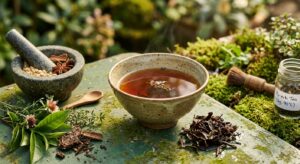
Long before neuroscientists coined the term neurogenesis, healers in China and Japan were prescribing lion’s mane mushroom and ginkgo biloba to restore mental clarity, sharpen memory, and protect the aging mind. Lion’s mane, known botanically as Hericium erinaceus, has been used in Traditional Chinese Medicine for over a thousand years, prized as a tonic for the stomach, nerves, and spirit. Ginkgo biloba, the sole surviving species of a tree lineage that predates the dinosaurs, has been a cornerstone of Eastern botanical medicine for millennia, appearing in texts dating back to the Tang Dynasty as a treatment for cognitive decline and poor circulation to the brain.
What makes this pairing genuinely extraordinary is how well the two botanicals complement each other at the cellular level. Lion’s mane stimulates the production of Nerve Growth Factor (NGF), a protein that signals the brain to create and maintain new neurons, while ginkgo improves cerebrovascular circulation, ensuring those neurons receive the oxygen and glucose they need to thrive. Together they address two distinct but deeply connected pillars of brain health: growth and nourishment. This is not a stimulant tea that borrows energy from tomorrow. It is a slow, restorative brew designed to build cognitive capacity over time.
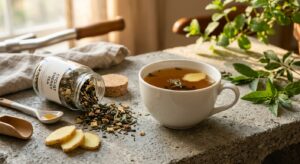
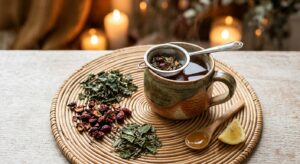
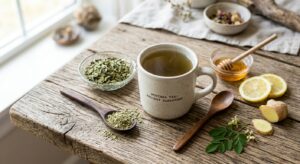
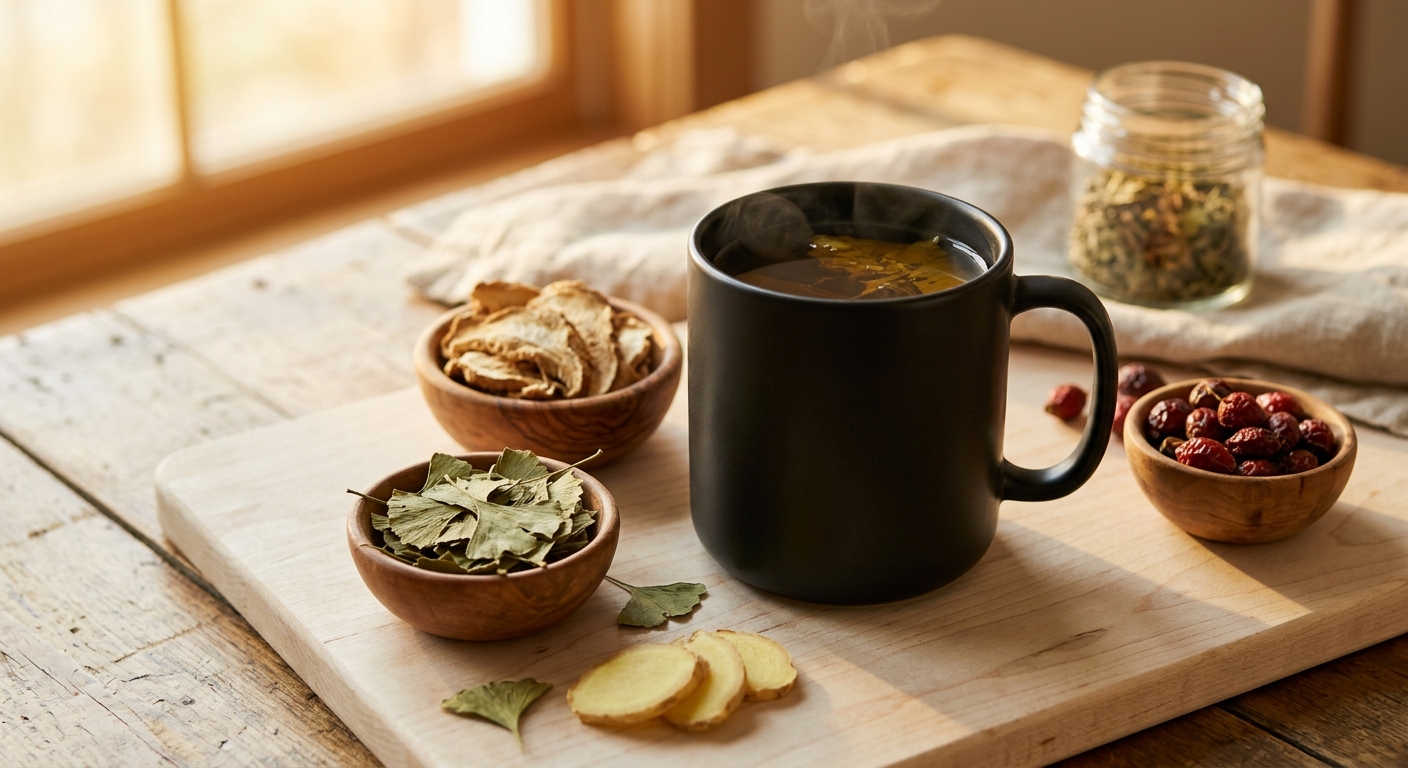
The sensory experience of this tea is quieter than its reputation. Lion’s mane contributes a mild, slightly seafood-like earthiness that softens into a clean, mushroomy warmth, while ginkgo adds a faintly bitter, resinous edge reminiscent of green tea without the caffeine. A small addition of raw rosehips or a sliver of fresh ginger can round out the flavor beautifully and add their own complementary benefits. Brewed with patience and intention, this is a cup best enjoyed in the morning before creative work, or in the early afternoon when mental focus begins to wane.
2
cups
Ingredients
- 2 tspdried lion’s mane mushroom (sliced or powdered)
- 1 tspdried ginkgo biloba leaves
- 500 mlwater (85 to 90°C / 185 to 194°F)
- 1 tspdried rosehips (optional, for flavor balance)
- —raw honey or maple syrup to taste (optional)
- —a few slices of fresh ginger (optional, for warmth)
How to Brew
Click on an item below to shop for the recommended items for this recipe on Amazon.
As an Amazon Associate, we earn from qualifying purchases.
- Heat filtered water to 85 to 90°C (185 to 194°F). If you do not have a temperature-controlled kettle, bring water to a full boil and let it rest uncovered for 3 to 4 minutes before using.
- Add the dried lion’s mane mushroom and dried ginkgo biloba leaves to a tea infuser, muslin bag, or small teapot. If using rosehips and ginger, add them at this stage as well.
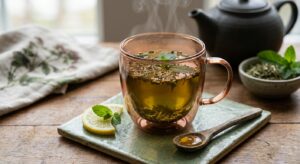
- Pour the hot water over the herbs, ensuring all plant material is fully submerged. Cover the vessel with a lid or small plate to trap the aromatic volatile compounds and hold the temperature steady.
- Steep for 15 to 20 minutes. For a milder brew, remove the herbs at 15 minutes. For maximum extraction of lion’s mane beta-glucans, extend to the full 20 minutes.
- Remove the infuser or strain the tea into two pre-warmed mugs. Stir in honey or maple syrup if desired. Sip slowly over 10 to 15 minutes while the tea is still warm.
- Measure 2.5 teaspoons of dried lion’s mane mushroom and 1.5 teaspoons of dried ginkgo biloba leaves into a clean glass jar. Use slightly more herb than for hot brew to compensate for the lower extraction efficiency of cold water.
- Pour 600 ml of cold, filtered water over the herbs. Stir gently with a long spoon to ensure all plant material is moistened and none is floating dry at the surface.
- Seal the jar with a lid and leave it at room temperature for 1 hour to allow an initial ambient-temperature extraction before moving it.
- Transfer the sealed jar to the refrigerator and allow it to steep for 10 to 14 hours, ideally overnight. Do not agitate the jar during this period, as undisturbed cold brewing produces a cleaner, clearer liquid.
- When ready to serve, strain the cold brew through a fine mesh strainer or cheesecloth into two glasses filled with ice. Add a thin slice of lemon or a few fresh mint leaves to brighten the earthy flavor profile.
- Combine 3 teaspoons of dried sliced lion’s mane mushroom and 1 teaspoon of dried ginkgo biloba leaves in a small saucepan. Add 650 ml of cold, filtered water.
- Place the saucepan over medium heat and bring the water slowly up to a gentle simmer. Do not rush this stage. A slow rise in temperature allows the compounds to begin extracting gradually before the heat intensifies.
- Once a steady simmer is reached at approximately 90 to 95°C (194 to 203°F), reduce the heat to low and maintain this temperature for 25 to 30 minutes. The liquid will reduce and deepen in color to a rich amber. Keep the lid slightly ajar to prevent a full rolling boil, which can degrade ginkgo flavonoids.
- Remove the saucepan from heat and allow it to rest, covered, for 5 minutes. This resting period allows remaining compounds to diffuse fully into the liquid.
- Strain the decoction through a fine mesh strainer into a measuring cup or teapot, pressing the mushroom pieces gently with the back of a spoon to extract all remaining liquid.
- Pour into mugs. The decoction will be noticeably stronger and earthier than a standard hot brew. Balance the intensity with a spoonful of raw honey and a small pinch of cinnamon if desired.
Health Benefits
Hericenones and erinacines in lion’s mane have been shown in multiple in vitro and animal studies to upregulate NGF synthesis, a protein critical for the survival, growth, and differentiation of neurons. A 2009 double-blind, placebo-controlled trial published in Phytotherapy Research found that older adults consuming lion’s mane showed significant improvements in cognitive function scores that reversed upon discontinuation.
Ginkgo biloba’s ginkgolides inhibit platelet aggregation and dilate cerebral blood vessels, increasing oxygen and glucose delivery to the brain. Meta-analyses covering over 30 clinical trials support ginkgo’s modest but consistent benefit for memory and processing speed, particularly in individuals with early cognitive impairment.
Chronic low-grade inflammation in the brain is a primary driver of neurodegenerative conditions including Alzheimer’s disease. The beta-glucans in lion’s mane and the flavonoid glycosides in ginkgo both independently downregulate pro-inflammatory cytokines such as TNF-alpha and IL-6 in neural tissue, creating a less hostile environment for new neuron growth.
A 2010 study published in Biomedical Research found that women who consumed lion’s mane cookies for four weeks reported significantly lower scores for depression and anxiety compared to a placebo group. Researchers attribute this partly to NGF’s role in maintaining the hippocampus, a brain region central to emotional regulation as well as memory formation.
The combination of NGF stimulation from lion’s mane and neuroprotection from ginkgo’s bilobalide creates a dual defense against the two primary mechanisms of age-related neurodegeneration: insufficient neurotrophic support and oxidative damage to mitochondria in neurons. Long-term use at appropriate doses may slow the rate of cognitive aging in otherwise healthy adults.
🧪 Key Bioactive Compounds
The Science Behind Lion’S Mane Mushroom
The scientific case for this tea rests on two distinct but converging mechanisms. Lion’s mane mushroom contains two families of small, fat-soluble molecules, hericenones derived from the fruiting body and erinacines derived from the mycelium, that are among the only naturally occurring compounds known to stimulate Nerve Growth Factor (NGF) production in mammals. NGF is a neurotrophin, a signaling protein that instructs the brain to grow new neurons, maintain existing ones, and form new synaptic connections, a process called synaptic plasticity. Critically, erinacines are small enough to cross the blood-brain barrier, meaning they act directly on central nervous system tissue rather than peripherally. This distinguishes lion’s mane from most other so-called nootropic herbs, which exert their effects through secondary pathways such as circulation or inflammation.
Ginkgo biloba operates through complementary but mechanistically distinct pathways. Its terpene lactones, particularly ginkgolide B, are potent antagonists of platelet-activating factor (PAF), a lipid mediator involved in platelet aggregation and vascular constriction. By blocking PAF receptors, ginkgolides reduce microvascular resistance in the brain, increasing cerebral blood flow to memory-critical regions including the hippocampus and prefrontal cortex. Simultaneously, bilobalide, a sesquiterpene lactone found exclusively in ginkgo, has demonstrated the ability to preserve mitochondrial membrane potential in neurons under oxidative stress, effectively reducing the rate of programmed neuron death triggered by free radical damage. This is particularly relevant because mitochondrial dysfunction precedes detectable cognitive decline in Alzheimer’s disease by years or even decades.
The synergy between the two botanicals lies in their ability to address the full cycle of neurogenesis: lion’s mane initiates the signal for neuron growth and maintenance through NGF stimulation, while ginkgo ensures the vascular and metabolic infrastructure is in place to support those new neurons once formed. Neurogenesis without adequate blood flow and mitochondrial energy would be like planting seeds in dry, nutrient-depleted soil. Together, the two herbs create conditions more favorable for the brain’s natural repair processes. While most robust clinical data comes from studies on isolated extracts rather than whole-herb teas, the bioavailability of key compounds in aqueous preparations, particularly after decoction, is supported by both traditional pharmacological records and a growing body of phytochemical extraction research.
Brewing Tips
- Use sliced dried lion’s mane rather than powder for hot brew and decoction methods, as slices allow for more controlled extraction and produce a cleaner liquid. Reserve powder for smoothies or capsule preparations where filtration is less critical.
- Source ginkgo biloba leaf from a reputable supplier that provides standardized material containing 24 percent flavonoid glycosides and 6 percent terpene lactones. This mirrors the extract concentrations used in clinical research and ensures you are working with therapeutically relevant material.
- Consistency matters more than intensity with this blend. Neurogenesis is a gradual, cumulative process. Drinking one cup daily for 8 to 12 weeks will produce more meaningful cognitive benefit than an occasional high-dose brew. Consider keeping a short daily journal to track changes in focus, memory recall, and mood over time.