Long before sports nutrition became a multibillion-dollar industry, endurance athletes and warriors relied on the plant kingdom to sustain them through grueling physical demands. Siberian hunters chewed eleuthero root for warmth and stamina during long treks. Tibetan monks brewed rhodiola to cope with high-altitude exertion and mental strain. Viking warriors reportedly carried rhodiola rosea to enhance physical strength before battle. These traditions were not mere folklore; they pointed to real biochemical mechanisms that modern science is now beginning to fully understand and validate.
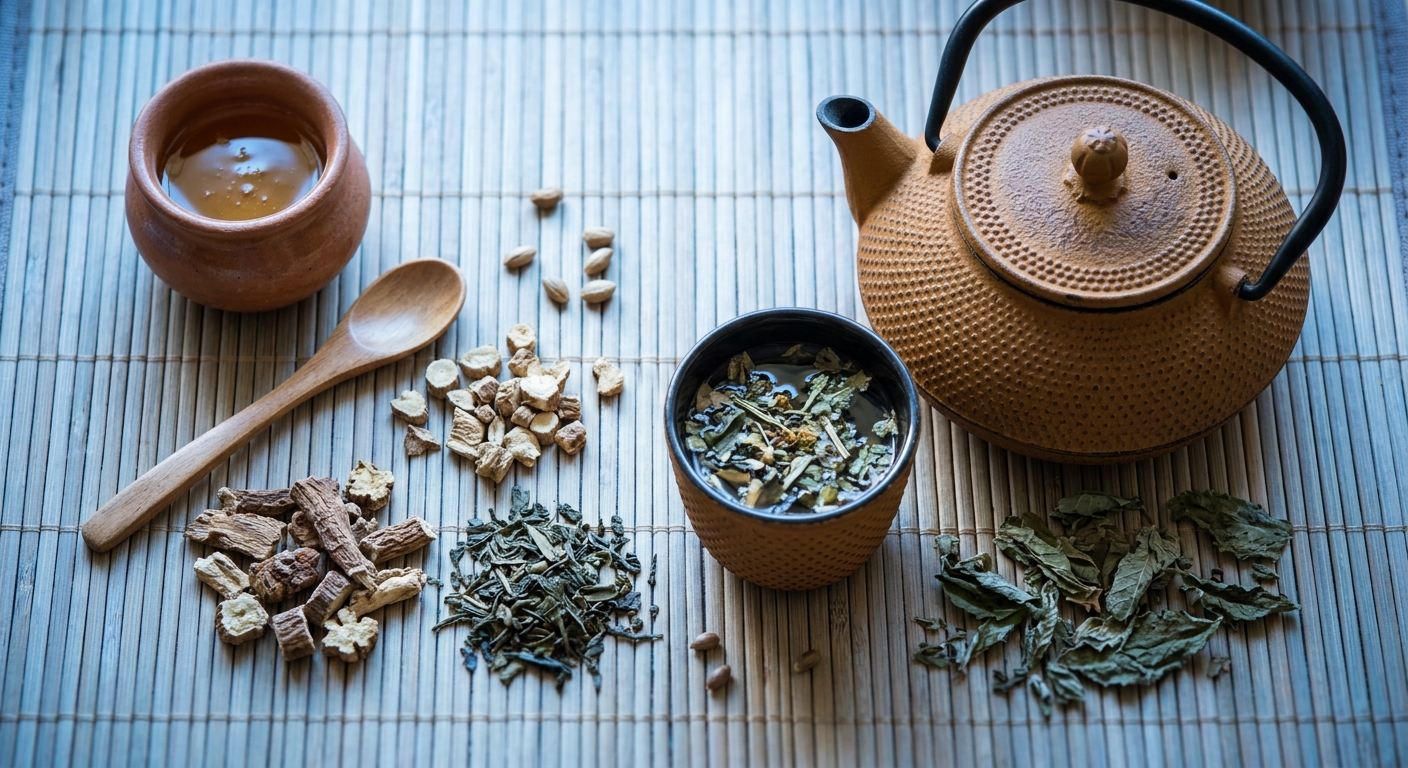
The Endurance Athlete Tea brings these ancient plant allies together in a single, purposeful blend. Rhodiola rosea contributes its celebrated adaptogenic properties to help the body resist physical and mental stress. Eleuthero root, sometimes called Siberian ginseng, supports oxygen utilization and immune resilience under training loads. A base of green tea provides a clean, steady stream of caffeine alongside L-theanine, which smooths out the stimulant effect into calm, focused energy rather than jittery spikes. Peppermint adds a brisk, cooling lift that sharpens alertness and soothes the digestive system before or after exertion.
This blend is designed to be as versatile as the athletes who drink it. Served hot before a morning run, it acts as a warming pre-workout ritual. Brewed cold and bottled for a long cycling ride, it delivers sustained hydration alongside bioactive compounds that support muscle endurance. Whether you are training for a marathon, logging hours on a mountain bike, or simply pushing through a demanding workday, Endurance Athlete Tea offers a clean, plant-powered edge rooted in centuries of human performance tradition.
2
cups
Ingredients
- 1.5 tspdried rhodiola rosea root, finely sliced or granulated
- 1 tspeleuthero root, cut and sifted
- 1 tspgreen tea leaves (sencha or gunpowder)
- 0.5 tspdried peppermint leaf
- 500 mlwater (80°C / 176°F for hot brew)
- —raw honey or maple syrup to taste (optional)
- —a squeeze of fresh lemon juice (optional, enhances antioxidant absorption)
How to Brew
Click on an item below to shop for the recommended items for this recipe on Amazon.
As an Amazon Associate, we earn from qualifying purchases.
- Combine the rhodiola rosea root and eleuthero root in a small saucepan with 500 ml of cold water. Bring to a gentle simmer over medium-low heat and allow the roots to simmer for 8 to 10 minutes. This short decoction extracts the dense, woody root material more effectively than simple steeping alone.
- Remove the saucepan from the heat and allow the liquid to cool for 3 to 4 minutes until it reaches approximately 80 to 85°C (176 to 185°F). This lower temperature is essential for the next stage to avoid scorching the green tea and peppermint.
- Add the green tea leaves and dried peppermint to a tea infuser or directly into the saucepan. Pour the hot root decoction over them and steep for exactly 5 to 7 minutes. Do not exceed this time or the green tea will become astringent and bitter.
- Strain the blend through a fine mesh strainer into two pre-warmed mugs. Add raw honey or a squeeze of lemon if desired. Drink 20 to 30 minutes before training or as a morning focus ritual.
- Combine the rhodiola rosea root, eleuthero root, green tea leaves, and dried peppermint in a clean glass jar. Use double the dry herb quantities compared to the hot brew, as cold water extracts compounds more slowly: use 3 tsp rhodiola, 2 tsp eleuthero, 2 tsp green tea, and 1 tsp peppermint per 1 liter of water.
- Pour 1 liter of cold, filtered water over the herbs. Stir gently to ensure all plant material is fully submerged. Seal the jar with a lid and leave at room temperature for 1 hour to allow initial extraction to begin.
- Transfer the sealed jar to the refrigerator and allow it to cold steep for 10 to 14 hours, ideally overnight. The extended cold extraction gently draws out adaptogenic glycosides and polyphenols without releasing the bitter tannins that hot water accelerates.
- When ready, strain the brew through a fine mesh strainer or cheesecloth into a clean bottle or pitcher, pressing the herbs gently to extract the remaining liquid. Store in the refrigerator for up to 3 days. Shake or stir before serving over ice. Add a lemon wedge or a sprig of fresh mint to finish.
- Combine 3 tbsp of rhodiola rosea root and 2 tbsp of eleuthero root with 500 ml of cold water in a small saucepan. Bring to a gentle boil, then reduce to a low simmer. Decoct uncovered for 15 to 20 minutes until the liquid reduces by roughly one third and deepens to a rich amber color.
- Remove from heat and allow to cool to approximately 80°C (176°F). Add 2 tbsp of green tea leaves and 1 tbsp of dried peppermint directly to the saucepan. Steep for 5 minutes, then strain through a fine mesh strainer into a glass jar, pressing the herbs firmly to extract all liquid.
- Allow the concentrate to cool completely at room temperature before sealing the jar. Label it with the date and refrigerate. This concentrate is highly potent and should not be consumed undiluted.
- To serve, dilute 60 to 80 ml of concentrate with 180 to 200 ml of cold water, coconut water for electrolyte replenishment, or warm water for a pre-workout hot drink. Sweeten lightly if desired. Consume one serving 30 minutes before training or within 30 minutes after to support recovery.
Health Benefits
Rhodiola’s salidroside and rosavins have been shown in multiple randomized controlled trials to significantly reduce fatigue markers and extend time to exhaustion in endurance athletes. These compounds appear to enhance mitochondrial efficiency and reduce the accumulation of blood lactate during sustained aerobic activity.
The combination of green tea’s L-theanine and caffeine is one of the most well-researched natural cognitive stacks, consistently shown to improve attention, reaction time, and working memory. Rhodiola adds to this by lowering cortisol response to mental stress, helping athletes maintain sharp decision-making even under fatigue.
Intense endurance training generates significant free radical load that can damage muscle fibers and prolong recovery. Green tea’s EGCG and rhodiola’s salidroside both demonstrate potent antioxidant activity in human studies, helping neutralize reactive oxygen species produced during sustained exercise.
Athletes in heavy training phases often experience a well-documented dip in immune function. Eleuthero root has been shown in clinical research to support natural killer cell activity and modulate the stress hormone response, helping maintain immune integrity during periods of high physical demand.
Peppermint’s menthol activates thermoreceptors in the airways that signal a sensation of cooler, freer breathing, which studies suggest can measurably reduce perceived exertion during aerobic activity. This psychological and sensory effect supports longer, more comfortable training sessions.
🧪 Key Bioactive Compounds
The Science Behind Rhodiola Rosea
The performance potential of this blend centers on the concept of adaptogenesis, a mechanism by which certain plant compounds help the body calibrate its stress response system rather than simply stimulating or suppressing it. Rhodiola rosea’s primary bioactives, salidroside and the rosavins, work on the hypothalamic-pituitary-adrenal (HPA) axis and sympathoadrenal system, the two core pathways that govern how the body deploys energy and copes with stress. Multiple double-blind, placebo-controlled trials, including a landmark study published in Phytomedicine, have demonstrated that rhodiola supplementation significantly reduces fatigue, improves exercise capacity, and lowers perceived exertion scores in endurance athletes. The mechanism appears to involve enhanced mitochondrial ATP synthesis and reduced lactate accumulation during sustained aerobic output.
Eleuthero root contributes a complementary layer of adaptogenic action via its eleutherosides, particularly eleutherosides B and E, which have been shown to modulate adrenal cortisol output and support erythropoiesis, the production of red blood cells that carry oxygen to working muscles. A 2010 study published in the International Journal of Sport Nutrition and Exercise Metabolism found that eleuthero supplementation improved endurance performance and elevated cardiovascular function in competitive cyclists. This makes eleuthero particularly well-suited to aerobic athletes who train at high intensities over extended periods. Meanwhile, green tea’s EGCG reduces the inflammatory cascade triggered by prolonged exercise, while L-theanine at naturally occurring concentrations modulates alpha brain wave activity to produce a state of alert relaxation that supports both physical performance and post-exercise cognitive function.
Peppermint’s contribution is subtler but meaningfully supported by research. A study published in the Journal of the International Society of Sports Nutrition found that athletes who consumed peppermint oil before exercise showed improvements in lung function, grip strength, and time to exhaustion compared to placebo. The mechanism involves menthol’s activation of TRPM8 cold receptors in the nasal passages and airways, which creates a sensation of increased airflow and reduced effort at comparable workloads. When these four plants are combined in a single brew, they create a synergistic profile that addresses the three critical pillars of endurance performance: energy substrate utilization, mental sharpness under fatigue, and recovery from oxidative and inflammatory stress.
Brewing Tips
- Simmer the rhodiola and eleuthero roots first before adding green tea and peppermint. These woody roots require higher heat and longer contact time to release their active compounds, while green tea and peppermint are delicate and will turn bitter or lose volatile aromatics if overheated.
- For the cold brew, use a ratio of roughly double the dry herb quantity compared to the hot brew method. Cold water extracts compounds more slowly and gently, so increasing the herb-to-water ratio compensates for the lower extraction efficiency while producing a noticeably smoother and less astringent flavor.
- Drink this blend on a well-hydrated stomach, not as your sole pre-workout fluid. The mild diuretic effect of caffeine in the green tea base means you should ensure you are already well hydrated before consuming this tea as a pre-training drink, particularly in warm weather or for sessions longer than 90 minutes.