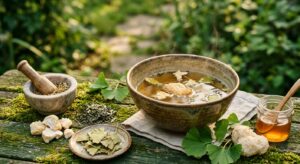
High in the cold mountain ranges of Siberia, Scandinavia, and Central Asia, a tenacious flowering succulent clings to rocky cliffs and arctic tundra. Rhodiola rosea, sometimes called golden root or Arctic root, has been revered for over a thousand years by healers who recognized that anything capable of thriving in such brutal conditions might share some of its resilience with the humans who consumed it. Viking warriors reportedly drank preparations of this root before battle to sharpen courage and endurance. Siberian villagers gifted bundles of it to newlyweds to promote vitality and fertility. In the 18th century, the Swedish botanist Carl Linnaeus documented the plant’s widespread medicinal use across northern Europe, cementing its place in the Western botanical record.
What makes Rhodiola rosea especially compelling in the world of herbal teas is its classification as an adaptogen, a category of plants that help the body adapt to physical, mental, and environmental stress without forcing a single physiological response. Rather than jolting your adrenal glands into overdrive the way caffeine does, rhodiola works subtly, modulating the hypothalamic-pituitary-adrenal axis and supporting neurotransmitter balance so that your energy feels earned and sustainable. Soviet scientists conducted extensive research on the herb throughout the mid-20th century, and modern clinical trials have built on that foundation, examining its effects on fatigue, cognitive performance, and mood regulation.
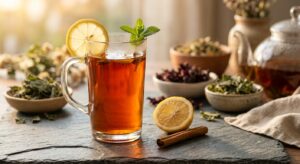
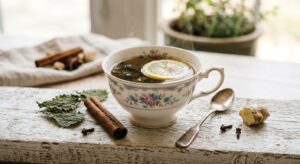
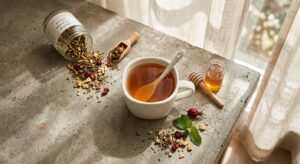
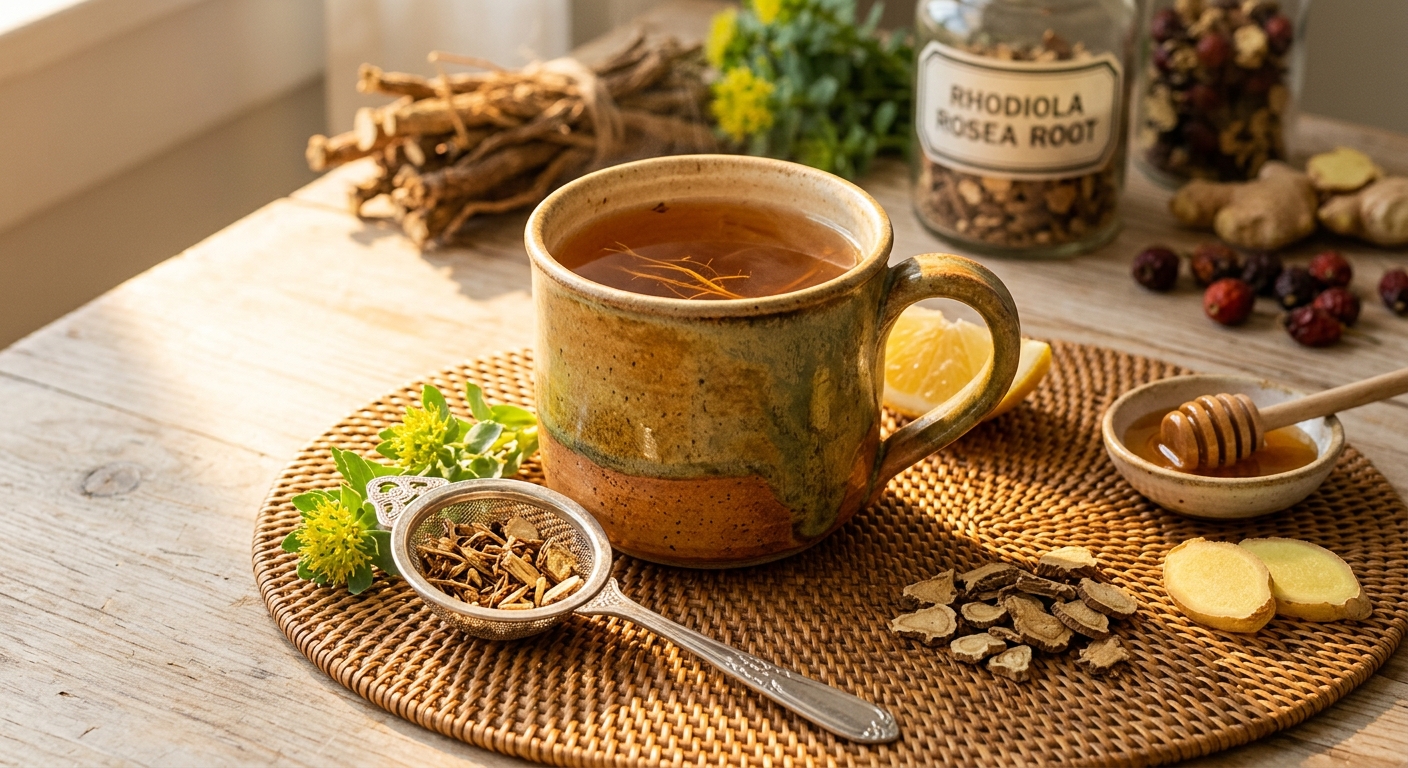
As a tea, rhodiola offers a uniquely grounding experience. The root carries a slightly earthy, faintly floral aroma with a note that many describe as similar to rosewater, hence the species name rosea, derived from the rose-like scent of the freshly cut root. Brewed into a cup, it produces a pale amber liquor with a pleasantly astringent, mildly bitter finish. It pairs beautifully with warming spices, tart berries, and brightening citrus, making it as versatile as it is functional. Whether you are preparing for a long workday, recovering from a demanding week, or simply seeking a morning ritual that supports your whole self, Rhodiola energy tea is a worthy companion.
2
cups
Ingredients
- 2 tspdried rhodiola rosea root pieces or slices
- 480 mlwater (85°C / 185°F)
- —raw honey or maple syrup to taste (optional)
- —a squeeze of lemon juice (optional, brightens flavor)
- —1 to 2 slices fresh ginger (optional, pairs well with rhodiola)
How to Brew
Click on an item below to shop for the recommended items for this recipe on Amazon.
As an Amazon Associate, we earn from qualifying purchases.
- Measure 1 teaspoon of dried rhodiola rosea root pieces per 240 ml of water. For two servings, use 2 teaspoons in 480 ml of water. If working with whole root slices, break or lightly crush them to increase surface area and improve extraction.
- Heat filtered water to 85 to 90°C (185 to 194°F). If you do not have a temperature-controlled kettle, bring water to a full boil and allow it to rest off heat for 3 to 4 minutes before pouring.
- Place the rhodiola root in your infuser basket or directly into a small teapot. Pour the heated water over the root, ensuring all pieces are fully submerged.
- Steep for 10 to 15 minutes with the vessel covered to trap volatile aromatic compounds. Begin tasting at the 10-minute mark. A longer steep will intensify the earthy bitterness; pull at 12 minutes for a balanced, moderately assertive cup.
- Remove the infuser or strain the root pieces out. Add a squeeze of fresh lemon juice to lift the flavor and enhance your body’s absorption of the active compounds. Sweeten lightly with raw honey if desired.
- Sip slowly and mindfully. Rhodiola tea is best consumed in the morning or early afternoon on a relatively empty stomach for optimal absorption and to avoid any potential interference with sleep.
- Measure 1.5 teaspoons of dried rhodiola root pieces per 240 ml of cold filtered water. Because cold water extracts less efficiently than hot, a slightly higher herb-to-water ratio ensures adequate potency. For two generous servings, combine 3 teaspoons of root with 480 ml of cold water.
- Lightly crush or bruise the dried root pieces using the back of a spoon or a mortar to open up the fibrous structure. This step is more important in cold brewing than in hot brewing because there is no heat to assist extraction.
- Combine the crushed root and cold water in a clean glass jar. Stir well to ensure all root pieces are saturated, then loosely cover the jar with a lid or a small plate to prevent absorption of refrigerator odors.
- Allow the jar to sit at room temperature for 30 minutes to begin initial hydration of the root, then transfer to the refrigerator. Cold brew for 8 to 12 hours. Overnight is ideal and convenient.
- In the morning, strain the liquid through a fine mesh strainer lined with cheesecloth if you prefer a very clear brew, or use a standard fine strainer for a slightly more rustic result. Press the spent root gently to extract remaining liquid.
- Serve the cold brew over ice as is, dilute with sparkling water for a lightly effervescent energy drink, or blend with a splash of tart cherry or pomegranate juice to complement the root’s earthy rosewater notes. Refrigerate any unused portion and consume within 48 hours.
- Combine 2 teaspoons of whole or roughly broken dried rhodiola root pieces with 600 ml of cold filtered water in a small stainless steel or ceramic saucepan. Starting with cold water and heating together allows the root to gradually release its compounds as the temperature rises, producing a more complete extraction than adding root to already-hot water.
- Place the saucepan over medium-low heat and bring the water slowly up to a gentle simmer. This should take 5 to 7 minutes. Watch carefully and do not allow the liquid to reach a vigorous rolling boil, which can break down heat-sensitive rosavins.
- Once simmering, reduce the heat to maintain a gentle, steady bubble at the surface. Simmer uncovered for 20 to 25 minutes. The liquid will reduce by roughly 20 to 25 percent and deepen in color to a warm amber.
- Remove the saucepan from heat and allow the decoction to rest for 5 minutes off the burner. This resting period allows remaining particulates to settle and the flavor to mellow slightly.
- Strain through a fine mesh strainer into a warmed teapot or directly into mugs. Press the softened root pieces firmly with the back of a spoon to extract maximum liquid.
- The finished decoction will be noticeably more concentrated and robust than a standard hot brew. Dilute with an equal part of hot water if you prefer a lighter cup, or serve as-is in smaller 120 ml portions as a functional tonic shot. Add a thin slice of fresh ginger or a twist of orange peel to the finished cup for complexity and warmth.
Health Benefits
Multiple randomized controlled trials have found that rhodiola extract significantly reduces symptoms of burnout and mental fatigue in students, physicians, and military personnel. The herb’s salidroside and rosavin content appears to support efficient neurotransmitter signaling, improving reaction time, attention, and accuracy under demanding conditions.
Rhodiola acts on the hypothalamic-pituitary-adrenal axis to normalize cortisol secretion during acute stress events, blunting the excessive hormonal spike without suppressing the body’s natural alertness. This makes it uniquely valuable as an adaptogen because it neither sedates nor overstimulates, but helps calibrate the stress response to the actual demand.
Research suggests that rhodiola supplementation can improve oxygen utilization efficiency and delay the onset of fatigue during sustained physical effort. A 2004 study published in the International Journal of Sport Nutrition and Exercise Metabolism found meaningful improvements in endurance performance after rhodiola supplementation, attributed in part to its antioxidant compounds protecting muscle tissue from oxidative damage.
A clinical trial published in Phytomedicine found that a standardized rhodiola extract produced significant improvements in depression, insomnia, and emotional instability in participants with mild to moderate depressive disorder. The mechanism is thought to involve upregulation of serotonin and dopamine transport in the limbic system, particularly through the activity of rosavins.
Prolonged psychological stress can exhaust adrenal function, a condition often described as burnout or adrenal fatigue. Rhodiola’s adaptogenic compounds help stabilize adrenal output over time, making it a popular choice among healthcare workers, caregivers, and anyone navigating chronically high-demand environments.
🧪 Key Bioactive Compounds
The Science Behind Rhodiola Rosea
The scientific foundation for rhodiola’s reputation as an energy and focus herb rests primarily on two groups of compounds that are unique or dominant in Rhodiola rosea: the phenylpropanoid glycosides known as rosavins (rosavin, rosarin, and rosin) and the phenolic compound salidroside. High-quality rhodiola extracts are typically standardized to contain at least 3 percent rosavins and 1 percent salidroside, a ratio that reflects the plant’s natural composition and has been used in the majority of human clinical trials. These compounds interact with the hypothalamic-pituitary-adrenal axis, the body’s central stress regulation system, helping to normalize cortisol output during periods of acute stress without blunting the body’s overall responsiveness. This is the hallmark of a true adaptogen: not suppression of the stress response, but intelligent modulation of it.
At the neurochemical level, salidroside and rosavins appear to influence the activity of monoamine neurotransmitters including serotonin, dopamine, and norepinephrine. Animal studies have shown that rhodiola extract inhibits the activity of monoamine oxidase A and B, enzymes responsible for breaking down these neurotransmitters, which may explain the mood-lifting and cognitive-enhancing effects observed in human trials. Additionally, salidroside has demonstrated the ability to cross the blood-brain barrier and activate Nrf2 signaling pathways, triggering the production of endogenous antioxidant enzymes that protect neurons from oxidative stress. This neuroprotective action may contribute to the herb’s observed benefits in fatigue, burnout, and age-related cognitive decline.
On the cellular energy front, research has pointed to rhodiola’s ability to optimize mitochondrial function. Salidroside appears to enhance ATP synthesis efficiency and protect mitochondrial membranes from lipid peroxidation during high-demand situations such as intense exercise or prolonged cognitive effort. A review published in Phytomedicine summarized multiple studies suggesting that rhodiola reduces the accumulation of lactic acid and urea nitrogen in the blood during physical exertion, two reliable markers of fatigue onset. Taken together, these mechanisms paint a compelling picture of an herb that supports energy not by forcing the body to burn hotter, but by helping it burn more cleanly and sustainably under pressure.
Brewing Tips
- Always source rhodiola products that are standardized to at least 3 percent rosavins and 1 percent salidroside to ensure you are getting a potent and authentic preparation, as adulteration with other Rhodiola species is common in the supplement market.
- Consume rhodiola tea before 2 pm to avoid any potential disruption to your sleep cycle, particularly if you are sensitive to stimulating herbs or already prone to insomnia.
- Rhodiola is most effective when used cyclically rather than continuously. Many herbalists recommend a 5-days-on, 2-days-off schedule, or a 6-week course followed by a 2-week break, to prevent the body from adapting to its effects and diminishing returns over time.
- The earthy bitterness of rhodiola root can be significantly softened by pairing it with warming aromatic herbs such as ginger, cinnamon, or cardamom, which complement its mineral, faintly floral character without masking its therapeutic compounds.
- Store dried rhodiola root in an airtight glass container away from direct light and heat. Properly stored root retains its potency for up to 18 months. Powdered or pre-ground rhodiola degrades more quickly and should be used within 6 months.