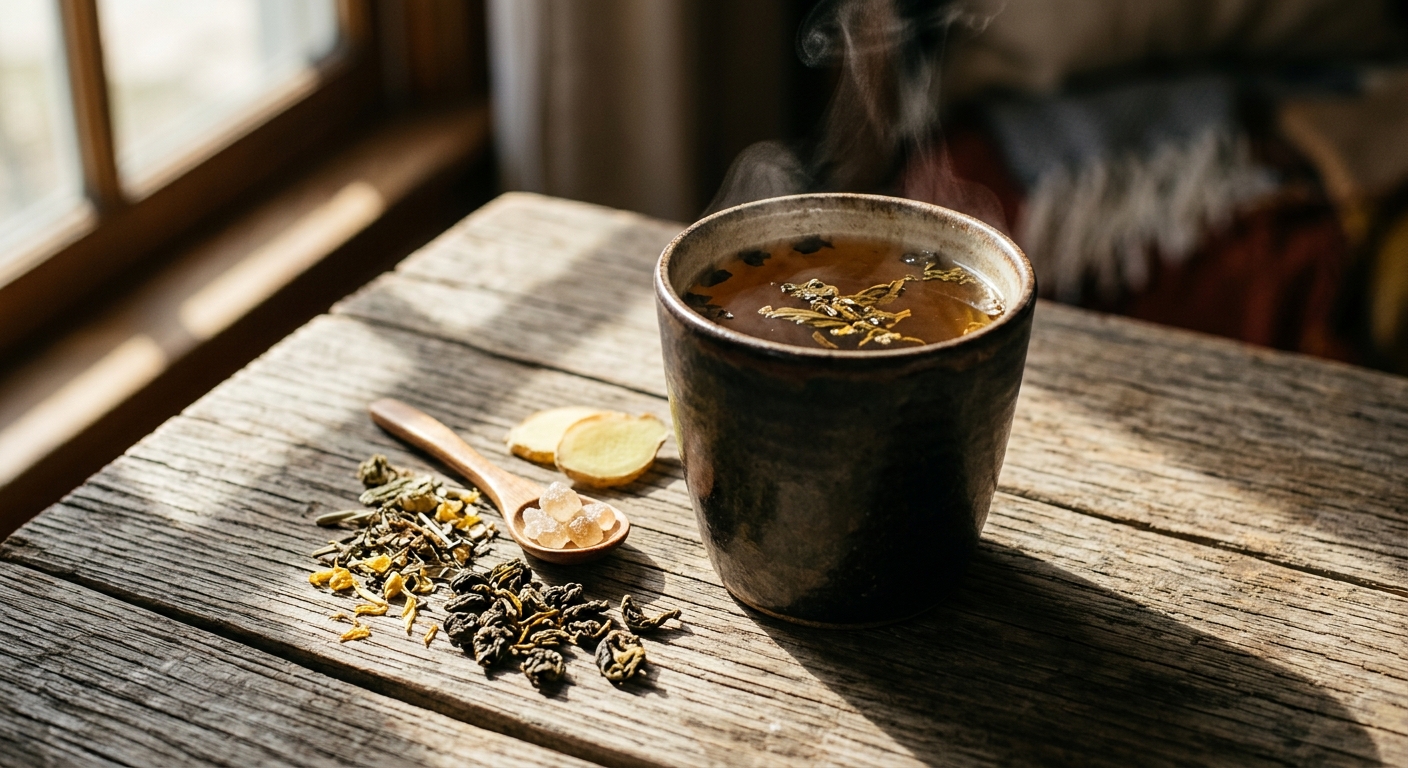
Few teas command as much reverence among connoisseurs as oolong. Occupying the fascinating middle ground between green and black tea, oolong is defined by its partial oxidation, ranging from as little as 10 percent to as much as 85 percent. This spectrum gives oolong an extraordinary range of flavors, from the floral and creamy notes of a lightly oxidized Taiwanese High Mountain to the roasted, honeyed depth of a heavily oxidized Wuyi Rock oolong from China’s Fujian province. It is this complexity, rather than any single fixed character, that has made oolong the centerpiece of the Chinese gongfu tea ceremony for hundreds of years.
The word oolong (also written as wulong) translates roughly as ‘black dragon tea’ in Chinese, a name wrapped in folklore. One legend attributes the discovery to a tea farmer named Wu Liang, who was distracted by a deer after harvesting tea leaves and returned to find them partially oxidized in the sun, producing an unexpectedly aromatic and delicious brew. Whether myth or history, the name captures something true about oolong: it is a tea of in-between states, neither fully green nor fully black, and that ambiguity is precisely its power. Grown primarily in China’s Fujian and Guangdong provinces and across Taiwan’s mountainous interior, oolong production is one of the most labor-intensive and skill-demanding processes in all of tea craft.
What makes oolong especially compelling for modern tea drinkers seeking energy and focus is its unique chemical profile. It contains a moderate amount of caffeine, typically between 30 and 60 mg per cup, paired with a generous concentration of L-theanine, an amino acid that promotes calm alertness without the jitteriness associated with coffee. This combination has earned oolong a reputation as the ideal tea for sustained concentration, creative work, and mindful productivity. Beyond its cognitive benefits, centuries of traditional use and a growing body of modern research point to oolong’s role in supporting metabolism, heart health, and blood sugar balance.
2
cups
Ingredients
- 2 tsploose-leaf oolong tea
- 240 mlwater (85 to 95°C / 185 to 203°F depending on oxidation level)
- —raw honey or rock sugar to taste (optional)
- —thin slice of fresh ginger (optional, for warmth)
How to Brew
Click on an item below to shop for the recommended items for this recipe on Amazon.
As an Amazon Associate, we earn from qualifying purchases.
- Heat fresh, filtered water to 85°C (185°F) for light or green oolongs, or 90 to 95°C (194 to 203°F) for roasted or dark oolongs. Use an electric kettle with temperature control if possible.
- Use 1 heaped teaspoon of loose-leaf oolong per 120 ml of water, roughly double the ratio used for a standard Western brew. Place the leaves in a small teapot, gaiwan, or infuser.
- Perform a brief rinse steep: pour hot water over the leaves, swirl gently, and discard after 5 to 10 seconds. This awakens the leaves, removes any dust, and begins the opening of the tightly rolled or twisted leaves.
- Pour hot water over the rinsed leaves and steep for 30 to 45 seconds for the first infusion. Pour immediately and fully into your cup to stop the steep and prevent bitterness.
- Taste and note the flavor. For the second infusion, add 10 to 15 seconds to your steep time. Quality oolong leaves can be re-steeped four to six times, with each infusion revealing different aromatic and flavor layers.
- Sip slowly and without added ingredients for the first cup to experience the full complexity. Honey or rock sugar can be added to later infusions if desired.
- Use 1.5 teaspoons of loose-leaf oolong per 240 ml of room temperature filtered water. Place the leaves in a clean glass jar or pitcher with a lid.
- Pour room temperature or cool filtered water (not iced) directly over the leaves. Do not use hot water, as this changes the extraction chemistry and defeats the purpose of cold brewing.
- Stir gently once to ensure the leaves are fully submerged and in contact with the water. Seal the jar or cover the pitcher tightly.
- Allow the tea to steep at room temperature for the first hour, then transfer to the refrigerator. Let it steep for a total of 8 to 12 hours or overnight.
- Strain the tea through a fine-mesh strainer or tea filter into a clean glass or pitcher. Discard or compost the spent leaves.
- Serve chilled over ice if desired. The cold brew will keep sealed in the refrigerator for up to 48 hours. Add a slice of lemon or a few fresh mint leaves for a refreshing variation.
- Heat fresh filtered water to 90 to 95°C (194 to 203°F). Use a higher temperature here than you might for delicate oolongs, as the milk will dilute the intensity and needs a stronger extraction.
- Use 3 teaspoons of loose-leaf roasted or medium-oxidized oolong per 240 ml of hot water, triple the standard ratio, to create a concentrated brew.
- Steep the leaves for 5 to 7 minutes, stirring once at the halfway point to ensure even extraction. The resulting liquid should be deep amber and intensely aromatic.
- Strain the concentrate through a fine-mesh strainer into a heat-safe measuring cup or pour-over vessel. Discard the spent leaves.
- Steam or froth 120 to 180 ml of whole milk, oat milk, or your preferred alternative until it is hot and lightly foamy. For an iced latte, use cold milk and do not steam.
- Combine the hot concentrate with the steamed milk in a ratio of roughly 1 part concentrate to 1 part milk, adjusting to taste. Add rock sugar or honey if desired, and dust lightly with cinnamon or matcha powder as a garnish.
Health Benefits
The combination of moderate caffeine and high L-theanine in oolong produces a uniquely balanced form of cognitive stimulation. Multiple human trials have shown that this pairing improves attention, working memory, and reaction speed more effectively than caffeine alone, while significantly reducing the jitteriness and anxiety commonly associated with coffee or energy drinks.
Oolong’s polyphenols, particularly EGCG and the oxidized theaflavins unique to this tea category, have been shown in both animal studies and human clinical trials to activate enzymes that promote fat oxidation and support thermogenesis. A study published in the Journal of Nutrition found that regular oolong consumption significantly increased energy expenditure compared to water or caffeine alone.
Regular consumption of oolong tea has been associated with reduced levels of LDL cholesterol and improved arterial function in several large-scale epidemiological studies from Japan and China. The theaflavins and antioxidant polyphenols in oolong help reduce oxidative damage to blood vessel walls and may lower the risk of cardiovascular disease with consistent, long-term use.
Oolong contains chlorogenic acid and other polyphenols that inhibit alpha-glucosidase, an enzyme involved in breaking down dietary carbohydrates into glucose. A randomized controlled trial found that drinking oolong tea alongside meals measurably reduced postprandial blood glucose spikes in participants with type 2 diabetes.
Oolong’s partial oxidation preserves a significant portion of the green catechins found in green tea while adding a unique layer of oxidized polyphenols not present in unoxidized teas. This dual antioxidant profile gives oolong a broad spectrum of free-radical scavenging capacity, helping to protect cells from DNA damage and chronic inflammation associated with aging.
🧪 Key Bioactive Compounds
The Science Behind Oolong Tea
The cognitive benefits of oolong tea are rooted in the elegant synergy between two of its primary bioactive compounds: caffeine and L-theanine. Caffeine works by competitively blocking adenosine receptors in the brain, preventing the accumulation of the neurotransmitter that signals fatigue. This results in increased neuronal firing, improved release of dopamine and norepinephrine, and a measurable improvement in attention, alertness, and short-term memory. L-theanine, an amino acid found almost exclusively in the Camellia sinensis plant, crosses the blood-brain barrier and promotes alpha wave activity, the brain state associated with relaxed, wakeful concentration. When the two compounds are consumed together, as they are naturally in oolong, the anxious edge of pure caffeine stimulation is smoothed and redirected into a cleaner, more sustained cognitive lift.
The partial oxidation process that defines oolong tea creates a uniquely complex polyphenol profile. Green tea retains high levels of unoxidized catechins, primarily EGCG, while black tea converts most of these into theaflavins and thearubigins. Oolong, suspended between the two, contains meaningful quantities of all three categories. This matters metabolically because theaflavins have been shown in clinical research to specifically target LDL oxidation and lipid metabolism, effects that are distinct from those of the catechins studied primarily in green tea research. The result is that oolong may offer a broader cardiovascular protection profile than either green or black tea alone.
Emerging research has also focused on oolong’s effect on blood glucose regulation. Several of its polyphenols, including chlorogenic acid, act as inhibitors of alpha-glucosidase and alpha-amylase, the digestive enzymes responsible for converting carbohydrates into absorbable glucose. By slowing this process, oolong effectively flattens the postprandial glucose spike that follows carbohydrate-rich meals. A randomized crossover trial published in Diabetes Care demonstrated that participants who consumed oolong tea alongside a carbohydrate meal showed significantly lower plasma glucose levels compared to those who consumed water, suggesting a meaningful and practical role for oolong in blood sugar management as part of a balanced diet.
Brewing Tips
- Quality oolong leaves are designed for multiple infusions. Do not discard your leaves after one steep. Set them aside, covered, and re-brew two to five more times throughout the day, adding 15 to 20 seconds to each successive steep time.
- Water temperature is critical and variety-dependent. A delicate Tie Guan Yin or Ali Shan high-mountain oolong will turn bitter and astringent if brewed above 88°C (190°F), while a heavily roasted Da Hong Pao needs the full 95°C (203°F) to open properly. When in doubt, brew slightly cooler and adjust upward.
- Store loose-leaf oolong in an airtight, opaque container away from heat, light, and strong odors. Roasted oolongs are more shelf-stable and can last up to two years when stored properly, while lightly oxidized green oolongs are best consumed within six to twelve months of purchase for peak aroma and flavor.