Spearmint has been cultivated and cherished for thousands of years, with records of its use stretching back to ancient Greece, where it was scattered on floors, rubbed into bathing vessels, and stirred into medicinal preparations. The Romans carried it across their empire, and by the medieval period, European herbalists were prescribing it for everything from indigestion to memory complaints. Unlike its more intense cousin peppermint, spearmint carries a softer, sweeter character that makes it one of the most approachable and versatile herbs in the tea garden.
What sets spearmint apart botanically and therapeutically is its dominant compound, carvone, which gives the herb its distinctive sweet minty scent without the sharp menthol intensity of peppermint. This makes spearmint tea an ideal choice for people who want the refreshing, uplifting quality of mint without the cooling burn. Traditional Moroccan mint tea, the famous atai, is made almost exclusively with spearmint, steeped strong with green tea and sweetened generously, poured from a height to create a froth, and shared as a gesture of hospitality and community.
Modern interest in spearmint has been energized by a growing body of research examining its effects on hormonal health, particularly its potential to reduce excess androgens in women with polycystic ovary syndrome. Alongside this, its rosmarinic acid content has drawn attention for cognitive and anti-inflammatory effects. Whether you are sipping it to focus during a long afternoon of work, to ease a heavy meal, or simply to enjoy its bright and cheerful flavor, spearmint tea is a genuinely functional cup with deep roots in global plant medicine traditions.
2
cups
Ingredients
- 2 tspdried spearmint leaves (or 4 tsp fresh spearmint leaves)
- 240 mlwater per serving (90°C / 194°F for hot brew)
- —raw honey or a slice of lemon to taste (optional)
How to Brew
Click on an item below to shop for the recommended items for this recipe on Amazon.
As an Amazon Associate, we earn from qualifying purchases.
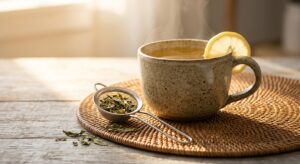
- Heat filtered water to 90 to 95°C (194 to 203°F). Avoid a full rolling boil, as excessive heat can diminish the volatile aromatic compounds in spearmint that contribute to its flavor and therapeutic qualities.
- Add 2 teaspoons of dried spearmint leaves (or 4 teaspoons of fresh, lightly bruised leaves) per 240 ml of water into a tea infuser or teapot. If using fresh leaves, gently crush them between your fingers before placing them in the infuser to help release the aromatic oils.
- Pour the hot water directly over the spearmint leaves and cover your mug or teapot immediately. Covering the vessel traps the volatile oils that would otherwise escape with the steam, preserving both aroma and potency.
- Steep for 5 to 7 minutes. For a brighter, sweeter cup, keep to 5 minutes. For a more robust, slightly more herbal flavor, allow the full 7 minutes.
- Remove the infuser or strain the leaves, then taste before adding any sweetener. Spearmint is naturally sweet and often needs no addition. A thin slice of lemon or a drizzle of raw honey complements the herb beautifully if desired.
- Add 3 teaspoons of dried spearmint leaves (or 6 teaspoons of fresh leaves) per 480 ml of cold, filtered water into a clean glass jar. The higher leaf-to-water ratio compensates for the slower, cooler extraction.
- Stir gently to ensure all the leaves are submerged, then seal the jar with a lid or cover tightly with plastic wrap. No heat is required at any stage of this method.
- Allow the jar to sit at room temperature for 30 minutes to begin the extraction, then transfer to the refrigerator and steep for a further 8 to 12 hours, or overnight. The slow cold extraction draws out the sweet, aromatic carvone compounds while leaving behind any harsh or bitter notes.
- Once steeped, strain the leaves through a fine mesh strainer or cheesecloth into a clean pitcher or bottle. Press the leaves gently to extract the last of the flavorful liquid.
- Serve over ice in tall glasses. The cold brew keeps well in the refrigerator for up to 3 days. Add a few slices of cucumber or a sprig of fresh spearmint as a garnish for an especially vibrant presentation.
- Bring filtered water to 95 to 100°C (203 to 212°F). While the water heats, rinse your teapot with a small splash of hot water to warm it, then discard that water.
- Place 1 teaspoon of loose-leaf gunpowder green tea (or one green tea bag) and a generous handful of fresh spearmint leaves (roughly 10 to 15 large leaves) into the warmed teapot. If using dried spearmint, use 1.5 teaspoons per serving.
- Pour about 60 ml of the hot water over the tea and spearmint and swirl gently for 20 seconds, then pour off this first rinse. This brief rinse removes any bitterness from the green tea and opens the spearmint leaves without sacrificing their essential oils.
- Pour the remaining hot water into the teapot, filling to the desired volume. Stir in 1 to 2 teaspoons of sugar or honey per serving (this is traditional and helps balance the tannins), then steep for 3 to 4 minutes.
- In the Moroccan tradition, pour the tea from a height of roughly 30 cm above the glass to aerate it and create a light froth on the surface. Serve in small heat-safe glasses and garnish each with a fresh sprig of spearmint.
Health Benefits
Rosmarinic acid and luteolin in spearmint have been studied for their ability to improve working memory and attention. A 2018 randomized controlled trial published in the Journal of Alternative and Complementary Medicine found that a spearmint extract supplement significantly improved working memory scores in older adults with age-associated memory impairment, suggesting real cognitive benefit beyond traditional folk use.
Two clinical studies, including a peer-reviewed trial published in Phytotherapy Research, found that drinking two cups of spearmint tea daily for 30 days significantly reduced free testosterone levels in women with polycystic ovary syndrome. This anti-androgenic effect appears to involve inhibition of 5-alpha reductase and direct suppression of androgen production, making spearmint a genuinely functional herbal option for hormonal support.
Carvone and limonene in spearmint act as antispasmodics on the smooth muscle of the gastrointestinal tract, reducing cramping, bloating, and gas. Unlike peppermint, spearmint does not relax the lower esophageal sphincter as strongly, which may make it a better choice for those prone to acid reflux who still want digestive mint benefits.
Rosmarinic acid is one of the most well-studied antioxidant polyphenols in culinary herbs, and spearmint is a rich source. It scavenges free radicals, inhibits pro-inflammatory cytokine production, and has shown protective effects in animal models of arthritis and inflammatory bowel conditions.
Limonene and carvone both have mild anxiolytic properties observed in preclinical research, helping to take the edge off mental tension without causing sedation. This makes spearmint tea a useful afternoon drink for maintaining focus and composure during cognitively demanding work.
🧪 Key Bioactive Compounds
The Science Behind Spearmint
The cognitive benefits of spearmint tea are rooted largely in its exceptionally high rosmarinic acid content, a polyphenol that crosses the blood-brain barrier and exerts neuroprotective effects by reducing oxidative stress in neural tissue. Research published in peer-reviewed journals has shown rosmarinic acid to inhibit acetylcholinesterase, the enzyme that breaks down acetylcholine, a neurotransmitter critical for memory formation and sustained attention. By preserving acetylcholine availability, spearmint may function similarly, in a much milder way, to some nootropic compounds, lending credibility to its traditional reputation as a herb for mental clarity and memory.
Spearmint’s hormonal activity has attracted considerable scientific interest, particularly regarding its anti-androgenic properties. The key mechanism appears to involve inhibition of 5-alpha reductase, the enzyme responsible for converting testosterone into the more potent dihydrotestosterone (DHT). Ursolic acid and related triterpenoids in spearmint appear to bind to androgen receptors and suppress androgenic signaling. Two clinical trials in women with polycystic ovary syndrome demonstrated statistically significant reductions in free testosterone and luteinizing hormone after regular spearmint tea consumption, establishing this as one of the better-evidenced herbal hormonal interventions available.
On the digestive and anti-inflammatory front, carvone, the compound responsible for spearmint’s characteristic sweet aroma, has been shown in in vitro and animal studies to relax intestinal smooth muscle through calcium channel antagonism, reducing spasm-related pain and bloating. Simultaneously, rosmarinic acid and luteolin act as COX-2 inhibitors, reducing the production of prostaglandins that drive gut inflammation. Together, these compounds create a genuinely multi-target digestive remedy that works through complementary pathways rather than a single mechanism, consistent with the complexity of phytochemical plant medicine and distinct from single-molecule pharmaceutical approaches.
Brewing Tips
- Fresh spearmint leaves produce a more vibrant, aromatic cup than dried, but dried leaves offer more concentrated flavor per volume. When switching between them, use roughly double the amount of fresh leaves to achieve equivalent strength.
- Always cover your mug or teapot while steeping spearmint. The essential oils responsible for both flavor and many therapeutic effects are volatile and will escape with the steam if left uncovered, leaving you with a flatter, less effective cup.
- For the clearest hormonal and cognitive benefits studied in clinical trials, aim for two cups of moderately strong spearmint tea per day consumed consistently over several weeks, as the anti-androgenic and neuroprotective effects observed in research were cumulative rather than immediate.