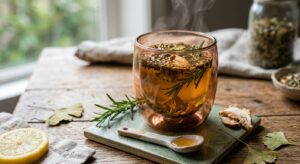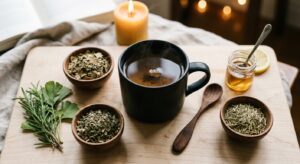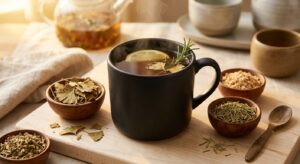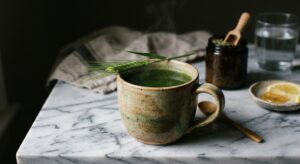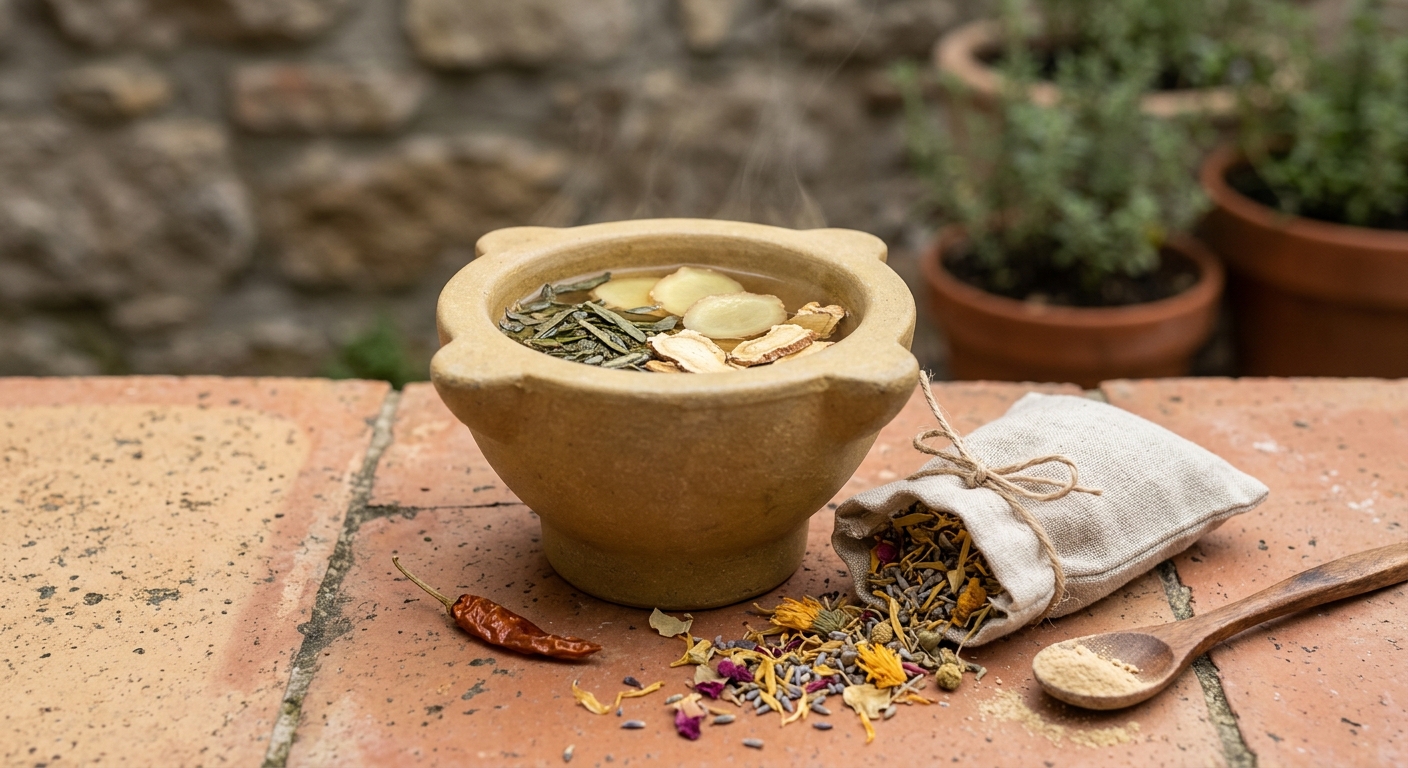
Long before sports nutrition brands flooded the market with neon-colored powders and synthetic stimulants, athletes and warriors across Asia were reaching for something far more elegant: a carefully brewed cup of herbs. Green tea has been consumed by Japanese samurai, Chinese scholars, and Korean monks for over a thousand years, prized not just for alertness but for a state of calm, focused energy described in Japanese culture as cha-ki, the vital force of tea. When combined with ginger root and Asian ginseng, two of the most revered herbs in traditional medicine, the result is a pre-workout tonic with deep historical roots and a growing body of modern scientific support.
Green tea forms the energizing backbone of this blend, providing natural caffeine alongside L-theanine, an amino acid that smooths out stimulant effects and promotes what researchers call alpha-wave brain activity: a state of relaxed alertness ideal for focused physical effort. Ginger brings thermogenic heat to the blend, stimulating circulation and reducing the muscle soreness that can follow intense training. Ginseng, particularly Panax ginseng, rounds out the formula as a classical adaptogen, helping the body manage physical stress and delay the onset of fatigue. Together, these three herbs create a synergistic pre-workout blend that feels as good as it performs.
What sets this tea apart from commercial pre-workouts is the quality of its energy. There are no jitters, no mid-workout crash, and no synthetic additives. The caffeine from green tea is released gradually, modulated by L-theanine and the natural tannins in the leaf. The warming sensation from ginger encourages blood flow to working muscles, while ginseng’s ginsenosides support oxygen utilization at the cellular level. Whether you brew it hot on a cool morning, cold-steep it the night before a long run, or prepare a concentrated shot before a high-intensity session, this tea can become a cornerstone of your pre-exercise ritual.
2
cups
Ingredients
- 2 tsploose-leaf green tea (sencha or gunpowder)
- 1 tspfreshly grated or thinly sliced ginger root
- 0.5 tspdried Panax ginseng root slices or powder
- 480 mlwater (80°C / 176°F)
- —raw honey or pure maple syrup to taste (optional)
- —pinch of cayenne pepper for extra thermogenic boost (optional)
- —squeeze of fresh lemon juice (optional)
How to Brew
Click on an item below to shop for the recommended items for this recipe on Amazon.
As an Amazon Associate, we earn from qualifying purchases.
- Heat your water to 78 to 82°C (172 to 180°F). If using a standard kettle, bring water to a boil then let it rest uncovered for 4 to 5 minutes to cool to the correct temperature. An electric kettle with temperature control is ideal.
- While the water cools slightly, place the ginger slices and ginseng root into your teapot or infuser first. Pour just 60 ml of the hot water over the ginger and ginseng and let them pre-steep for 1 minute. This gives these tougher root materials a head start on releasing their compounds.
- Add the loose-leaf green tea to the infuser on top of the pre-steeped roots. Pour the remaining hot water over all the ingredients at once, filling the vessel.
- Steep for exactly 3 minutes for a lighter, more delicate cup or up to 5 minutes for a stronger, more robust brew. Cover the cup or pot with a lid or small plate during steeping to trap volatile aromatic compounds and maintain temperature.
- Remove the infuser promptly. Do not over-steep as this causes bitterness from excess tannin release. Taste and stir in raw honey or lemon juice if desired. Drink 20 to 30 minutes before your workout.
- Combine the loose-leaf green tea, ginger slices, and ginseng root directly in a glass jar or pitcher. Use 1.5 times the standard quantity of green tea (about 3 tsp per 480 ml) to compensate for the slower extraction rate of cold water.
- Pour room-temperature filtered water over the herbs. Do not use hot water at any stage. Stir briefly with a long spoon to ensure all the tea leaves are saturated and not clumped together.
- Seal the jar with a lid and refrigerate immediately. Allow the blend to steep for a minimum of 8 hours and up to 12 hours overnight. Longer steeping extracts more ginsenosides from the ginseng root without the bitterness that hot water can introduce.
- In the morning, strain the tea through a fine-mesh strainer or cheesecloth into a clean bottle or pitcher, pressing gently on the ginger to release its juice. Discard the spent herbs.
- Taste the cold brew. It will be noticeably sweeter and smoother than a hot brew. Add a squeeze of lemon or a small amount of honey if desired. Shake or stir well, pour over ice, and drink 20 to 30 minutes before training. Keeps refrigerated for up to 48 hours.
- Use double the standard herb quantities in a small teapot or heat-safe mug: 2 tsp green tea, 2 tsp freshly grated ginger, and 1 tsp ginseng powder or finely chopped root slices. The higher surface area of grated ginger and powdered ginseng accelerates extraction.
- Heat water to 80 to 85°C (176 to 185°F) and pour only 90 to 120 ml over the concentrated herb blend. The low water volume and high herb ratio is intentional and creates a thick, potent infusion rather than a full-sized cup.
- Cover and steep for 6 to 8 minutes, which is longer than a standard hot brew. This extended steeping time is acceptable at a slightly higher temperature with this method because the concentrate is meant to be more robust and you will not be drinking a large volume.
- Strain through a fine-mesh strainer into a small shot glass or espresso cup, pressing firmly on the ginger to extract maximum juice. The liquid should be a deep amber-green color and noticeably more intense in both flavor and aroma than a regular brew.
- Allow to cool for 2 minutes until it is comfortable to drink quickly. Stir in a small amount of raw honey or a few drops of lemon juice if desired to balance the intensity. Consume the full concentrate 15 to 20 minutes before your workout for a fast-acting effect.
Health Benefits
Multiple randomized controlled trials have demonstrated that caffeine and EGCG from green tea improve time-to-exhaustion and reduce perceived exertion in aerobic exercise. Panax ginseng ginsenosides complement this effect by supporting ATP production at the mitochondrial level, delaying the point at which muscles begin to tire.
The combination of caffeine and L-theanine found naturally in green tea is one of the most studied nootropic pairings in nutrition science. Together they produce significantly better sustained attention, reaction time, and working memory compared to caffeine alone, with markedly fewer side effects such as jitteriness or anxiety.
Green tea catechins, particularly EGCG, have been shown to inhibit catechol-O-methyltransferase (COMT), an enzyme that breaks down noradrenaline. Higher noradrenaline levels encourage the body to mobilize fat stores as fuel during exercise, making this blend particularly effective for training sessions aimed at body composition.
Both ginger and green tea polyphenols independently reduce markers of exercise-induced inflammation including interleukin-6 and C-reactive protein. A 2015 clinical study found that 2 grams of ginger per day significantly reduced DOMS and muscle damage markers following eccentric exercise, supporting faster recovery between sessions.
Ginsenosides in Panax ginseng stimulate endothelial nitric oxide synthase (eNOS), increasing nitric oxide production and widening blood vessels. This vasodilatory effect improves blood flow to working muscles, lowers exercise heart rate at submaximal intensities, and can improve both aerobic and anaerobic performance over time.
🧪 Key Bioactive Compounds
The Science Behind Green Tea
The science behind this pre-workout blend is built on three well-researched pillars of exercise physiology. Green tea’s caffeine and EGCG work through complementary mechanisms: caffeine blocks adenosine receptors in the brain to suppress fatigue signaling and stimulate the central nervous system, while EGCG protects muscle mitochondria from oxidative damage during intense exertion. Crucially, L-theanine modulates caffeine’s stimulant effect by promoting inhibitory GABA activity and increasing serotonin and dopamine levels, which explains why green tea drinkers consistently report a qualitatively different, smoother energy than coffee drinkers despite sometimes consuming similar amounts of caffeine.
Panax ginseng’s ginsenosides operate at multiple points in the performance pathway. Rg1-type ginsenosides have been shown to activate the PI3K/Akt signaling pathway, which triggers eNOS (endothelial nitric oxide synthase) and increases nitric oxide bioavailability. Nitric oxide relaxes smooth muscle in artery walls, widening vessels and improving delivery of oxygen and glucose to active muscle tissue. Animal and human studies have also demonstrated that ginsenosides increase the density of mitochondria in skeletal muscle over time, potentially improving the muscle’s fundamental capacity to generate ATP aerobically. A 2013 meta-analysis in the Journal of Strength and Conditioning Research found statistically significant improvements in aerobic capacity measures among ginseng users compared to placebo groups.
Ginger’s contribution is primarily anti-inflammatory and thermogenic. The phenolic compounds 6-gingerol and 6-shogaol inhibit the cyclooxygenase (COX) and lipoxygenase (LOX) enzyme pathways, blocking the synthesis of prostaglandins and leukotrienes that drive post-exercise inflammation and soreness. This is the same pathway targeted by non-steroidal anti-inflammatory drugs (NSAIDs) like ibuprofen, though ginger achieves the effect through a gentler, broader mechanism without the gastrointestinal side effects. The thermogenic properties of shogaol, which activates transient receptor potential (TRP) channels in a manner similar to capsaicin, slightly raise metabolic rate and encourage peripheral circulation, warming muscles before exercise and potentially reducing injury risk.
Brewing Tips
- Brew your cold brew the night before an early morning workout so it is ready to grab from the refrigerator. Pre-planning removes any friction from your pre-workout routine.
- Use whole loose-leaf sencha or gunpowder green tea rather than tea bags for this blend. Whole leaves contain significantly higher concentrations of L-theanine and EGCG than the dust-grade tea found in most commercial bags.
- Fresh ginger root is substantially more potent than dried ginger powder in terms of 6-gingerol content. Buy a large knob of fresh ginger, peel it, slice it thinly, and freeze the slices in a zip-lock bag so you always have pre-measured workout portions ready to go.
- Time your pre-workout tea strategically: caffeine peaks in the bloodstream 30 to 60 minutes after consumption, while ginsenosides are more slowly absorbed. Drink your tea 30 minutes before training for the best overlap of effects.
- Cycle your use of ginseng by taking a one-week break every 8 to 10 weeks of regular use. This prevents the adaptogenic plateau effect and keeps ginsenosides working effectively when you return to the blend.