Goat’s rue (Galega officinalis) is a tall, leguminous herb native to the meadows and riverbanks of southern Europe and western Asia, where it has been gathered and used medicinally since at least the Middle Ages. Its common name comes from the old pastoral observation that goats who grazed on it produced more milk, a folk insight that herbalists carried forward into formal practice. By the seventeenth century, European midwives and physicians were prescribing goat’s rue to nursing mothers, and the tradition persisted well into the modern era across France, Italy, and Eastern Europe.
What makes goat’s rue particularly fascinating is the bridge between its folk reputation and modern biochemistry. The plant contains a compound called galegine, which researchers in the 1920s identified as a potent blood sugar lowering agent. That discovery ultimately led to the development of metformin, today one of the most widely prescribed diabetes medications in the world. This lineage places goat’s rue in rare company as an herb whose traditional use directly inspired a pharmaceutical breakthrough, lending it a credibility that pure folklore alone cannot provide.
As a tea, goat’s rue is somewhat earthy and mildly bitter, with a grassy undertone that pairs well with sweeter companions like fennel seed or licorice root. It is most commonly sought by postpartum mothers looking to establish or increase milk supply, but it is also used by herbalists as a gentle tonic for blood sugar management, lymphatic support, and kidney health. Whether you come to goat’s rue for its lactation benefits or its metabolic properties, brewing it with care draws out its active constituents in a form the body can readily absorb.
2
cups
Ingredients
- 2 tspdried goat’s rue herb (aerial parts)
- 480 mlwater (90°C / 194°F)
- —1 tsp fennel seed (optional, to balance bitterness)
- —raw honey or stevia to taste (optional)
How to Brew
Click on an item below to shop for the recommended items for this recipe on Amazon.
As an Amazon Associate, we earn from qualifying purchases.
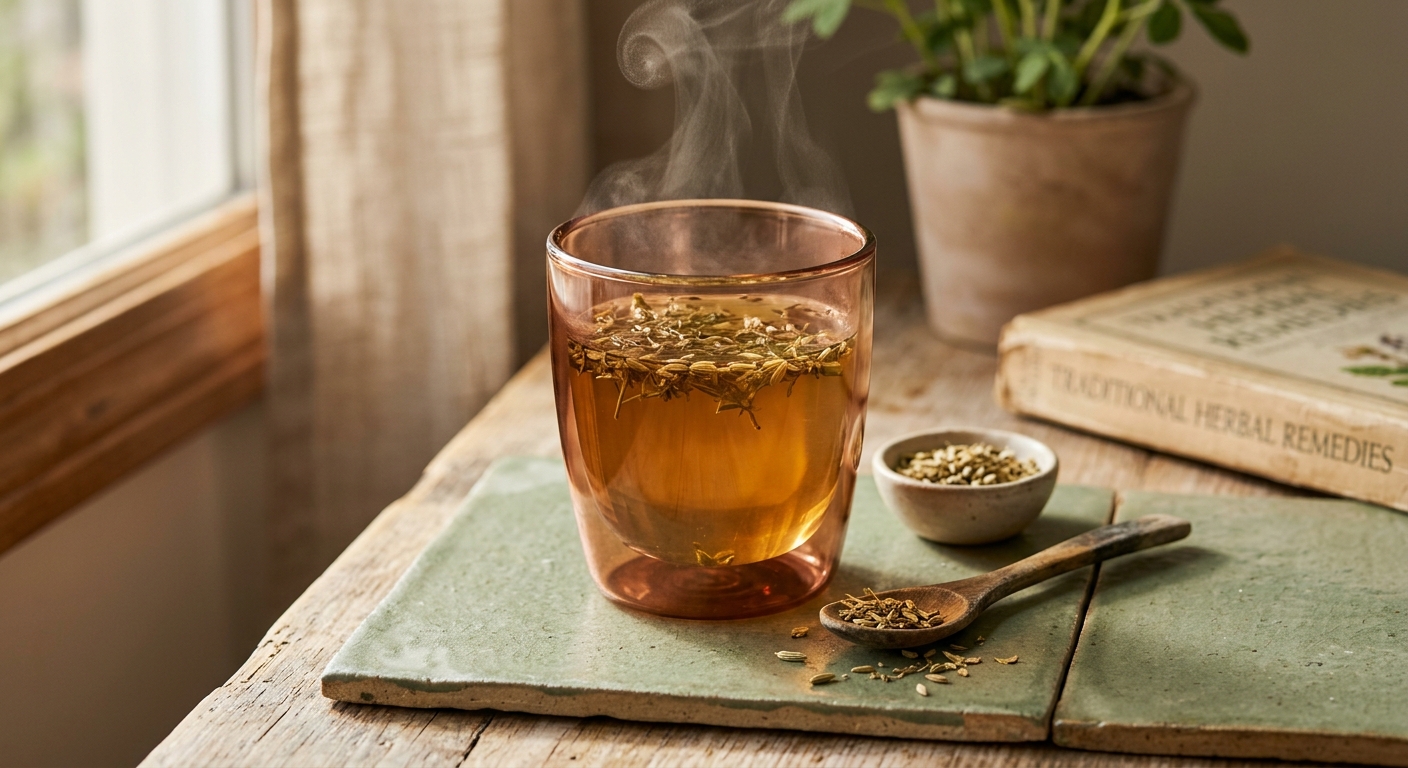
- Measure 1 teaspoon of dried goat’s rue herb per 240 ml of water and place it into a tea infuser or directly into a warmed teapot.
- Heat filtered water to 90 to 95°C (194 to 203°F). Avoid a full rolling boil, as excessive heat can degrade some of the more delicate plant constituents.
- Pour the hot water over the herb and cover the vessel with a lid or small saucer. Covering is important because volatile aromatic compounds escape in the steam and contribute to the tea’s beneficial profile.
- Steep for 10 to 15 minutes. For a more robust medicinal effect, steep toward the longer end of this range.
- Strain thoroughly into your mug. If using fennel seed for flavor balance, add it to the infuser alongside the goat’s rue from the beginning.
- Sweeten lightly with raw honey or stevia if desired, and drink warm. For lactation support, a common protocol is two to three cups per day, ideally at consistent times.
- Measure 2 teaspoons of dried goat’s rue herb per 480 ml of cold, filtered water. The ratio is slightly higher than hot brew to compensate for the reduced extraction efficiency at lower temperatures.
- Combine the herb and water in a clean glass jar. Add a few fennel seeds or a small slice of fresh ginger if you prefer a flavor accent that softens the bitterness.
- Stir gently with a long spoon to ensure all the plant material is saturated, then seal the jar with a lid.
- Leave the jar at room temperature for 1 hour to begin the infusion, then transfer it to the refrigerator and allow it to steep for a further 9 to 11 hours, totaling 10 to 12 hours.
- Strain the liquid through a fine mesh strainer lined with cheesecloth to remove all fine plant particles and achieve a clean, clear brew.
- Pour over ice into a tall glass. Sweeten with a light drizzle of honey or a few drops of liquid stevia if desired. Store any remaining cold brew in the refrigerator and consume within 48 hours.
- Place 1.5 teaspoons of dried goat’s rue herb per 240 ml of filtered water into a small stainless steel or enamel saucepan. For two servings, use 3 teaspoons of herb and 480 ml of water.
- Bring the water to a gentle simmer over medium-low heat, stirring once as the temperature rises. Do not allow the liquid to reach a hard boil, as this can cause excessive evaporation and may damage heat-sensitive compounds.
- Maintain a gentle simmer, uncovered, for 20 to 25 minutes. The liquid will reduce somewhat and deepen in color to a richer golden-green.
- Remove the saucepan from heat and allow the decoction to rest for 5 minutes off the heat so that any remaining plant material settles.
- Strain through a fine mesh strainer into a warmed mug, pressing gently on the spent herb to extract the remaining liquid without introducing excess bitterness.
- Taste before sweetening. A decoction of goat’s rue will be noticeably more concentrated and robust than a standard hot brew. Add honey, fennel-infused honey, or a small amount of licorice root tea to balance the intensity if needed. Drink one cup at a time and do not exceed the recommended daily amount.
Health Benefits
Goat’s rue is one of the most well-established herbal galactagogues in Western and European folk medicine. Its polysaccharide constituents are believed to stimulate prolactin production and support mammary gland tissue development, with anecdotal and observational evidence supporting increased milk supply in breastfeeding women, particularly those who adopted early.
Galegine and chromium work synergistically to reduce blood glucose levels by limiting hepatic glucose production and improving peripheral insulin sensitivity. Several animal studies and limited human observations suggest that goat’s rue may be a useful adjunct herb for those managing pre-diabetes or type 2 diabetes, though it must be used carefully alongside pharmaceutical hypoglycemics.
The saponin content of goat’s rue gives it mild diuretic and lymphagogue properties, meaning it gently encourages fluid movement through the lymphatic system and promotes healthy kidney filtration. Herbalists have traditionally used it in formulas aimed at reducing fluid retention and supporting immune system drainage.
The flavonoids quercetin and kaempferol found in goat’s rue contribute meaningful antioxidant activity, helping to neutralize free radicals and reduce oxidative stress in tissues. This activity supports cardiovascular health and may contribute to the herb’s broader metabolic benefits.
Goat’s rue’s mild bitterness activates digestive bitter receptors on the tongue, stimulating the production of digestive enzymes and bile flow. This makes a pre-meal cup a useful bitter tonic for those with sluggish digestion, bloating, or poor fat emulsification.
🧪 Key Bioactive Compounds
The Science Behind Goat’S Rue
The scientific story of goat’s rue begins in earnest in the 1920s, when French researchers isolated galegine, a guanidine-based alkaloid, from Galega officinalis and demonstrated its potent blood glucose lowering effect in animal models. Galegine was found to inhibit complex I of the mitochondrial electron transport chain in liver cells, reducing hepatic glucose output and improving insulin sensitivity. This mechanism proved too powerful for galegine itself to be clinically safe at pharmacological doses, but it directly inspired the structural development of biguanide compounds, which eventually yielded metformin, now the first-line pharmaceutical treatment for type 2 diabetes worldwide. At the far lower concentrations found in a therapeutic cup of tea, galegine provides a gentler, modulating effect rather than a pharmacological one.
The lactation-supporting properties of goat’s rue are less thoroughly studied than its hypoglycemic constituents, but the available evidence points toward a combination of mechanisms. A high-molecular-weight polysaccharide isolated from the plant, identified as 4-hydroxygalactomannan, has been shown in some research to stimulate mammary gland development in animal models, even in nulliparous subjects. Separately, the herb’s flavonoid content may support prolactin secretion through indirect estrogenic receptor modulation. This dual mechanism, supporting both the physical structure of the mammary gland and the hormonal signaling that drives milk production, helps explain why goat’s rue has maintained its galactagogue reputation across so many centuries and cultures.
The saponin fraction of goat’s rue contributes to its mild diuretic and lymphagogue activity by reducing surface tension in mucosal membranes and stimulating fluid movement across cellular barriers. Quercetin and kaempferol, both well-researched flavonoids present in the plant, add a layer of antioxidant and anti-inflammatory support that buffers systemic oxidative load. Together, these compounds create a herb whose bioactive profile is genuinely multifaceted, a metabolic herb, a galactagogue, an antioxidant, and a gentle circulatory tonic, all housed within the same fragrant, meadow-grown plant.
Brewing Tips
- Always source dried goat’s rue from a certified organic or tested herbal supplier. The raw, fresh plant contains higher concentrations of toxic alkaloids that are reduced significantly through proper drying and processing.
- For lactation support, consistency matters more than dose size. Two moderate cups daily taken at regular times, such as morning and early afternoon, tends to produce better results than sporadic large servings.
- Goat’s rue pairs well with oat straw, nettle, and red raspberry leaf in a nourishing postpartum blend. These additions contribute minerals, gentle nervine support, and uterine toning properties that complement goat’s rue’s galactagogue focus.