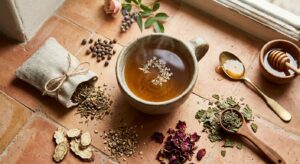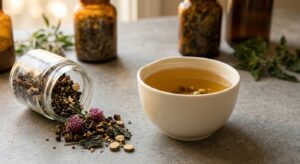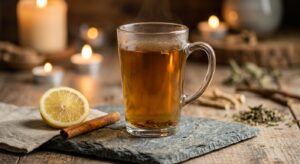
The weeks following childbirth are among the most emotionally complex of a person’s life. Hormones plummet, sleep becomes fragmented, and the weight of new responsibility can feel overwhelming. Long before modern medicine had language for postpartum mood shifts, herbalists across cultures reached for nervine herbs, adaptogens, and nourishing botanicals to steady the nervous system and restore a sense of calm. Baby Blues Herbal Tea draws from this deep tradition, weaving together herbs that have supported birthing people for centuries.
At the heart of this blend are herbs like lemon balm, oat straw, lavender, and rose petals, each chosen for its distinct action on the nervous system, emotional body, and hormonal landscape. Lemon balm has been called the “gladdening herb” since at least the Middle Ages, used by Carmelite nuns in their famous Eau de Mélisse. Oat straw, the green milky tops of the oat plant, has long been regarded as a profound nervous system trophorestorative, rebuilding what exhaustion has depleted. Together they form a foundation of gentle, sustainable support.
This tea is not a replacement for professional care, and postpartum mood disorders deserve full medical attention when present. But for the milder blues, the weepy afternoons, and the quiet moments of overwhelm that are a normal part of the fourth trimester, a warm cup of something lovingly brewed can be a small but meaningful act of self-tending. This blend is also designed to be caffeine-free and compatible with breastfeeding, making it a safe daily companion through the postpartum season.
2
cups
Ingredients
- 2 tspdried lemon balm leaves
- 1 tspdried oat straw
- 1 tspdried rose petals
- 0.5 tspdried lavender flowers
- 0.5 tspdried chamomile flowers
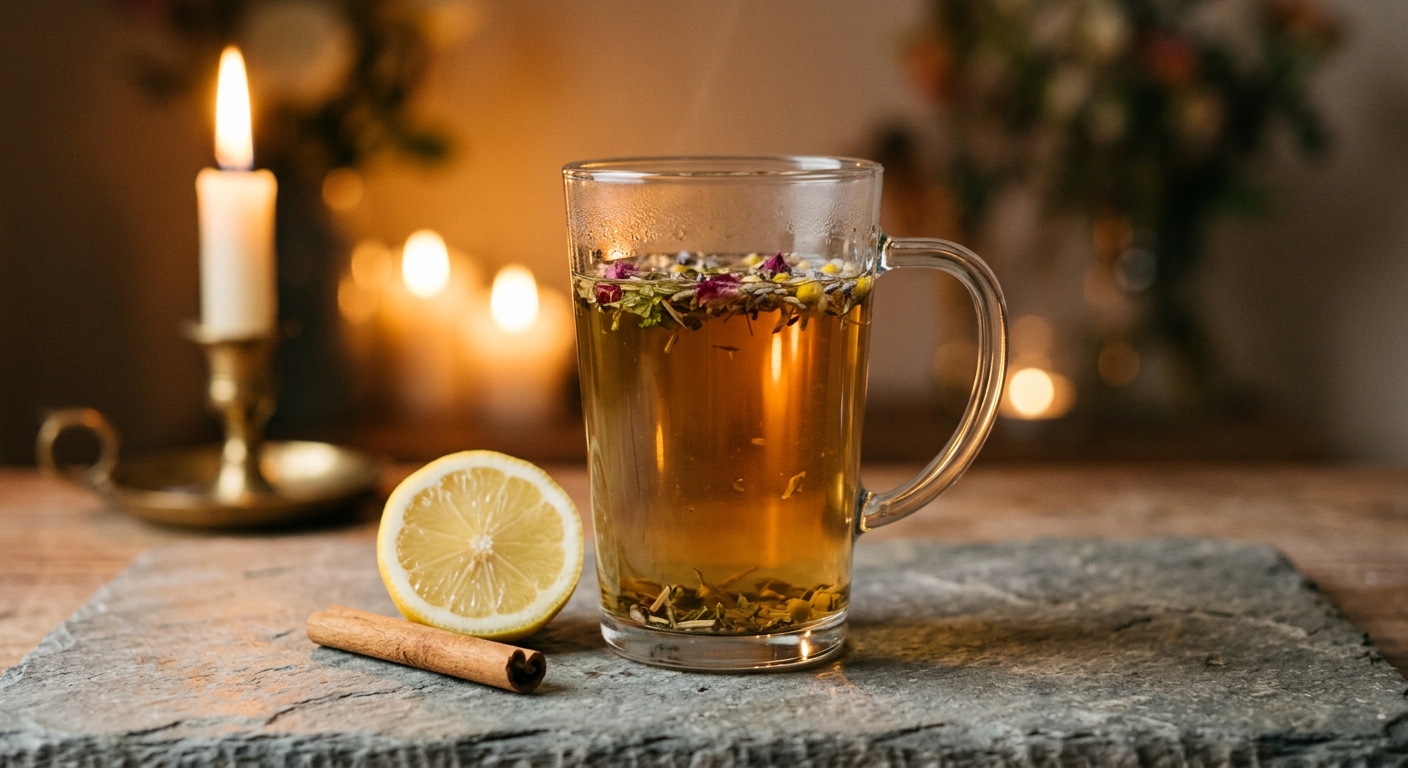
- 480 mlwater (90°C / 194°F)
- —raw honey or maple syrup to taste (optional)
- —a thin slice of fresh lemon (optional)
How to Brew
Click on an item below to shop for the recommended items for this recipe on Amazon.
As an Amazon Associate, we earn from qualifying purchases.
- Heat filtered water to 90 to 93°C (194 to 199°F). If you don’t have a temperature-controlled kettle, bring water to a full boil and let it rest for 90 seconds before pouring.
- Combine the lemon balm, oat straw, rose petals, lavender, and chamomile in a tea infuser, muslin bag, or teapot with a built-in strainer. Use the full blend per two cups of water.
- Pour the hot water over the herbs and immediately cover the vessel with a lid or small plate. This traps the volatile aromatic compounds that would otherwise escape as steam, preserving both flavor and therapeutic potency.
- Steep for 7 to 10 minutes. A shorter steep yields a lighter, more floral cup; a longer steep brings out the deeper green and oaty notes.
- Remove the infuser and gently press the herbs with the back of a spoon to release any remaining liquid. Sweeten lightly with raw honey if desired, and sip slowly while still warm.
- Measure out a double-strength batch of the herb blend: 4 tsp lemon balm, 2 tsp oat straw, 2 tsp rose petals, 1 tsp lavender, and 1 tsp chamomile for every 480 ml of water. The extra volume of herbs compensates for the slower cold extraction.
- Place the herbs loosely into a glass jar or cold brew pitcher. Pour cold, filtered water directly over the herbs at room temperature. Stir gently to ensure all plant material is saturated.
- Leave the jar on the countertop at room temperature for 30 minutes to allow initial extraction to begin, then seal the jar and transfer to the refrigerator.
- Allow the blend to steep in the refrigerator for 8 to 12 hours, or overnight. The slow, cool extraction draws out gentle flavors and softer compounds without releasing harsh tannins.
- Strain through a fine mesh strainer or cheesecloth into a clean glass. Serve over ice, add a slice of fresh lemon and a drizzle of honey if desired. The cold brew will keep refrigerated for up to 48 hours.
- Increase the oat straw to 2 tsp per serving since it is the primary nutritive herb that benefits most from extended steeping. Keep all other herbs at standard amounts. This method is especially suited for when deep nourishment is the goal.
- Bring filtered water to 93 to 96°C (199 to 205°F) and pour it over the full herb blend placed inside a quart mason jar or a heat-safe glass vessel with a tight-fitting lid.
- Stir once to ensure all herbs are submerged, then seal the jar tightly with the lid. The sealed environment traps all volatile oils and prevents oxidation over the long steep.
- Allow the jar to steep at room temperature for a minimum of 4 hours and up to 8 hours. Many practitioners prepare this before bed and strain it in the morning for a full day’s supply.
- Strain carefully through a fine mesh strainer, pressing gently on the spent herbs. The resulting brew will be noticeably darker, greener, and more substantial in body than a standard steep.
- Warm individual servings gently on the stovetop or in a small pot over low heat before drinking, or enjoy at room temperature. Store remaining infusion in the refrigerator and consume within 24 hours for optimal freshness and potency.
Health Benefits
Lemon balm’s rosmarinic acid and lavender’s linalool both act on GABA pathways to quiet an overactivated nervous system. A 2014 randomized controlled trial found lemon balm extract significantly reduced anxiety and insomnia scores compared to placebo in adults experiencing mild mood disturbance.
The dramatic drop in estrogen and progesterone after delivery can destabilize mood-regulating neurotransmitters. Nervine herbs like chamomile and rose petals provide gentle phytochemical support that may help buffer these fluctuations without pharmaceutical intervention.
Apigenin from chamomile and linalool from lavender have both been shown to reduce sleep latency and improve sleep quality in human studies. Even short periods of deeper sleep can significantly impact a new parent’s emotional and cognitive recovery.
Oat straw is rich in B vitamins, calcium, magnesium, and silica, all of which are depleted by stress and disrupted sleep. Traditional herbalism classifies it as a trophorestorative, meaning it gradually rebuilds depleted tissue function rather than simply sedating or stimulating.
The act of preparing and inhaling a warm, aromatic brew activates the parasympathetic nervous system through olfactory pathways. Research on aromatherapy with lavender and rose compounds supports their ability to lower cortisol levels and heart rate within minutes of inhalation.
🧪 Key Bioactive Compounds
The Science Behind Lemon Balm
The mood-supporting action of Baby Blues Herbal Tea is not incidental. Each herb in this blend has been studied for its interaction with the central nervous system, and together they create what herbalists call a synergistic formula, where the combined effect exceeds what any single herb could produce alone. Lemon balm is perhaps the most scientifically substantiated ingredient in the blend. Its primary polyphenol, rosmarinic acid, inhibits GABA-transaminase, the enzyme responsible for breaking down gamma-aminobutyric acid in the brain. By slowing GABA degradation, lemon balm effectively raises the brain’s natural inhibitory tone, producing a calming, grounding effect without the sedation or dependency risk associated with pharmaceutical agents that work on the same receptor system.
Lavender’s active compound linalool works through a complementary but distinct mechanism, directly modulating GABA-A receptor activity and inhibiting voltage-gated sodium and calcium channels in excitable neurons. A 2010 double-blind randomized trial published in Phytomedicine found that an oral lavender preparation significantly reduced anxiety scores in patients with generalized anxiety disorder, demonstrating clinical relevance beyond aromatherapy alone. Chamomile’s apigenin adds a third layer of GABA pathway support by binding to benzodiazepine receptor sites, explaining why chamomile has been a sleep and anxiety herb in virtually every traditional healing system from ancient Egypt to Ayurveda to European folk medicine.
Oat straw occupies a different but equally important role in this formula. Rather than acting on neurotransmitter pathways acutely, its benefit is nutritive and restorative over time. The milky green tops of oats are extraordinarily rich in bioavailable minerals, particularly magnesium and calcium, both of which are co-factors in the synthesis and regulation of serotonin and dopamine. Magnesium deficiency, which is extremely common in the postpartum period due to the physiological demands of pregnancy and childbirth, is directly associated with increased anxiety, poor sleep quality, and depressed mood. By regularly consuming oat straw in a long infusion, where mineral extraction is maximized, new parents can begin to replenish these foundational reserves from the inside out.
Brewing Tips
- Prepare a large batch of the long infusion the night before and store it in the refrigerator, then warm individual mugs throughout the next day so you always have a ready cup without having to brew from scratch during a difficult moment.
- Use a kitchen scale to batch-blend a two-week supply of the dry herb mix in advance and store it in a sealed amber glass jar away from light and heat. This removes the mental labor of measuring when energy is low.
- If the floral notes of lavender are too strong for your palate, reduce it to a pinch or swap it for additional rose petals, which provide similar aromatherapy benefits with a softer, sweeter flavor.