Few herbs carry the weight of culinary and medicinal history quite like caraway. The dried seeds of Carum carvi, a member of the Apiaceae family, have been found in archaeological sites dating back over 8,000 years, including the remains of Mesolithic settlements in Europe. Ancient Egyptians placed caraway in tombs to ward off evil spirits, and medieval European herbalists prescribed it for everything from flatulence to lovesickness. In traditional Ayurvedic and Unani medicine, it was considered a warming digestive tonic capable of igniting the digestive fire and easing colic in both adults and infants.
What makes caraway so enduringly useful is its remarkable concentration of volatile oils, particularly carvone and limonene, which give the seed its distinctive sharp, slightly sweet, and anise-like aroma. When steeped in hot water, these oils are released into the brew, creating a tea that is simultaneously stimulating and settling to the digestive system. European herbalism has long relied on caraway as a carminative, a herb that relaxes the smooth muscle of the gastrointestinal tract, allowing trapped gas to pass freely and relieving the cramping that often accompanies it.
Today, caraway seed tea occupies a respected place in both traditional herbalism and modern phytotherapy research. Studies have confirmed many of the benefits that generations of herbalists observed empirically, including its antispasmodic effects on the gut, its antimicrobial activity, and its potential to support healthy digestive enzyme function. Whether you are reaching for it after a heavy meal or sipping it to manage chronic bloating, caraway seed tea is one of the most practical and pleasurable herbs in the digestive medicine cabinet.
2
cups
Ingredients
- 2 tspwhole dried caraway seeds (lightly crushed)
- 480 mlwater (95°C / 203°F)
- —raw honey or a slice of fresh ginger to taste (optional)
- —a small strip of lemon peel (optional)
How to Brew
Click on an item below to shop for the recommended items for this recipe on Amazon.
As an Amazon Associate, we earn from qualifying purchases.
- Place 2 teaspoons of whole dried caraway seeds onto a clean cutting board. Using the flat side of a wide knife, a mortar and pestle, or a rolling pin, gently press and crack the seeds. You want them split and bruised, not ground into powder. This step releases the volatile oils and significantly improves flavor and medicinal potency.
- Bring 480 ml of fresh, filtered water to just below a full boil, aiming for around 93 to 96°C (199 to 205°F). Avoid a rolling boil, which can drive off some of the delicate aromatic compounds.
- Add the crushed caraway seeds directly to a small saucepan or place them inside a tea infuser or muslin bag set inside a pre-warmed teapot. Pour the hot water over the seeds immediately.
- Cover the pot or mug tightly with a lid or small plate to trap the volatile steam, which carries a significant portion of the aromatic compounds. Steep for 10 to 15 minutes. A shorter steep gives a milder, more floral result; 15 minutes delivers the full medicinal strength.
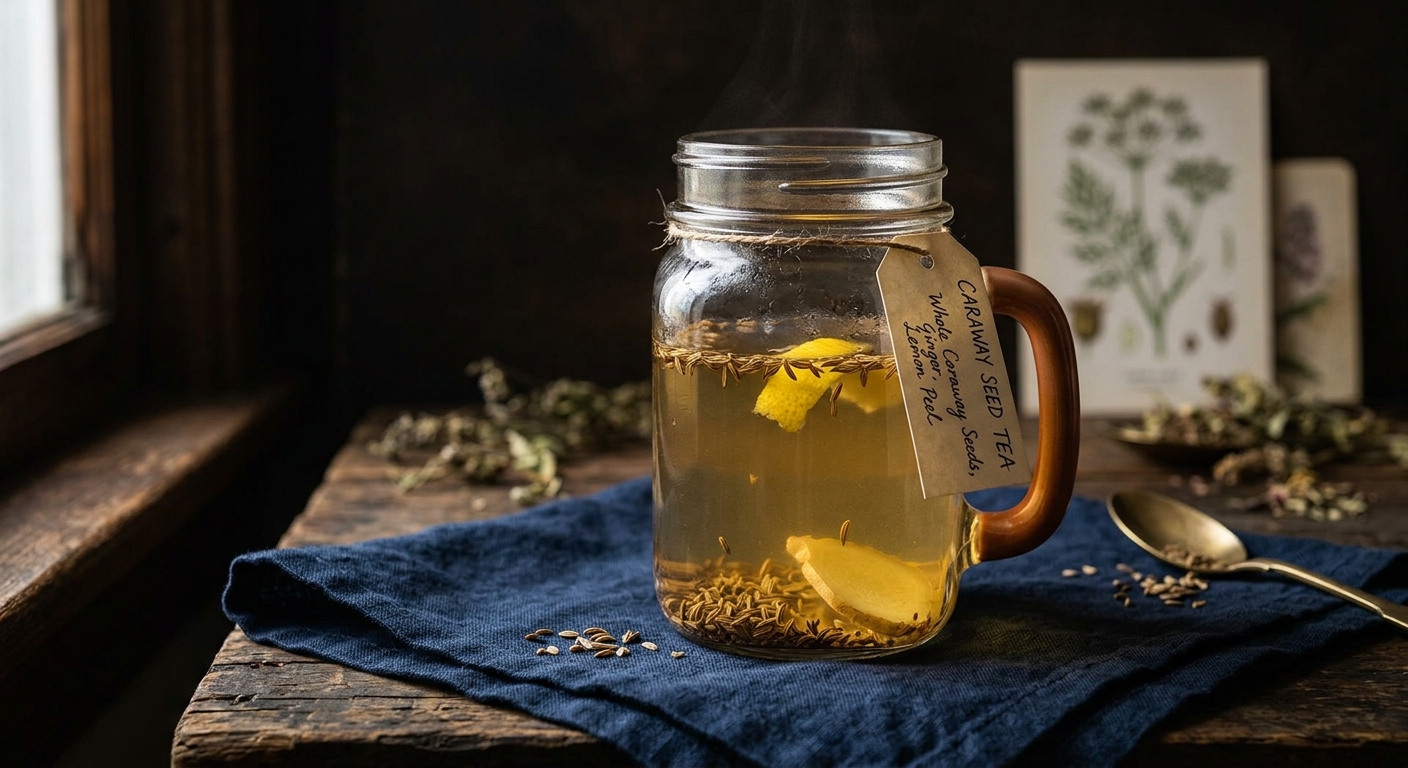
- Strain the seeds out thoroughly using a fine mesh strainer. Pour into warmed mugs. Add raw honey, a sliver of fresh ginger, or a small strip of lemon peel if desired. Drink warm, ideally 15 to 20 minutes after a meal for best digestive results.
- Lightly crush 3 teaspoons of dried caraway seeds using a mortar and pestle or the flat of a knife. Cold water extracts compounds more slowly than hot water, so a slightly larger quantity of seeds compensates for the lower extraction rate.
- Place the crushed seeds into a clean glass jar or pitcher. Pour 600 ml of cold, filtered water over the seeds at room temperature. Stir briefly to ensure all seeds are fully submerged.
- Cover the jar loosely with a lid or a piece of muslin cloth secured with a rubber band. Allow the jar to sit at room temperature for 1 to 2 hours before transferring it to the refrigerator. This initial room-temperature rest helps kick-start extraction of the volatile oils before the cold slows the process.
- Refrigerate for 8 to 12 hours (overnight is ideal). The brew will develop a pale golden colour with a noticeably softer, slightly sweet anise note and none of the sharpness that hot brewing brings out.
- Strain through a fine mesh strainer or cheesecloth into a clean jar or glasses. Serve over ice if desired. The cold brew keeps well refrigerated for up to 24 hours. Add a few slices of cucumber or a sprig of fresh mint for a refreshing digestive tonic on warm days.
- Measure 1 tablespoon (approximately 3 teaspoons) of whole dried caraway seeds and crush them moderately using a mortar and pestle. For a decoction, a slightly coarser crush than for hot brewing is fine, as the extended simmer time will extract the oils thoroughly.
- Combine the crushed seeds and 600 ml of cold, filtered water in a small stainless steel or ceramic saucepan. Starting with cold water allows the compounds to be drawn out gradually as the temperature rises, which is considered a more thorough extraction technique.
- Bring the water to a full boil over medium-high heat, then immediately reduce the heat to a gentle simmer. Cover the saucepan with a lid, leaving it slightly ajar to prevent overflow. Simmer for 20 to 25 minutes. The liquid will reduce by roughly one-third and deepen to a warm amber colour.
- Remove from heat and allow the decoction to rest, covered, for an additional 5 minutes off the heat before straining. This rest period allows the steam condensation inside the lid to drip back into the brew, returning volatile compounds that rose with the steam.
- Strain through a fine mesh strainer into a heat-safe pitcher, pressing the spent seeds gently with the back of a spoon to extract all remaining liquid. Pour into mugs. This yields approximately 2 small therapeutic cups. Sip slowly after meals, or drink one cup in the morning and one in the evening to address chronic digestive discomfort. A small amount of raw honey can soften the more intense flavour.
Health Benefits
Carvone and limonene work synergistically to relax the smooth muscle lining of the gastrointestinal tract, reducing spasm and allowing trapped gas to disperse. Multiple clinical studies, including trials using a caraway-peppermint combination formula (Enteroplant), have confirmed significant reductions in bloating and abdominal pain in patients with functional dyspepsia and irritable bowel syndrome.
Caraway’s volatile oils act as antispasmodics by inhibiting calcium ion influx into smooth muscle cells, directly reducing the involuntary contractions that cause cramping. This mechanism mirrors that of pharmaceutical antispasmodics but with a far milder side effect profile.
Traditional use and preliminary research suggest that caraway stimulates the secretion of digestive enzymes and bile, improving the breakdown and absorption of fats and proteins. This makes it particularly useful after rich or heavy meals when digestive sluggishness is most likely.
Limonene and carvone have demonstrated antimicrobial activity against several pathogenic bacteria including Helicobacter pylori, Escherichia coli, and Candida albicans in laboratory studies. While more clinical evidence is needed, this supports caraway’s traditional use in treating mild gastrointestinal infections and restoring gut balance after illness.
The flavonoids apigenin, luteolin, and quercetin present in caraway seeds help reduce inflammatory signalling in the gut mucosa. Regular consumption may help soothe chronically irritated digestive tissue and reduce the frequency of flare-ups in those with mild inflammatory bowel conditions.
🧪 Key Bioactive Compounds
The Science Behind Caraway Seed
The medicinal power of caraway seed tea rests primarily on its exceptionally high concentration of volatile essential oils, which can comprise up to 7 percent of the seed’s dry weight. Carvone is the dominant compound, typically accounting for 50 to 80 percent of the total essential oil content depending on growing conditions and seed maturity. Pharmacologically, carvone acts as a smooth muscle relaxant by blocking calcium channels in the gastrointestinal tract. When smooth muscle cells cannot contract as forcefully, the painful cramps and spasms associated with bloating, gas, and conditions like irritable bowel syndrome are significantly reduced. This is a well-characterised mechanism supported by both in vitro studies and clinical trials, including double-blind research showing that a standardised caraway-peppermint oil combination reduced functional dyspepsia symptoms comparably to the pharmaceutical drug cisapride.
Limonene, the second most abundant volatile compound in caraway, contributes meaningfully to the herb’s digestive action through a distinct but complementary pathway. Limonene promotes the secretion of bile from the gallbladder and stimulates the activity of gastric enzymes, particularly those involved in fat digestion. It also exhibits notable antimicrobial properties against a range of gastrointestinal pathogens, including Helicobacter pylori, the bacterium responsible for peptic ulcers. Research published in food chemistry and pharmacology journals has confirmed that limonene at concentrations achievable through dietary consumption can inhibit H. pylori growth, lending scientific support to traditional use of caraway in treating stomach complaints.
The flavonoid fraction of caraway seeds, including apigenin, luteolin, and quercetin, adds a meaningful anti-inflammatory dimension to the tea that is often overlooked in favour of the more dramatic volatile oil effects. These polyphenolic compounds modulate the NF-kB inflammatory pathway and stabilise mast cells in the intestinal mucosa, reducing histamine release and the associated tissue inflammation. Quercetin in particular has been the subject of extensive research into its gut-protective effects, with studies suggesting it can help restore gut barrier function and reduce intestinal permeability, a mechanism increasingly associated with both functional digestive disorders and broader systemic inflammation. Together, these compounds give caraway seed tea a layered pharmacological profile that supports the gut from multiple angles simultaneously.
Brewing Tips
- Always lightly crush caraway seeds before brewing by any method. Even a brief press under a flat knife increases volatile oil release by breaking the seed coat, producing a significantly more aromatic and medicinally potent cup compared to brewing whole seeds.
- Cover your mug or teapot tightly during steeping for hot brew. Caraway’s most active compounds are volatile, meaning they evaporate readily with rising steam. A simple saucer placed over your mug can preserve a meaningful portion of the essential oils that would otherwise be lost.
- For best digestive results, drink caraway seed tea warm and after eating rather than on an empty stomach. The carminative action of carvone works most effectively when the digestive tract is already active, and the warmth of the tea helps relax the gut wall more quickly than a cold preparation would.