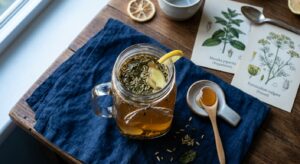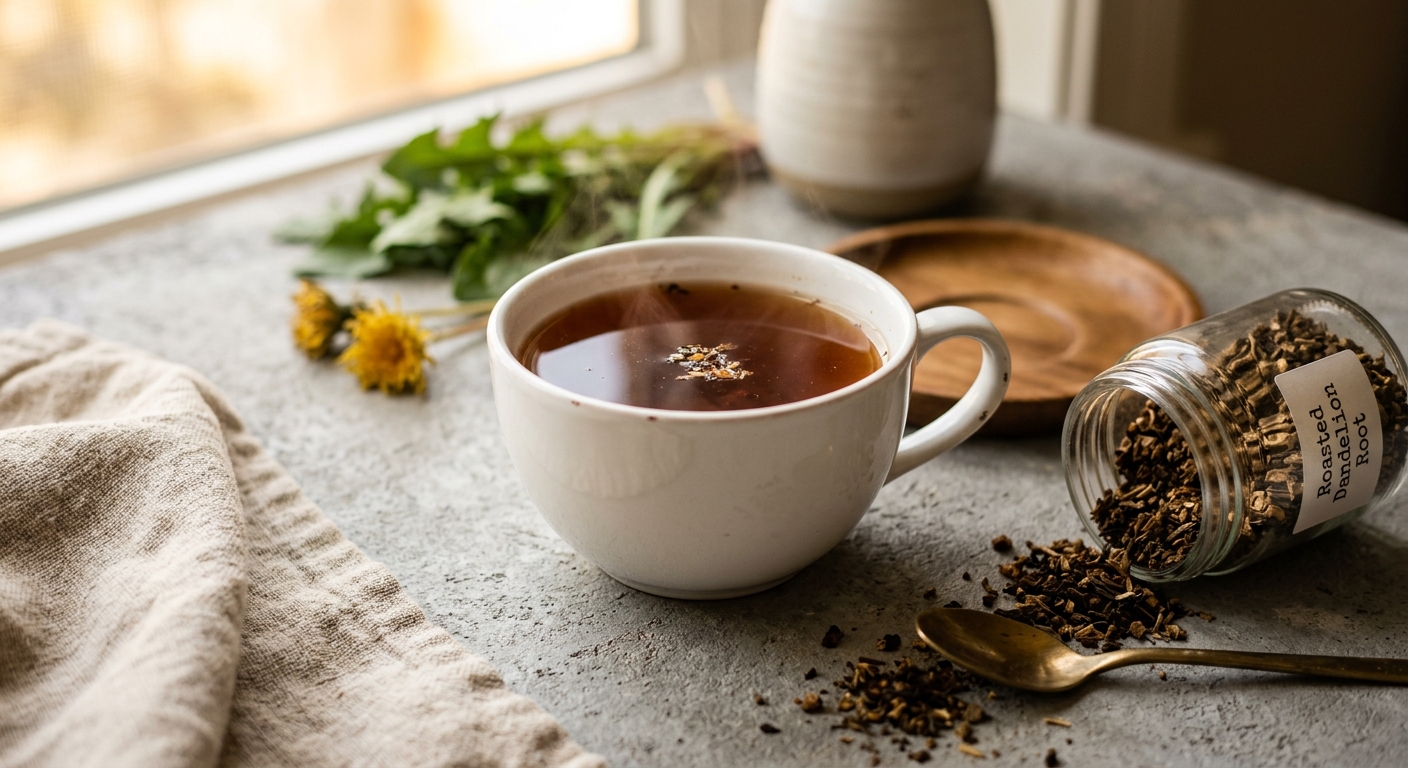
Long before dandelions were dismissed as lawn weeds, they were revered as one of nature’s most complete medicinal plants. The roots of Taraxacum officinale have been used for centuries in Traditional Chinese Medicine, Ayurveda, and European folk herbalism to stimulate digestion, support the liver, and cleanse the blood. Native American healers brewed dandelion root to treat kidney disease, heartburn, and upset stomachs, while medieval European herbalists prescribed it as a general tonic for sluggish digestion and poor appetite.
What sets dandelion root apart from the leafy greens sold in salads is its remarkable concentration of bitter compounds, prebiotic fibers, and liver-supportive phytochemicals. When the root is dried and roasted, it develops a deep, coffee-like richness that makes it one of the most satisfying caffeine-free alternatives available. Raw or lightly dried root offers a more earthy, grassy profile, while the roasted version delivers toasty, nutty undertones with a pleasantly bitter finish that herbalists consider a hallmark of digestive tonics.
Modern herbalists and integrative practitioners still reach for dandelion root as a first-line botanical for sluggish digestion, bloating, and liver congestion. With a growing body of research supporting its prebiotic and hepatoprotective properties, this humble root has earned its place on the herbal tea shelf as something far more than a weed remedy. Whether you are seeking a morning ritual without caffeine or a gentle after-dinner digestive aid, dandelion root tea is a time-tested, deeply nourishing brew.
2
cups
Ingredients
- 2 tbspdried roasted dandelion root (chopped or granulated)
- 480 mlwater (100°C / 212°F)
- —raw honey or maple syrup to taste (optional)
- —splash of oat milk for a coffee-style finish (optional)
How to Brew
Click on an item below to shop for the recommended items for this recipe on Amazon.
As an Amazon Associate, we earn from qualifying purchases.
- Add 2 tablespoons of dried roasted dandelion root directly to a small saucepan with 480 ml of cold filtered water. Using cold water and bringing it up to heat together helps draw out soluble compounds more gradually.
- Bring the water to a full rolling boil over medium-high heat, then immediately reduce to a gentle simmer. Allow the root to simmer uncovered for 10 to 15 minutes. The liquid will deepen to a rich amber or mahogany color as the bitter compounds and inulin release.
- Remove from heat and allow the decoction to rest for 2 minutes. This brief resting period lets the root settle and allows the brew to cool slightly before straining.
- Pour the decoction through a fine mesh strainer or cheesecloth into your mugs, pressing the spent root gently to extract the last of the liquid. Discard the root material.
- Taste the tea before adding anything. The pleasant bitterness is part of the digestive benefit. If desired, stir in a small amount of raw honey or oat milk to soften the roasted edge.
- Add 3 tablespoons of dried roasted dandelion root to a clean glass jar. Use slightly more root than you would for a hot brew to compensate for the lower extraction efficiency of cold water.
- Pour 480 ml of cold, filtered water over the root. Stir briefly to ensure all the root material is submerged. Do not use warm or hot water – the cold temperature is essential to the slow, gentle extraction that defines this method.
- Seal the jar with a lid and place it on your kitchen counter for 1 hour to begin extraction at room temperature, then transfer it to the refrigerator. Allow the root to steep for a total of 12 to 18 hours. Longer steeping yields a stronger, slightly more bitter brew.
- When ready, strain the liquid through a fine mesh strainer or a nut milk bag into a glass or pitcher, pressing the root to extract all the liquid. Serve over ice for a refreshing cold drink, or enjoy it straight from the refrigerator.
- Cold brew dandelion root pairs beautifully with a squeeze of orange juice or a few drops of liquid vanilla extract to complement its natural caramel and earthy notes.
- Add 4 tablespoons of dried roasted dandelion root to a medium saucepan with 480 ml of cold filtered water. The higher root-to-water ratio is intentional – you are brewing a concentrate, not a ready-to-drink tea.
- Bring to a full boil over medium-high heat, then reduce to a low simmer. Allow the root to simmer uncovered for 25 to 30 minutes, stirring occasionally. The liquid will reduce noticeably and deepen to a very dark, syrupy brown.
- Remove from heat and let the concentrate rest for 5 minutes. Strain through a fine mesh strainer or cheesecloth into a clean glass jar, pressing the root firmly to extract every drop of the concentrated liquid.
- Allow the concentrate to cool to room temperature before sealing the jar. Store in the refrigerator for up to 5 days. Label the jar with the date.
- To serve, dilute one part concentrate with two to three parts hot water or steamed milk. Adjust the ratio to your preferred strength. A spoonful of raw honey and a pinch of cinnamon turns this into an exceptional dandelion root latte.
Health Benefits
The bitter sesquiterpene lactones taraxacin and taraxacerin stimulate the liver to increase bile production and prompt the gallbladder to release it. Improved bile flow aids the digestion and absorption of dietary fats and supports the liver’s natural detoxification pathways.
Dandelion root is one of the richest natural sources of inulin, a soluble prebiotic fiber that selectively feeds beneficial gut bacteria including Bifidobacterium and Lactobacillus strains. Regular consumption supports microbiome diversity, reduces bloating from dysbiosis, and promotes healthy bowel regularity.
The bitter compounds in dandelion root stimulate digestive secretions throughout the gastrointestinal tract, improving the breakdown of food and reducing symptoms of sluggish digestion such as bloating, gas, and a heavy feeling after meals. A 2011 study in Evidence-Based Complementary and Alternative Medicine identified dandelion as a clinically relevant digestive bitter.
Dandelion root and leaf have a well-documented mild diuretic effect, increasing urine output without causing significant potassium depletion. Unlike pharmaceutical diuretics, dandelion naturally replaces the potassium lost through increased urination due to its own high potassium content.
Dandelion root contains a range of polyphenols including chicoric acid, chlorogenic acid, and luteolin that neutralize free radicals and reduce systemic inflammation. Animal studies have shown reductions in key inflammatory markers, and these compounds are being investigated for their hepatoprotective and metabolic health effects.
🧪 Key Bioactive Compounds
The Science Behind Dandelion Root
The digestive power of dandelion root begins with its bitter compounds, specifically the sesquiterpene lactones taraxacin and taraxacerin. When these bitter molecules contact taste receptors at the back of the tongue, they trigger a reflexive cascade of digestive secretions: gastric acid production increases, digestive enzyme output rises, and the liver is prompted to ramp up bile synthesis. This is the classical mechanism of a digestive bitter, a category of plant medicine used in European and Ayurvedic traditions for centuries and now supported by modern gastroenterology research. Adequate bile flow is essential not only for fat digestion but for the elimination of fat-soluble toxins and the regulation of cholesterol metabolism.
Inulin, the prebiotic fructooligosaccharide that makes up a significant portion of dandelion root’s dry weight, takes a different but equally important path in the body. Because humans lack the enzyme to break down inulin in the small intestine, it passes intact into the colon where it serves as a selective fermentation substrate for beneficial bacteria. Strains such as Bifidobacterium longum and Lactobacillus acidophilus thrive on inulin, producing short-chain fatty acids like butyrate as byproducts. Butyrate is the primary energy source for colonocytes (the cells lining the colon), and it plays a documented role in reducing intestinal inflammation and maintaining the integrity of the gut barrier. This makes dandelion root a functional prebiotic food in addition to a digestive bitter.
Dandelion root’s antioxidant profile adds a third dimension to its therapeutic value. Chicoric acid, chlorogenic acid, and luteolin are all polyphenolic compounds present in the root that have been shown in cell and animal studies to reduce oxidative stress in liver tissue, inhibit pro-inflammatory cytokines, and modulate lipid metabolism. A 2016 study published in Evidence-Based Complementary and Alternative Medicine found that dandelion root extracts significantly reduced inflammation markers in laboratory models of liver injury. While large-scale human clinical trials are still limited, the mechanistic evidence is compelling and consistent with centuries of traditional use as a liver and digestive tonic.
Brewing Tips
- Always decoct dandelion root rather than simply steeping it. Roots require direct simmering in water to release their full spectrum of bitter compounds and inulin. A standard tea infuser and hot water will produce a weak, underwhelming brew from this fibrous material.
- Source your dandelion root from certified organic suppliers or reputable herbal apothecaries. Dandelions growing in lawns or roadsides may have been treated with herbicides or absorbed heavy metals from soil. The quality of the root dramatically affects the flavor and potency of the tea.
- Drink dandelion root tea about 20 to 30 minutes before a main meal to maximize its digestive benefit. This timing allows the bitter compounds to stimulate gastric acid and bile production before food arrives, setting the digestive system up for optimal function.