Aloe vera has been cultivated and revered for over 6,000 years, appearing in the ancient medical texts of Egypt, Greece, India, and China. The Egyptians called it the ‘Plant of Immortality’ and used it both topically and internally, while Ayurvedic practitioners prescribed it as a digestive tonic, liver support, and cooling herb for pitta-type heat conditions. Today, modern herbalists and integrative practitioners continue to recognize aloe vera as one of nature’s most versatile botanicals, particularly for its profound effects on the gastrointestinal tract.
What most people do not realize is that aloe vera can be brewed into a surprisingly pleasant tea using either fresh inner leaf gel or carefully prepared dried aloe vera powder that has been processed to remove aloin, the harsh laxative compound found in the latex layer just beneath the outer leaf skin. When prepared correctly, the resulting tea is a clean, mildly grassy, subtly fresh drink that feels cooling and soothing from the very first sip. It has become a go-to remedy for those managing symptoms of acid reflux, IBS, leaky gut, and general digestive discomfort.
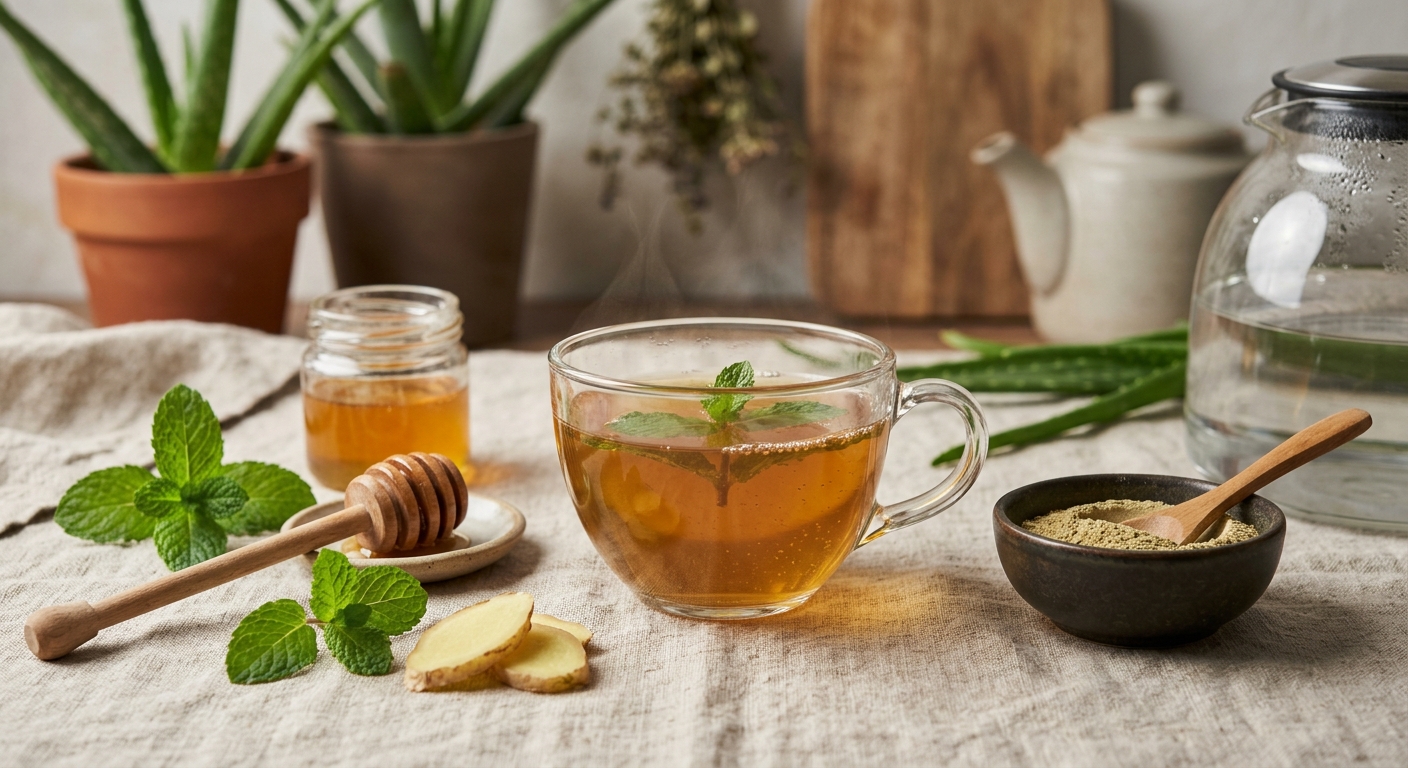
The sensory experience of aloe vera tea is understated and gentle. The flavor is lightly vegetal with a clean, watery freshness that resembles cucumber water with a faint herbal undertone. The tea brews to a very pale, almost clear gold, and its texture can carry a slight natural viscosity from the mucilaginous polysaccharides that give aloe its healing character. Blended with cooling herbs like mint or warming ones like ginger, aloe vera tea transforms into a deeply functional and enjoyable daily ritual for anyone prioritizing gut health.
2
cups
Ingredients
- 2 tspdried aloe vera powder (aloin-free, food-grade)
- 480 mlwater (80°C / 176°F)
- —raw honey or agave to taste (optional)
- —fresh mint leaves or thin ginger slices (optional, for flavor)
How to Brew
Click on an item below to shop for the recommended items for this recipe on Amazon.
As an Amazon Associate, we earn from qualifying purchases.
- Heat filtered water to 80 to 85°C (176 to 185°F). Avoid boiling water, as high heat can degrade the delicate polysaccharides and acemannan that give aloe its healing properties.
- Measure 1 teaspoon of food-grade aloin-free aloe vera powder per 240 ml of water and place it directly into your mug or a fine-mesh infuser. If using fresh inner leaf gel, cut a 5 cm section of a clean aloe leaf, scoop out approximately 2 tablespoons of the clear gel, and add it to the mug.
- Pour the heated water gently over the aloe powder or gel. Stir thoroughly for 30 to 45 seconds to help the powder dissolve and the gel disperse evenly throughout the liquid.
- Allow the tea to steep for 5 to 8 minutes, stirring once midway. The liquid will remain very pale but will take on a slightly viscous, silky quality as the mucilaginous compounds bloom into the water.
- Strain through a fine-mesh strainer if using gel pieces or loose additions. Add optional honey, agave, or a sprig of fresh mint. Drink warm, ideally 20 to 30 minutes before a meal to prime the digestive tract.
- Measure 2 teaspoons of food-grade aloin-free aloe vera powder per 480 ml of filtered water and add it to a clean glass jar. Alternatively, scoop 4 tablespoons of fresh inner leaf gel into the jar.
- Add room-temperature filtered water to the jar and stir vigorously for 1 full minute to begin dissolving the powder or dispersing the gel. The mixture will appear slightly cloudy or gelatinous at this stage.
- Seal the jar with a lid and place it in the refrigerator. Let the tea cold brew for a minimum of 8 hours and up to 12 hours for a fuller, more viscous extraction. Gently swirl the jar once or twice during steeping if possible.
- After steeping, strain the liquid through a fine-mesh strainer or cheesecloth into a pitcher or glass, pressing gently to extract all liquid. Discard any undissolved sediment.
- Serve over ice with a squeeze of fresh lemon juice or a few torn mint leaves. Cold brew aloe vera tea keeps refrigerated for up to 48 hours and is especially refreshing as a morning digestive tonic.
- Measure 3 teaspoons of food-grade aloin-free aloe vera powder into a small saucepan. Optionally add one thin slice of fresh ginger or a small strip of lemon peel to complement the aloe’s gut-healing properties with warming or brightening notes.
- Add 240 ml of filtered water to the saucepan and heat gently over low flame until the water reaches 75 to 80°C (167 to 176°F). Do not allow the mixture to simmer or boil, as this will degrade the active polysaccharides.
- Stir the concentrate continuously for the first 2 minutes to ensure the powder is fully integrated. Then cover the saucepan loosely with a lid and maintain the low heat for 15 to 20 minutes, stirring every 5 minutes.
- Remove from heat and allow the concentrate to cool for 5 minutes. Strain through a fine-mesh strainer or muslin cloth into a small glass bottle or jar, pressing firmly to extract all liquid.
- Store the concentrate in the refrigerator for up to 5 days. To use, dilute 2 to 3 tablespoons of concentrate into 200 ml of warm water, cool water, or fresh juice. Take once or twice daily before meals for maximum digestive benefit.
Health Benefits
A 2015 randomized controlled trial published in the Journal of Traditional Chinese Medicine found that aloe vera syrup significantly reduced the frequency of heartburn, food regurgitation, and dysphagia compared to placebo. The mucilaginous polysaccharides form a protective coating along the esophageal and gastric lining, physically buffering against acid irritation.
Clinical studies have investigated aloe vera’s effects on IBS symptoms, with some trials showing meaningful reductions in abdominal pain, bloating, and altered bowel habits. The acemannan content helps regulate intestinal movement without the harsh purging associated with aloin-containing preparations.
Acemannan and other polysaccharides in aloe inner leaf gel have been shown to stimulate fibroblast growth and support tissue regeneration in the gut lining. This mechanism makes aloe tea a promising complementary approach for individuals managing intestinal permeability, sometimes called leaky gut.
Multiple in vitro and animal studies have demonstrated that aloe vera extracts suppress pro-inflammatory cytokines including TNF-alpha and IL-6 in intestinal tissue. While human trials are still limited, these findings support the long-standing traditional use of aloe as an anti-inflammatory digestive herb.
Several small clinical trials have found that aloe vera supplementation modestly reduces fasting blood glucose and HbA1c levels in people with prediabetes or type 2 diabetes. The polysaccharides may slow glucose absorption in the small intestine, contributing to more stable post-meal blood sugar levels.
🧪 Key Bioactive Compounds
The Science Behind Aloe Vera
The most pharmacologically significant compound in aloe vera’s inner leaf gel is acemannan, a long-chain beta-1,4-acetylated polymannose polysaccharide. Acemannan has been extensively studied for its immunomodulatory properties, particularly its ability to activate macrophages in the gut-associated lymphoid tissue (GALT). When acemannan reaches the intestinal mucosa, it stimulates macrophage activity, triggering the release of immune-regulating cytokines that help balance both inflammatory and anti-inflammatory signals in the gut. This makes aloe tea particularly valuable not for suppressing immune function but for helping it self-regulate, which is precisely the kind of nuanced intervention needed in conditions like IBS and inflammatory bowel disease.
The mucilaginous quality of aloe vera tea, that slight slippery texture you notice when drinking it, is a direct result of these polysaccharides interacting with water to form a hydrocolloid structure. This physical property is not just a textural curiosity. It means the tea coats mucous membranes along the entire gastrointestinal tract, from the esophagus down to the intestinal lining. This mechanical action creates a temporary but meaningful physical barrier between stomach acid or irritants and the underlying mucosal tissue. Research has confirmed that this protective coating reduces the frequency of acid reflux events and may support healing of existing mucosal erosions when consumed regularly.
Aloe vera also contains a complex array of phenolic antioxidants including aloesin, a C-glucosyl chromone that has demonstrated dose-dependent inhibition of cyclooxygenase-2 (COX-2), an enzyme centrally involved in the inflammatory cascade. By moderating COX-2 activity in the intestinal environment, aloe extracts may reduce prostaglandin-mediated inflammation without the gastric side effects associated with conventional NSAIDs. Additionally, aloe’s phytosterols, particularly beta-sitosterol, contribute to the regulation of intestinal cholesterol absorption and support a healthier lipid environment in the gut wall. Together, these compounds make aloe vera one of the most pharmacologically complex and genuinely functional herbs available for daily digestive tea practice.
Brewing Tips
- Always choose products labeled ‘inner leaf’ and ‘aloin-free’ or ‘decolorized’ when purchasing aloe vera powder or gel for tea. The aloin content in improperly processed products is the primary cause of reported adverse effects from internal aloe use.
- Brew at temperatures no higher than 85°C (185°F). Acemannan and other beneficial polysaccharides begin to degrade above this temperature, reducing the therapeutic value of the tea significantly.
- Drink aloe vera tea on an empty stomach or 20 to 30 minutes before meals for maximum digestive benefit. Taking it with food reduces the concentration of active compounds reaching the intestinal lining before the protective mucus barrier is disrupted by eating.
- Introduce aloe vera tea gradually, starting with one small cup every other day, to allow your digestive system to adjust. Even aloin-free preparations can cause loose stools in sensitive individuals if introduced too rapidly or in large amounts.
- Pair aloe vera tea with a few slices of fresh cucumber in the cup for cold brew preparations. Cucumber’s high silica content and cool nature synergize beautifully with aloe’s mucilaginous soothing action, and the flavor pairing is exceptional.