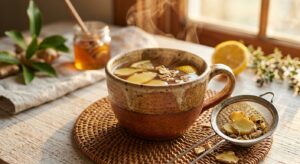
Senna has been a cornerstone of traditional medicine for over a thousand years. Arab physicians in the 9th century were among the first to document its laxative properties, and it was later adopted widely in Ayurvedic practice under the name Sonamukhi, where it was prescribed to clear the bowels, balance the doshas, and prepare the body for deeper cleansing treatments. By the 16th century, senna had traveled across trade routes into European apothecaries, where herbalists prized it as one of the few plant medicines reliable enough to be trusted in serious digestive complaints.
The plant itself, Cassia senna (also classified as Senna alexandrina), is a small shrub native to the arid regions of North Africa, the Middle East, and parts of South Asia. Both the leaves and the seed pods are used medicinally, with the pods generally considered gentler and the leaves more potent. Today, senna is one of the few herbal laxatives approved by the U.S. Food and Drug Administration as an over-the-counter stimulant laxative, and it forms the active ingredient in products like Smooth Move tea and Ex-Lax Gentle.
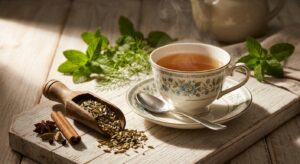
As a tea, senna has a distinctly herbal, mildly bitter character that many find more palatable when blended with warming spices like ginger or fennel. Beyond its flavor, senna is a herb that commands respect: it works reliably and noticeably, typically producing a bowel movement within 6 to 12 hours of consumption. This makes understanding the right preparation, dose, and frequency absolutely essential before brewing your first cup.
1
cups
Ingredients
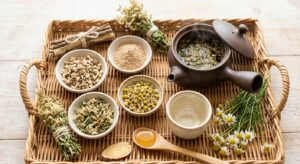
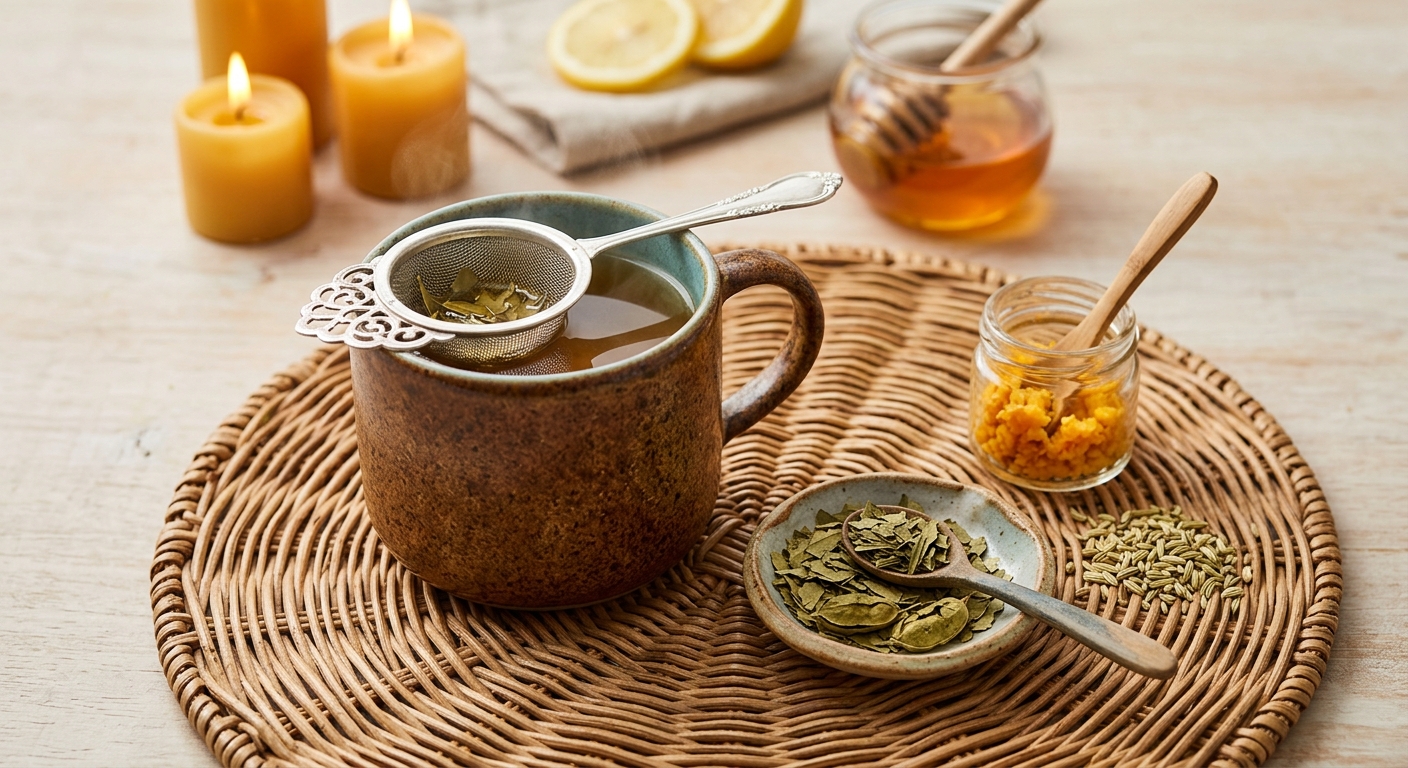
- 1 tspdried senna leaves or crushed senna pods
- 240 mlwater (90°C / 194°F)
- 1 tspfreshly grated ginger (optional, to soothe cramping)
- 0.5 tspfennel seeds (optional, to reduce bloating)
- —raw honey or lemon to taste (optional)
How to Brew
Click on an item below to shop for the recommended items for this recipe on Amazon.
As an Amazon Associate, we earn from qualifying purchases.
- Heat water to 90 to 95°C (194 to 203°F). Avoid a full rolling boil, as excessive heat can degrade some of senna’s active compounds and increase bitterness.
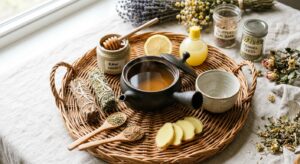
- Place 1 teaspoon of dried senna leaves or crushed pods into a tea infuser or directly into your mug. If using a blend, add ginger and fennel seeds at this stage for a gentler, more stomach-friendly cup.
- Pour the hot water over the herbs and cover your mug with a small plate or lid to trap the volatile aromatic compounds and keep the steep temperature consistent.
- Steep for 5 minutes for a mild effect or up to 10 minutes for a stronger result. Watch your time carefully, as over-steeping significantly increases potency.
- Remove the infuser or strain the tea into a clean mug. Add honey or a squeeze of lemon to soften the bitterness if desired.
- Drink in the evening, approximately 8 hours before you need the effect. Senna typically produces results within 6 to 12 hours.
- Measure 1 teaspoon of dried senna leaves or pods and place them into a clean glass jar or pitcher. Cold brewing works best with a sealed container to prevent absorption of refrigerator odors.
- Add 240 ml of room-temperature filtered water. Do not use hot or warm water, as the goal of cold brewing is a slow, low-heat extraction that moderates the intensity of active compounds.
- Seal the jar and allow it to steep at room temperature for 1 hour, then transfer to the refrigerator.
- Let the tea continue to steep in the refrigerator for a further 5 to 7 hours, for a total steeping time of 6 to 8 hours. Overnight cold brewing works well if you plan to drink the tea in the morning.
- Strain the cold-brewed tea through a fine mesh strainer or cloth into a glass. The resulting brew will be lighter in color and milder in bitterness compared to hot-brewed senna.
- Drink at room temperature or slightly chilled. Because cold-brewed senna is gentler, it is a good starting point for those new to the herb or those with sensitive digestion.
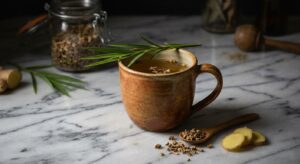
- Combine 240 ml of water, 1 teaspoon of fennel seeds, and 3 to 4 thin slices of fresh ginger root in a small saucepan. Bring to a gentle simmer over medium heat.
- Once simmering, reduce the heat to low and add 1 teaspoon of dried senna leaves or crushed pods directly to the pot. Do not bring to a full boil after adding senna, as boiling can break down beneficial compounds and increase harshness.
- Maintain a gentle simmer for 5 minutes, stirring occasionally. The liquid will deepen in color and the aroma of the spices will become prominent.
- Remove the saucepan from heat and allow the mixture to steep off the burner for a further 10 to 15 minutes. This passive steeping continues the extraction without heat-induced degradation.
- Strain the decoction through a fine mesh strainer into a mug, pressing the solids gently to extract remaining liquid.
- Taste the brew and adjust with honey or a small pinch of cinnamon if desired. Drink warm in the evening. The added fennel and ginger work synergistically with senna to reduce intestinal cramping and support a more comfortable experience.
Health Benefits
Senna is one of the most clinically well-documented herbal laxatives available. Multiple randomized controlled trials confirm that sennosides A and B reliably produce bowel movements within 6 to 12 hours by stimulating peristaltic contractions in the large intestine.
By inhibiting fluid and electrolyte reabsorption in the colon and stimulating mucus secretion, senna increases the water content of stool, making passage easier and less uncomfortable for those experiencing hard, dry stools.
Senna is commonly used in clinical settings as part of bowel preparation before colonoscopies and surgeries. Research published in gastroenterology journals confirms its efficacy as a preparation agent when used under medical guidance.
Senna is widely used in palliative medicine to counteract opioid-induced constipation, one of the most distressing side effects of long-term opioid therapy. Clinical guidelines in several countries recommend it as a first-line option in this context.
🧪 Key Bioactive Compounds
The Science Behind Senna
The laxative action of senna is among the best-understood mechanisms in herbal medicine. The primary active compounds, sennosides A and B, are anthraquinone glycosides that pass through the small intestine largely intact and unabsorbed. When they reach the large intestine, resident bacteria cleave the glycoside bonds to release the active aglycone rheinanthrone. This compound acts on two fronts: it stimulates the smooth muscle cells of the colon wall to contract more forcefully and frequently (increasing peristalsis), and it disrupts the normal reabsorption of water and sodium from the colon’s epithelial lining, resulting in softer, more fluid-rich stool that is easier to pass.
Research published in journals including the Journal of Ethnopharmacology and Phytotherapy Research has consistently validated what traditional medicine practitioners observed for centuries: senna produces reliable, dose-dependent laxative effects in healthy adults and in clinical patient populations. The onset of action, typically 6 to 12 hours after ingestion, corresponds to the time required for gut microbiota to metabolize the sennosides in the colon. The effectiveness of senna is therefore partly dependent on the health and composition of an individual’s gut microbiome, which may explain why some people notice stronger or weaker effects than others at identical doses.
The flavonoid kaempferol, also present in senna leaves, contributes an antioxidant dimension to the herb’s profile. Laboratory studies suggest kaempferol can modulate inflammatory pathways in intestinal tissue, though this effect is considered secondary to senna’s primary laxative mechanism. Scientists continue to investigate whether the anti-inflammatory properties of senna’s minor constituents may eventually have applications in managing intestinal inflammation, though at this stage the evidence is primarily preclinical and senna’s role in digestive health remains firmly defined by its stimulant laxative action.
Brewing Tips
- Always start with the minimum dose, which is 1 teaspoon of dried leaf steeped for 5 minutes, and wait a full 12 hours before deciding whether to increase the strength. Individual sensitivity to sennosides varies considerably.
- Drink a full glass of plain water alongside your senna tea and stay well hydrated throughout the day. Senna increases fluid secretion in the colon, and adequate hydration helps prevent dehydration and supports a more comfortable experience.
- Pair senna with fennel or ginger in your brew to reduce the risk of intestinal cramping. These herbs contain antispasmodic compounds (anethole in fennel, gingerols in ginger) that help relax smooth muscle and counterbalance senna’s stimulating action.