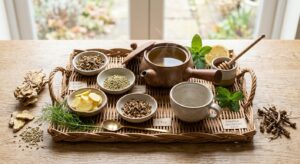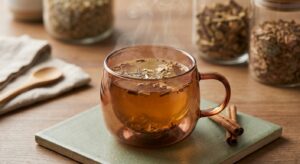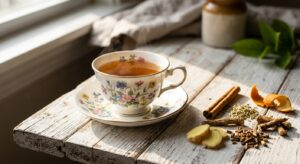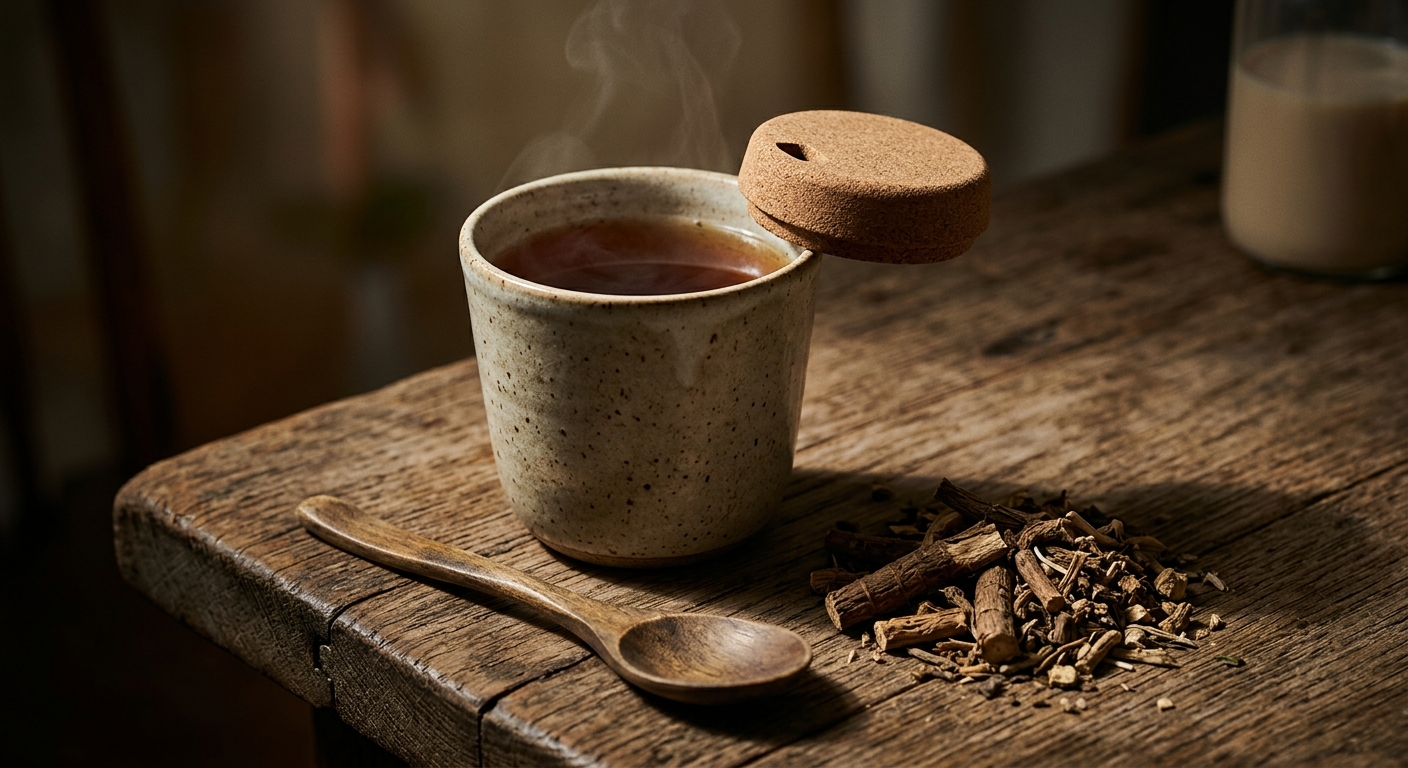
Long before the word ‘probiotic’ appeared on yogurt labels, traditional healers across Europe, Asia, and the Americas were brewing the roots of chicory, dandelion, and burdock into medicinal teas prescribed for sluggish digestion, liver congestion, and intestinal complaints. What they understood intuitively, modern science has since confirmed: these deep-rooted plants are packed with inulin-type fructans, oligosaccharides, and bitter compounds that fundamentally reshape the environment of the gut. This is not a tea for flavor alone. It is a functional, purposeful brew with centuries of botanical credibility behind it.
Chicory root has been cultivated since ancient Egypt, where it was used both as food and medicine. Roman writers including Pliny the Elder praised its digestive virtues, and by the 18th century, roasted chicory became a beloved coffee substitute across continental Europe precisely because of its deep, caramel-bitter flavor. Dandelion root, revered in traditional Chinese medicine and European herbalism alike, was used to support the liver and stimulate bile flow. Burdock root, known as ‘gobo’ in Japanese cuisine, has been consumed for over a thousand years in East Asia as a warming, earthing food that supports the bowel and clears stagnation. Together, these three roots form an exceptional prebiotic foundation.
What makes this blend particularly special is its mechanism: rather than introducing new bacteria to the gut the way probiotics do, prebiotic herbs act as fertilizer for the beneficial bacteria already living there. The inulin and fructooligosaccharides in these roots pass through the stomach and small intestine undigested, arriving intact in the colon where Bifidobacterium and Lactobacillus species ferment them into short-chain fatty acids. These fatty acids, especially butyrate, directly nourish the cells lining the colon, reduce inflammation, and strengthen the intestinal barrier. Drinking this tea regularly is one of the gentlest and most time-honored ways to invest in your gut microbiome.
2
cups
Ingredients
- 2 tspdried roasted chicory root (chopped)
- 1 tspdried dandelion root (chopped)
- 1 tspdried burdock root (chopped)
- 500 mlwater (filtered, 100°C / 212°F)
- —raw honey or maple syrup to taste (optional)
- —a splash of oat milk for a latte-style finish (optional)
How to Brew
Click on an item below to shop for the recommended items for this recipe on Amazon.
As an Amazon Associate, we earn from qualifying purchases.
- Combine the chopped chicory root, dandelion root, and burdock root in a small saucepan. Add 500 ml of cold filtered water and let the roots soak for 5 minutes before heating. This pre-soak begins cell wall hydration and improves extraction.
- Place the saucepan over medium-high heat and bring to a full rolling boil, then immediately reduce the heat to a gentle simmer. You want a steady, quiet bubble, not a vigorous boil, which can drive off volatile aromatics.
- Simmer uncovered for 10 to 15 minutes, watching the liquid deepen to a rich mahogany color. For a stronger, more intensely prebiotic brew, extend to 20 minutes. For a milder everyday cup, 10 minutes is sufficient.
- Remove from heat and allow the decoction to rest for 2 minutes. This lets any suspended particles settle and allows the temperature to drop slightly, which can improve flavor smoothness.
- Pour through a fine mesh strainer into two warmed mugs, pressing the spent roots gently with the back of a spoon to extract the last of the liquid. Sweeten with raw honey if desired, and serve immediately.
- Combine the chicory root, dandelion root, and burdock root in a clean glass jar. Use slightly more root material than you would for hot brew, approximately 1.5 times the amount, because cold water extracts compounds more slowly and less completely than boiling water.
- Pour 500 ml of cold, filtered water over the roots. Stir briefly to ensure all the root pieces are submerged. Cover the jar loosely with a cloth or lid to allow minimal airflow while keeping out dust.
- Leave the jar at room temperature for 2 hours to begin extraction, then transfer it to the refrigerator. Allow the roots to cold-steep for a total of 12 to 24 hours. A 12-hour steep yields a lighter, subtler brew, while 24 hours produces a richer, more complex tonic.
- When ready to serve, strain the liquid through a fine mesh strainer or cheesecloth into a pitcher or directly into glasses filled with ice. Press the roots gently to release the last of the liquid.
- Serve over ice with a slice of fresh orange or a sprig of mint. The cold brew is naturally less bitter and has a pleasant, lightly sweet earthiness that pairs beautifully with citrus.
- Triple the standard root quantities, using 6 tsp chicory root, 3 tsp dandelion root, and 3 tsp burdock root. Combine in a medium saucepan with 750 ml of cold filtered water. Soak for 10 minutes before heating.
- Bring to a full boil over medium-high heat, then reduce to a low simmer. Allow the liquid to reduce slowly for 25 to 30 minutes, stirring occasionally, until the volume has reduced by approximately half, leaving you with roughly 350 to 400 ml of concentrated liquid.
- Remove from heat and allow to cool to room temperature, about 20 to 30 minutes. The concentrate will thicken slightly as it cools and will deepen to a near-espresso-dark mahogany color.
- Strain through a fine mesh strainer into a clean glass bottle or jar, pressing the roots firmly to extract all liquid. If desired, stir in 2 tablespoons of raw honey while the concentrate is still warm, which also acts as a mild preservative.
- Store the concentrate in the refrigerator for up to 7 days. To serve, dilute 2 to 3 tablespoons of concentrate into 200 ml of hot water or warm oat milk, adjusting to taste. A 1:3 or 1:4 concentrate-to-liquid ratio is a good starting point.
Health Benefits
The inulin and fructooligosaccharides in chicory root are among the most well-studied prebiotic fibers in the world. Multiple clinical trials have demonstrated that consuming 5 to 10 grams of chicory-derived inulin daily significantly increases the count of Bifidobacterium species and improves microbial diversity, which is strongly associated with overall digestive and immune health.
Prebiotic fibers from chicory and burdock root add bulk to the stool and attract water into the colon, making elimination easier and more consistent. A 2017 randomized controlled trial found that chicory root inulin significantly increased stool frequency and softness in adults with constipation, without causing the urgency or cramping associated with some laxative herbs.
The bitter sesquiterpene lactones in chicory and dandelion root act on bitter receptors in the mouth and gut to trigger the cephalic phase of digestion, prompting the liver to produce bile and the pancreas to release digestive enzymes. This makes the tea particularly effective when consumed 15 to 20 minutes before a meal as a digestive bitter.
Butyrate, the short-chain fatty acid produced when gut bacteria ferment inulin, is the primary energy source for colonocytes (colon lining cells) and has potent anti-inflammatory effects in the gut. Regular inulin intake has been associated with reduced markers of intestinal inflammation, and arctigenin from burdock root independently inhibits the NF-kB inflammatory pathway in intestinal tissue.
Chlorogenic acid in chicory root has been shown in clinical studies to inhibit glucose-6-phosphatase, an enzyme involved in glucose release from the liver, and to slow carbohydrate absorption in the small intestine. Combined with the fiber-induced blunting of blood sugar spikes, this tea may be a useful adjunct for those managing blood sugar levels.
🧪 Key Bioactive Compounds
The Science Behind Chicory Root
The central mechanism behind this tea is the prebiotic effect of inulin and fructooligosaccharides (FOS), two closely related polysaccharides found in especially high concentrations in chicory root (up to 20% of dry root weight by some estimates) and in meaningful amounts in dandelion and burdock root. Because humans lack the intestinal enzyme inulinase, these fibers pass through the stomach and small intestine completely undigested, arriving intact in the colon. There, they are selectively fermented by Bifidobacterium, Lactobacillus, and Faecalibacterium prausnitzii, beneficial bacterial species that produce short-chain fatty acids, particularly butyrate, propionate, and acetate, as metabolic byproducts. Butyrate is the preferred fuel for the colonocyte cells that line the colon, and adequate butyrate production is associated with a lower risk of inflammatory bowel disease, colorectal cancer, and intestinal permeability (commonly referred to as ‘leaky gut’).
The bitter compounds in this blend, especially lactucopicrin in chicory, taraxacin in dandelion, and arctigenin in burdock, operate through an entirely different but complementary pathway. When these sesquiterpene lactones and lignans contact bitter taste receptors (TAS2Rs) on the tongue and in the gastrointestinal tract, they trigger a cascade of digestive reflexes: increased saliva production, greater gastric acid secretion, amplified bile release from the gallbladder, and enhanced pancreatic enzyme output. This is the classical ‘digestive bitter’ effect prized in European herbal medicine for centuries, and it directly improves the breakdown and absorption of fats, proteins, and fat-soluble vitamins. Arctigenin from burdock has also been shown in cell and animal studies to downregulate NF-kB signaling, a master inflammatory pathway implicated in chronic gut inflammation.
Chlorogenic acid, produced in significant quantities during the roasting of chicory root, adds a third functional dimension. This hydroxycinnamic acid polyphenol acts as an inhibitor of intestinal alpha-glucosidase enzymes and hepatic glucose-6-phosphatase, effectively slowing both carbohydrate digestion and glucose release from the liver. Human clinical trials, including a notable 2015 study published in the Journal of Nutrition, have demonstrated that chicory root extract consumption leads to measurable reductions in postprandial blood glucose and insulin response. This property, combined with the fiber-induced slowing of gastric emptying, positions prebiotic root tea as a thoughtful adjunct for metabolic as well as digestive health.
Brewing Tips
- Always source roasted chicory root rather than raw for the best flavor and maximum chlorogenic acid content. The roasting process caramelizes natural sugars and develops the deep, coffee-like complexity that makes this tea genuinely enjoyable rather than medicinal-tasting.
- If you experience gas or bloating in the first week, reduce the chicory root to half a teaspoon per cup and build up over two weeks. This symptom is a sign that your gut bacteria are actively fermenting the inulin, and it typically resolves as your microbiome adapts.
- Drink this tea 15 to 20 minutes before your largest meal of the day to take full advantage of the digestive bitter effect. The bile-stimulating compounds work best as a pre-meal aperitif rather than an after-dinner digestif.