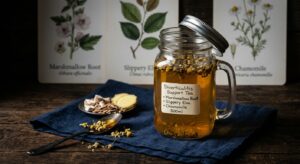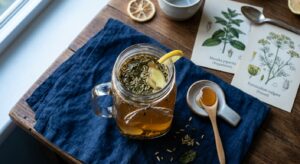
Gastroesophageal reflux disease, commonly known as GERD, affects millions of people worldwide, causing that familiar burning sensation in the chest and throat after meals. Long before antacids lined pharmacy shelves, herbalists across Europe, the Middle East, and the Americas turned to mucilaginous plants to soothe inflamed digestive tissues. Slippery elm bark, harvested from the inner bark of Ulmus rubra, was a staple of Native American medicine, used to ease sore throats, stomach irritation, and bowel complaints. Marshmallow root (Althaea officinalis) has been documented in medicinal use since ancient Egypt and Greece, prized for its ability to coat and protect mucous membranes throughout the digestive tract.
What makes this blend so well suited to GERD is the concept of demulcency. Demulcent herbs are rich in polysaccharides that, when steeped in water, release a thick, gel-like mucilage. This mucilage physically coats the esophageal lining and stomach wall, creating a protective barrier against stomach acid. Deglycyrrhizinated licorice root (DGL), the third hero of this blend, has been studied for its ability to stimulate the production of protective mucus in the stomach and reduce inflammation in the esophagus. Together, these three herbs work synergistically to address the root discomfort of acid reflux rather than simply suppressing acid production.
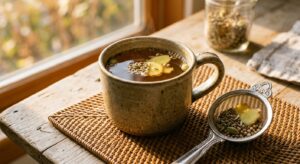
The resulting tea is mild, subtly sweet, and slightly viscous, almost like a very thin, soothing broth. It is best consumed warm, especially 20 to 30 minutes before meals or immediately after symptoms arise. Unlike many herbal teas, the cold brew method is particularly effective here because cold or room-temperature water actually extracts mucilage more efficiently than boiling water, giving you a richer, more therapeutic cup without any bitterness.
2
cups
Ingredients
- 2 tspslippery elm bark powder or cut and sifted bark
- 2 tspdried marshmallow root
- 1 tspdeglycyrrhizinated licorice root (DGL), cut and sifted
- 480 mlwater (85°C / 185°F)
- —raw honey to taste (optional)
- —a thin slice of fresh ginger (optional, for added digestive support)
How to Brew
Click on an item below to shop for the recommended items for this recipe on Amazon.
As an Amazon Associate, we earn from qualifying purchases.
- Heat water to 85°C (185°F). If you do not have a temperature-controlled kettle, bring water to a full boil and let it sit uncovered for 3 to 4 minutes before using.
- Place the slippery elm bark, marshmallow root, and DGL licorice root into a fine mesh tea strainer or infuser basket set inside your mug or teapot. If using slippery elm powder, place it directly in the mug and plan to strain through a fine sieve before drinking.
- Pour the heated water slowly over the herbs, making sure all plant material is fully submerged. Cover the mug or teapot with a lid or small saucer to trap the steam and preserve volatile aromatic compounds.
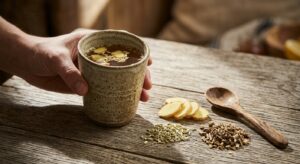
- Steep for 10 to 15 minutes. The longer steep will yield a more viscous, mucilage-rich brew, which is ideal for acute GERD symptoms. You will notice the liquid becomes slightly thicker and takes on a cloudy, soft amber color.
- Remove the infuser or strain the tea through a fine mesh sieve into a clean mug. If using slippery elm powder, stir well before straining as the powder settles.
- Add a small drizzle of raw honey if desired. Sip slowly and mindfully, 20 to 30 minutes before a meal or when symptoms flare. Do not rush this tea.
- Combine the slippery elm bark, marshmallow root, and DGL licorice root in a clean glass jar. Use a slightly higher ratio if desired: 3 tsp slippery elm and 2.5 tsp marshmallow root per 480 ml water to account for the gentler extraction.
- Pour room-temperature filtered water (around 20°C / 68°F) over the herbs. Stir gently with a long spoon to ensure all plant material is fully saturated and no dry clumps remain at the surface.
- Seal the jar loosely with a lid or cover with a clean cloth secured with a rubber band. Leave at room temperature for the first 2 hours to begin the extraction process.
- Transfer the jar to the refrigerator and allow it to continue infusing for a total of 8 to 12 hours. Overnight preparation is ideal and very convenient for a morning cup.
- In the morning, strain the infusion through a fine mesh sieve or cheesecloth into a clean jar or pitcher. The resulting liquid will be noticeably more viscous and silkier than a hot-brewed cup, with a beautiful, slightly milky clarity.
- Drink at room temperature or gently warm on the stovetop over very low heat (do not boil). Sip one cup 20 to 30 minutes before breakfast or any meal that typically triggers your reflux.
- Place the marshmallow root and DGL licorice root into a small saucepan. Add 600 ml of cold filtered water. Starting in cold water allows a more gradual, thorough extraction from the dense root material.
- Bring the water slowly to a gentle simmer over medium-low heat. Once you see small, steady bubbles forming (around 90 to 95°C), reduce the heat to maintain a gentle simmer. Do not allow the decoction to reach a hard, rolling boil.
- Simmer the roots uncovered for 20 to 25 minutes. The liquid will reduce slightly and deepen in color to a warm amber. You will notice the subtle licorice aroma becoming more pronounced as the roots open up.
- Remove the saucepan from heat and allow it to cool for 3 minutes. Add the slippery elm bark or powder now, off heat, to protect the heat-sensitive mucilaginous polysaccharides. Stir well to combine.
- Cover the saucepan and allow the slippery elm to infuse in the residual heat for 10 minutes. This hybrid decoction-then-infuse approach extracts the best of all three herbs.
- Strain through a fine mesh sieve or cheesecloth, pressing the plant material gently to extract the remaining liquid. Serve warm in a mug, adding honey if desired. This yields a more concentrated tea, so you may wish to dilute slightly with hot water to taste.
Health Benefits
The mucilaginous polysaccharides in slippery elm and marshmallow root dissolve in water to form a viscous gel that physically coats the esophagus and stomach wall, acting as a buffer between acidic gastric contents and sensitive mucosal tissue. This mechanical protection reduces the burning sensation characteristic of acid reflux.
Deglycyrrhizinated licorice root has been shown in clinical studies to stimulate mucus secretion by stomach lining cells, effectively strengthening the stomach’s natural protective barrier. A 2011 study in the Journal of Research in Medical Sciences found DGL significantly reduced gastric ulcer symptoms, pointing to its mucoprotective mechanism.
All three herbs in this blend possess anti-inflammatory compounds that help calm the chronic inflammation of the esophageal mucosa associated with GERD. Marshmallow root polysaccharides in particular have demonstrated anti-inflammatory activity in vitro, reducing the inflammatory response in irritated mucous membrane cells.
Poor lower esophageal sphincter tone and delayed gastric emptying both contribute to GERD. The prebiotic fiber content of this blend, particularly the pectin from slippery elm, supports a balanced gut microbiome that in turn can influence gastrointestinal motility and reduce reflux frequency over time.
Unlike proton pump inhibitors that take days to build effect, this demulcent tea can provide immediate, though temporary, relief from the burning sensation of acid reflux by coating irritated tissues within minutes of consumption. It is best used as a complementary approach alongside dietary and lifestyle adjustments.
🧪 Key Bioactive Compounds
The Science Behind Slippery Elm Bark
The therapeutic foundation of this GERD relief tea lies in the science of demulcency. Slippery elm bark and marshmallow root are among the most well-studied demulcent herbs in Western botanical medicine. Both are exceptionally rich in mucilaginous polysaccharides, complex carbohydrate chains that hydrate and swell upon contact with water to form a thick, viscous gel. This gel is not simply a superficial coating. Research published in Phytotherapy Research and other botanical medicine journals has demonstrated that these polysaccharides interact directly with the glycoprotein receptors on mucous membrane cells, stimulating them to increase their own mucus secretion. The result is a two-layered protective effect: the ingested mucilage provides immediate physical coating, while the underlying tissue is simultaneously prompted to strengthen its own defenses.
Deglycyrrhizinated licorice root (DGL) adds a distinct pharmacological dimension to this blend. Traditional licorice root contains glycyrrhizin, a triterpenoid saponin with potent anti-inflammatory and antiviral properties, but one that also carries significant cardiovascular risks at higher doses or prolonged use. The deglycyrrhizination process removes approximately 97 percent of glycyrrhizin while preserving the flavonoid and polyphenol content responsible for the herb’s mucoprotective effects. Flavonoids such as liquiritin and isoliquiritigenin have been shown to upregulate prostaglandin E2 synthesis in gastric mucosa cells, a mechanism that directly stimulates protective mucus secretion and accelerates mucosal healing. A randomized controlled trial published in the Journal of Research in Medical Sciences (2011) found DGL as effective as the antacid cimetidine in reducing gastric ulcer symptoms, with a substantially safer long-term profile.
The cold brew preparation method deserves specific scientific attention in the context of this blend. Mucilaginous polysaccharides, particularly the hexosans and pectins in slippery elm and marshmallow root, are heat-labile to varying degrees. While moderate heat (below 90°C) facilitates extraction, prolonged boiling can begin to hydrolyze and partially degrade these long-chain polysaccharides, reducing their viscosity and therefore their protective capacity. Cold water extraction over 8 to 12 hours has been shown in herbalist practice and supported by preliminary in vitro evidence to yield a higher concentration of intact, high-molecular-weight mucilaginous compounds. This is why many clinical herbalists and naturopathic physicians specifically recommend cold or room-temperature infusions of marshmallow root for conditions involving mucosal irritation, including GERD, interstitial cystitis, and inflammatory bowel conditions.
Brewing Tips
- Drink this tea on an empty stomach or 20 to 30 minutes before meals for the best protective effect. Consuming it after a heavy meal when you are already symptomatic is helpful, but the pre-meal window allows the mucilage to coat the esophagus before acid production peaks.
- When using slippery elm powder (rather than cut and sifted bark), whisk it into a small amount of warm water first to form a smooth paste before adding the remaining liquid. This prevents clumping and ensures an even, well-distributed mucilage throughout your cup.
- Store any leftover cold-brewed tea in the refrigerator for up to 48 hours. Because the polysaccharides continue to hydrate over time, your second-day cup will actually be slightly thicker and more mucilaginous than the first. Stir well before drinking as settling is normal.