Crohn’s disease is a chronic inflammatory bowel condition that can turn even the act of eating into an anxious experience. For centuries, healers in Indigenous North American, European, and Ayurvedic traditions reached for mucilaginous and anti-inflammatory plants to ease the pain of a troubled gut. Long before the term “IBD” existed, herbs like slippery elm and marshmallow root were considered foundational remedies for the kind of raw, inflamed digestive tracts that Crohn’s patients know all too well. These plants form the heart of this carefully considered tea blend.
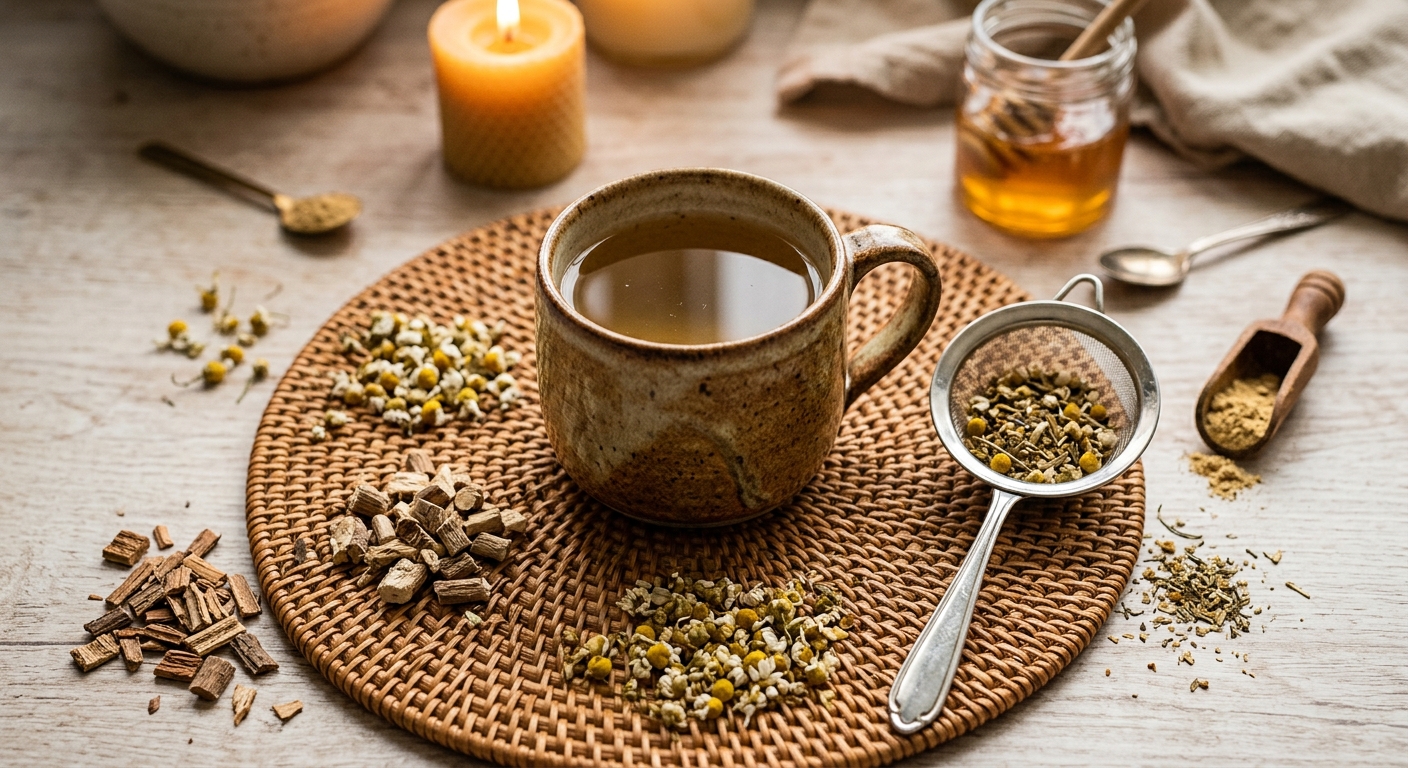
This formulation pairs three herbs that work in genuinely complementary ways. Slippery elm (Ulmus rubra) and marshmallow root (Althaea officinalis) are both rich in polysaccharide mucilage that physically coats and soothes irritated mucous membranes throughout the gut lining. Chamomile (Matricaria chamomilla) adds its well-documented anti-inflammatory and antispasmodic action, helping to ease the cramping and bloating that so commonly accompany a Crohn’s flare. Together, they make a tea that is gentle enough for sensitive days yet substantive enough to feel like real medicine.
It is important to note from the start that this tea is a complementary support, not a replacement for prescribed treatment. Crohn’s disease is a serious condition requiring medical supervision. What herbal tea can offer is a daily ritual of warmth and nourishment, meaningful symptom relief between flares, and a way to feel proactive about your own gut health. Many people with IBD find that consistent use of gut-soothing herbs, especially the mucilaginous ones, helps maintain periods of remission and reduces the severity of mild flares when paired with their broader treatment plan.
2
cups
Ingredients
- 2 tspslippery elm bark powder or cut bark
- 2 tspdried marshmallow root
- 2 tspdried chamomile flowers
- 500 mlwater (85 to 90°C / 185 to 194°F)
- —raw honey or pure maple syrup to taste (optional)
- —a pinch of ground ginger (optional, for added anti-nausea support)
How to Brew
Click on an item below to shop for the recommended items for this recipe on Amazon.
As an Amazon Associate, we earn from qualifying purchases.
- Heat 500 ml of water to 85 to 90°C (185 to 194°F). If you do not have a temperature-controlled kettle, bring water to a full boil and let it rest for 3 to 4 minutes before using.
- Combine the slippery elm bark, marshmallow root, and chamomile flowers in a tea infuser or small strainer basket placed inside a teapot or heatproof pitcher.
- Pour the heated water over the herbs and cover the vessel immediately to trap the volatile aromatic compounds from the chamomile.
- Allow the herbs to steep for 10 to 15 minutes. The longer steep allows the mucilage to fully release, giving the tea a slightly viscous, silky body that is central to its gut-coating action.
- Remove the infuser and gently stir the tea. You will notice a subtle thickening, which is the mucilage at work. Pour into mugs and add honey or maple syrup if desired.
- Drink slowly, ideally 20 to 30 minutes before a meal or during a flare, allowing the liquid to coat the digestive tract before food passes through.
- Place the slippery elm bark, marshmallow root, and chamomile flowers into a clean glass jar. Using cold water for this method is intentional, as cool temperatures optimize mucilage extraction from both slippery elm and marshmallow root.
- Pour 500 ml of cold, filtered water directly over the herbs at room temperature. Do not use hot water for this method, as the goal is a slow, cold extraction.
- Stir gently to ensure all the herb material is submerged, then place a lid or plate over the jar.
- Let the jar sit at room temperature for 1 hour to begin the extraction, then transfer to the refrigerator and steep for a further 7 to 11 hours, totaling 8 to 12 hours overall.
- In the morning, strain the liquid through a fine-mesh strainer or cheesecloth, pressing the spent herbs gently to release any remaining mucilage. The resulting liquid should be noticeably more viscous and gel-like than a hot brew.
- Drink cold or at room temperature throughout the day in small, steady sips. Add honey if desired. Keeps refrigerated for up to 48 hours.
- Place the slippery elm bark and marshmallow root only into a small saucepan with 600 ml of cold, filtered water. Add the chamomile at the end of cooking, not now, as prolonged heat will destroy its delicate volatile compounds.
- Bring the water and root herbs to a very gentle simmer over low to medium-low heat, keeping the temperature below 90°C (194°F). Watch carefully and do not allow a full rolling boil, which will degrade the mucilage.
- Maintain the low simmer uncovered for 20 to 25 minutes, stirring occasionally. The liquid will reduce slightly and take on a richer amber color and a noticeably syrupy consistency.
- Remove the saucepan from heat and add the dried chamomile flowers directly to the hot decoction. Cover with a lid immediately and allow the chamomile to infuse off-heat for 5 to 8 minutes.
- Strain through a fine-mesh strainer into two mugs, pressing the spent herbs firmly to extract all the remaining mucilage-rich liquid.
- Allow to cool slightly until comfortable to drink, then sip slowly. This concentrate can also be diluted with an equal part of warm water for a lighter drink, or used as a base to which a small amount of aloe vera juice is added for additional gut support.
Health Benefits
The mucilage from slippery elm and marshmallow root physically coats the damaged intestinal mucosa, creating a temporary protective barrier. This reduces direct contact between irritants and inflamed tissue, giving the gut lining a window to begin healing.
Chamomile’s apigenin and chamazulene compounds have demonstrated inhibition of key inflammatory pathways, including COX-2 and leukotriene synthesis. Multiple in vitro and animal studies suggest these actions are relevant to the type of chronic mucosal inflammation seen in Crohn’s disease.
Alpha-bisabolol and other chamomile constituents have well-documented antispasmodic effects on intestinal smooth muscle, helping to reduce the painful cramping and urgency that accompany Crohn’s flares.
Slippery elm has been shown in small clinical studies, including a 2002 pilot study in the journal Complementary Therapies in Medicine, to support the production of protective mucus in the bowel, which is often deficient in people with IBD.
The gut-brain axis plays a significant role in IBD flares, with psychological stress frequently triggering or worsening symptoms. Chamomile’s mild anxiolytic properties, mediated through apigenin’s binding to GABA-A receptors, can help reduce the stress load that exacerbates Crohn’s symptoms.
🧪 Key Bioactive Compounds
The Science Behind Slippery Elm
The therapeutic value of this blend is rooted in two distinct but complementary mechanisms: physical mucosal protection and biochemical anti-inflammation. Slippery elm and marshmallow root both owe their healing action to high-molecular-weight polysaccharide mucilages. When these compounds contact water, they swell into a viscous gel that physically adheres to the mucous membranes of the gastrointestinal tract. In the context of Crohn’s disease, where the intestinal epithelium is eroded, ulcerated, and highly permeable, this coating action reduces contact between luminal antigens, bile acids, and bacteria with raw, inflamed tissue. Research published in the journal Phytotherapy Research has highlighted the cytoprotective and anti-inflammatory potential of mucilaginous plant preparations in gut mucosal models, supporting what traditional herbalists observed for centuries.
Chamomile brings a sophisticated anti-inflammatory chemistry to the blend. Its principal bioactive flavonoid, apigenin, has been shown to downregulate NF-kB signaling, a central pathway in the chronic inflammatory cascade driving Crohn’s disease pathology. NF-kB activation leads to the production of pro-inflammatory cytokines including TNF-alpha, IL-1 beta, and IL-6, the same targets addressed by many modern biologic drugs for IBD. Chamazulene, a terpenoid produced when chamomile’s precursor compound matricine is exposed to heat during brewing, inhibits leukotriene B4 synthesis, reducing neutrophil recruitment to inflamed tissue. Alpha-bisabolol has demonstrated direct mucosal protective effects in animal models of gastric and intestinal damage, and its antispasmodic action on smooth muscle provides meaningful symptomatic relief for cramps and urgency.
The choice of water temperature in this recipe is scientifically deliberate. Marshmallow root’s mucilage is a pectic polysaccharide that is paradoxically more soluble and better preserved in cold or warm water than in boiling water. High temperatures above 95°C can partially denature and fragment the mucilage chains, reducing their gel-forming capacity and therefore their protective coating ability. This is why the cold brew method, despite being counterintuitive for a medicinal tea, often produces the most therapeutically potent preparation for gut-coating purposes. The gentle decoction method compensates for this by keeping temperatures at a controlled low simmer, extracting maximum compounds from tough plant material while stopping short of the temperatures that would degrade the mucilage.
Brewing Tips
- If you are in an active flare, favor the cold brew method, which produces the richest mucilage content and is easiest on a hypersensitive digestive system. Drink it in small sips of 50 to 100 ml at a time rather than in a full cup all at once.
- For best results with the hot brew, always cover your steeping vessel. Chamomile’s volatile aromatic compounds, including chamazulene precursors and alpha-bisabolol, can escape with steam, reducing both the aroma and the anti-inflammatory potency of the final cup.
- Store pre-measured portions of the dry herb blend in small airtight tins or paper envelopes so you can prepare tea quickly on difficult days. Batch-preparing the dry mix in a 2:2:2 ratio of slippery elm, marshmallow root, and chamomile means one less decision to make when you are already uncomfortable.