Bloating after meals is one of the most common digestive complaints worldwide, yet for centuries, herbalists across cultures have reached for the same trio of plants to address it. Peppermint has been documented in Egyptian papyri dating back to 1000 BCE, used to soothe stomach cramping and dispel gas. Fennel seeds were prized in ancient Rome and medieval Europe as a digestif, chewed after meals to prevent bloating and freshen breath. Ginger root has anchored Ayurvedic and Traditional Chinese Medicine digestive formulas for over 2,000 years, valued for its ability to accelerate gastric emptying and reduce nausea. Together, these three herbs form one of the most historically validated digestive blends in the herbal canon.
What makes this combination so effective is the way each herb targets a different mechanism of digestive discomfort. Peppermint’s menthol relaxes the smooth muscle of the intestinal wall, easing spasms and allowing trapped gas to move through. Fennel seeds contain volatile oils, particularly anethole, that act as antispasmodics and carminatives, actively breaking up gas pockets in the gut. Ginger’s gingerols and shogaols stimulate digestive enzymes and speed the rate at which the stomach empties its contents into the small intestine, reducing the fermentation that leads to bloating in the first place. This is not folk remedy by coincidence; each mechanism has been studied in clinical settings.
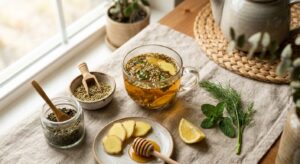
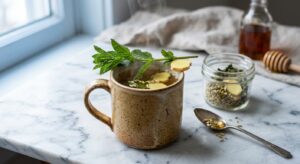
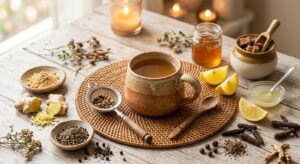
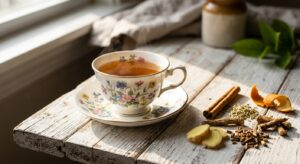
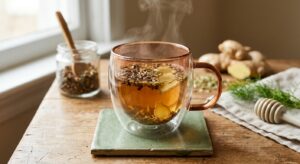
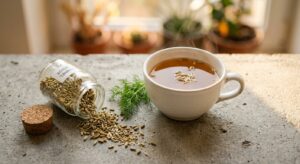
Sensory experience matters just as much as biochemistry with this tea. Brewed correctly, the cup opens with a bright, cooling rush of peppermint, then settles into the warm, anise-like sweetness of fennel, with ginger adding a gentle, lingering heat at the back of the throat. The color is a clear, pale gold with a faint green tint. Sipping it slowly in the 20 to 30 minutes after a meal is not just therapeutic; it is genuinely pleasurable, a ritual that signals to the body that the meal is complete and digestion can begin in earnest.
2
cups
Ingredients
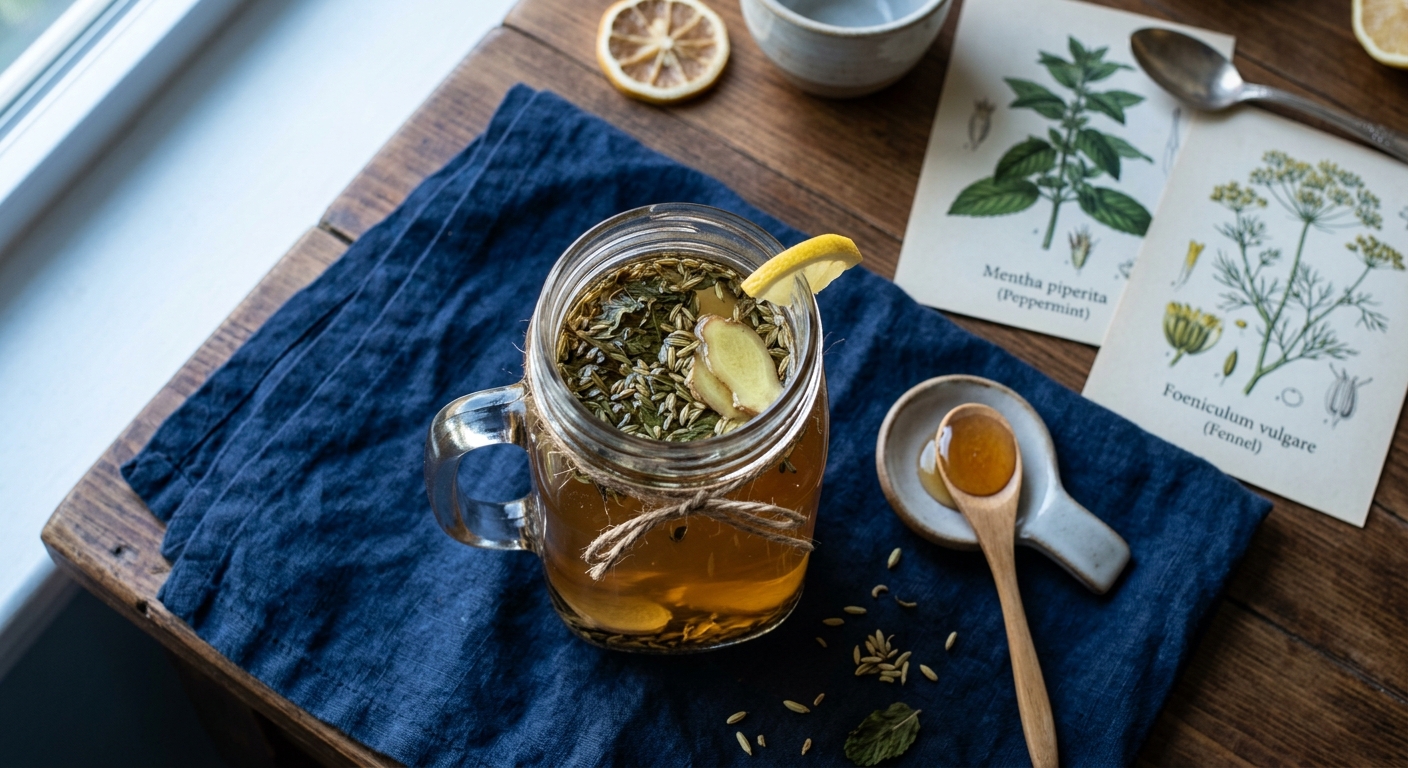
- 2 tspdried peppermint leaves
- 1 tspfennel seeds, lightly crushed
- 4 slicesfresh ginger root (or 0.5 tsp dried ground ginger)
- 480 mlwater (90°C / 194°F)
- —raw honey to taste (optional)
- —a squeeze of fresh lemon juice (optional)
How to Brew
Click on an item below to shop for the recommended items for this recipe on Amazon.
As an Amazon Associate, we earn from qualifying purchases.
- Lightly crush the fennel seeds using a mortar and pestle or the back of a spoon. This cracks the seed coat and releases the volatile anethole oil into the water far more effectively than whole seeds.
- Bring filtered water to 90 to 95°C (194 to 203°F). Avoid a full rolling boil, as excessive heat can degrade the delicate menthol compounds in peppermint. If using a standard kettle, allow boiling water to rest for 60 to 90 seconds before pouring.
- Combine the crushed fennel seeds and fresh ginger slices in a tea infuser or heatproof teapot. Pour the hot water over them first and allow to steep for 2 minutes before adding the peppermint leaves. This pre-steeping extracts the more robust compounds from ginger and fennel without over-steeping the peppermint.
- Add the dried peppermint leaves to the infuser, cover the mug or teapot with a small plate or lid, and steep for a further 5 to 8 minutes. Taste at 5 minutes; extend if you want more intensity.
- Remove the infuser, add honey and lemon if using, and sip slowly while still warm. Aim to drink within 20 to 30 minutes after your meal for best digestive effect.
- Lightly crush 2 tsp fennel seeds and slice 6 to 8 pieces of fresh ginger root (slightly more than the hot brew ratio, as cold water extracts more slowly). Place them in a clean glass jar along with 3 tsp dried peppermint leaves.
- Pour 500 ml of cold, filtered water over the herbs. Do not use hot water at any stage; this is a true cold extraction. Stir gently to ensure all plant material is submerged.
- Allow the jar to sit at room temperature for 30 minutes so the aromatic volatile compounds begin releasing, then seal the jar and transfer it to the refrigerator.
- Steep in the refrigerator for 8 to 12 hours. Taste at 8 hours. The flavor should be bright, sweet, and cooling without bitterness. Do not exceed 14 hours or the ginger may become overly sharp.
- Strain through a fine mesh strainer or cheesecloth into a glass. Add a squeeze of lemon and a small drizzle of honey if desired. Drink chilled, about 20 minutes after a meal, as a refreshing digestive aid.
- Double or triple the herb quantities: use 4 tsp dried peppermint, 2 tsp crushed fennel seeds, and 8 to 10 slices of fresh ginger. Place all ingredients in a small saucepan or heatproof pitcher.
- Pour 300 ml of just-boiled water (95 to 100°C) over the herbs. The higher volume of plant material can withstand a slightly higher temperature and longer steep without becoming unpleasantly bitter.
- Cover the saucepan or pitcher tightly with a lid or plate and steep for 15 to 20 minutes. This extended extraction pulls a fuller spectrum of compounds, including less volatile constituents from the ginger such as shogaols, which form at higher temperatures and contribute additional anti-nausea benefit.
- Strain the concentrate through a fine mesh strainer, pressing the herbs gently to extract the remaining liquid. Pour into a small glass bottle or jar with a lid.
- To serve, add 60 to 80 ml of concentrate to a mug and top with 180 ml of hot water or sparkling water. Add honey to taste. For a chilled version, combine the concentrate with cold sparkling water over ice for a naturally digestive herbal spritz.
Health Benefits
The combined carminative actions of anethole from fennel and menthol from peppermint directly relax the smooth muscle of the intestinal wall, allowing trapped gas to be expelled more easily. Clinical studies on both herbs individually have confirmed statistically significant reductions in bloating scores compared to placebo.
Ginger’s gingerols have been shown in multiple randomized controlled trials to significantly reduce gastric emptying time, meaning food moves more quickly from the stomach into the small intestine. This reduces the window for fermentation and gas production, addressing bloating at its root cause.
Peppermint oil, the concentrated form of menthol, is supported by meta-analyses as an effective treatment for abdominal cramping in irritable bowel syndrome. Even the dilute concentration in brewed tea can produce meaningful antispasmodic effects for general post-meal cramping and discomfort.
Ginger has been shown to stimulate the production of digestive enzymes including lipase and amylase, improving the breakdown of fats and carbohydrates respectively. Better enzymatic digestion means less undigested material reaching the colon, where bacterial fermentation produces gas.
Both ginger and peppermint have well-documented antiemetic properties. Ginger’s inhibition of 5-HT3 and substance P receptors in the gut reduces nausea signals, while menthol’s cooling effect calms the sensory overload that can accompany overeating and indigestion.
🧪 Key Bioactive Compounds
The Science Behind Peppermint
The digestive action of this three-herb blend is best understood through the lens of gut motility and smooth muscle physiology. The gastrointestinal tract is lined with smooth muscle that contracts rhythmically in a process called peristalsis, moving food and gas through the system. When this muscle becomes spasmodic or overactive, the result is cramping, trapped gas, and bloating. Peppermint’s primary volatile compound, menthol, is a potent calcium channel blocker in intestinal smooth muscle cells. By reducing calcium ion influx, menthol prevents the sustained muscle contractions responsible for spasm and creates a relaxed, open pathway for gas to move and exit the digestive tract naturally.
Ginger operates on a different but complementary physiological pathway. Its bioactive phenolic ketones, particularly 6-gingerol and its heat-converted form 6-shogaol, interact with the enteric nervous system, sometimes called the second brain, which governs gut motility independently of the central nervous system. Gingerols activate 5-HT4 serotonin receptors in the gut wall, which stimulates pro-kinetic activity and accelerates the speed of gastric emptying. In a 2011 double-blind trial published in the European Journal of Gastroenterology and Hepatology, healthy volunteers who consumed ginger capsules showed gastric emptying rates approximately 25% faster than those who received placebo. Faster gastric emptying means less time for carbohydrates and proteins to ferment in the stomach and upper gut, directly reducing gas production.
Fennel seed’s contribution centers on its high concentration of anethole, which constitutes up to 80% of the seed’s essential oil. Anethole has been shown in laboratory studies to inhibit acetylcholine-mediated contraction of intestinal smooth muscle, acting similarly to pharmaceutical antispasmodic drugs but through a gentler, food-compatible mechanism. Additionally, anethole appears to disrupt the surface tension of gas bubbles in the gut, a carminative action that allows small pockets of gas to coalesce and pass more easily. The rosmarinic acid contributed by peppermint adds a layer of anti-inflammatory support, downregulating prostaglandin synthesis in the gut lining and reducing the low-grade inflammation that often accompanies food intolerances and sensitivity-driven bloating. Together, these compounds address bloating through at least four distinct biological mechanisms, making this blend genuinely more effective as a combination than any single herb used alone.
Brewing Tips
- Crush fennel seeds immediately before brewing rather than pre-crushing and storing. The volatile anethole oil oxidizes quickly once the seed coat is broken, and freshly crushed seeds release significantly more aromatic compounds into the water.
- Brew and drink this tea within 20 to 30 minutes after finishing your meal for the strongest digestive effect. Ginger is most effective at stimulating gastric emptying when the stomach still contains food, and peppermint’s antispasmodic action is most relevant while digestive motility is active.
- If you find the ginger too sharp or the peppermint too intense, reduce each by half on your first brew and increase gradually. Everyone’s gut sensitivity is different, and a gentler infusion sipped regularly is more beneficial than a strong one you find unpleasant and avoid.