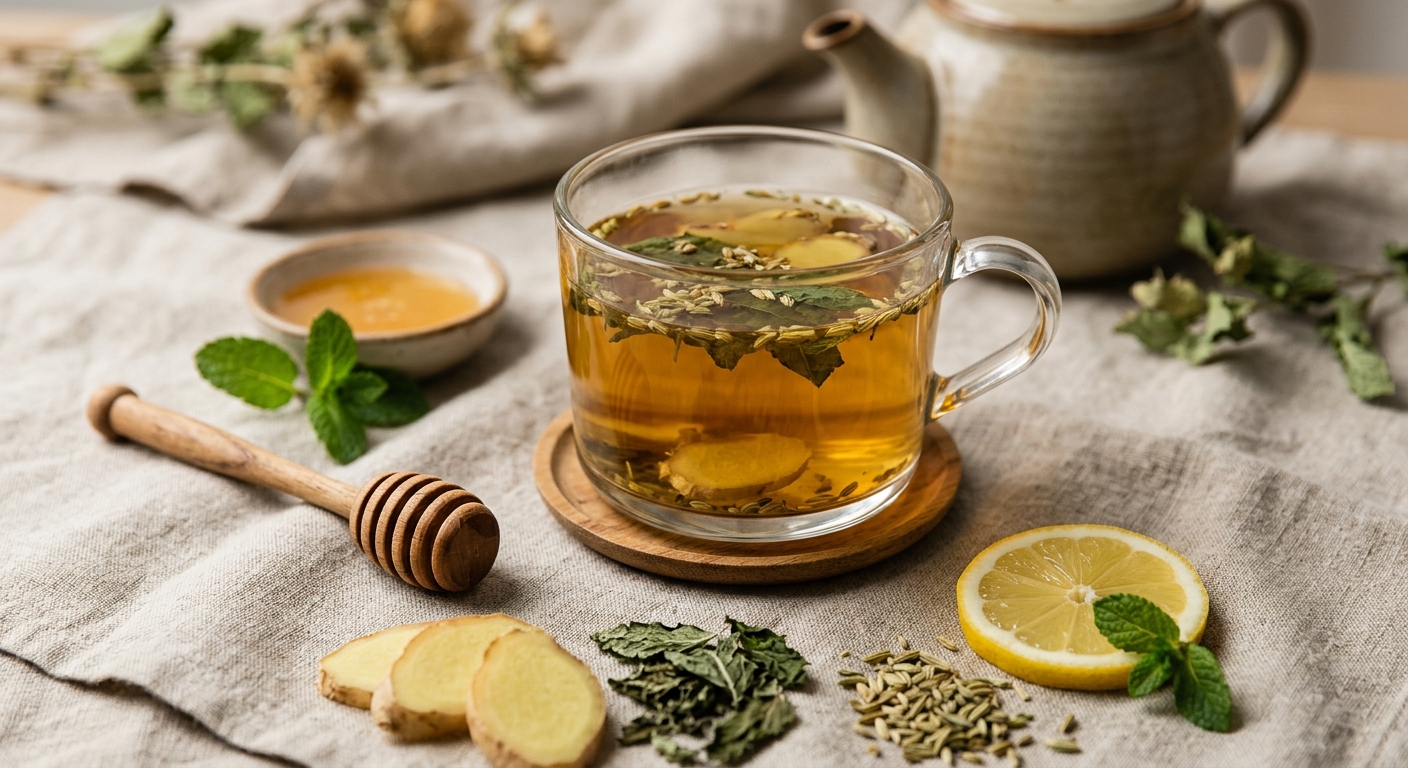
The morning after a night of drinking is rarely kind to the stomach. Alcohol irritates the gastrointestinal lining, disrupts the gut microbiome, triggers acid reflux, and causes the liver to produce acetaldehyde, a toxic byproduct that leaves you feeling queasy, bloated, and deeply uncomfortable. While no tea will undo a hangover entirely, a carefully chosen herbal blend can meaningfully ease the digestive component, which is often the most acute source of misery. Cultures around the world have reached for plant medicine in exactly these moments, from ginger-heavy broths in East Asia to fennel seed tisanes across the Mediterranean.
This blend draws on three time-honored digestive herbs: ginger root, peppermint leaf, and fennel seed. Ginger has been used in Ayurvedic and Traditional Chinese Medicine for over 5,000 years as a primary remedy for nausea and stomach upset. Peppermint has a long European history as a carminative and antispasmodic, helping to relax the muscles of the gastrointestinal tract and relieve cramping. Fennel seed, a staple of post-meal digestive rituals from India to Italy, helps expel gas, reduce bloating, and soothe intestinal inflammation. Together, they address the full spectrum of hangover gut symptoms in a single, warming cup.
Beyond their functional benefits, these three herbs make a genuinely pleasant tea. The sharp, spicy warmth of fresh ginger is softened by the cool menthol of peppermint, while fennel adds a gentle anise-like sweetness that rounds out the flavor. It is a tea that feels restorative from the very first sip, and the act of brewing it slowly, breathing in the steam, and wrapping your hands around a warm mug is itself a form of gentle self-care on a rough morning.
2
cups
Ingredients
- 6 slicesfresh ginger root (or 1 tsp dried ground ginger)
- 1 tspdried peppermint leaf
- 1 tspfennel seeds (lightly crushed)
- 480 mlwater (95°C / 203°F)
- —raw honey to taste (optional)
- —fresh lemon slice (optional)
How to Brew
Click on an item below to shop for the recommended items for this recipe on Amazon.
As an Amazon Associate, we earn from qualifying purchases.
- Lightly crush the fennel seeds using the back of a spoon or a mortar and pestle to break open the seed coat and release their volatile oils before brewing.
- Peel and thinly slice 6 rounds of fresh ginger root, each about 3mm thick. If using dried ground ginger, measure out 1 teaspoon.
- Add the ginger slices, crushed fennel seeds, and dried peppermint leaf to a tea infuser or directly into a heatproof mug or small teapot.
- Heat water to approximately 95°C (203°F), just below a rolling boil. Pour 480ml over the herbs and cover the mug with a small plate or lid to trap the volatile aromatic compounds.
- Steep for 7 to 10 minutes. The longer you steep, the spicier and more potent the ginger will become.
- Strain into your mug, add a squeeze of fresh lemon and raw honey if desired, and sip slowly while still warm.
- Lightly crush 1 teaspoon of fennel seeds and peel and slice 8 rounds of fresh ginger (slightly more than the hot brew to compensate for the slower cold extraction).
- Combine the ginger slices, crushed fennel seeds, and 1.5 teaspoons of dried peppermint leaf in a glass jar or pitcher.
- Pour 480ml of cold filtered water over the herbs, stir gently, and seal the jar with a lid.
- Leave the jar at room temperature for 1 hour to allow the initial extraction to begin, then transfer to the refrigerator.
- Steep in the refrigerator for a total of 10 to 12 hours, ideally overnight so it is ready in the morning when you need it most.
- Strain through a fine mesh strainer into a glass, add honey or lemon to taste, and serve over ice or at cool room temperature.
- Peel and slice 8 to 10 rounds of fresh ginger root, each about 4mm thick. Lightly crush 1.5 teaspoons of fennel seeds.
- Add the ginger slices and crushed fennel seeds to a small saucepan with 600ml of cold water. Do not add the peppermint yet, as its volatile menthol oils will dissipate with prolonged heat.
- Bring the water to a full boil over medium-high heat, then immediately reduce to a low simmer.
- Simmer uncovered for 15 to 20 minutes. The liquid will reduce slightly and deepen in color to a richer amber, and the ginger aroma will become more intense.
- Remove from heat and add the dried peppermint leaf (1 teaspoon) directly to the saucepan. Cover with a lid and allow the peppermint to steep off the heat for 5 minutes.
- Strain the decoction through a fine mesh strainer into a mug, add honey and lemon to taste, and sip slowly in small amounts if nausea is present.
Health Benefits
Ginger’s gingerols and shogaols directly interact with serotonin (5-HT3) receptors in the gastrointestinal tract, the same receptors targeted by pharmaceutical antiemetic drugs. Multiple clinical trials have confirmed ginger’s efficacy for nausea related to motion sickness, chemotherapy, and morning sickness, and these mechanisms apply equally to alcohol-induced nausea.
Both fennel seed and peppermint are well-established carminatives, meaning they help prevent the formation of intestinal gas and promote its expulsion. Anethole in fennel and menthol in peppermint relax the smooth muscle of the intestinal wall, allowing trapped gas to move through and be released, relieving the pressure and discomfort of post-drinking bloat.
Alcohol irritates and inflames the stomach lining and small intestine. The 6-gingerol and 6-shogaol compounds in ginger inhibit the production of pro-inflammatory prostaglandins and cytokines along the GI tract, helping to reduce mucosal irritation and the burning discomfort associated with alcohol-related gastritis.
Emerging research suggests that ginger’s antioxidant compounds help reduce oxidative stress in the liver caused by alcohol metabolism and acetaldehyde accumulation. While not a cure, regular ginger consumption has been associated with improved liver enzyme profiles in several animal and preliminary human studies.
Alcohol is a diuretic that causes significant fluid and electrolyte loss. Consuming a warm herbal tea helps restore fluid levels, and the warming effect of ginger improves peripheral circulation, helping to counter the cold, clammy feeling common in hangover states while encouraging the body to relax and recover.
🧪 Key Bioactive Compounds
The Science Behind Ginger
The three herbs in this blend each target hangover-related gut distress through distinct but complementary biochemical mechanisms. Ginger’s primary active compounds, the gingerols and their dehydrated forms the shogaols, work primarily on the enteric nervous system. They antagonize serotonin at 5-HT3 receptors located throughout the gastrointestinal tract, disrupting the nausea signaling pathway. This is the same receptor class blocked by the pharmaceutical antiemetic ondansetron, which underscores why ginger’s effects are clinically meaningful rather than merely anecdotal. Shogaols, which form when raw ginger is dried or cooked, are estimated to be up to twice as potent as gingerols, explaining why a decoction or a tea brewed from dried ginger can feel more powerfully antiemetic than a cold-brewed preparation.
Peppermint’s key bioactive compound, menthol, exerts its digestive effects primarily through calcium channel antagonism in the smooth muscle cells lining the intestines. By partially blocking calcium influx, menthol reduces the contractile force of gut muscle, relieving spasms and cramping. This is the mechanism behind the clinical use of peppermint oil capsules for irritable bowel syndrome, a condition characterized by gut hypersensitivity very similar to the state induced by alcohol. Menthol also activates TRPM8 receptors, cold-sensitive ion channels in the esophagus and stomach, producing a cooling, soothing sensation that can provide almost immediate symptomatic relief from nausea.
Fennel seed contributes through its high content of the phenylpropanoid anethole, which has been shown in multiple studies to inhibit smooth muscle contractions in the gut, reduce intestinal inflammation, and exert significant antimicrobial activity against dysbiotic gut bacteria. This last property is particularly relevant in the hangover context, as alcohol consumption significantly disrupts the gut microbiome and promotes bacterial overgrowth in the small intestine. The combination of antispasmodic, carminative, and antimicrobial activity in fennel makes it a genuinely multi-mechanistic digestive herb, not simply a flavoring agent, and its synergy with ginger and peppermint creates a blend that addresses hangover gut distress from several angles simultaneously.
Brewing Tips
- Brew this tea the night before and store it in the refrigerator so it is ready the moment you wake up and need it, without having to stand at the stove while feeling unwell.
- Sip slowly and in small amounts if nausea is severe. Drinking too quickly can overwhelm an already irritated stomach. Aim for a few sips every 5 minutes rather than drinking the whole cup at once.
- For extra potency, grate the fresh ginger rather than slicing it. Grating ruptures more cell walls and releases a higher concentration of gingerols into the water, producing a noticeably stronger antiemetic effect.