Long before antacids and digestive supplements lined pharmacy shelves, healers across Europe, Asia, and the Americas turned to bitter plants to settle the stomach and awaken the body’s own digestive intelligence. The practice of using bitters medicinally dates back at least to ancient Egypt, where bitter herbs were prescribed for gastrointestinal complaints, and was later codified by Greek physicians like Dioscorides, who praised gentian root as a remedy for a troubled belly. In traditional European herbalism, a bitter aperitif taken before meals was not merely a cultural ritual but a deliberate therapeutic act, one designed to prime the digestive system for the work ahead.
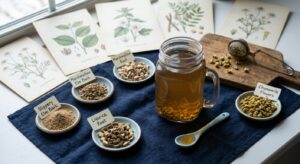
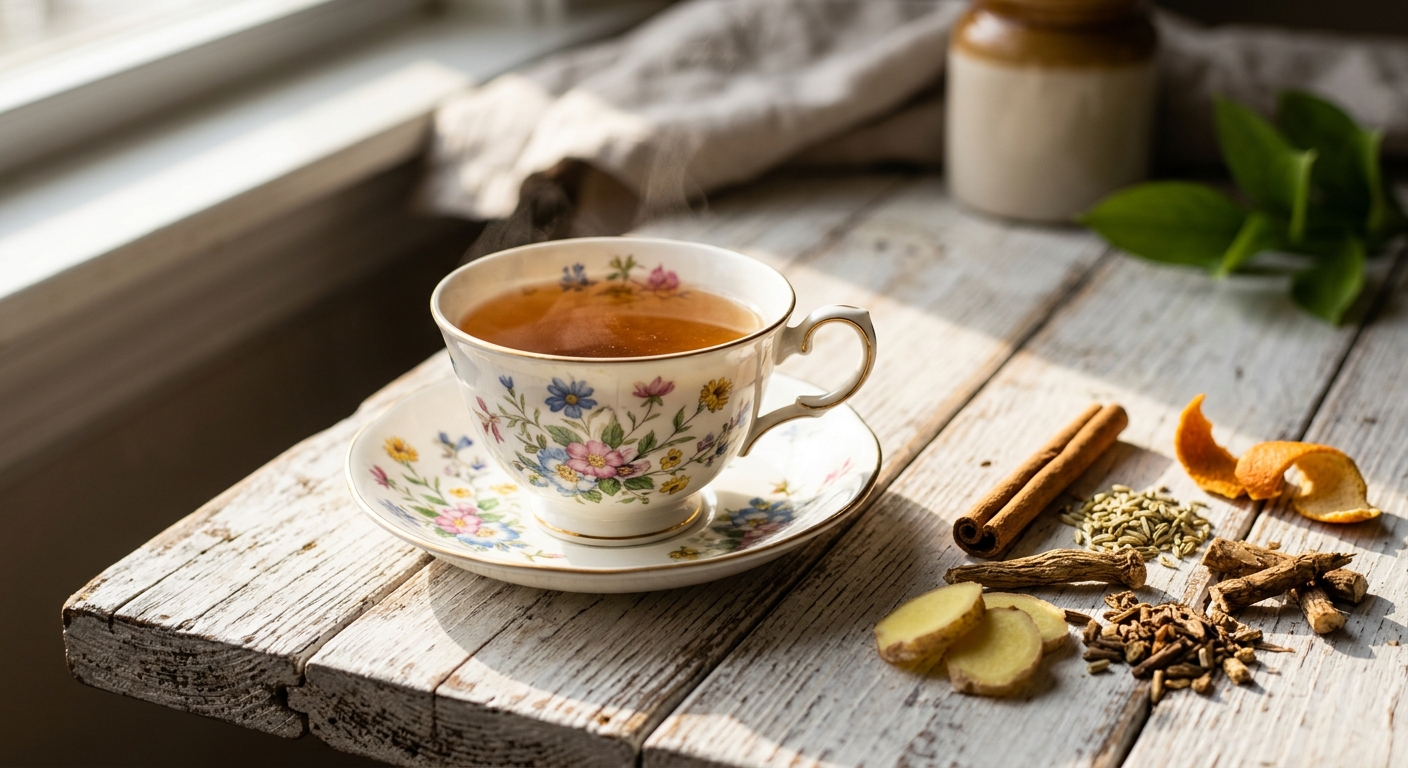
Digestive bitters tea draws on this long tradition by combining some of the most well-studied bitter herbs in the pharmacopoeia: gentian root, dandelion root, and burdock, often rounded out with aromatic digestive herbs like fennel seed, ginger, and orange peel. The bitter taste itself is the medicine. When bitter compounds touch the taste receptors on the tongue and in the gut lining, they trigger a cascade of digestive secretions, including saliva, stomach acid, bile, and pancreatic enzymes. This reflex, sometimes called the bitter reflex, is the physiological foundation behind centuries of empirical wisdom.
What makes digestive bitters tea so compelling today is the growing body of research validating what traditional herbalists always knew. Compounds like amarogentin in gentian, taraxacin in dandelion, and gingerols in ginger have each been studied for their effects on gastric motility, inflammation, and enzyme production. This is a tea that works with your body rather than suppressing its signals, making it an elegant, food-like approach to digestive wellness. Whether you struggle with post-meal bloating, sluggish digestion, or simply want to support your gut’s daily rhythm, a well-brewed cup of digestive bitters tea is one of the most time-honored tools in the herbal medicine cabinet.
2
cups
Ingredients
- 0.5 tspdried gentian root (chopped or powdered)
- 1 tspdried dandelion root (roasted or raw)
- 0.5 tspdried burdock root
- 0.5 tspfennel seeds (lightly crushed)
- 3 slicesfresh ginger root (or 0.25 tsp dried)
- 1 stripdried orange peel
- 480 mlwater (95 to 100°C / 203 to 212°F)
- —raw honey or a few drops of pure stevia to taste (optional)
How to Brew
Click on an item below to shop for the recommended items for this recipe on Amazon.
As an Amazon Associate, we earn from qualifying purchases.
- Combine the gentian root, dandelion root, and burdock root in a small saucepan with 480 ml of cold water. These roots are dense and require heat extraction to release their bitter glycosides and inulin.
- Bring the water to a gentle simmer over medium heat. Once simmering, reduce the heat to low and allow the roots to decoct for 10 to 12 minutes. The liquid will deepen to a rich amber or mahogany color.
- Add the crushed fennel seeds, ginger slices, and orange peel to the saucepan. Remove the pan from the heat, cover, and allow the aromatics to steep for an additional 5 minutes. Covering the pan preserves the volatile oils in fennel and ginger, which are key to the tea’s digestive and flavor profile.
- Strain the tea through a fine mesh strainer into warmed mugs, pressing the plant material gently to extract every last drop of the bitter liquid.
- Taste before sweetening. The bitterness is intentional and therapeutically important, but a small amount of raw honey or stevia can be added without significantly blunting the bitter reflex if needed.
- Drink 15 to 20 minutes before a meal as a digestive primer, or immediately after eating to ease post-meal discomfort. Start with a small cup (120 ml) if you are new to bitters.
- Combine all herbs, including the gentian root, dandelion root, burdock root, fennel seeds, ginger, and orange peel, in a clean glass jar. Because cold water is far less efficient at extracting root compounds, increase the herb quantity by 25 to 50 percent compared to the hot brew recipe.
- Pour 480 ml of filtered cold or room-temperature water over the herbs. Stir gently to ensure all plant material is fully submerged. Do not use hot water, as the goal is a slow, cold extraction that yields a softer bitterness profile.
- Seal the jar and leave it at room temperature for 2 hours to allow initial extraction, then transfer the jar to the refrigerator and let it steep for a further 10 to 14 hours, ideally overnight.
- The following morning, strain the cold brew through a fine mesh strainer or a nut milk bag into a clean bottle or pitcher. Press or squeeze the herb bundle to extract the maximum liquid.
- Serve over ice in a small glass. The cold brew bitters can be stored sealed in the refrigerator for up to 3 days. Take 120 to 150 ml before or after meals as needed.
- Combine the full recipe of herbs with 720 ml of water in a small saucepan, using one and a half times the standard herb quantity to account for the volume reduction that occurs during concentration.
- Bring to a gentle boil over medium heat, then reduce to a low simmer. Allow the mixture to decoct uncovered for 25 to 30 minutes, until the liquid reduces by roughly half, yielding approximately 350 to 400 ml of concentrated liquid.
- Add the fennel seeds, ginger, and orange peel in the final 8 minutes of simmering, then remove the pan from heat and cover tightly for 5 minutes to capture the aromatic volatile oils.
- Strain the concentrate through a fine mesh strainer into a sterilized glass bottle or jar. Press the plant material firmly to extract all liquid. Allow the concentrate to cool completely before sealing.
- Store the bitters concentrate in the refrigerator for up to 7 days. To use, stir 1 to 2 tablespoons into 120 ml of warm or room-temperature water and drink 15 minutes before meals. You can also stir it into sparkling water for a gentler digestive tonic.
Health Benefits
The bitter compounds in gentian and dandelion root activate TAS2R bitter taste receptors throughout the digestive tract, triggering a reflex that increases the secretion of saliva, gastric acid, bile, and pancreatic enzymes. This coordinated response dramatically improves the breakdown and absorption of proteins, fats, and fat-soluble vitamins.
Fennel seed and ginger work synergistically in this blend to relax the smooth muscle of the gastrointestinal tract, expelling trapped gas and relieving the pressure and distension that cause bloating. Ginger additionally accelerates gastric emptying, reducing the time food sits in the stomach and ferments.
Dandelion root has been shown in several studies to stimulate bile secretion and support healthy liver enzyme levels. Bile is essential not only for fat digestion but also for the elimination of fat-soluble waste products and excess hormones, making this blend a gentle daily liver tonic.
Both dandelion root and burdock root are rich in inulin, a prebiotic fiber that selectively feeds beneficial bacteria in the colon, particularly Bifidobacterium and Lactobacillus species. A well-nourished microbiome is associated with reduced inflammation, better immune function, and improved mood via the gut-brain axis.
Clinical research on ginger has demonstrated its ability to accelerate gastric emptying in people with functional dyspepsia. Combined with the motility-stimulating effects of bitter compounds on the gut lining, this tea can meaningfully reduce the heaviness, nausea, and sluggishness that often follow large or rich meals.
🧪 Key Bioactive Compounds
The Science Behind Gentian Root
The therapeutic foundation of digestive bitters tea lies in a fascinating physiological mechanism called the bitter reflex. When amarogentin, taraxacin, and other bitter glycosides contact the TAS2R family of bitter taste receptors, which are located not only on the tongue but throughout the gastrointestinal lining, stomach, and even the gallbladder, they trigger a coordinated neurohormonal response. This response includes increased secretion of gastrin, cholecystokinin (CCK), and secretin, hormones that orchestrate the release of gastric acid, bile, and pancreatic digestive enzymes. The result is a digestive tract that is primed and ready to break down a meal efficiently, reducing the likelihood of incomplete digestion and its uncomfortable downstream consequences, including bloating, gas, and heaviness.
Ginger’s primary active compound, 6-gingerol, operates through complementary but distinct mechanisms. Research published in peer-reviewed journals including the European Journal of Gastroenterology and Hepatology has shown that ginger significantly accelerates gastric emptying, the rate at which food moves from the stomach into the small intestine. This action is mediated partly through 5-HT3 receptor antagonism and partly through enhanced gastric contractility. Fennel’s anethole, meanwhile, is a phytochemical with well-documented antispasmodic effects on intestinal smooth muscle. By binding to calcium channels in smooth muscle cells, anethole reduces the involuntary spasms that generate cramping and gas pain, providing rapid relief from the tension and discomfort that often accompany sluggish digestion.
The prebiotic dimension of this tea represents a longer-term benefit that complements the immediate digestive stimulation. Inulin, a fructooligosaccharide found in high concentrations in both dandelion root (up to 40 percent dry weight in autumn-harvested roots) and burdock root, reaches the colon largely intact because human digestive enzymes cannot break it down. Once in the colon, inulin is selectively fermented by beneficial bacteria including Bifidobacterium longum and Lactobacillus acidophilus, producing short-chain fatty acids like butyrate as metabolic byproducts. Butyrate is the primary fuel source for colonocytes (the cells lining the colon), supports intestinal barrier integrity, and has significant anti-inflammatory effects throughout the body. Consistent consumption of inulin-rich bitters tea thus offers both immediate digestive comfort and meaningful long-term microbiome support.
Brewing Tips
- Drink digestive bitters tea without food 15 to 20 minutes before a meal for the strongest digestive priming effect. If you prefer to take it after eating, allow at least 30 minutes to pass so the bitter reflex can still act on residual digestive secretions rather than simply being diluted by a full stomach.
- The intensity of gentian root is formidable. Start with just a pinch (less than 0.25 tsp per 480 ml) and gradually increase over a week or two as your palate and digestion adapt. You can always add more bitterness, but you cannot remove it from an over-extracted brew.
- For the richest extraction of bitter glycosides from the roots, always start them in cold water and bring the water to a simmer slowly. Adding roots to already-boiling water can cause rapid surface coagulation of plant proteins that actually impedes full extraction of the deeper bitter compounds.