In the gardens of India, holy basil – known as Tulsi in Sanskrit – has been considered a sacred plant for more than three thousand years. Planted outside homes and temples as a symbol of purity and divine protection, it occupies a central place in Ayurvedic medicine, where it is classified as a rasayana, or a rejuvenating herb that promotes longevity and vitality. Ancient texts like the Charaka Samhita praised tulsi for its ability to sharpen the mind, strengthen the spirit, and harmonize the body during times of stress and illness. To this day, the plant is woven into daily rituals across South Asia, from morning prayers to evening teas shared within families.
What makes holy basil so remarkable is its status as a true adaptogen, a class of herbs that help the body adapt to physical, emotional, and environmental stressors without overstimulating or sedating. Unlike pharmaceutical sleep aids, tulsi works gently and cumulatively, coaxing the nervous system toward a state of calm alertness during the day and easing the transition into sleep at night. Its leaves carry a complex, aromatic chemistry that blends notes of clove, pepper, and a whisper of mint, making the tea both medically compelling and genuinely pleasurable to drink.
Three distinct varieties of holy basil are commonly used in tea: Vana (wild), Rama (green-leafed and mild), and Krishna (purple-tinged and more peppery). Many commercial tulsi teas blend all three for a rounded flavor and a broader spectrum of beneficial compounds. Whether you source it from a trusted herbal supplier, grow your own on a sunny windowsill, or pick up a quality blended product, brewing tulsi tea is one of the most accessible and rewarding ways to bring plant medicine into your evening routine.
2
cups
Ingredients
- 2 tspdried holy basil (tulsi) leaves per cup
- 480 mlwater (90°C / 194°F)
- —raw honey or jaggery to taste (optional)
- —a pinch of freshly ground black pepper (optional, enhances absorption)
- —a thin slice of fresh ginger (optional)
How to Brew
Click on an item below to shop for the recommended items for this recipe on Amazon.
As an Amazon Associate, we earn from qualifying purchases.
- Heat your water to 90 to 95°C (194 to 203°F). If you do not have a temperature-controlled kettle, bring water to a full boil and let it rest off the heat for 2 to 3 minutes before pouring.
- Add 2 teaspoons of dried tulsi leaves per cup into your tea infuser or directly into the teapot. If using fresh leaves, double the quantity to 4 teaspoons per cup.
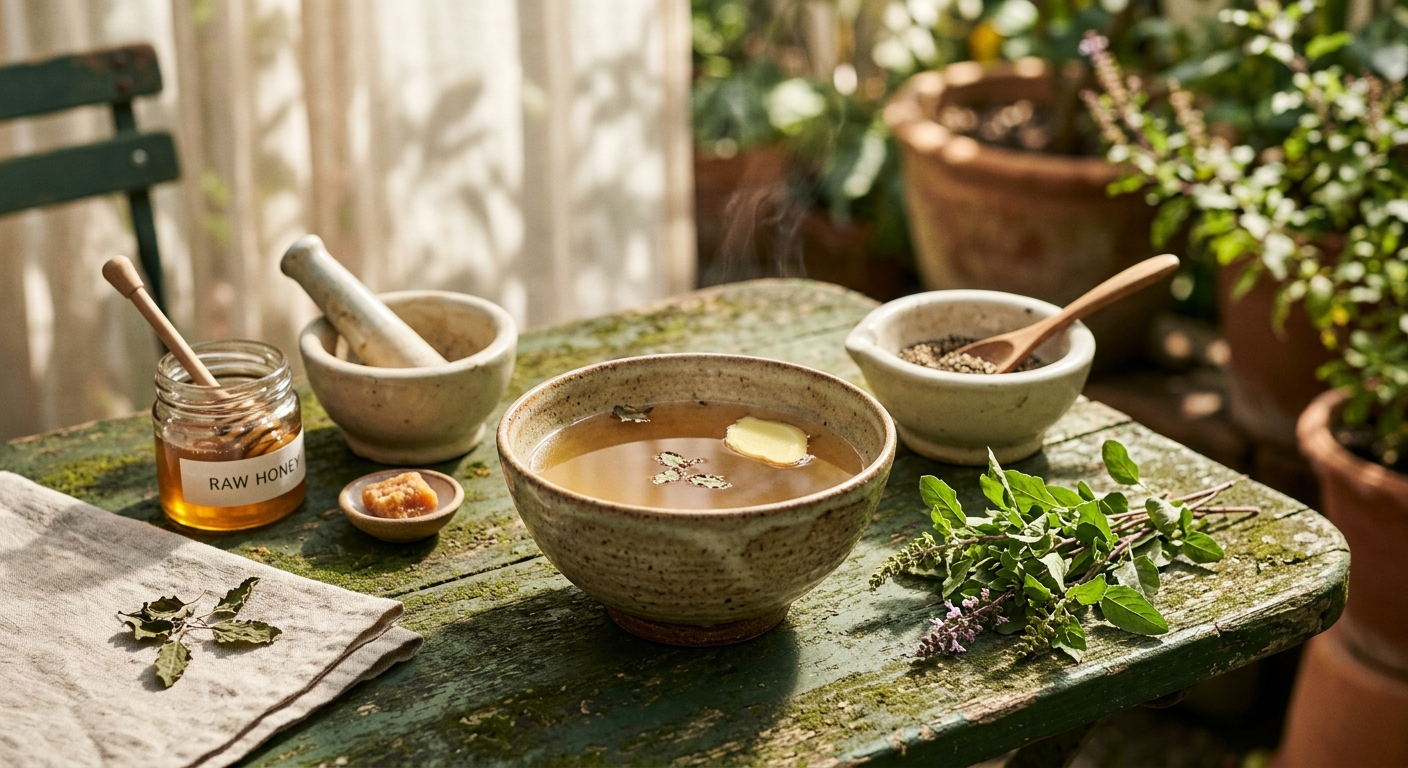
- Optional: add a thin slice of fresh ginger or a pinch of black pepper to the infuser alongside the tulsi. Ginger deepens the warming quality and black pepper enhances the bioavailability of tulsi’s key compounds.
- Pour the hot water over the leaves and cover the mug or teapot with a lid or small saucer. This traps the aromatic volatile oils inside the cup rather than letting them escape with the steam.
- Steep for 5 to 7 minutes. A 5-minute steep yields a lighter, more floral cup; 7 minutes produces a fuller-bodied, spicier brew. Taste as you go and find your preferred balance.
- Remove the infuser, sweeten with raw honey or jaggery if desired, and sip slowly about 30 to 45 minutes before bedtime for the best sleep-supportive effect.
- Measure 3 teaspoons of dried tulsi leaves per 240 ml of water. The slightly higher ratio compensates for the slower, gentler cold extraction process.
- Place the tulsi leaves into a clean glass jar or pitcher. If you enjoy added complexity, include 2 to 3 thin slices of cucumber or a small sprig of fresh mint alongside the tulsi.
- Pour cold, filtered water over the leaves, making sure all the plant material is fully submerged. Stir gently with a long spoon to ensure even distribution.
- Seal the jar with a lid and leave it at room temperature for 1 hour to begin extraction, then transfer it to the refrigerator and steep for a further 7 to 11 hours, or overnight.
- Strain the liquid through a fine mesh strainer or cheesecloth into a clean glass, pressing the leaves gently to extract any remaining liquid.
- Serve over ice, optionally sweetened with a light drizzle of honey or a few drops of fresh lemon juice. This cold brew keeps well in the refrigerator for up to 48 hours.
- Choose a clear glass jar with a tight-fitting lid. Add 2 heaped teaspoons of dried tulsi leaves per 240 ml of cold, filtered water directly to the jar.
- Optional: add a cinnamon stick, 2 to 3 cardamom pods lightly crushed, or a few slices of fresh lemon to complement tulsi’s spiced, floral character.
- Seal the jar and place it in a sunny spot outdoors or on a south-facing windowsill. The warmth of the sun will gently draw out the herb’s flavor and compounds without the harshness of boiling water.
- Allow the jar to steep in direct sunlight for 3 to 4 hours, checking it periodically. The tea is ready when it has taken on a warm amber or olive-gold color and the aroma is fragrant and spiced.
- Bring the jar indoors and strain the liquid through a fine mesh strainer into a clean pitcher or glass. Discard the spent leaves.
- Serve immediately over ice with a sprig of fresh mint or store in the refrigerator for up to 24 hours. Sweeten with honey or agave syrup if desired.
Health Benefits
Multiple human clinical trials have shown that daily consumption of holy basil extract significantly reduces perceived stress scores and normalizes cortisol and corticosterone levels. The adaptogenic compounds ocimumosides A and B appear to modulate the hypothalamic-pituitary-adrenal (HPA) axis, helping the body recalibrate its stress response rather than simply suppressing it.
Tulsi’s combination of linalool, apigenin, and rosmarinic acid works synergistically to lower nervous system arousal and ease the body into the parasympathetic rest state required for restorative sleep. Unlike sedative herbs that knock you out, tulsi promotes what Ayurvedic practitioners call sattvic rest, a calm, clear, undisturbed quality of sleep.
A 2012 double-blind, randomized controlled trial published in the Journal of Ayurveda and Integrative Medicine found that a 500 mg daily dose of tulsi extract significantly improved measures of cognitive flexibility, attention, and stress-related anxiety compared to placebo. Rosmarinic acid’s inhibition of GABA-transaminase may be a central mechanism here.
Eugenol, ursolic acid, and rosmarinic acid collectively give holy basil a broad-spectrum anti-inflammatory and antioxidant profile. Regular consumption may reduce circulating markers of inflammation such as IL-6 and CRP, which are elevated during chronic stress and associated with disrupted sleep.
Several animal studies and a small number of human trials suggest that tulsi may help moderate postprandial blood glucose spikes by inhibiting alpha-glucosidase activity. Stable blood sugar throughout the night reduces the likelihood of cortisol-driven wake events in the early morning hours, indirectly supporting sleep continuity.
🧪 Key Bioactive Compounds
The Science Behind Holy Basil (Tulsi)
The adaptogenic power of holy basil is rooted in a sophisticated phytochemical profile that targets multiple arms of the stress-response system simultaneously. At the center of this profile are two glycosides unique to Ocimum tenuiflorum: ocimumosides A and B. These compounds have been shown in peer-reviewed studies to significantly reduce elevated corticosterone levels in chronically stressed animals, pointing to a direct modulatory effect on the hypothalamic-pituitary-adrenal (HPA) axis. Unlike synthetic anxiolytics that blunt the entire stress response, these glycosides appear to recalibrate the system, restoring normal hormonal rhythms rather than overriding them. This is the pharmacological basis for the Ayurvedic concept of tulsi as a rasayana, a substance that restores rather than merely suppresses.
Two polyphenols, rosmarinic acid and apigenin, provide tulsi’s most direct sleep-supportive mechanisms. Rosmarinic acid inhibits GABA-transaminase, the enzyme responsible for breaking down gamma-aminobutyric acid (GABA) in the synaptic cleft. By slowing GABA degradation, rosmarinic acid effectively extends the duration and intensity of this primary inhibitory neurotransmitter’s calming signal, reducing neuronal excitability and lowering the mental chatter that often prevents sleep onset. Apigenin reinforces this effect by binding directly to GABA-A receptors as a positive allosteric modulator, a mechanism shared with benzodiazepine drugs but far gentler and without the dependency risk. Together, these two compounds create a measurable shift toward parasympathetic nervous system dominance, the physiological state required for sleep.
The aromatic volatile oils of tulsi, primarily eugenol and linalool, add a third dimension to its sleep-supportive chemistry. Eugenol’s COX-2 inhibitory activity reduces the low-grade neuroinflammation that is increasingly recognized as a driver of insomnia and anxiety disorders. Linalool, most famously associated with lavender, has been shown in both inhalation and ingestion studies to modulate the limbic system’s response to stress cues, dampening amygdala reactivity and reducing heart rate variability in anxious subjects. When all of these compounds are consumed together in a warm cup of tulsi tea, they create a gentle but multifaceted pharmacological tapestry that addresses the stress, inflammation, and neural hyperactivation at the root of most modern sleep disturbances.
Brewing Tips
- Always cover your mug while steeping holy basil tea. The volatile oils responsible for both its aroma and its calming properties are highly fragrant and will evaporate with the steam if the cup is left open, leaving you with a weaker and less therapeutic brew.
- Grow your own tulsi on a sunny windowsill for the freshest possible leaves. Fresh tulsi is significantly more aromatic than dried and can be used at double the quantity. Simply rinse the leaves, lightly bruise them between your fingers to release their oils, and steep as normal.
- Consistency matters more than dose with adaptogens like holy basil. Rather than drinking a very strong cup once in a while, aim for one to two moderate cups daily for at least three to four weeks to experience the cumulative stress-regulating and sleep-supportive benefits that clinical trials have documented.