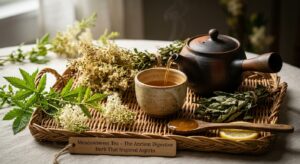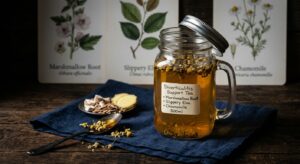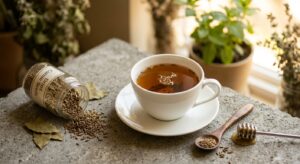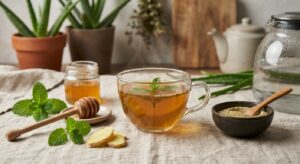
The pancreas is one of the most overlooked organs in digestive wellness conversations, yet it performs a remarkable dual role: producing insulin to regulate blood sugar and secreting a suite of digestive enzymes, including lipase, amylase, and protease, that break down fats, carbohydrates, and proteins. When the pancreas is under stress from poor diet, chronic inflammation, or oxidative damage, the entire digestive cascade suffers. Traditional healing systems from Ayurveda to European phytotherapy have long recognized specific bitter and aromatic herbs as allies for the upper digestive tract, with herbalists prescribing blends that stimulate bile flow, encourage enzymatic secretion, and calm irritated tissues.
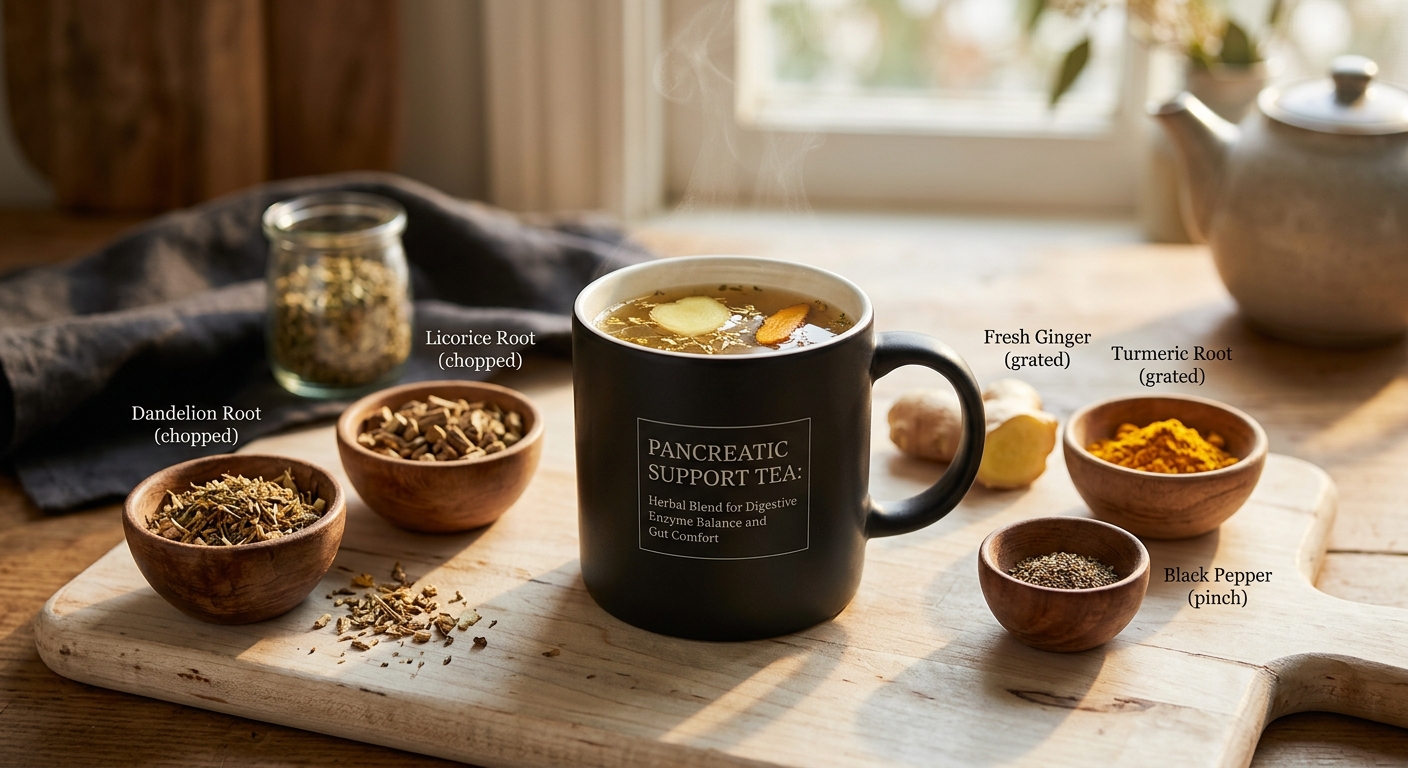
This Pancreatic Support Tea brings together a quartet of time-honored botanicals: dandelion root, which acts as a bitter digestive tonic and liver ally; licorice root, prized for its anti-inflammatory glycyrrhizin content; ginger root, a warming carminative that reduces nausea and supports enzymatic activity; and turmeric, whose curcumin compound has been studied extensively for its role in protecting pancreatic tissue from oxidative stress and inflammation. Together, these herbs form a synergistic blend that addresses pancreatic health from multiple angles, covering stimulation, protection, and soothing relief.
Bitter herbs like dandelion have been used in European folk medicine since at least the medieval period, appearing in texts by herbalists such as Hildegard von Bingen, who recommended bitter roots for sluggish digestion and liver complaints. Ginger’s role in Southeast Asian and Ayurvedic medicine as a digestive fire-kindler spans over 3,000 years, while turmeric has been documented in Ayurvedic texts, specifically the Charaka Samhita, as a remedy for abdominal pain and poor digestion. Licorice root appears in both Traditional Chinese Medicine and ancient Egyptian records as a harmonizing herb that tempers the sharpness of other botanicals while contributing its own profound healing properties.
2
cups
Ingredients
- 2 tspdried dandelion root, chopped
- 1 tspdried licorice root, chopped
- 1 tspfresh ginger root, grated (or 0.5 tsp dried)
- 0.5 tspground turmeric or 1 tsp grated fresh turmeric root
- 480 mlwater (95 to 100°C / 203 to 212°F)
- —a pinch of black pepper (to enhance curcumin absorption)
- —raw honey or maple syrup to taste (optional)
How to Brew
Click on an item below to shop for the recommended items for this recipe on Amazon.
As an Amazon Associate, we earn from qualifying purchases.
- Combine the dandelion root, licorice root, grated ginger, and turmeric in a small saucepan with 500 ml of cold filtered water.
- Bring the mixture slowly to a gentle boil over medium heat, then immediately reduce to a low simmer. Do not allow a rolling boil, which can degrade delicate volatile compounds.
- Simmer uncovered for 10 to 15 minutes, watching the liquid reduce slightly and deepen in color to a rich amber-brown.
- Add a pinch of black pepper in the final 2 minutes of simmering to activate piperine, which increases curcumin bioavailability by up to 2,000 percent.
- Remove from heat and allow to rest for 2 minutes, then strain through a fine-mesh strainer or cheesecloth into two mugs.
- Sweeten lightly with raw honey or maple syrup if desired, and sip slowly 20 to 30 minutes before a meal for maximum digestive benefit.
- Lightly crush the dandelion root and licorice root pieces with the back of a spoon or a mortar and pestle to increase their surface area, which compensates for the slower cold extraction process.
- Combine all herbs, including ginger and turmeric, with 600 ml of cold filtered water in a glass jar with a lid. Use slightly more water than the hot method, as cold brewing requires greater dilution to balance the slow-extracted bitters.
- Stir gently to ensure all herbs are submerged, then seal the jar loosely and leave at room temperature for 1 hour to begin extraction.
- Move the jar to the refrigerator and allow to steep for 12 to 16 hours, or overnight. The longer the steep, the deeper the licorice sweetness and earthy root flavors become.
- Strain through a fine-mesh strainer lined with cheesecloth or a nut milk bag into a clean pitcher or bottle, pressing the herbs gently to release remaining liquid.
- Serve over ice in tall glasses, adding a squeeze of fresh lemon juice and a small drizzle of honey if desired. Consume within 3 days when stored refrigerated.
- Double the ingredient quantities, using 4 tsp dandelion root, 2 tsp licorice root, 2 tsp grated fresh ginger, and 1 tsp turmeric, and combine in a medium saucepan with 500 ml of cold filtered water.
- Bring to a full boil over medium-high heat, then reduce to a steady low simmer. Allow to simmer uncovered for 25 to 30 minutes, letting the liquid reduce by roughly half to approximately 240 to 250 ml of concentrated liquid.
- In the final 5 minutes, add a generous pinch of black pepper and stir to incorporate.
- Remove from heat and let cool for 5 minutes before straining through a fine-mesh strainer lined with cheesecloth into a clean glass jar with a tight-fitting lid.
- Allow the concentrate to cool to room temperature before refrigerating. It will keep for up to 5 days.
- To serve, combine 60 to 80 ml of concentrate with 180 to 200 ml of hot water or sparkling water for a digestive tonic, adjusting the ratio to your taste and tolerance for bitterness. Take one serving before meals up to twice daily.
Health Benefits
Bitter compounds such as taraxacin in dandelion root trigger the vagal nerve response that initiates the cephalic digestive phase, prompting the pancreas to release amylase, lipase, and protease before food even reaches the small intestine. This priming effect can reduce the digestive burden on an already stressed pancreas.
Curcumin from turmeric has been shown in multiple clinical trials and animal studies to inhibit NF-kB and COX-2 pathways, both of which are central to chronic pancreatic inflammation. Glycyrrhizin from licorice root complements this action by soothing mucous membranes and reducing prostaglandin-mediated irritation throughout the digestive tract.
Both 6-gingerol and curcumin are potent antioxidants that neutralize reactive oxygen species generated during periods of digestive stress or high-fat dietary load. Protecting beta cells from oxidative damage is important for maintaining both digestive enzyme production and insulin regulation.
Dandelion root has a well-documented choleretic effect, meaning it stimulates bile secretion from the liver and gallbladder. Adequate bile flow is essential for fat emulsification and directly reduces the workload placed on pancreatic lipase, allowing more efficient digestion of dietary fats.
The inulin naturally present in dandelion root acts as a prebiotic, selectively feeding Lactobacillus and Bifidobacterium species in the colon. A balanced microbiome reduces systemic inflammation and supports the gut-pancreas axis, contributing to better overall digestive and metabolic health.
🧪 Key Bioactive Compounds
The Science Behind Dandelion Root
The science behind this blend centers on the intersection of bitter receptor stimulation, anti-inflammatory signaling, and antioxidant protection at the cellular level. When bitter compounds like taraxacin reach the taste receptors on the tongue and the bitter receptors (TAS2Rs) found throughout the digestive lining, they trigger a chain of neurological signals via the vagus nerve that prepares the entire upper GI tract for digestion. This includes stimulating the gallbladder to release bile and prompting the pancreatic acinar cells to begin synthesizing and secreting their enzyme payload. Essentially, these bitter botanicals are giving the digestive system an advance warning system that results in smoother, more complete breakdown of food.
Curcumin’s mechanisms have been studied extensively in the context of pancreatic health. Research published in journals including Gut, Pancreas, and the International Journal of Molecular Sciences has documented its ability to suppress the transcription factor NF-kB, which orchestrates the production of pro-inflammatory cytokines such as IL-6, TNF-alpha, and IL-1beta. In the context of the pancreas, runaway NF-kB activity is a hallmark of both acute and chronic pancreatitis. Curcumin’s ability to modulate this pathway, alongside its direct radical-scavenging activity, makes it a particularly meaningful addition to any herbal strategy aimed at pancreatic tissue protection. The addition of black pepper as a piperine source is not merely traditional, it is pharmacologically rational, as piperine has been shown in human trials to increase curcumin’s serum concentration by up to 2,000 percent by inhibiting its rapid intestinal and hepatic glucuronidation.
Glycyrrhizin from licorice root contributes a distinct and complementary mechanism. Once absorbed, glycyrrhizin is converted by intestinal bacteria into glycyrrhetic acid, which inhibits the enzyme 11-beta-hydroxysteroid dehydrogenase. This leads to a mild cortisol-sparing effect that, in appropriate doses, can reduce inflammation throughout the body including in the pancreatic ductal lining. Additionally, licorice root extracts have demonstrated mucoprotective effects on epithelial surfaces throughout the gastrointestinal tract, reinforcing the mucous layer that protects the pancreatic ducts from autodigestion by prematurely activated enzymes, a key mechanism in pancreatitis. Together, these compounds make this tea a multi-target botanical strategy rather than a single-action remedy.
Brewing Tips
- Always use freshly grated ginger and turmeric root when available rather than dried powder, as the volatile oil content in fresh roots is significantly higher and contributes superior anti-inflammatory and carminative activity.
- Drink this tea 20 to 30 minutes before your largest meal of the day to maximize the bitter-stimulated enzyme priming effect on the pancreas, rather than drinking it after eating when the digestive phase has already begun.
- If the bitterness of dandelion root is too pronounced for your palate, increase the licorice root ratio slightly or add a small slice of fresh apple or a cinnamon stick during brewing, both of which soften the bitterness without significantly altering the therapeutic compounds.