Long before antacids lined pharmacy shelves, herbalists across Europe and North America turned to the plant kingdom for relief from the burning discomfort of excess stomach acid. Meadowsweet, revered by the Druids as one of their three most sacred herbs, was used in medieval Europe to ease stomach pain and reduce acidity. Slippery elm bark was a cornerstone of Native American medicine, used by the Ojibwe and Cherokee peoples to soothe inflamed mucous membranes throughout the digestive tract. Marshmallow root traces its medicinal use back to ancient Egypt and Greece, where Dioscorides and Hippocrates both wrote of its remarkable capacity to coat and protect irritated tissues. These three herbs have stood the test of time not just through folklore, but through modern scientific validation.
What makes this blend so effective is the elegant synergy between its ingredients. Marshmallow root and slippery elm both contain high concentrations of mucilage, a gel-forming polysaccharide that physically coats the esophagus, stomach lining, and intestinal walls, creating a protective barrier against acid damage. Meadowsweet brings a different mechanism entirely, contributing salicylates and tannins that mildly inhibit excess acid secretion while also calming inflammation in the gastric mucosa. Together, these actions address the root causes of acid-related discomfort rather than simply masking symptoms. The result is a tea that feels genuinely therapeutic from the very first sip.
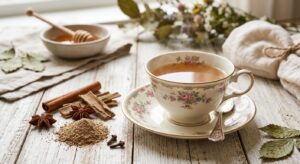
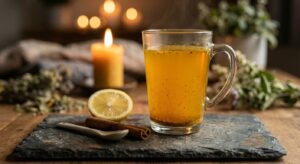
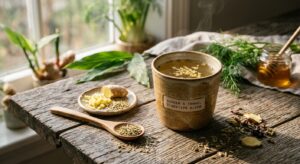
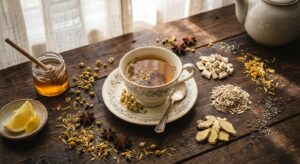
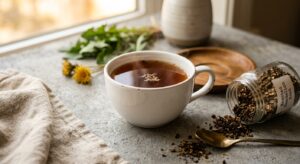
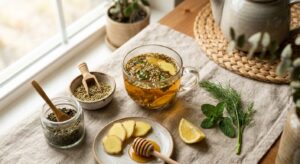
The sensory experience of this tea is quietly remarkable. It brews into a soft, hazy, pale gold cup with a subtly sweet, slightly earthy aroma carrying faint almond-like floral notes from the meadowsweet. The texture is unmistakably silky, almost velvety on the tongue, a direct result of the mucilage releasing from the slippery elm and marshmallow root. This is a tea that does not merely taste pleasant but communicates its medicine through its mouthfeel. Sipped slowly before or after meals, it offers genuine comfort to those living with acid reflux, gastritis, or the everyday discomfort of a stressed and overworked digestive system.
2
cups
Ingredients
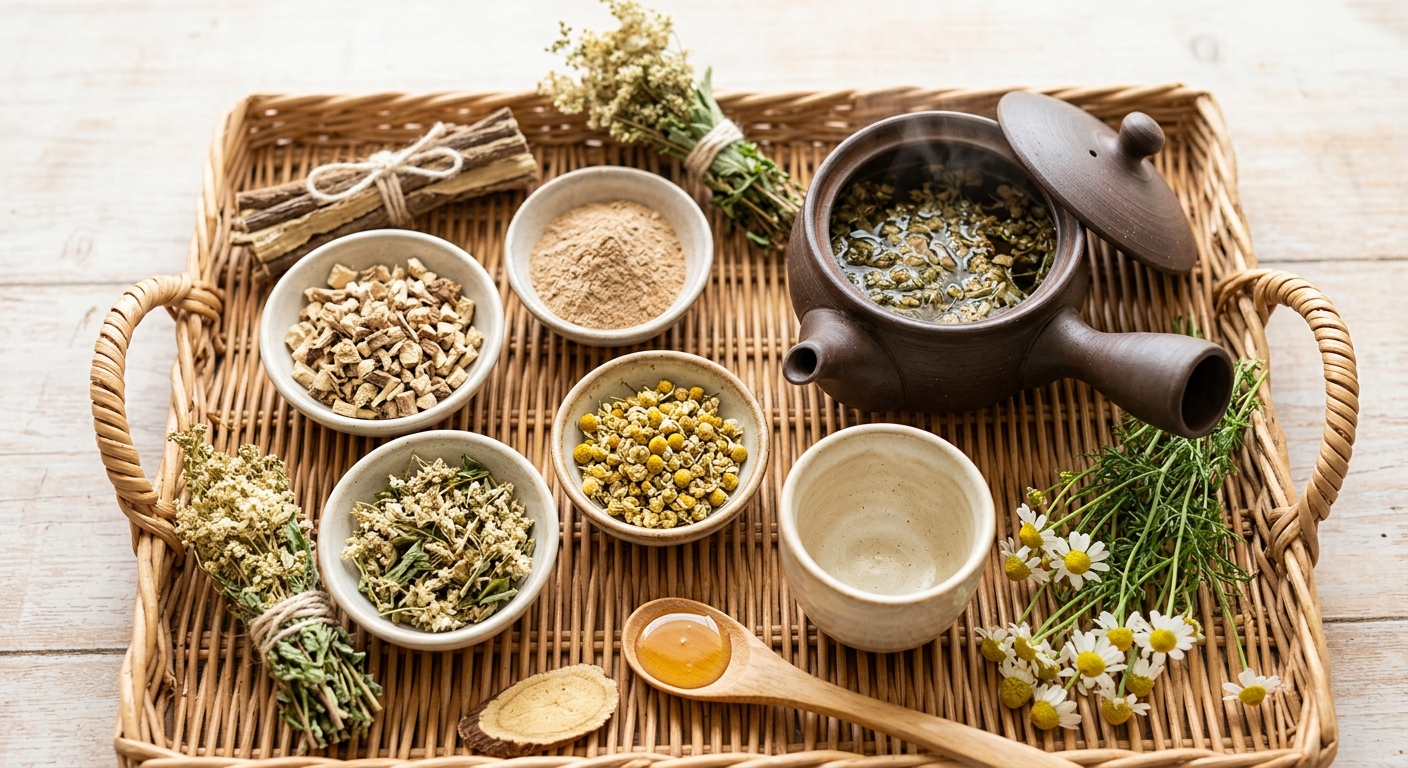
- 2 tspdried marshmallow root
- 1.5 tspdried slippery elm bark (powder or cut and sifted)
- 1 tspdried meadowsweet flowers and leaves
- 0.5 tspdried chamomile flowers (optional, for added calm)
- 480 mlwater (90°C / 194°F)
- —raw honey or licorice root slice to taste (optional)
How to Brew
Click on an item below to shop for the recommended items for this recipe on Amazon.
As an Amazon Associate, we earn from qualifying purchases.
- Bring filtered water to 88 to 92°C (190 to 198°F). If you do not have a temperature-controlled kettle, bring water to a full boil and allow it to rest for 3 to 4 minutes before using.
- Add the marshmallow root, slippery elm bark, and meadowsweet to a tea infuser or small muslin bag. If using chamomile, add it now as well. Place the infuser into your mug or teapot.
- Pour the hot water over the herbs and cover the mug or pot with a lid or small plate. Covering is essential – it traps the volatile aromatic compounds from meadowsweet that would otherwise escape as steam.
- Steep for 10 to 15 minutes. You will notice the liquid becoming slightly silky and hazy as the mucilage from the marshmallow root and slippery elm releases into the water.
- Remove the infuser and gently press the herbs against the side of the mug with the back of a spoon to extract the remaining mucilage-rich liquid. Sweeten lightly with raw honey if desired.
- Sip slowly, ideally 20 to 30 minutes before a meal or when experiencing acid-related discomfort. Drink at a warm, comfortable temperature rather than scalding hot.
- Measure out the marshmallow root, slippery elm bark, and meadowsweet. For cold brew, increase the marshmallow root to 3 teaspoons per 480 ml of water, as the longer extraction rewards a slightly higher ratio.
- Place the herbs directly into a clean glass jar without a metal infuser if possible, allowing the mucilage to diffuse freely into the water. Pour room temperature filtered water (approximately 20°C / 68°F) over the herbs and stir gently.
- Seal the jar loosely with a lid or cover with a cloth secured with a rubber band. Allow the herbs to begin infusing at room temperature for 30 minutes, then transfer the jar to the refrigerator.
- Leave to cold brew for 8 to 12 hours. Overnight is ideal. The water will gradually take on a noticeably thick, silky, gel-like quality as the polysaccharides from the marshmallow root and slippery elm fully dissolve.
- Strain the cold brew through a fine mesh strainer or cheesecloth into a clean glass, pressing the spent herbs firmly to extract every drop of the mucilage-rich liquid.
- Drink cold or allow to sit at room temperature for 15 minutes before drinking. This cold brew keeps in the refrigerator for up to 48 hours. Consume one glass on an empty stomach in the morning for best results with chronic acid reflux.
- Combine the marshmallow root and slippery elm bark in a small stainless steel or ceramic saucepan. Add 600 ml of cold filtered water to account for evaporation during simmering.
- Place the saucepan over low to medium-low heat and bring the water slowly up to a gentle simmer, approximately 85 to 90°C (185 to 194°F). You should see small bubbles rising lazily from the bottom but no vigorous boiling. Adjust heat as needed to maintain this.
- Allow the marshmallow root and slippery elm to decoct at this gentle simmer for 20 to 25 minutes, stirring occasionally. The liquid will reduce slightly and become noticeably more viscous and silky. Do not allow it to boil hard.
- Remove the saucepan from heat entirely. Add the dried meadowsweet flowers and leaves directly into the hot liquid. Cover the pan with a tight-fitting lid and allow the meadowsweet to infuse off the heat for 8 to 10 minutes. This preserves its volatile aromatic oils and active salicylate compounds.
- Strain the decoction through a fine mesh strainer into mugs, pressing the herbs to extract all the thick, mucilage-rich liquid. You should have approximately 360 to 400 ml of finished tea after evaporation.
- Taste before adding any sweetener. The decoction will be more concentrated and notably more viscous than the hot brew version, with a deeper earthy sweetness. Add a thin slice of licorice root during the final steep for natural sweetness and additional gastroprotective benefit if desired. Consume warm, one cup before a main meal.
Health Benefits
The mucilage from marshmallow root and slippery elm physically coats the lower esophageal lining, buffering it from stomach acid exposure. Clinical and traditional evidence supports this mechanism for reducing the frequency and severity of reflux episodes when consumed regularly before meals.
Meadowsweet’s tannins and salicylate compounds work alongside mucilage to reduce inflammation and support regeneration of damaged gastric mucosa. Traditional European herbalists used meadowsweet specifically for gastric ulcers, and modern research confirms its cytoprotective effects on stomach tissue.
The anti-inflammatory quercetin and spiraein glycosides in meadowsweet reduce prostaglandin activity in the gut lining, helping to calm the inflammation, pain, and cramping associated with gastritis, irritable bowel syndrome, and general digestive irritation.
The arabinogalactan from slippery elm is a well-documented prebiotic fiber that feeds beneficial Lactobacillus and Bifidobacterium species in the colon. Regular consumption supports a healthier gut microbiome, which in turn regulates gastric acid balance and reduces systemic inflammation.
The gel-forming mucilage of both marshmallow root and slippery elm slows the passage of food through the digestive tract in a regulated way, reducing the pressure and bloating caused by rapid gastric emptying and gas accumulation in the upper digestive tract.
🧪 Key Bioactive Compounds
The Science Behind Marshmallow Root
The science behind this stomach acid balancing blend centers on the remarkable properties of mucilage, a class of complex hydrophilic polysaccharides that dissolve in water to form a viscous, gel-like substance. In marshmallow root (Althaea officinalis), the primary mucilaginous component is a polysaccharide called Althaenan, which has been shown in laboratory and clinical studies to adhere to the mucosal lining of the gastrointestinal tract, forming a physical barrier that protects underlying epithelial cells from the corrosive effects of hydrochloric acid. Research published in botanical pharmacology journals has confirmed that this protective coating is particularly effective in the esophagus and stomach, making it directly relevant for conditions like GERD, acid reflux, and non-ulcer dyspepsia. Interestingly, cold water extraction yields significantly higher concentrations of intact mucilage than hot water extraction, which is why the cold brew method in this guide is considered the most therapeutically potent delivery format.
Slippery elm bark (Ulmus rubra) contributes a complementary but structurally distinct form of mucilage in the form of arabinogalactan, a branched polysaccharide that not only coats and soothes the gut lining but also functions as a prebiotic substrate for colonic microflora. Studies examining arabinogalactan have shown it selectively stimulates the growth of Lactobacillus and Bifidobacterium species while inhibiting pathogenic bacteria, suggesting that regular consumption of slippery elm may support long-term gut microbiome balance. A healthy microbiome is increasingly understood to play a significant role in regulating gastric acid secretion and maintaining the integrity of the intestinal barrier, creating a beneficial cascade effect beyond the immediate soothing action of the mucilage itself.
Meadowsweet (Filipendula ulmaria) adds a pharmacologically distinct layer to this blend. Historically, aspirin’s discovery was informed by the isolation of salicylate compounds from meadowsweet, but the herb acts very differently from the pharmaceutical drug. Where aspirin is extracted and concentrated into a single compound that can irritate the stomach lining, meadowsweet contains a full matrix of buffering tannins, flavonoids, and multiple salicylate glycosides that work together to inhibit excess prostaglandin-mediated acid secretion and reduce inflammation in the gastric mucosa without the erosive side effects of isolated aspirin. Studies in phytotherapy research have highlighted meadowsweet’s cytoprotective effect, demonstrating its ability to reduce gastric ulcer formation in preclinical models. The synergistic relationship between its tannins and salicylates appears to actually protect the stomach lining while simultaneously modulating the acid environment, making it a uniquely well-suited herb for this blend.
Brewing Tips
- Always cover your mug or pot while steeping this blend. Meadowsweet’s most therapeutically active volatile compounds and aromatic esters will evaporate quickly if left uncovered, and you will lose both the fragrance and a portion of its anti-inflammatory benefit.
- For chronic acid reflux, consistency matters more than intensity. Drinking one cup of this tea 20 to 30 minutes before your two largest meals of the day for at least three to four weeks will deliver more noticeable, lasting relief than drinking it sporadically in response to acute symptoms.
- Source your marshmallow root in cut-and-sifted or whole root form rather than as a very fine powder for brewing. A very fine powder disperses into the tea and creates a gritty, difficult-to-strain texture. Cut-and-sifted root releases mucilage efficiently while remaining easy to strain cleanly through a fine mesh strainer or cheesecloth.