Ulcerative colitis is a chronic inflammatory bowel disease that causes persistent inflammation and ulceration along the lining of the colon and rectum. While modern medicine offers essential treatments, many people living with UC seek complementary herbal support to soothe flare-up symptoms, protect the mucosal lining, and encourage remission. Herbal traditions across Europe, the Americas, and the Middle East have long turned to mucilaginous and anti-inflammatory plants to calm the gut, and a growing body of research is beginning to validate these centuries-old instincts.
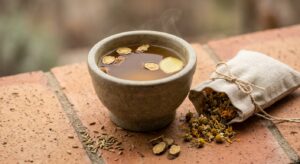
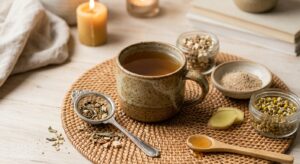
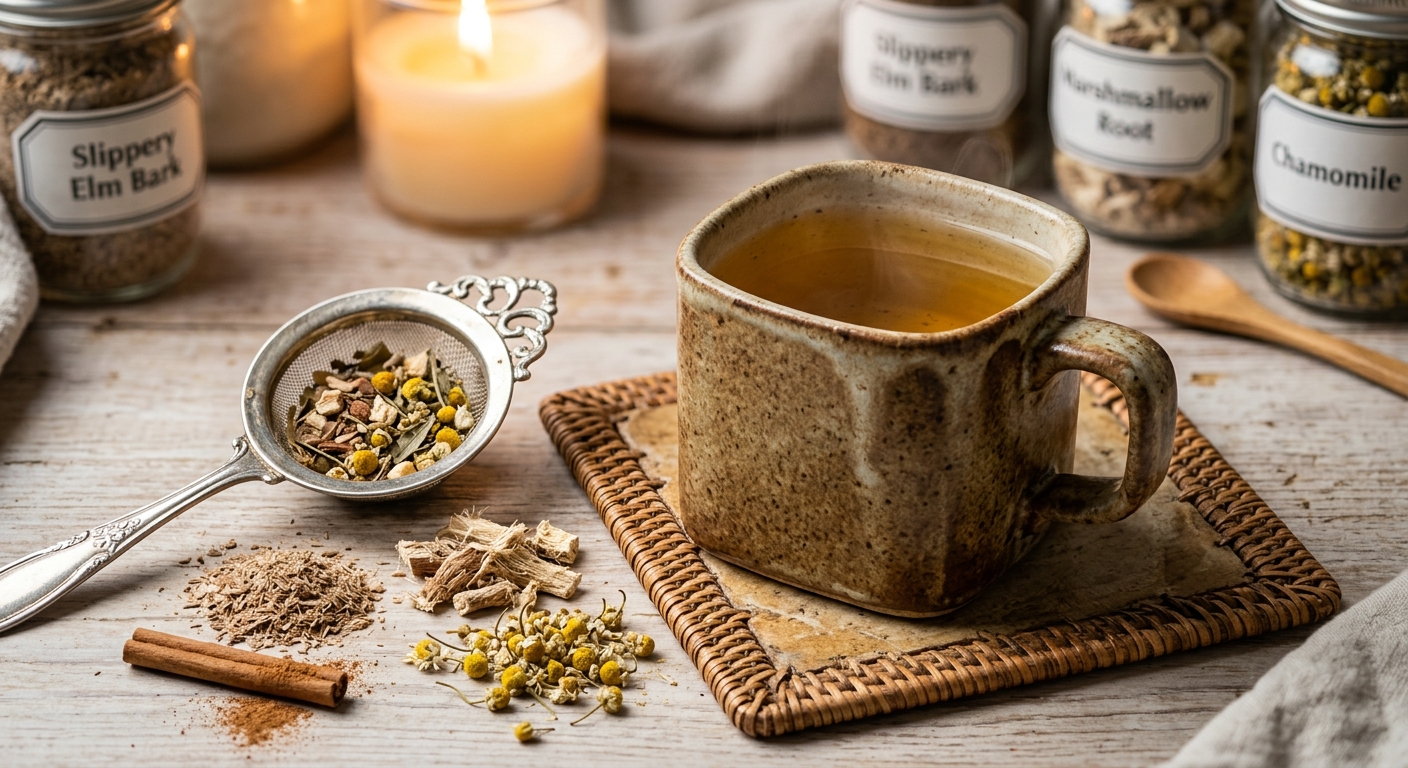
This blend centers on three foundational herbs: slippery elm bark, marshmallow root, and chamomile flowers. Slippery elm and marshmallow root are both rich in mucilage, a gel-like polysaccharide that coats the intestinal walls, reducing friction, buffering acid, and forming a protective barrier over inflamed tissue. Chamomile contributes powerful anti-inflammatory flavonoids and antispasmodic compounds that ease cramping, calm the nervous system, and reduce gut hypersensitivity. Together, they create a soft, earthy, mildly sweet tea that feels as nurturing as it tastes.
Preparing this tea is an act of intentional self-care. The herbs are best extracted at a lower temperature than standard teas to preserve the delicate mucilaginous compounds in slippery elm and marshmallow root, which can be degraded by a rolling boil. Whether you brew it hot on a difficult morning, prepare a cold-brew jar the night before, or slow-steep a sun infusion on a gentle afternoon, this blend offers a quiet, consistent form of gut support that complements your broader care plan.
2
cups
Ingredients
- 2 tspslippery elm bark powder or cut-and-sifted bark
- 2 tspdried marshmallow root
- 2 tspdried chamomile flowers
- 500 mlwater (80 to 85°C / 176 to 185°F)
- —raw honey to taste (optional)
- —a pinch of cinnamon (optional, for warmth and added anti-inflammatory support)
How to Brew
Click on an item below to shop for the recommended items for this recipe on Amazon.
As an Amazon Associate, we earn from qualifying purchases.
- Heat 500 ml of filtered water to 80 to 85°C (176 to 185°F). If you do not have a temperature-controlled kettle, bring water to a boil and allow it to cool for 4 to 5 minutes before proceeding.
- Place 2 tsp slippery elm bark, 2 tsp marshmallow root, and 2 tsp chamomile flowers into a tea infuser or directly into a small teapot. If using slippery elm powder, place it in a small bowl and whisk in a splash of the warm water first to form a smooth slurry before adding to the pot.
- Pour the warm water over the herbs and cover immediately to trap the volatile aromatic compounds from the chamomile. Steep for 10 to 15 minutes.
- Strain the tea through a fine-mesh strainer into your mug. The liquid may appear slightly thick or silky due to the released mucilage – this is the desired effect.
- Sweeten lightly with raw honey if desired, and optionally add a pinch of cinnamon. Sip slowly and mindfully, ideally 20 to 30 minutes before a meal or at the onset of discomfort.
- Measure 2 tsp slippery elm bark, 2 tsp marshmallow root, and 2 tsp chamomile flowers into a clean glass jar with a tight-fitting lid.
- Pour 500 ml of filtered room-temperature water over the herbs. If using slippery elm powder, stir briskly with a long spoon for 30 seconds to begin dispersing the powder before sealing the jar.
- Seal the jar and leave it on the counter at room temperature for 1 hour to allow initial extraction, then transfer to the refrigerator and steep for a further 8 to 12 hours, or overnight.
- In the morning, strain the brew through a fine-mesh strainer or cheesecloth, pressing gently on the herbs. The liquid will be noticeably thicker, more viscous, and deeply golden compared to the hot brew.
- Serve over ice for a refreshing option during warmer months, or warm the brew gently in a small saucepan over low heat without boiling. Add honey to taste and drink slowly on an empty stomach for maximum mucosal contact.
- Add 3 tsp slippery elm bark and 3 tsp marshmallow root to a small saucepan with 600 ml of filtered cold water. Do not add the chamomile yet.
- Place the saucepan over low-medium heat and bring to a very gentle simmer, 85 to 90°C (185 to 194°F). Do not allow it to reach a rolling boil. Maintain this gentle simmer for 20 minutes, stirring occasionally. The liquid will reduce slightly and take on a silky, lightly thickened quality.
- Remove the saucepan from the heat entirely. Add 3 tsp dried chamomile flowers directly to the hot liquid. Cover the saucepan with a lid and allow the chamomile to infuse for 5 minutes in the residual heat.
- Strain the entire decoction through a fine-mesh strainer or cheesecloth into a heatproof jug, pressing firmly on the spent herbs to extract all the gel-like mucilage.
- Pour into mugs and allow to cool to a comfortable drinking temperature. Sweeten with raw honey if desired. This concentrate can be diluted with additional warm water if the flavor or texture is too strong, and any remaining brew can be refrigerated for up to 48 hours.
Health Benefits
The mucilage from slippery elm and marshmallow root forms a slippery, gel-like coating over the gastrointestinal tract when hydrated. This physical barrier can reduce direct contact between digestive acids, irritants, and inflamed ulcerated tissue, offering symptomatic relief during flares and supporting mucosal healing during remission.
Chamomile’s key compounds, particularly apigenin and chamazulene, have been shown in cell and animal studies to inhibit key inflammatory mediators including TNF-alpha, IL-1beta, and leukotriene B4. These are the same cytokines targeted by many pharmaceutical UC treatments, making chamomile a meaningful complementary anti-inflammatory agent.
Alpha-bisabolol and other antispasmodic compounds in chamomile relax smooth muscle tissue along the intestinal walls, helping to reduce the painful cramping and urgency commonly associated with UC flares. Several clinical trials have validated chamomile’s antispasmodic activity in the gastrointestinal tract.
The soluble fibers and pectins in marshmallow root act as prebiotics, selectively feeding beneficial bacteria such as Lactobacillus and Bifidobacterium species in the colon. A balanced microbiome is increasingly recognized as central to managing UC, as dysbiosis is closely linked to flare frequency and severity.
Chronic gut inflammation and pain activate stress responses via the gut-brain axis, and psychological stress in turn can worsen UC symptoms. Chamomile’s apigenin content binds to GABA-A receptors in the brain, producing a mild anxiolytic effect that can interrupt this stress-inflammation feedback loop and reduce stress-triggered flares.
🧪 Key Bioactive Compounds
The Science Behind Slippery Elm Bark
The therapeutic potential of this blend is rooted in the biochemistry of its three core herbs. Slippery elm bark (Ulmus rubra) and marshmallow root (Althaea officinalis) both derive their gut-healing properties from high concentrations of mucilaginous polysaccharides, complex long-chain carbohydrates that absorb water and form a viscous, gel-like substance. When consumed, this gel coats the mucosal surfaces of the esophagus, stomach, and intestines, forming a physical protective barrier that reduces tissue irritation. Research published in the Journal of Alternative and Complementary Medicine found that a formula containing slippery elm significantly improved bowel habit, abdominal pain, and bloating in individuals with inflammatory bowel conditions. The mucilage also appears to stimulate the production of secretory immunoglobulin A (sIgA), an antibody that plays a critical role in gut immune defense.
Chamomile (Matricaria chamomilla) contributes several bioactive compounds relevant to UC management. Apigenin, its primary flavonoid, has been shown to suppress nuclear factor kappa B (NF-kB), a master regulator of inflammatory gene expression that is chronically overactivated in UC. By dampening NF-kB signaling, apigenin reduces the downstream production of TNF-alpha, interleukin-6, and other pro-inflammatory cytokines directly implicated in colonic inflammation. Separately, chamazulene, a terpenoid that forms from the precursor matricine during the drying of chamomile flowers, inhibits 5-lipoxygenase and cyclooxygenase enzymes, blocking the synthesis of leukotrienes and prostaglandins that drive the inflammatory cascade. A 2011 clinical trial found that chamomile extract significantly reduced intestinal inflammation markers in patients with mild to moderate UC when used as an adjunct to standard therapy.
The prebiotic role of marshmallow root is a newer but compelling area of interest. Its soluble fiber and pectin content ferments in the colon, producing short-chain fatty acids (SCFAs) such as butyrate, which is the primary fuel source for colonocytes (the cells lining the colon). Butyrate deficiency is a recognized feature of active UC, and increasing its production through prebiotic fiber is an active area of research. Furthermore, cold-water extraction of both slippery elm and marshmallow root has been shown to yield higher concentrations of intact mucilaginous polysaccharides compared to hot-water extraction, offering a scientific rationale for incorporating the cold brew method as an especially effective preparation for mucosal support.
Brewing Tips
- Use cold or room-temperature water to pre-mix slippery elm powder before adding hot water – this prevents clumping and ensures smooth, even mucilage distribution throughout the brew.
- Drink this tea slowly and consistently rather than in large amounts all at once. Small sips spread over 10 to 15 minutes maximize mucosal contact time and allow the mucilage to coat more of the intestinal surface.
- During active flares, consider drinking a cup of cold-brewed marshmallow root and slippery elm tea first thing in the morning before eating or taking any medications, to pre-coat the gut lining and prepare it for the day.