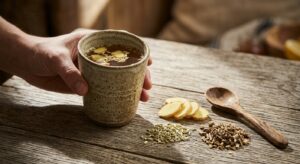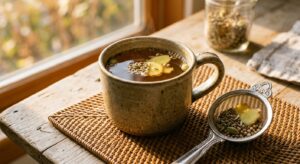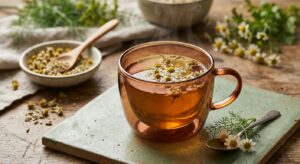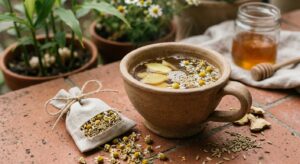
Few discomforts are as disruptive as intestinal cramping. Whether triggered by irritable bowel syndrome, food sensitivities, stress, or a simple case of indigestion, the sharp, gripping spasms of an unhappy gut can bring daily life to a halt. Long before pharmaceutical antispasmodics existed, healers across Europe, the Middle East, and Asia turned to the plant kingdom for relief. Herbs like peppermint, chamomile, and fennel seed were staples in apothecary traditions precisely because they possess measurable antispasmodic and carminative properties, meaning they relax smooth muscle while simultaneously expelling trapped gas.
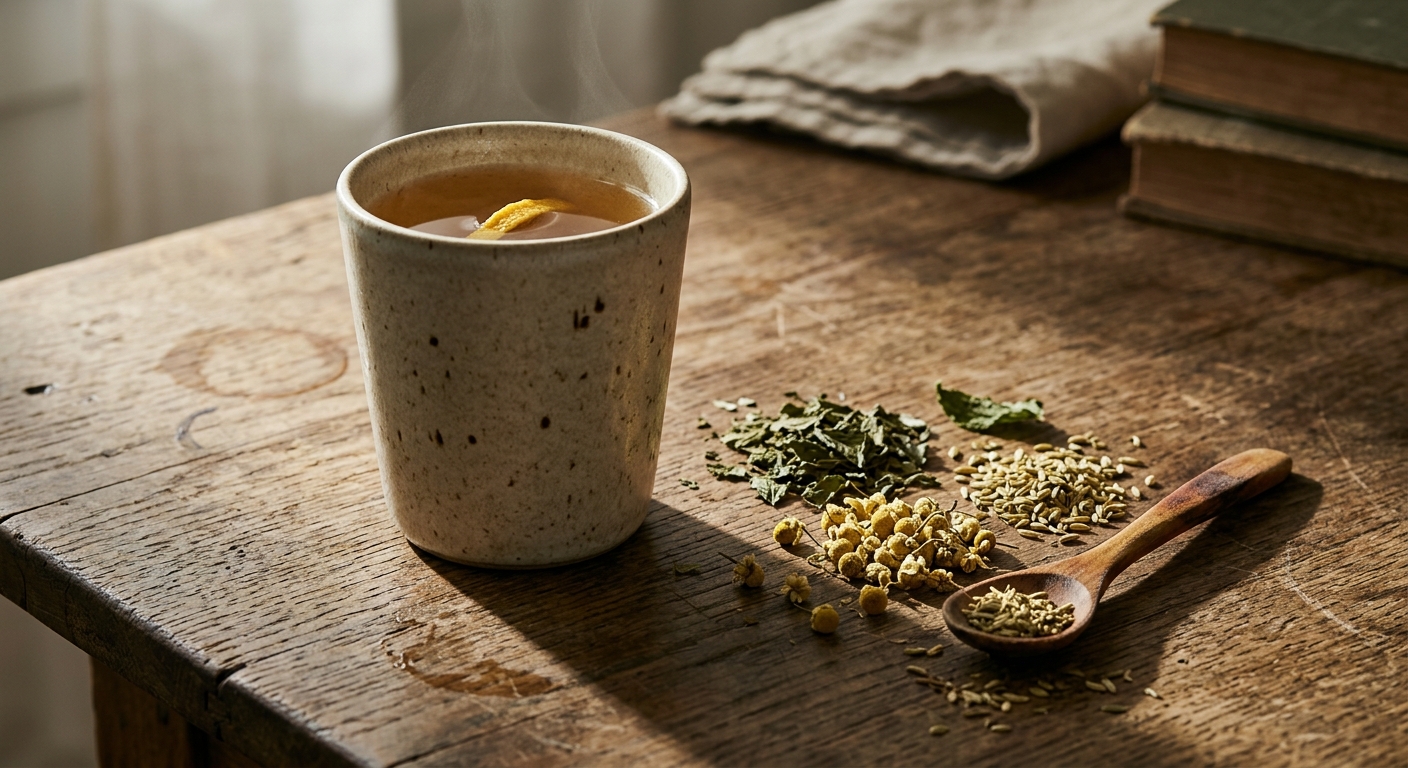
This blend centers on three proven allies: peppermint leaf, chamomile flower, and fennel seed. Peppermint brings menthol, a compound that directly relaxes the smooth muscle lining of the intestinal wall. Chamomile contributes its famous bisabolol and apigenin, which soothe inflammation and calm nervous tension that so often accompanies gut spasms. Fennel seed rounds out the formula with anethole, a phytonutrient that relieves gas pressure and quiets intestinal contractions. Together, they form a synergistic cup that addresses cramping from multiple angles at once.
What makes this tea particularly compelling is the convergence of traditional wisdom and modern research. Peppermint oil has been the subject of numerous randomized controlled trials for IBS, with consistent evidence supporting its antispasmodic effect on intestinal smooth muscle. Chamomile has a documented history in German Commission E monographs as a gastrointestinal remedy. And fennel has been used in Ayurvedic medicine for thousands of years to manage colic and digestive cramping. Brewed together, these three herbs produce a pale amber, mildly sweet, and gently cooling cup that your gut will genuinely thank you for.
2
cups
Ingredients
- 1.5 tspdried peppermint leaf
- 1 tspdried chamomile flowers
- 0.75 tspfennel seeds, lightly crushed
- 480 mlwater (90°C / 194°F)
- —raw honey or a small strip of lemon peel to taste (optional)
How to Brew
Click on an item below to shop for the recommended items for this recipe on Amazon.
As an Amazon Associate, we earn from qualifying purchases.
- Lightly crush the fennel seeds using the back of a spoon or a mortar and pestle. This cracks the seed coat and releases the volatile anethole oils that would otherwise stay locked inside during a short steep.
- Combine the crushed fennel seeds, dried peppermint leaf, and dried chamomile flowers in a tea infuser or a small teapot with a built-in strainer. Keeping all three herbs together ensures they brew evenly.
- Heat your water to 88 to 92°C (190 to 198°F). If you do not have a temperature-controlled kettle, bring water to a full boil and allow it to cool for 2 to 3 minutes before pouring.
- Pour the hot water over the herb blend and cover the mug or teapot immediately with a lid or small saucer. Covering the brew is essential because it traps the steam and keeps the volatile menthol and anethole oils in the liquid rather than letting them evaporate into the air.
- Steep for 5 to 7 minutes. For a milder cup with a lighter mint presence, aim for 5 minutes. For stronger antispasmodic potency and a more pronounced fennel note, extend to 7 minutes.
- Remove the infuser, strain well, and sip slowly while warm. If desired, stir in a small amount of raw honey, which also has mild anti-inflammatory properties. Drink one cup at the onset of cramping and a second cup 30 to 45 minutes later if needed.
- Lightly crush the fennel seeds as described in the hot brew method. Because cold water extracts more slowly, crushing is especially important here to ensure adequate anethole release over the long steep time.
- Combine the fennel seeds, peppermint leaf, and chamomile flowers in a clean glass jar or cold brew pitcher. For cold brew, increase the total herb quantity by approximately 25 percent to compensate for the slower, less aggressive cold-water extraction. Use 2 tsp peppermint, 1.5 tsp chamomile, and 1 tsp crushed fennel seeds per 480 ml water.
- Add room-temperature filtered water to the jar and stir gently to ensure all herbs are fully submerged. Cover with a lid or cloth to keep the jar sealed.
- Leave the jar at room temperature for the first 1 to 2 hours if your kitchen is cool, then transfer it to the refrigerator. Steep for a total of 8 to 12 hours. An overnight steep is the easiest approach.
- When the steep is complete, strain the brew through a fine mesh strainer or cheesecloth into a clean vessel, pressing the spent herbs gently to extract the remaining liquid.
- Serve over ice or chilled straight from the jar. Cold brew intestinal spasm tea keeps in the refrigerator for up to 48 hours. Sip slowly rather than drinking quickly over ice to allow the herbs time to interact with the gut lining.
- Add 1.5 tsp of lightly crushed fennel seeds to a small saucepan with 540 ml of cold filtered water. The extra water volume accounts for evaporation during simmering.
- Bring the water to a gentle simmer over medium heat, approximately 96°C (205°F), then reduce the heat and hold at a low simmer for 10 minutes. The water will take on a faint yellow color and a warm, anise-like aroma as the anethole and other seed compounds extract fully into the liquid. Do not allow the decoction to reach a rolling boil, as excessive heat can destroy some beneficial compounds.
- Remove the saucepan from the heat and allow the fennel decoction to cool for 2 to 3 minutes until it reaches approximately 88 to 90°C (190 to 194°F). Use a thermometer for accuracy if possible.
- Place 1.5 tsp dried peppermint leaf and 1 tsp dried chamomile flowers in a tea infuser or directly in a heatproof jug.
- Pour the warm fennel decoction through a strainer over the peppermint and chamomile herbs, discarding the spent fennel seeds. Cover the jug immediately and steep the delicate herbs in the fennel base for exactly 5 minutes.
- Strain into mugs and serve immediately. The resulting brew is noticeably more complex and potent than a standard hot steep. A small amount of raw honey can help balance the stronger fennel base. Sip one full cup slowly, ideally seated and relaxed, to allow the antispasmodic compounds to work most effectively.
Health Benefits
Peppermint’s menthol is one of the most well-studied natural antispasmodics for the gut. A 2014 meta-analysis published in the Journal of Clinical Gastroenterology found peppermint oil significantly more effective than placebo in reducing IBS-related abdominal pain, with its mechanism of action confirmed as calcium channel antagonism in intestinal smooth muscle.
Fennel seed is classified as a carminative herb, meaning it actively promotes the expulsion of intestinal gas by relaxing the muscular tension that traps it. Anethole inhibits spasms at the ileocecal valve and throughout the colon, allowing gas to pass and reducing the painful distension that accompanies it.
Chamomile’s apigenin interacts with GABA receptors not only in the central nervous system but also in the enteric nervous system, the so-called second brain located in the gut wall. This dual action addresses the stress and anxiety component of functional gut disorders, making this blend particularly useful for those whose cramping worsens during periods of emotional strain.
Alpha-bisabolol and chamazulene from chamomile, combined with rosmarinic acid from peppermint, deliver meaningful anti-inflammatory activity to the gut mucosa. Research published in Molecular Medicine Reports has documented chamomile’s ability to inhibit prostaglandin synthesis, reducing the inflammatory signaling that sensitizes gut tissue and amplifies cramping responses.
Rather than simply numbing cramping, this blend works to normalize gut motility, helping the intestines find a balanced rhythm between overstimulation and stagnation. Peppermint has been shown to modulate gut transit time, while fennel and chamomile together help regulate the pace and coordination of peristaltic contractions.
🧪 Key Bioactive Compounds
The Science Behind Peppermint
The science behind this intestinal spasm blend begins at the level of smooth muscle physiology. Unlike skeletal muscles, which we control voluntarily, the smooth muscle lining the gastrointestinal tract operates under involuntary control governed by the enteric nervous system and modulated by calcium ion channels. When these muscles contract excessively or in a discoordinated pattern, the result is the gripping, wave-like pain of intestinal spasm. Menthol, the primary volatile compound in peppermint, acts as a calcium channel antagonist in these smooth muscle cells, inhibiting the calcium influx necessary for contraction. This mechanism has been confirmed in both in vitro studies and clinical trials, placing peppermint among the most pharmacologically validated of all herbal antispasmodics.
Fennel seed’s contribution comes primarily through anethole, a phenylpropanoid compound that makes up 60 to 80 percent of fennel’s essential oil. Anethole has demonstrated spasmolytic activity in isolated intestinal tissue preparations, relaxing muscle contractions induced by acetylcholine and histamine. It also inhibits the fermentation processes that generate excess intestinal gas, addressing not just the muscular component of discomfort but the pressure-related distension that so often accompanies it. Fenchone, a secondary fennel compound, synergizes with anethole to extend this carminative and antispasmodic effect. Together, these compounds make fennel far more than a culinary herb: it is a clinically coherent gut relaxant with a well-understood molecular basis.
Chamomile’s role in this formula is perhaps the most sophisticated. Its flavonoid apigenin interacts with GABA-A receptors distributed throughout both the central and enteric nervous systems, reducing neurally driven hypercontractility in the gut wall. Meanwhile, alpha-bisabolol and chamazulene work at the mucosal level, inhibiting cyclooxygenase enzymes and blocking prostaglandin synthesis in a manner that parallels the action of non-steroidal anti-inflammatory drugs, but without gastrointestinal side effects. This layered activity means chamomile addresses the upstream triggers of spasm, including inflammation and neural sensitization, while peppermint and fennel address the muscular mechanics directly. The result is a formula with genuine pharmacological synergy that traditional herbalists arrived at through centuries of empirical observation, now increasingly validated by modern phytopharmacology.
Brewing Tips
- Always cover your mug or teapot while steeping this blend. Menthol and anethole are highly volatile oils and will escape with the steam if left uncovered, significantly reducing the antispasmodic potency of your brew.
- Sip this tea slowly over 10 to 15 minutes rather than drinking it quickly. Slow, warm sipping allows the menthol and other compounds to come into prolonged contact with the upper GI tract as they pass through, maximizing the soothing effect along the entire length of the digestive system.
- For chronic or recurring intestinal spasms, consider drinking one cup 20 minutes before meals as a preventive measure rather than waiting for cramping to begin. This gives the antispasmodic compounds time to circulate and pre-condition the gut muscles before the digestive process begins.