Long before rhubarb stalks became a pie filling, rhubarb root commanded one of the highest prices in the medieval spice trade. Known in Traditional Chinese Medicine as Da Huang, meaning ‘Big Yellow,’ Rheum palmatum has been prescribed by Chinese physicians for over 2,000 years to clear intestinal heat, promote healthy bowel movement, and reduce inflammation throughout the digestive tract. At one point in history, rhubarb root was considered so valuable in Europe that it was sold for several times the price of cinnamon and opium, arriving via the Silk Road in small, precious quantities.
What makes rhubarb root so fascinating is its dose-dependent nature. In small amounts, the tannins dominate, producing an astringent, binding effect that can calm diarrhea and soothe an irritated gut lining. At larger doses, the anthraquinone glycosides take over, stimulating peristalsis and acting as a reliable laxative. This duality made it a prized medicine across Persian, Ayurvedic, Greek, and European herbal traditions alike. The 16th-century herbalist John Gerard described it as ‘the best purge,’ while Chinese texts praised its ability to ‘break accumulation and drain fire.’ Few herbs bridge so many traditions with such consistency of purpose.
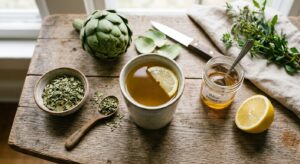
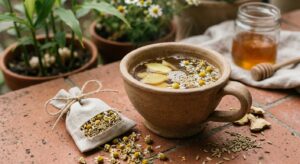
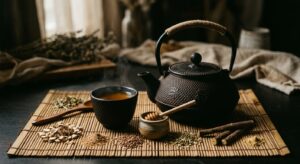
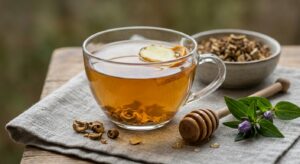
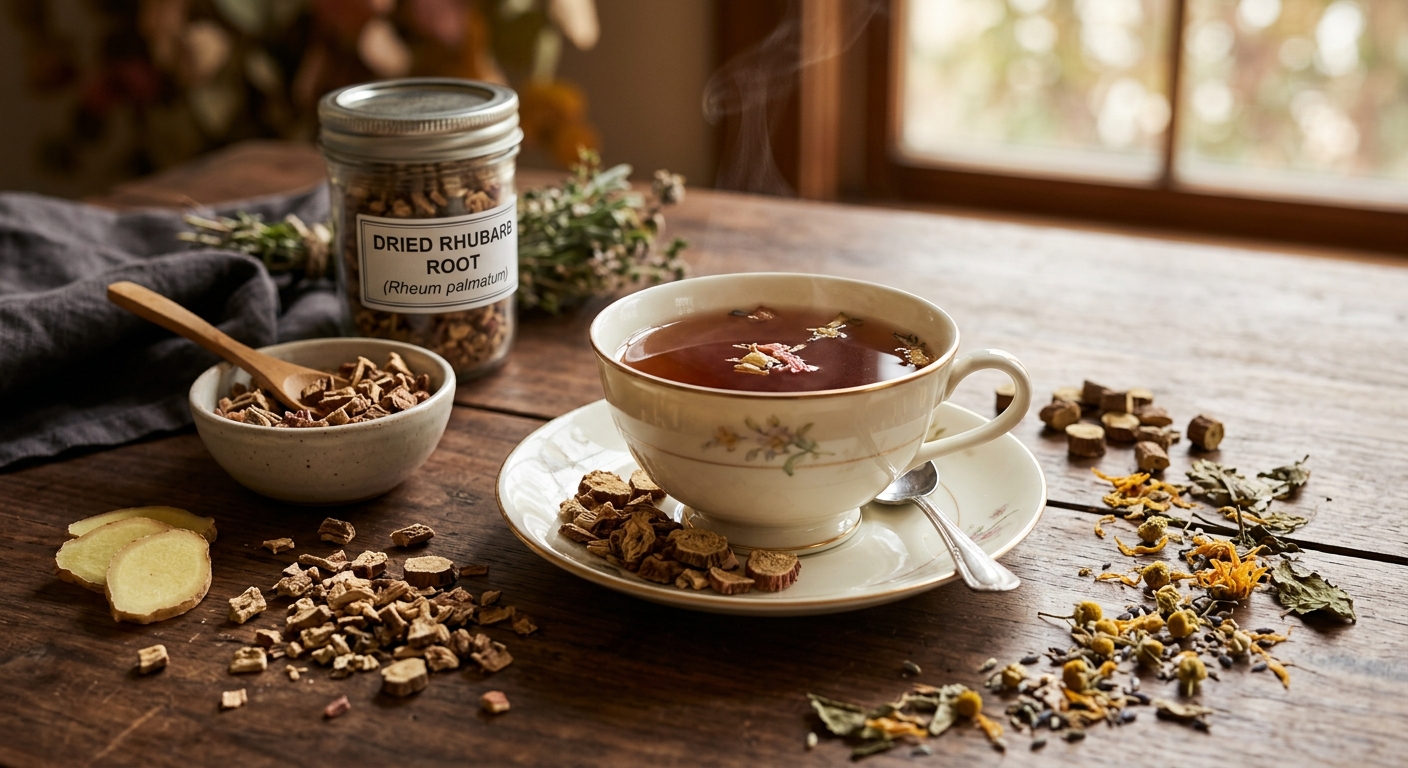
Brewed as a tea, rhubarb root delivers a deep, earthy flavor with notable bitterness and a dry, almost tannic finish. The brew turns a warm amber to golden-brown in the cup, carrying a faint woody, slightly resinous aroma that signals its potency. It is most commonly prepared as a short, precise decoction to extract its active compounds from the tough rhizome, though longer cold brews also yield a gentler, tannin-forward infusion. Whether you are seeking relief from sluggish digestion, occasional constipation, or a bloated, overloaded gut, rhubarb root tea offers one of herbal medicine’s most time-tested solutions.
2
cups
Ingredients
- 2 tspdried rhubarb root, coarsely chopped or sliced
- 480 mlwater (for hot brew or decoction)
- —raw honey or licorice root to taste (optional, helps balance bitterness)
- —a small slice of fresh ginger (optional, supports digestive action)
How to Brew
Click on an item below to shop for the recommended items for this recipe on Amazon.
As an Amazon Associate, we earn from qualifying purchases.
- Place 2 teaspoons of coarsely chopped dried rhubarb root into a tea infuser, strainer, or small teapot.
- Heat 480 ml of water to approximately 90 to 95°C (194 to 203°F). Do not use a full rolling boil, as extreme heat can degrade some of the more delicate polyphenols.
- Pour the hot water over the rhubarb root and cover the vessel immediately. Covering is important as it traps volatile aromatic compounds and maintains temperature.
- Steep for 10 to 15 minutes. A shorter steep of 10 minutes yields a milder, more tannin-forward cup with a gentle astringent quality. Steeping for 15 minutes draws out more anthraquinones and increases the laxative potential.
- Strain thoroughly through a fine mesh strainer into your mug, pressing the root pieces gently to extract the last of the liquid.
- Allow to cool for 1 to 2 minutes before drinking. Sweeten with raw honey or add a slice of licorice root if the bitterness is too pronounced. Drink one cup, ideally after a meal.
- Place 2 heaped teaspoons of dried rhubarb root pieces into a clean glass jar. Because cold water extracts compounds more slowly, slightly increasing the amount of root compared to a hot brew helps ensure a flavorful result.
- Pour 480 ml of cool, filtered water over the root pieces. Do not use hot or warm water as this shifts the extraction profile toward the more stimulating anthraquinones, which is not the goal for this method.
- Stir gently, then cover the jar loosely with a lid or a small plate. Allow the jar to sit at room temperature for the first hour, then transfer it to the refrigerator.
- Let the root steep in the refrigerator for a total of 8 to 12 hours, or overnight. The slow, cold extraction draws out primarily tannins and milder polyphenols, producing a subtler, less bitter brew.
- Strain the liquid through a fine mesh strainer or cheesecloth into a glass or pitcher, pressing gently on the root to release remaining liquid.
- Serve over ice or chilled, as is. The cold brew has a smoother, less aggressive flavor than the hot brew. Add a few drops of honey or a sprig of fresh mint to brighten the earthy character if desired.
- Place 2 teaspoons of coarsely chopped dried rhubarb root into a small stainless steel or ceramic saucepan. Avoid reactive metals like uncoated aluminum, which can interact with the root’s acidic compounds.
- Add 600 ml of cold, filtered water. Starting in cold water and slowly bringing it to temperature draws out deeper compounds from the dense rhizome more effectively than plunging the root into already-boiling water.
- Bring the water to a full boil over medium-high heat, then immediately reduce the heat to a gentle simmer. You should see small, steady bubbles rather than a rolling boil.
- Simmer uncovered for 20 to 25 minutes. The liquid will reduce and deepen in color to a rich amber or golden-brown. Check periodically to ensure the liquid does not reduce below approximately 300 to 350 ml. Add a small splash of water if needed.
- Remove from heat and allow the decoction to rest for 5 minutes off the heat before straining. This resting period allows remaining compounds to settle out of suspension.
- Strain thoroughly through a fine mesh strainer into two small cups, yielding roughly 150 to 175 ml per serving. Because this is a potent preparation, serve in smaller amounts. Sweeten minimally with honey if needed, and drink warm. Do not drink more than one small cup per day and do not use this method on consecutive days without guidance from a qualified herbalist.
Health Benefits
The anthraquinone glycosides in rhubarb root, particularly emodin and rhein, stimulate rhythmic muscle contractions in the large intestine and increase water secretion into the colon, softening stool and encouraging bowel movement. Rhubarb root preparations are listed in the European Medicines Agency monograph as a traditional herbal laxative for short-term use.
At lower doses or via cold-brew preparation, the tannins in rhubarb root dominate, producing an astringent effect that tones the gut lining, reduces intestinal secretions, and helps firm loose stools. This dose-dependent duality is unique among common digestive herbs and is well-documented in both traditional and modern phytotherapy literature.
Traditional Chinese Medicine has long used Da Huang to ‘clear liver heat’ and support bile flow. Modern research suggests that rhubarb root compounds may stimulate bile production and secretion, supporting fat digestion and the liver’s detoxification pathways, with several small clinical trials showing improvements in liver enzyme markers in patients with non-alcoholic fatty liver disease.
Rhein and other polyphenols in rhubarb root have demonstrated anti-inflammatory effects in the gastrointestinal tract, potentially reducing levels of pro-inflammatory cytokines in the intestinal mucosa. A number of studies in Traditional Chinese Medicine research have investigated rhubarb root’s role in managing inflammatory bowel conditions, with promising but preliminary results.
Laboratory research has shown that emodin, aloe-emodin, and rhein possess antimicrobial activity against a range of intestinal pathogens, including certain strains of Staphylococcus and E. coli. This may partly explain rhubarb root’s traditional use in treating ‘food stagnation’ and gut infections in classical herbal medicine systems.
🧪 Key Bioactive Compounds
The Science Behind Rhubarb Root
The therapeutic action of rhubarb root tea is driven primarily by two competing classes of compounds: anthraquinone glycosides and condensed tannins. The anthraquinone glycosides, which include emodin, rhein, and aloe-emodin, are found in the inner layers of the dried rhizome and are responsible for the herb’s laxative properties. Once ingested, these compounds are metabolized by gut bacteria into their active aglycone forms, which then stimulate secretion of electrolytes and water into the large intestine while simultaneously stimulating the smooth muscle contractions of peristalsis. This is the mechanism recognized by the European Medicines Agency in its 2014 assessment of Rheum palmatum preparations as a traditional herbal medicine for constipation.
The condensed tannins, including gallic acid and catechins, work in an opposing direction. They bind to proteins in the gut mucosa, producing an astringent effect that reduces intestinal secretions, tones the mucosal lining, and slows gut motility. This explains the classical herbalist’s observation that small doses of rhubarb root can treat diarrhea while larger doses treat constipation. Cold-brew extraction favors tannin-dominant profiles because these smaller, more polar molecules dissolve readily in cold water, while the more complex anthraquinone glycosides require higher temperatures for efficient extraction. This gives the practitioner meaningful control over which therapeutic action they wish to emphasize simply by adjusting preparation temperature and time.
Beyond digestion, emerging research has highlighted rhubarb root’s broader pharmacological profile. Stilbene glycosides such as lindleyin demonstrate phytoestrogenic activity and have been studied in the context of menopausal symptom relief. Rhein has shown meaningful anti-inflammatory effects in animal models of intestinal inflammation, reducing levels of tumor necrosis factor-alpha and interleukin-6 in gut tissue. Several small Chinese clinical trials have investigated standardized rhubarb root extracts in the management of non-alcoholic fatty liver disease, acute pancreatitis, and chronic kidney disease, with results suggesting hepatoprotective and renoprotective potential. While much of this research is preliminary and conducted on concentrated extracts rather than brewed teas, it underscores why rhubarb root has remained central to formal herbal pharmacopoeias from China to Europe for more than two millennia.
Brewing Tips
- Buy rhubarb root from a reputable supplier that clearly labels the species as Rheum palmatum or Rheum officinale. These are the medicinal species and should not be confused with garden rhubarb stalks (Rheum rhabarbarum), which are culinary and do not carry the same concentration of therapeutic anthraquinones.
- Store dried rhubarb root in an airtight glass container away from light and heat. The anthraquinone compounds degrade with prolonged exposure to air and light, which reduces the tea’s potency over time. Properly stored root retains its medicinal quality for up to two years.
- If you find the bitterness of rhubarb root tea too harsh on its own, try combining it with a warming blend of fennel seeds and fresh ginger. Fennel adds a gentle sweetness and additional carminative support for gas and bloating, while ginger enhances the overall digestive effect and makes the cup far more enjoyable to drink.