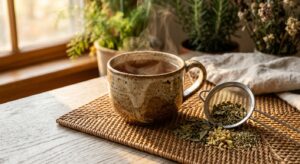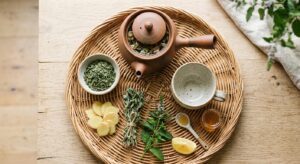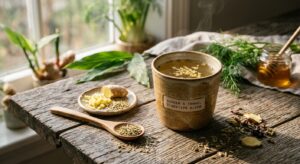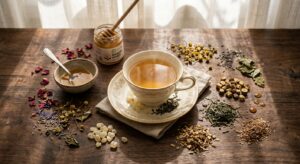
Long before artichokes became a prized ingredient on Mediterranean tables, the ancient Greeks and Romans were already turning to the spiky thistle-like plant for its remarkable medicinal properties. Known botanically as Cynara scolymus, globe artichoke has been cultivated for over 2,000 years, with physicians from Dioscorides to Pliny the Elder praising it as a remedy for sluggish digestion and liver complaints. Traditional healers across Italy, France, and North Africa prepared bitter infusions from the plant’s large, silvery-green leaves, drinking them before or after meals to stimulate the appetite and settle the stomach. This ancient wisdom has proven remarkably durable, finding strong support in modern phytotherapy.
What sets globe artichoke apart from other herbal digestive aids is its exceptional concentration of bitter compounds, particularly cynarin and caffeoylquinic acid derivatives, which act directly on the liver and gallbladder. These compounds trigger increased bile secretion, which is the body’s natural mechanism for breaking down dietary fats and clearing metabolic waste. Herbalists in the European tradition classify it as a cholagogue and hepatoprotective herb, meaning it both moves bile and actively shields liver cells from oxidative damage. The result in the cup is a tea that is assertively bitter, faintly earthy, and surprisingly complex, with a characteristic sweet aftertaste that emerges on the finish, a hallmark of the cynarin compound itself.
Artichoke leaf tea occupies a fascinating place where culinary culture and plant medicine overlap. The very bitterness that makes it challenging for first-time drinkers is precisely what makes it therapeutically effective. Bitter compounds detected by taste receptors in the mouth and gut trigger a cascade of digestive responses: increased saliva, gastric acid secretion, and bile flow. Many Europeans still observe the tradition of sipping a small glass of artichoke-based bitters or amaro before a large meal, a custom rooted in exactly the same herbal logic. A pot of home-brewed artichoke leaf tea is simply the whole-leaf, additive-free expression of that same centuries-old practice.
2
cups
Ingredients
- 2 tspdried globe artichoke leaves (cut and sifted)
- 480 mlwater (90°C / 194°F)
- —thin slice of fresh lemon (optional, brightens the flavor)
- —raw honey or agave to taste (optional)
How to Brew
Click on an item below to shop for the recommended items for this recipe on Amazon.
As an Amazon Associate, we earn from qualifying purchases.
- Bring filtered water to 90 to 95°C (194 to 203°F). Avoid a full rolling boil, as excessive heat can degrade delicate polyphenols and push the bitterness into an unpleasant harshness.
- Measure 1 teaspoon of dried artichoke leaf per 240 ml of water and place the leaves in a tea infuser or directly into a warmed teapot. Pre-warming the teapot with a splash of hot water helps maintain a steady steeping temperature.
- Pour the hot water directly over the leaves, cover the vessel with a lid or small saucer to trap volatile aromatic compounds, and steep for 7 to 10 minutes according to your bitterness preference.
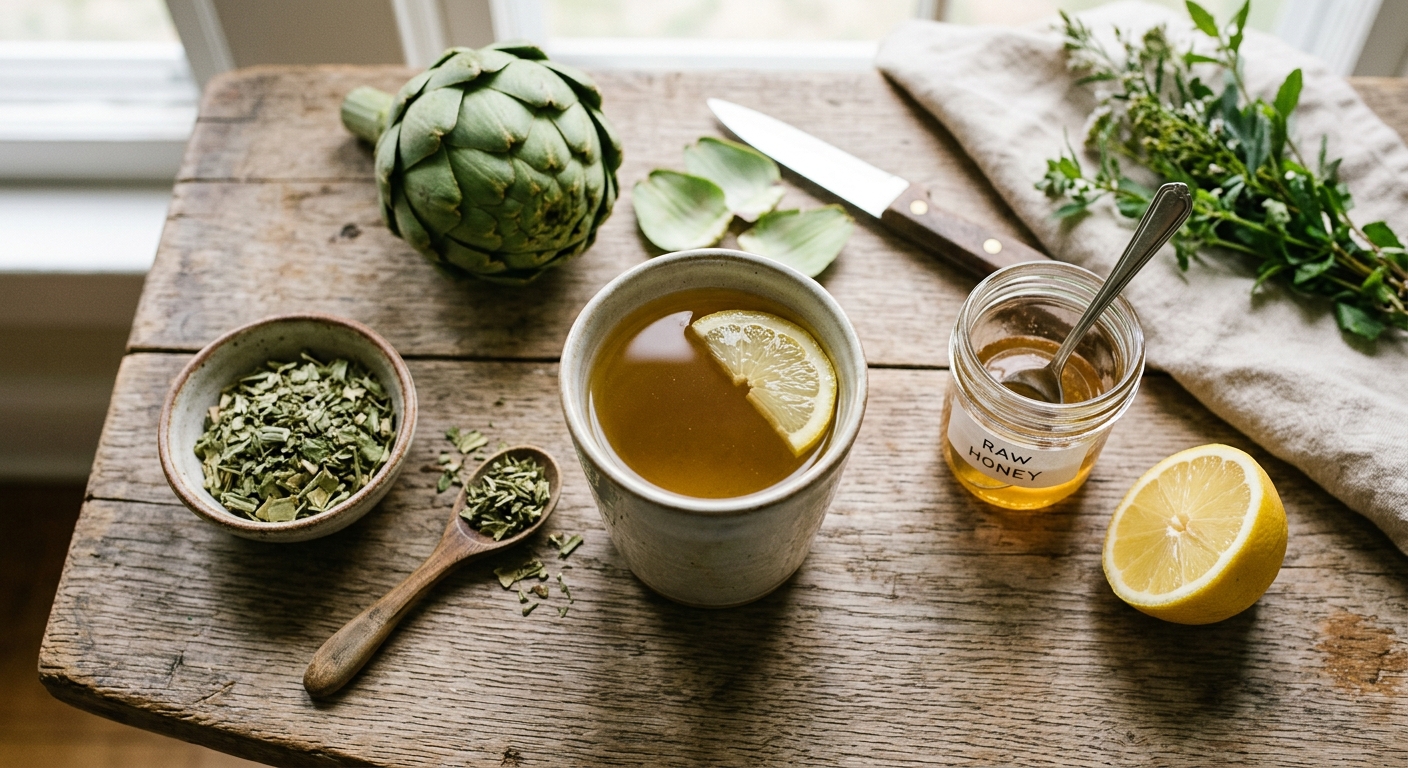
- Remove the infuser or strain the tea through a fine mesh strainer into your cup. Take a moment to observe the pale olive-green color and the gently herbaceous aroma before drinking.
- Sip the tea plain to experience its full bitter stimulus, which is the most therapeutically active way to drink it. If needed, add a squeeze of fresh lemon or a small amount of honey. Drink 15 to 30 minutes before a meal for digestive priming, or directly after a rich meal for relief.
- Measure 1.5 teaspoons of dried artichoke leaf per 240 ml of cold, filtered water. The slightly higher ratio compensates for the slower cold-extraction rate compared to hot brewing.
- Combine the leaves and cold water in a clean glass jar. Stir briefly to ensure all leaf material is submerged, then seal the jar with a lid.
- Leave the jar at room temperature for the first 30 minutes to allow the extraction to begin, then transfer it to the refrigerator and steep for a total of 10 to 14 hours, ideally overnight.
- The next morning, strain the tea through a fine mesh strainer or a piece of muslin cloth into a clean bottle or pitcher, pressing the leaves gently to extract the last of the liquid.
- Serve chilled over ice in a tall glass. The cold-brewed version will be noticeably paler, a soft celery-gold, and the bitterness will be rounder and more integrated. Add a slice of lemon or cucumber for a refreshing digestive drink.
- Combine 2 teaspoons of dried artichoke leaf per 300 ml of cold, filtered water in a small stainless steel or enamel saucepan. Starting in cold water allows the compounds to begin releasing gradually as the temperature rises.
- Place the saucepan over medium-low heat and bring the water to a very gentle simmer. Once you see small, consistent bubbles forming, reduce the heat to maintain a low simmer. Do not allow the liquid to reach a vigorous rolling boil.
- Simmer uncovered for 15 to 20 minutes. The liquid will reduce slightly and deepen in color to a richer amber-green. Stir once or twice during this time. The aroma will shift from gently vegetal to more concentrated and earthy.
- Remove from heat and allow the decoction to rest, covered, for 5 minutes before straining. This brief resting period allows final extraction and lets the temperature settle so volatile compounds are not lost to evaporation.
- Strain through a fine mesh strainer into a cup. The resulting tea will be noticeably darker and more intensely bitter than a standard infusion. Sip slowly in small amounts, 100 to 150 ml per serving. This preparation is best taken as a focused therapeutic dose rather than a large casual cup.
Health Benefits
Cynarin and related caffeoylquinic acids directly stimulate hepatocytes and gallbladder smooth muscle to increase bile synthesis and secretion. Multiple clinical trials, including a 2003 study published in Alimentary Pharmacology and Therapeutics, have confirmed artichoke leaf extract significantly increases bile flow, improving the emulsification and absorption of dietary fats and fat-soluble vitamins.
Several randomized controlled trials have found artichoke leaf extract significantly reduces symptoms of functional dyspepsia, including bloating, nausea, abdominal cramping, and feelings of fullness. A 2003 large-scale open study of 553 patients in Phytomedicine found that 640 mg of artichoke leaf extract daily produced marked improvement in digestive comfort scores across all measured symptoms.
The flavonoids luteolin and the polyphenol complex in artichoke leaf have demonstrated hepatoprotective effects in both animal studies and human trials, helping to shield liver cells from oxidative damage, reduce inflammatory markers, and support the regeneration of hepatic tissue. This makes it a valuable supportive herb for those with elevated liver enzymes or fatty liver conditions.
A randomized, double-blind, placebo-controlled trial published in the European Journal of Nutrition (2000) found that artichoke leaf extract reduced total cholesterol by approximately 18% and LDL cholesterol by 23% over 12 weeks in adults with mild hypercholesterolemia. The mechanism involves both increased bile-mediated cholesterol excretion and inhibition of cholesterol biosynthesis in the liver.
Artichoke leaves contain inulin-type fructooligosaccharides, which function as prebiotic fibers when consumed. These compounds selectively feed beneficial gut bacteria including Lactobacillus and Bifidobacterium species, helping to support a balanced and diverse gut microbiome, which in turn influences both digestive comfort and broader systemic health.
🧪 Key Bioactive Compounds
The Science Behind Globe Artichoke Leaf
The therapeutic action of globe artichoke tea is driven by one of the richest concentrations of hydroxycinnamic acid derivatives found in any herbal tea. Cynarin, the compound most synonymous with artichoke medicine, works by stimulating receptors on hepatocytes (liver cells) and on the smooth muscle of the gallbladder, triggering an increase in both bile synthesis and the release of stored bile into the small intestine. This process, known as choleresis, is fundamental to healthy digestion: bile emulsifies dietary fats so that lipase enzymes can break them down, and it serves as the liver’s primary route for excreting metabolic waste, excess cholesterol, and fat-soluble toxins. Interestingly, cynarin is also responsible for the curious sweet aftertaste that artichoke is famous for: the compound temporarily inhibits sweetness receptors, and when it is rinsed away, those receptors respond to even plain water with a perception of sweetness.
The sesquiterpene lactone cynaropicrin is responsible for the herb’s intensely bitter character, but it does far more than create flavor. Bitter compounds interact with G protein-coupled bitter taste receptors (TAS2Rs) distributed not only on the tongue but throughout the gastrointestinal epithelium. When these receptors are activated, they trigger a well-documented cephalic phase digestive response: increased secretion of saliva, hydrochloric acid in the stomach, pepsin, and pancreatic digestive enzymes. This essentially prepares the entire digestive tract to process an incoming meal more efficiently. This is the pharmacological basis behind the long tradition of aperitivo bitters in European culture, and it explains why artichoke leaf tea is most effective when consumed 15 to 30 minutes before eating.
From a hepatoprotective standpoint, the flavonoid luteolin and polyphenol complex in artichoke leaf demonstrate meaningful antioxidant activity in hepatic tissue. Research published in Phytotherapy Research has shown that artichoke leaf extract reduces lipid peroxidation in liver cells exposed to oxidative stressors, while chlorogenic acid contributes to the regeneration of glutathione, the liver’s primary endogenous antioxidant. The combined effect of increased bile clearance and reduced hepatocellular oxidative damage gives artichoke leaf a dual mechanism that addresses both the functional and structural aspects of liver health. This positions it as one of the most evidence-supported herbs for digestive and hepatic support in the entire European phytotherapy pharmacopoeia.
Brewing Tips
- Start with a 7-minute steep and very gradually increase the time over several brewing sessions to allow your palate and digestive system to adjust to the bitterness. Jumping straight to a 10-minute decoction can feel overwhelming for new drinkers.
- For best therapeutic results, drink artichoke leaf tea consistently for at least 2 to 4 weeks. The liver-supportive and cholesterol-modulating effects seen in clinical trials were observed after sustained use, not from a single cup.
- If the bitterness is challenging, blending dried artichoke leaf with equal parts dandelion root or fennel seed before brewing can balance the flavor profile significantly while adding complementary digestive benefits from both companion herbs.